Backyard Beekeeping Guide
Can You Keep Bees in Your Backyard? What It Really Takes
Yes — for most people, in most gardens. But whether it works well depends on space, rules, neighbors, and how much time you can honestly give. Here is the full picture before you commit.
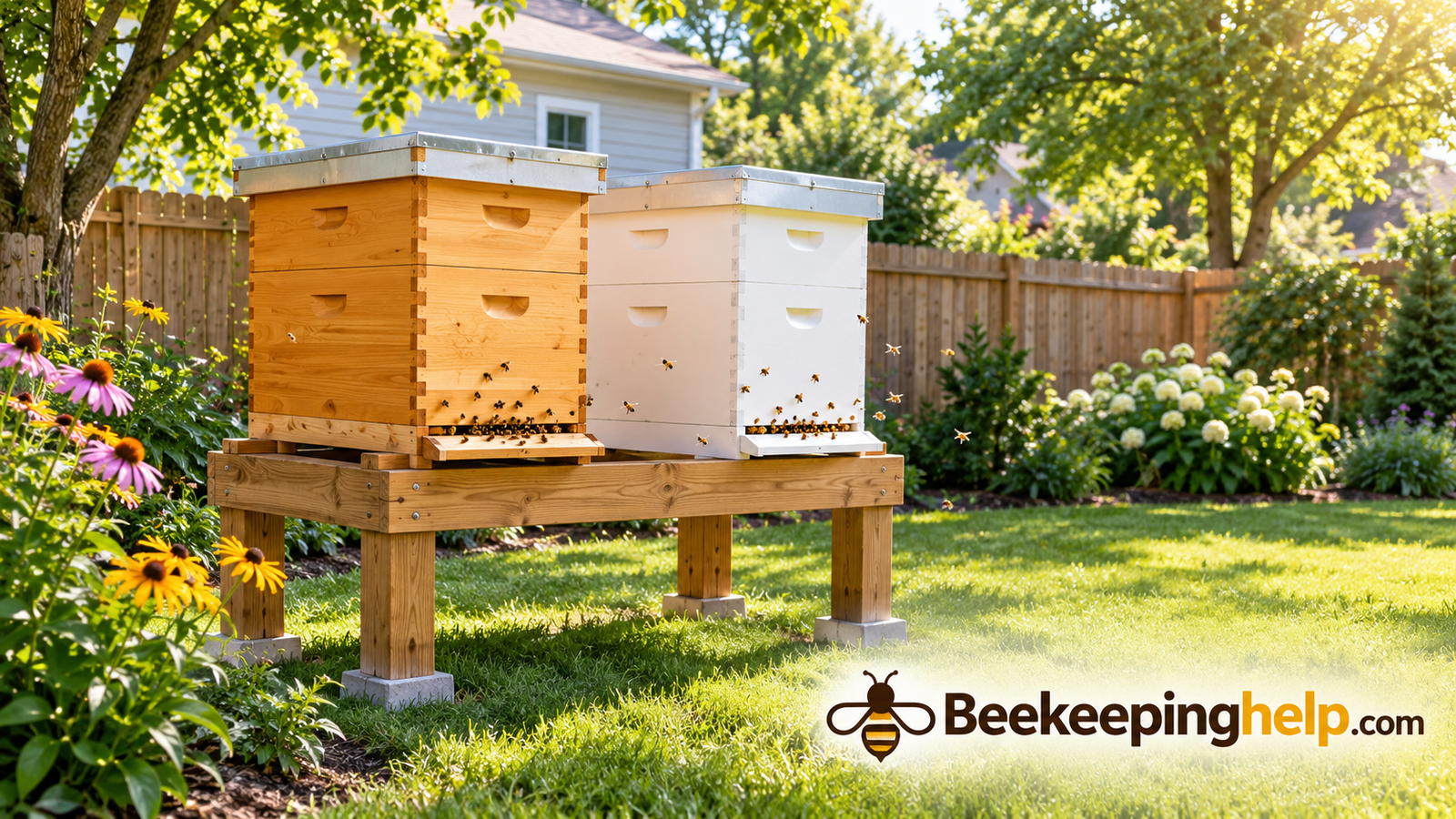
Ask ten beekeepers how they started and a surprising number will tell you the same story: a small garden, one or two hives in a corner, and a curiosity that turned into a hobby. Backyard beekeeping is not a scaled-down version of commercial beekeeping — it is its own thing, with its own rhythm, its own advantages, and its own particular responsibilities.
The question “can you keep bees in your backyard?” usually comes with quieter questions underneath it. Is my garden big enough? Will the neighbors object? What if someone gets stung? How much time does it actually take, and what does it cost to do it properly rather than cheaply? Those are the questions worth answering before equipment is ordered, because they determine whether the experience is enjoyable or stressful.
This guide works through the whole decision honestly — the space, the rules, the social side, the safety questions, the ongoing work, and the money. By the end you will know clearly whether your backyard is a good fit, and what to do next if it is. If you want the wider picture of the craft first, our complete beekeeping guide and the walkthrough on how to start beekeeping set the foundations.
Explore Backyard Beehive Kits
Complete setups sized for a small garden apiary.
Check Beehive Kits on Amazon1. Can You Keep Bees in Your Backyard? The Honest Answer
Yes, in most cases — and far more often than people assume.
Backyard beekeeping is entirely realistic in ordinary residential gardens. You do not need acres of meadow, a farmhouse, or a rural postcode. You need a stable, well-drained spot roughly the size of a garden shed, some thought about where the bees will fly, and a willingness to learn. That is genuinely the core of it.
What people underestimate is not the space requirement — it is the responsibility. A colony of bees is livestock. It needs regular attention through the active season, it responds to weather and forage conditions, and it will swarm, fill with honey, or struggle with pests if left unattended. The good news is that backyard-scale management is far simpler than commercial beekeeping, and a single hive is a very manageable commitment for most households.
Where it works well
Suburban gardens, village plots, allotments with permission, larger balconies and rooftops with proper approval, and small holdings all support healthy colonies. Beekeeping at this scale is largely about good habits rather than heavy equipment, which is why it suits first-time keepers so well.
Where you should pause first
Some situations genuinely warrant caution: a very small enclosed courtyard with no clear flight path, a household with a serious bee sting allergy, a neighborhood with strict rules about hive placement, or a schedule that keeps you away for long stretches through spring and summer. None of these are automatic deal-breakers, but each one deserves an honest assessment before you commit.
Why Backyard Beekeeping Works
- One or two hives are easy to manage
- Excellent pollination for your own garden
- A rewarding, absorbing outdoor hobby
- Honey and wax from your own space
- Close to home means frequent, easy checks
Where It Gets Difficult
- Neighbor and rule considerations
- Stings are part of the experience
- Time-sensitive work in spring and summer
- Heavy boxes require reasonable fitness
- Swarms and pests need real attention
The real answer in one line: if you have a corner of a garden, an hour or two a fortnight through the season, and a genuine interest in how colonies live — yes, you can keep bees in your backyard.
Understanding the commitment is easier when you know what a healthy colony is doing inside the box. Our guides to the parts of a bee hive and their functions and how a beehive works give you that picture early on.
2. How Much Space Do You Really Need?
Less than you think — but the shape of the space matters more than the size.
A single beehive occupies a footprint no larger than a small patio table. The working area around it is what matters: you need room to stand behind the hive, set down a super, and move safely with equipment in hand. Beyond that, the requirement is mostly about air space — where the bees will fly and climb once they leave the entrance.
Space by garden type
Very small courtyards can work, but only with careful planning about flight direction and screening. Average suburban lawns are comfortable for one to a few hives. Larger plots give you freedom to spread colonies out, which reduces drifting and makes management calmer.
| Option | Practical Capacity | What to Plan For | Suitability |
|---|---|---|---|
| Average Suburban GardenBest Starting Point | Comfortable for one to a few hives | Flight path away from patios and boundaries | Ideal Great Fit |
| Small Courtyard or Balcony | One hive with careful positioning | Screening, access, weight limits, water | Possible with care |
| Large Garden or Smallholding | Several hives well spaced | Predators, livestock, distance to equipment | Excellent |
| Shared Allotment | One or two hives with permission | Foot traffic, children, association rules | Good with agreement |
| Rooftop | One or more if structure allows | Wind exposure, safe access, water source | Workable, needs planning |
The two dimensions people forget
- Vertical space: bees climb steeply after leaving the entrance. A barrier a metre or two in front of the hive lifts them above head height.
- Working room: enough clear ground to set down a heavy box safely and step back when the colony is active.
- Access route: a path you can walk along carrying equipment without balancing on edges or steps.
- Storage proximity: somewhere near the hive for feeders, tools, and spare boxes saves endless trips.
- Drainage: dry, level ground that does not hold water after rain.
Getting placement right is a topic in itself, and it is worth reading properly before you settle on a corner. Our full guide to where to place a beehive covers sunlight, shelter, and flight paths in detail.
3. Rules, Zoning, and HOA Restrictions
The step most beginners skip — and the one that saves the most trouble.
Before you order anything, find out what applies where you live. Beekeeping is legal in most places, but the conditions vary enormously: some areas require registration of colonies, others set distance requirements from property lines, and some homeowner associations have their own restrictions that sit on top of local rules. Knowing this in advance is always easier than explaining it later.
The three layers to check
| Rule Type | What It Typically Covers | Where to Look | Priority |
|---|---|---|---|
| Local OrdinancesCheck First | Setbacks, colony limits, water sources, fencing | Municipal or county planning office | Essential Start Here |
| State or Regional Rules | Registration, disease reporting, movement of hives | Agriculture department or bee inspector | Essential |
| HOA or Community Rules | Livestock restrictions, screening, visual impact | Covenants and association guidelines | Important |
| Rental or Lease Terms | Whether hives are permitted at all | Your landlord or lease agreement | Non-negotiable |
Common requirements worth knowing
- Setback distances from property lines and neighboring dwellings.
- Limits on colony numbers for a given property size.
- Water source requirements so bees do not visit neighbors’ pools or taps.
- Flight path barriers such as fences or hedges above a certain height.
- Registration of hives, sometimes free, sometimes with an inspection.
- Swarm reporting and obligations to manage colonies that cause problems.
Practical tip: speak to the local authority early and ask what a compliant setup looks like. Most officials are happy to explain, and asking first puts you in a far stronger position than being reported later.
Regulations differ significantly by location, and ours is a general guide rather than legal advice. Our reference on beekeeping laws by state helps you navigate the framework, and once you are established it is sensible to think about beekeeping insurance alongside your other household cover.
Read Up Before You Start
Practical references covering rules, setup, and management.
Browse Beekeeping Books4. Talking to Your Neighbors (and Handling Concerns)
A short conversation now prevents a difficult one later.
Most neighborhood friction around bees comes from surprise rather than from the bees themselves. People who knew in advance, understood where the hives would sit, and felt listened to almost never become a problem. People who discovered a hive over the fence one afternoon frequently do.
How to approach the conversation
- Be early and casual. Mention it before the hive arrives, not after.
- Show the plan. A rough sketch of where the hive goes and how the flight path is directed is surprisingly reassuring.
- Address stings directly. Ask about allergies openly and honestly; it is the concern people actually have.
- Offer honey. It is a genuine gesture and it works.
- Invite them to look. A calm hive viewed from a safe distance is far less frightening than an imagined one.
- Keep promises. If you say you will add a screen or move a hive, do it.
What genuine concerns look like
Legitimate worries usually fall into three categories: stings and allergies, bees around washing, pools, and outdoor meals, and swarms appearing in the garden. Each has a practical answer. Flight path design and screening handle the second, responsible management handles the third, and open discussion plus good siting handles the first.
Being a considerate beekeeper
Keep the apiary tidy, manage grass and debris, avoid opening hives when neighbors are entertaining nearby, and move colonies calmly rather than dragging boxes across the garden. Small courtesies compound over time, and a relationship built on them withstands an occasional sting incident far better than no relationship at all.
Good neighbor relations also come from knowing your bees. A colony that is well-fed and unstressed behaves better, and understanding seasonal pressures like dearth in beekeeping helps you anticipate when colonies become more defensive or more prone to robbing.
Keep Colonies Calm and Healthy
Feeders and supplements for steady, well-fed colonies.
See Bee Feeders5. Safety, Stings, and Allergies
Honest about the sting, and honest about the risk.
Anyone considering beekeeping deserves a straightforward account of stings. They happen. Most beekeepers receive a few during a season, protective gear limits them significantly, and for most people a sting produces local pain and swelling rather than anything serious. That said, the risk is not zero and it is worth taking seriously, both for yourself and for anyone sharing the space.
Reducing stings in a residential setting
- Proper protective clothing. A well-fitted suit, gloves, and secure veil make a real difference. See our bee suit review and guide to the best beekeeping gloves.
- Work calmly and slowly. Sudden movement and noise make colonies defensive.
- Use smoke correctly. Understand how a bee smoker works and what to use in a bee smoker.
- Choose good weather. Calm, warm, foraging conditions produce calmer colonies.
- Know your colony temperament. Requeen persistently aggressive colonies rather than tolerating them.
- Keep the site clear. Trim grass, remove obstacles, and never work when you cannot step back safely.
Allergies deserve real caution
If anyone in your household or immediate vicinity has a known severe reaction to bee stings, that changes the calculation substantially. Beekeeping is simply not worth that risk, and there are many other ways to support pollinators — planting forage, hosting someone else’s hives, or helping a local association. If you are unsure about your own reaction, speak to a medical professional before starting.
Sensible Precautions
- Full protective gear every inspection
- Calm, methodical working style
- Hives sited away from foot traffic
- First aid knowledge for stings
- Communication with neighbors about allergies
Risks Worth Respecting
- Stings are unavoidable at some point
- Reactions can escalate over time
- Aggressive colonies cause disproportionate problems
- Working alone adds safety risk
- Children and pets need distance from hives
Washing and maintaining protective gear properly extends its life and keeps it comfortable — see how to wash a bee suit, clean beekeeping gloves, and what protective equipment does and does not cover when it comes to wasps.
Stay Protected at the Hive
Suits, veils, and gloves for confident inspections.
Check Beekeeping Suits6. Finding the Right Spot in Your Yard
Sun, shelter, and a clear flight path do most of the work.
Once you know the rules and your neighbors are comfortable, the physical placement decision is straightforward. You are looking for early morning sun, protection from prevailing wind, dry and level ground, and an entrance facing somewhere people are not. If your garden offers those four things, you have a good site.
Reading your garden
Watch where the sun lands in the morning, which direction the wind comes from, where water collects after rain, and where people actually walk. A site that looks ideal at noon on a sunny day may sit in freezing wind through winter or collect water in a storm. Observe first, then place.
Workable layouts
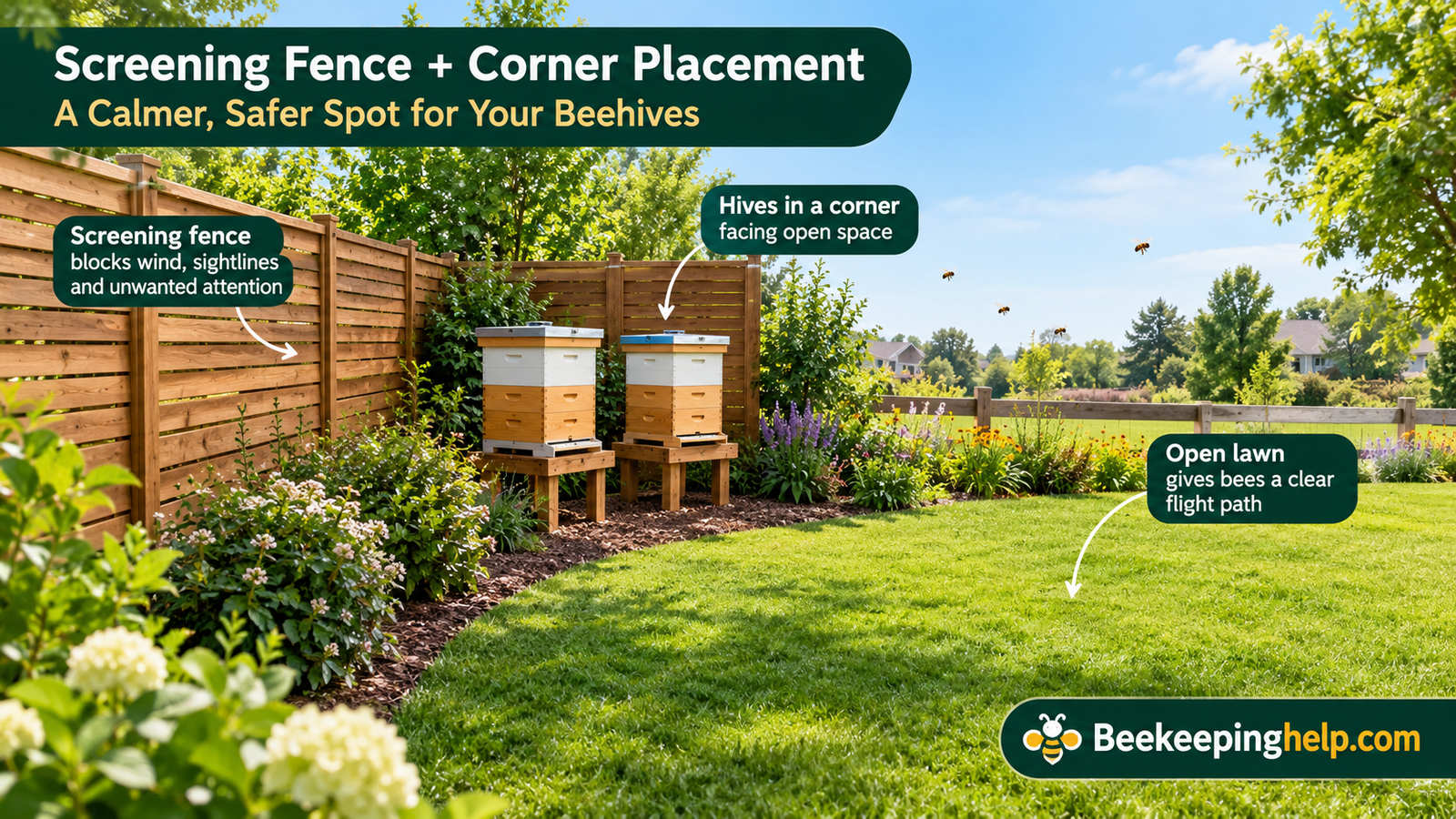
- A back corner bordered by two fences, entrance facing the open lawn.
- Behind a shed or garage, using the structure as shelter and screen.
- Along a boundary with a fence or hedge a metre or two in front.
- Beside a tall planting bed that lifts bees above head height quickly.
- Against a sunny wall in cooler climates, gaining warmth and shelter.
Adding a flight barrier
A fence, trellis, or hedge around head height placed in front of the hive is the single most effective trick in residential beekeeping. Bees leaving the entrance climb, hit the barrier, and pass over it above where people stand. It also hides the hive from view, which eases any lingering unease in the household or next door.
A useful test: stand at the hive entrance and imagine a steep line shooting upward. If it crosses anywhere people regularly sit, stand, or pass, turn the hive until it does not.
Getting this right is worth dedicated reading. Our detailed guide to where to place a beehive covers sun angles, windbreaks, spacing, and common siting errors in depth.
Screen Your Hives Effectively
Panels and trellises that lift bees above head height.
Find Screening Options7. Choosing a Hive Style for a Backyard
Different designs suit different priorities — none is universally best.
One of the first decisions a new backyard beekeeper faces is which hive design to use. Each has genuine strengths, and the right choice depends on your strength, your budget, your appetite for building or buying, and how you feel about harvesting honey. It is worth understanding the trade-offs rather than simply buying whatever appears first.
| Hive Style | Strengths | Considerations | Best Suited To |
|---|---|---|---|
| LangstrothBest All-Rounder | Widely supported, modular, easy to find equipment | Boxes get heavy when full | Most backyard beekeepers |
| Top Bar | No heavy lifting of full boxes, simple construction | Combs are more fragile to handle | Those who prefer gentler lifting |
| Observation Hive | Fascinating for families and teaching | Limited capacity, needs careful placement | Educational and display use |
| Bee-Optimised Stacked Design | Less intrusive harvesting approach | Higher initial investment | Honey-focused hobbyists |
| Wild or Skep-Style | Natural appearance, minimal intervention | Harder to inspect and manage | Experienced keepers with a purpose |
Buying versus building
Both routes are entirely legitimate. Building your own equipment is satisfying and saves money if you have tools and time; buying gives you consistency and saves weekends. If you are curious about construction, our guides on how to make a beehive and how beehives are made cover the details, and how to paint a beehive explains protecting that woodwork outdoors.
For a visual comparison of designs, see our beehive types with pictures, our overall picks for the best beekeeping hives, and the detailed look at modern harvesting hives versus Langstroth. Wild colonies nest differently again — our piece on beehives in trees is a fascinating read.
8. Time, Effort, and the Seasonal Commitment
Manageable, but not passive — and seasonally lopsided.
Beekeeping at backyard scale is not enormously time-consuming, but it is timing-sensitive. Spring and early summer demand regular attention: inspections every week or two, watching for swarm signs, adding space as the colony grows, and managing forage gaps. Autumn brings harvesting and preparation for winter; winter itself is mostly quiet observation and planning.
A realistic rhythm
- Spring: frequent inspections, swarm management, feeding during gaps.
- Early summer: adding supers, monitoring space and temperament.
- Mid to late summer: harvesting honey, watching for pests and robbing.
- Autumn: final checks, treatments where needed, winter stores.
- Winter: occasional checks on stores and equipment maintenance.
What makes it easier
Hives close to the house, good equipment that fits together properly, tidy organization, and clear notes after each inspection. Beekeepers who record what they saw simply do better — the pattern of a colony’s development is far clearer over time than in a single visit. Building that habit early pays off repeatedly.
Skills compound too. Early inspections feel daunting and later ones feel routine, especially once you understand colony behavior and seasonal signs. Our guide on how to improve your beekeeping skills covers the learning curve honestly, and if you want the candid truth about how demanding the first season is, read how hard it is to start beekeeping.
Time honesty check: if you regularly travel for weeks at a time through spring and summer, you will need a backup beekeeper. Plan that arrangement before you start rather than in a hurry in May.
9. What Backyard Beekeeping Actually Costs
Upfront investment, modest running costs, and equipment that lasts.
Cost is one of the most common reasons people hesitate, and it is worth being realistic rather than optimistic. Beekeeping requires genuine upfront spending on a hive, protective clothing, tools, and bees themselves. After that, running costs are comparatively modest, and much of the equipment lasts for many seasons if maintained well.
| Category | What It Includes | Cost Profile | Timing |
|---|---|---|---|
| Hive and BeesCore Investment | Hive bodies, frames, foundation, the colony itself | Largest single outlay | Before your first season |
| Protective Gear | Suit, gloves, veil, boots | Moderate, long-lasting | Before your first inspection |
| Tools | Hive tool, smoker, feeder, brush | Low to moderate | Before your first season |
| Ongoing Care | Feed, treatments where relevant, replacements | Low and steady | Throughout the year |
| Harvesting | Extractor, jars, straining equipment | Moderate, optional early | When you first harvest |
Ways to keep costs sensible
- Start with one hive rather than several; learn before you expand.
- Buy quality where it counts — protective gear and hive construction reward investment.
- Build what you can if you have the tools and inclination.
- Share equipment with a local association or mentor for occasional use items.
- Delay harvesting gear until there is actually honey to process.
For detailed figures and a realistic breakdown of first-season spending, our guide to how much it costs to start beekeeping works through the numbers. If you are weighing the financial side more broadly, our look at whether beekeeping is profitable gives a candid view of returns at hobby scale.
10. Water, Forage, and Being a Good Bee Neighbor
A well-supplied colony is a calm colony — and a better neighbor.
Bees need water daily, especially when raising brood and in hot weather. Left to find their own, they will locate the nearest reliable source — which is very often a neighbor’s paddling pool, pet bowl, or dripping tap. Providing a closer, better alternative early in the season solves this elegantly and keeps everyone happy.
Water done properly
- Shallow and safe: bees need landing spots so they do not drown.
- Close to the hive: within easy flight so they habitually use it.
- Partly screened: a little cover nearby discourages wandering.
- Reliable: topped up through dry spells when demand peaks.
- Clean: refreshed regularly to stay attractive.
Forage around your garden
Planting for bees is one of the genuine pleasures of backyard beekeeping. Early and late flowering plants help most, because those are the periods when natural forage is scarcest. Ivy, fruit trees, herbs left to flower, bulbs, and native wildflowers all contribute meaningfully. Even a modest garden supports a colony when there is forage across the wider neighborhood.
There will be periods when forage runs short, and knowing how to respond keeps colonies healthy. See our guides on what to feed bees and the best bee feeders, or make your own with our guide to how to make a bee feeder.
Water and neighbors: place your bee waterer before the colony starts searching. Bees habituate to the first reliable source they find, and habit is far easier to shape than to change.
11. Backyard Challenges: Pests, Predators, and Swarming
Real problems, but all of them manageable with attention.
Every beekeeper meets these eventually. The difference between an enjoyable experience and a frustrating one is usually how early problems are spotted and how calmly they are dealt with. None of what follows is a reason not to start; all of it is worth understanding in advance.
Swarming
Swarming is how colonies reproduce, and strong colonies in spring will try to do it. A swarm leaving your hive can settle in a neighbor’s tree or garage, which is precisely the kind of event that tests those neighbor relations. Regular inspections during the build-up period, adequate space in the hive, and timely management all reduce the likelihood substantially. Our explanation of swarming in beekeeping covers the signs and the response.
Pests and disease
Wax moth, hive beetles, and varroa mite all affect colonies to varying degrees. Strong, well-managed colonies resist them far better than weak ones, which is another argument for regular inspection and good nutrition. Keeping equipment clean, removing old comb promptly, and avoiding robbing pressure all contribute.
Predators
Depending on your region, skunks, mice, birds, and in some areas bears will interact with hives. Elevation, sturdy stands, secure entrances in winter, and physical barriers where needed handle most of this. Rural and semi-rural backyards need more thought here than urban ones.
The quiet risk of neglect
More colonies are lost to inattention than to dramatic events. Space that runs out, stores that run low, a queen problem that goes unnoticed for weeks — these are the ordinary causes. The habit of turning up and looking is genuinely the most protective thing a backyard beekeeper can do.
What Keeps Colonies Strong
- Regular inspections through the season
- Adequate space as colonies grow
- Consistent nutrition and water
- Clean, dry, well-ventilated hives
- Early action when problems appear
What Invites Trouble
- Weeks between spring inspections
- Crowded, congested colonies
- Damp or drafty sites
- Old comb and debris left in place
- Feeding that attracts robbers
Harvesting well and storing honey properly is part of the reward side of the equation. See the best honey extractors and our guide to how to store honey once your first crop is ready.
Manage Your Harvest
Extracting and storage equipment for your first honey crop.
Check Honey Extractors12. Is Backyard Beekeeping Right for You? A Readiness Check
Five honest questions that answer it.
After all the practical detail, the decision usually comes down to a small number of personal factors. Work through these honestly and the answer becomes clear, whichever way it falls.
Ask yourself these
- Do I have a suitable spot? Dry, level, sunny in the morning, and away from where people pass.
- Are the rules and neighbors sorted? Permission confirmed and concerns addressed openly.
- Is anyone at risk from stings? No severe allergies in the household or close by.
- Can I commit the time? Regular attention through spring and summer, without long gaps.
- Am I genuinely curious? Interest in the bees themselves sustains the hobby far better than interest in honey alone.
What a sensible first season looks like
Start with one hive. Take time over placement. Invest properly in protective gear and the core tools. Inspect regularly and keep notes. Read widely and, if possible, find a local mentor or association — having someone experienced to ask is invaluable early on. Expand only when you are confident and comfortable.
Alternative ways to support pollinators
If your answers lean toward “not right now”, there are plenty of meaningful alternatives: planting forage across the seasons, providing clean water for insects, avoiding pesticides in the garden, hosting a hive for a local beekeeper, or supporting associations that manage community apiaries. Pollinator support does not require ownership of a colony.
Starting out involves choosing bees as well as equipment. Our guide on how to buy bees for beekeeping covers packages, nucs, and colonies, and explains what a nuc is for those weighing the options. If your local climate is a factor, our piece on starting beekeeping in Texas shows how regional conditions shape the plan.
Take the First Step
Everything a backyard beekeeper needs to begin well.
Check Beginner Beehive KitsFrequently Asked Questions About Keeping Bees in a Backyard
Can you really keep bees in a normal backyard?
Yes. A single hive occupies very little ground and works well in ordinary suburban gardens provided there is a sensible flight path, dry level ground, and enough room to work safely around it.
How much space does a beehive need?
The hive itself needs only a small, stable footprint. What matters more is clear working room around it, a route in for equipment, and air space in front so bees can climb above where people walk.
Is it legal to keep bees in a residential area?
In most places, yes, though conditions vary widely. Check local ordinances, state or regional registration requirements, and any homeowner association rules before setting anything up.
Will my neighbors object to a beehive?
Usually not if you tell them in advance, explain where the hive will sit, and address stings and swarms honestly. Good placement and screening prevent most problems before they start.
How likely am I to get stung?
Stings are a normal part of beekeeping and most beekeepers receive a few during a season. Proper protective clothing, calm handling, and good timing reduce the frequency considerably.
Can I keep bees if someone in my family is allergic?
This requires serious caution. A known severe reaction to bee stings is a strong reason not to keep a hive at home, and medical advice should be sought before considering it at all.
How much time does backyard beekeeping take?
An inspection every week or two through the active season is typical, with more frequent attention during spring build-up and swarm season. Winter is mostly quiet observation and equipment care.
How many hives should a beginner start with?
One is ideal for learning. Two is comfortable once you are confident and gives you a useful comparison between colonies. Starting with more creates pressure before you have the experience to handle it.
Which hive type is best for a backyard?
There is no single best answer. Stacked modular hives are widely supported and easy to source equipment for, while top-bar designs reduce heavy lifting. The right choice depends on your strength, budget, and preferences.
Do bees need a water source in the garden?
Yes, and providing one early prevents bees from visiting neighbors’ pools, pet bowls, or taps. Use a shallow waterer with landing material, sited close to the hive.
Will bees bother people in my garden?
Well-sited hives with a clear flight path rarely cause trouble. Bees are focused on foraging and generally ignore people unless the hive is threatened or the colony is unusually defensive.
Can I keep bees if I rent my home?
Only with your landlord’s explicit permission. It is worth discussing the practicalities openly and being prepared to show how you will site and manage the hive responsibly.
Learn More Before You Commit
Practical beekeeping guides for every stage of the journey.
Check Beekeeping GuidesNext Steps: From Question to First Hive
So, can you keep bees in your backyard? For most people, the answer is a genuine yes — and the experience is one of the most rewarding ways to spend time outdoors. A small garden is enough, the rules in most places are workable, and the ongoing commitment, while real, is entirely manageable alongside ordinary life.
What separates a happy beekeeper from a frustrated one is preparation. Take the placement seriously. Check the regulations and talk to your neighbors. Buy protective gear that fits properly. Start with one hive, inspect regularly, and let your skills grow alongside the colony. Do those things and the rest tends to follow naturally.
Your next step is simple: walk out into your garden, find the corner that gets morning sun and sits away from the path, and imagine a hive standing there. If the picture fits, you already know your answer.
Ready to Start Your Backyard Apiary?
Compare beginner-friendly hives and take the first step.
Check Prices on AmazonYou May Also Like
More from Beekeeping Help to guide your first season.
How to Start Beekeeping
The complete beginner route from idea to first hive.
The Complete Beekeeping Guide
Season-by-season management for healthy colonies.
Where to Place a Beehive
Sun, shelter, flight paths, and the perfect garden spot.
Beekeeping Laws by State
Registration, setbacks, and rules explained clearly.
Beekeeping Insurance
What cover beekeepers need and when it matters.
How Much Does It Cost to Start?
A realistic budget for equipment, bees, and the first year.
How Hard Is It to Start Beekeeping?
The honest answer about effort, learning, and physical work.
Is Beekeeping Profitable?
What realistic returns look like at hobby and larger scale.
Beehive Types With Pictures
Compare common hive designs side by side.
Best Beekeeping Hives
Our picks across hive styles and budgets.
Modern Harvesting Hives vs Langstroth
Two very different approaches to taking honey compared.
Types of Beehives in Trees
How wild colonies nest and what that teaches us.
Parts of a Bee Hive
Every component and what it does for the colony.
How Does a Beehive Work?
What is happening inside the box across the season.
How to Make a Beehive
Build your own equipment with confidence.
How Beehives Are Made
Construction details behind standard hive designs.
How to Paint a Beehive
Protect your woodwork for years of outdoor service.
Best Beekeeping Starter Kit
Everything a new beekeeper needs in one bundle.
Bee Suit Review
Protection, ventilation, and fit across popular options.
How to Wash a Bee Suit
Clean protective gear without damaging fabric or veil.
Do Bee Suits Protect From Wasps?
What standard beekeeping gear does and does not cover.
Best Beekeeping Gloves
Balance protection and dexterity for confident work.
How to Clean Beekeeping Gloves
Keep gloves supple, hygienic, and long-lasting.
Best Bee Smoker
Reliable, cool smoke for calmer inspections.
How Does a Bee Smoker Work?
Understand the tool so you can use it effectively.
What to Use in a Bee Smoker
Fuels that burn cool, long, and steady all season.
What to Feed Bees
Nutrition through the seasons and when to step in.
Best Bee Feeders
Reliable feeders for every hive setup.
How to Make a Bee Feeder
Simple, practical feeders you can build yourself.
What Is a Nuc in Beekeeping?
A popular, beginner-friendly way to start a colony.
How to Buy Bees for Beekeeping
Packages, nucs, and colonies — choosing well.
What Is Swarming in Beekeeping?
Why colonies split and how to recognize the signs.
What Is Robbing in Beekeeping?
How to spot it and how to stop it quickly.
What Is Dearth in Beekeeping?
Seasonal forage gaps and how colonies cope.
Best Honey Extractor
Manual and electric options for every harvest size.
How to Store Honey
Keep your harvest perfect for years with simple care.
Best Beekeeping Books
Reading worth your time from first hive onward.
How to Improve Beekeeping Skills
Build confidence and judgment season by season.
How to Start Beekeeping in Texas
Climate, forage, and seasonal timing for Texas keepers.
Local regulations on hive ownership, placement, and registration vary widely. Always confirm the requirements in your area before establishing an apiary.