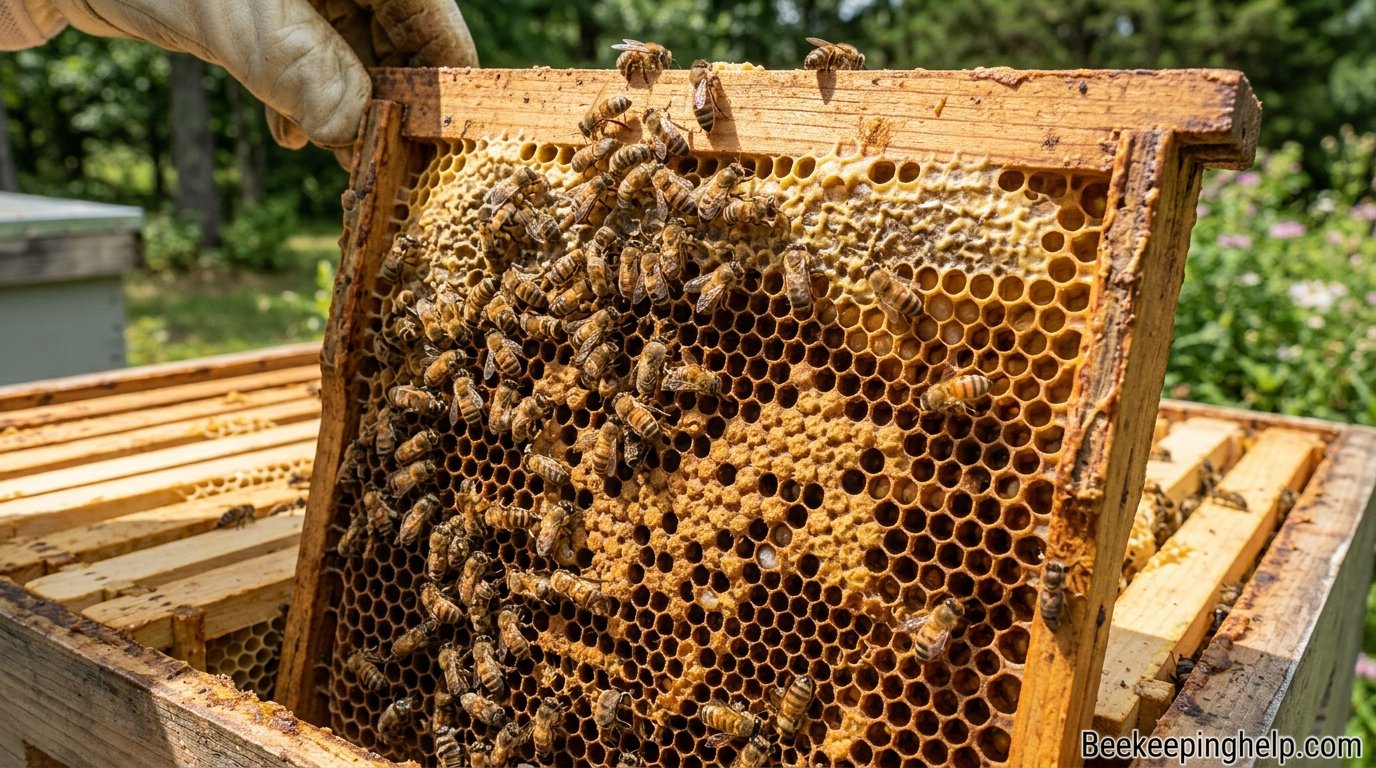
How Does a Beehive Work? A Complete Inside Look at Bee Colony Life
From wax cells to waggle dances, discover exactly how a beehive functions — and why it’s one of the most remarkable social systems in the natural world.
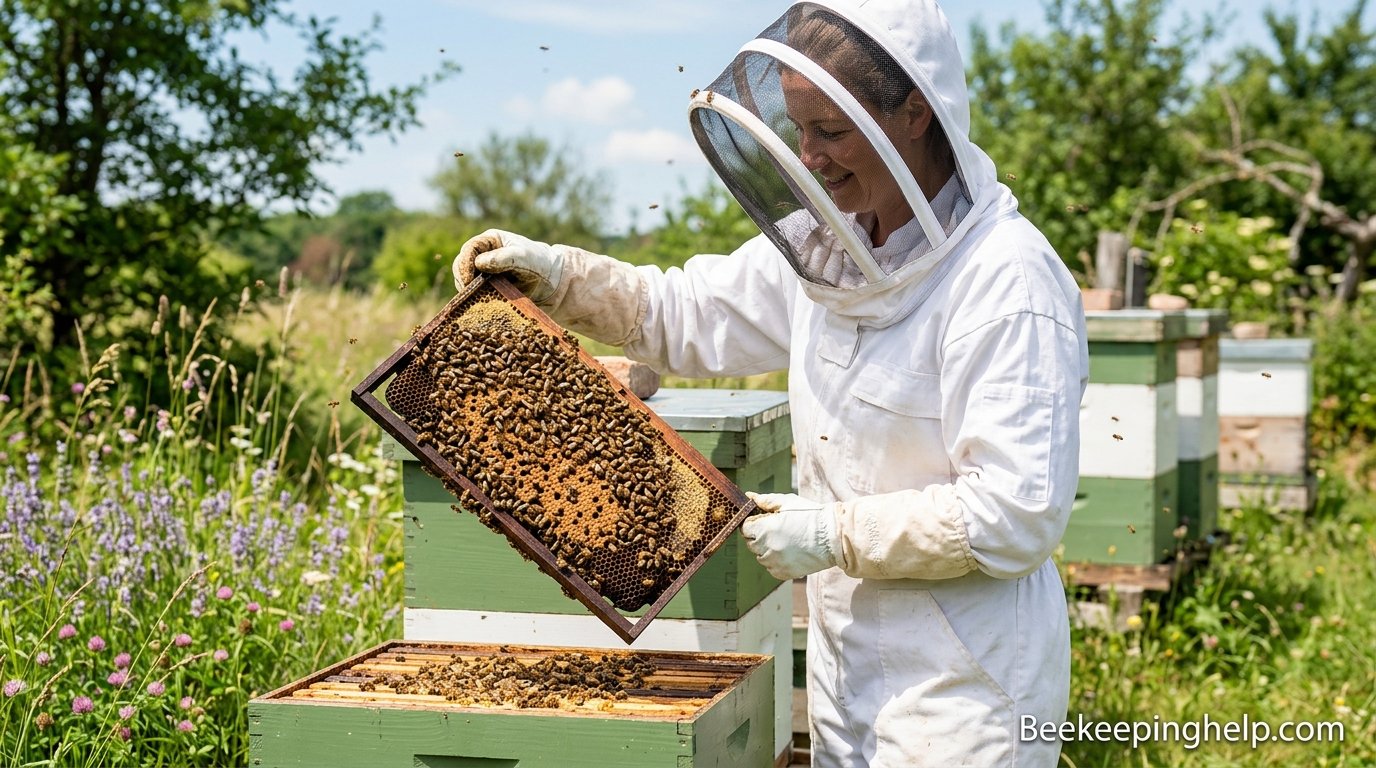
1. What Is a Beehive, Really?
A beehive is far more than a wooden box or a papery nest hanging from a tree branch — it is a living, breathing structure that houses one of the most sophisticated social organisms on the planet: the honeybee colony. When people ask “how does a beehive work,” they’re usually asking about two things at once. First, the physical structure — the wax comb, the frames, the entrance, the internal chambers. Second, and more fascinating, the biological system running inside it — tens of thousands of individual bees cooperating as if they were cells in a single, giant organism.
Biologists sometimes call a bee colony a “superorganism.” No single bee could survive alone for long, but together, a colony can regulate its own temperature, defend itself, raise its young, store months of food, and even relocate as a unit when conditions demand it. Understanding how a beehive works means understanding how thousands of individual decisions — made by bees with brains smaller than a grain of rice — add up to intelligent, coordinated behavior.
Whether you’re a curious homeowner who just found a hive in your yard, a beginner researching how to start beekeeping, or simply someone who wants to understand nature’s tiny architects a little better, this guide walks through every layer of the hive — from its wooden walls to its social hierarchy to the chemistry of the honey inside.
2. The Anatomy of a Beehive
Before we get into behavior, it helps to understand the physical layout bees are working with — whether that’s a hollow tree, a rock crevice, or a man-made box. Wild bees are surprisingly adaptable when it comes to choosing hive locations in trees and other natural cavities, but the internal logic remains remarkably consistent no matter where the colony sets up shop.
2.1 The Outer Shell
In nature, this might be a hollow log, a wall cavity, or a rock crevice. In managed beekeeping, it’s typically a wooden box system. The most iconic and widely used design in modern beekeeping is the Langstroth hive, named after its 19th-century inventor, Reverend Lorenzo Langstroth, who discovered the concept of “bee space” — the precise 3/8-inch gap bees leave between combs, which prevents them from gluing everything together with propolis.
2.2 Frames and Foundation
Inside a modern hive box, removable frames hold sheets of wax or plastic foundation. Bees draw out hexagonal cells on these frames, creating the honeycomb structure where brood is raised and food is stored. If you’re comparing hive systems, it’s worth reading about the Flow Hive vs. Langstroth debate, since the internal frame mechanics differ significantly between the two.
2.3 The Brood Chamber
Usually located in the lower box (or the center of a natural nest), this is the nursery. It’s kept at a nearly constant 93–95°F (34–35°C) regardless of outside temperature — a remarkable feat of biological engineering we’ll explore later in this guide.
2.4 The Honey Super
In managed hives, boxes placed above the brood chamber are called “supers.” Bees fill these with surplus honey, which beekeepers can harvest without disturbing the brood below. In wild nests, this same zone naturally forms at the top and outer edges of the comb.
2.5 The Entrance
A small, defensible opening — often no wider than a pencil — controls all traffic in and out. This chokepoint is heavily guarded and is central to the hive’s defense system.
| Hive Component | Primary Function | Typical Location |
|---|---|---|
| Outer shell / box | Weatherproofing and structural protection | Entire exterior |
| Frames / comb | Brood rearing and food storage | Interior, vertical hanging structure |
| Brood chamber | Egg-laying and larval development | Lower/central hive |
| Honey super | Surplus honey storage | Upper hive boxes |
| Entrance | Traffic control and defense chokepoint | Bottom front of hive |
| Propolis seal | Sterilization and draft-proofing | Cracks, joints, entrance edges |
If you’re setting up your own colony, choosing the right structure matters enormously — our guide to the best beekeeping hives breaks down the pros and cons of each major hive style available today, and if you’d rather understand the different designs visually, the beehive types with pictures resource is a great companion read.

Want to see a real working hive up close? This complete Langstroth starter hive kit is a great way to explore hive anatomy hands-on.
Check Price on Amazon3. The Three Types of Bees Inside a Hive
A functioning hive depends on three distinct castes of bees, each with a completely different body, lifespan, and job description. Understanding these roles is essential to understanding how the entire system operates.
3.1 The Queen
There is normally just one queen per colony. She is the only fully reproductive female and can lay up to 2,000 eggs a day during peak season — more than her own body weight daily. Contrary to popular belief, the queen doesn’t “rule” the hive in a command sense; she’s more like the reproductive engine that the workers manage and care for. She’s fed exclusively on royal jelly, which is what makes her body — and her egg-laying capacity — different from every other female in the colony.
3.2 The Worker Bees
Workers are sterile females and make up the overwhelming majority of the colony — often 20,000 to 60,000 individuals in a healthy hive. Workers perform every job that isn’t reproduction: nursing larvae, building comb, foraging, guarding, cleaning, and regulating hive temperature. A worker’s job actually changes as she ages, a phenomenon called “temporal polyethism,” which we’ll explore in the next section.
3.3 The Drones
Drones are the male bees, and their sole biological purpose is to mate with a virgin queen from another colony. They don’t forage, don’t have stingers, and don’t produce wax or feed larvae. In autumn, when resources become scarce, worker bees typically evict drones from the hive since they consume food but no longer serve the colony’s survival needs during winter.
Colony Roles at a Glance
- Queen: reproduction and pheromone regulation
- Workers: nearly all hive labor
- Drones: mating with new queens
Common Misconceptions
- The queen does not “give orders”
- Drones do not sting
- Workers are not “lesser” queens — they’re a separate developmental path
4. How the Colony Is Organized
One of the most elegant aspects of how a beehive works is the concept of “age-based division of labor.” A worker bee doesn’t do the same job her whole life — she moves through a predictable sequence of roles as she matures, almost like an internal career ladder.
| Age (approx.) | Job Title | Main Responsibilities |
|---|---|---|
| Days 1–3 | Cleaner | Cleaning empty cells for new eggs or storage |
| Days 3–11 | Nurse bee | Feeding larvae, tending the queen |
| Days 12–17 | Builder / handler | Producing wax, building comb, storing incoming nectar |
| Days 18–21 | Guard bee | Defending the entrance, inspecting incoming bees |
| Day 22+ | Forager | Collecting nectar, pollen, water, and propolis |
This schedule isn’t rigid — it’s flexible based on the colony’s needs. If the hive suddenly loses many of its foragers, younger bees can accelerate into foraging duty earlier than usual. This adaptability is part of what makes the superorganism concept so compelling: the colony behaves like it’s making strategic staffing decisions, even though no single bee is “in charge” of workforce planning.
4.1 Why This System Works So Well
Newer, younger bees performing indoor duties like nursing are safer from predators and weather, while older bees — who are more expendable in evolutionary terms — take on the riskiest job: flying outside to forage. This age-based risk allocation maximizes the colony’s overall survival odds, even though individual bees have short lifespans (workers typically live just 4–6 weeks during the busy season).
5. How Bees Build the Comb
The honeycomb is the physical infrastructure that makes everything else possible — brood rearing, honey storage, pollen storage, and even hive-wide communication all happen on or through the wax comb.
5.1 Wax Production
Worker bees between roughly 12 and 17 days old develop active wax glands on the underside of their abdomen. They consume honey, and through a metabolic process, secrete tiny translucent flakes of wax. A bee then uses her legs and mandibles to pass the flake to her mouth, chew and knead it until it’s pliable, and add it to the growing structure.
5.2 Why Hexagons?
The hexagonal cell shape isn’t accidental — it’s one of the most efficient shapes in nature for tiling a flat plane with minimal material and maximum storage volume. Mathematicians have shown that hexagons provide the strongest structure for the least amount of wax, and bees seem to have “discovered” this geometric optimum through millions of years of evolution.
5.3 Cell Specialization
- Worker cells: Smaller cells used for raising worker brood and storing honey/pollen
- Drone cells: Slightly larger, domed cells for raising male bees
- Queen cells: Large, peanut-shaped vertical cells built only when the colony needs a new queen
- Honey storage cells: Capped with a thin wax layer once nectar has been dehydrated into honey
If you’ve ever wondered whether it’s feasible to try building a hive structure yourself, our guide on how to make a beehive walks through DIY hive-building basics, and pairing that with proper exterior protection — see how to paint a beehive — helps extend the life of a wooden hive body significantly.
6. How Honey Is Actually Made
Honey production is arguably the most well-known — yet most misunderstood — process inside a beehive. Here’s the step-by-step biological reality behind it.
6.1 Nectar Collection
Forager bees visit flowers and use their long, straw-like proboscis to draw nectar into a specialized internal pouch called the “honey stomach” or “crop.” This is separate from their digestive stomach, so the nectar isn’t digested at this stage — it’s simply transported.
6.2 Enzymatic Transformation
While inside the crop, an enzyme called invertase begins breaking down the complex sugars in nectar (mostly sucrose) into simpler sugars — glucose and fructose. This is the first chemical step in turning flower nectar into something that can eventually become honey.
6.3 Trophallaxis (The Bee-to-Bee Handoff)
Back at the hive, the forager regurgitates the partially processed nectar to a receiver bee through mouth-to-mouth transfer, called trophallaxis. This receiver bee continues processing the nectar, sometimes passing it to multiple bees in sequence, each adding more enzymes and reducing the water content slightly with each transfer.
6.4 Dehydration
Raw nectar is roughly 70–80% water — far too wet to store without spoiling. Bees deposit the nectar into open cells and then fan it vigorously with their wings, creating airflow that evaporates excess moisture. This process typically continues until the water content drops to around 17–18%, the threshold at which honey becomes shelf-stable and resistant to fermentation or bacterial growth.
6.5 Capping
Once the moisture content is right, worker bees seal the cell with a thin wax cap. This capped honey can be stored for months — even years — without spoiling, serving as the colony’s primary food reserve, especially critical for surviving winter when no fresh nectar is available.
| Stage | What Happens | Approximate Duration |
|---|---|---|
| Nectar collection | Forager draws nectar into crop | Minutes per flower visit |
| Enzymatic breakdown | Invertase converts sucrose to glucose/fructose | During transport back to hive |
| Trophallaxis | Nectar passed between multiple worker bees | Minutes to hours |
| Dehydration | Fanning reduces water content to ~17–18% | 1–3 days |
| Capping | Cell sealed with wax for long-term storage | Once moisture threshold reached |

Curious about harvesting your own honey one day? A manual honey extractor makes it easy to see this process firsthand.
Check Price on Amazon7. Temperature Control Inside the Hive
Perhaps the single most impressive engineering feat of a working beehive is climate control. Bees maintain the brood nest at a nearly constant 93–95°F (34–35°C), regardless of whether it’s a freezing winter day or a sweltering summer afternoon outside.
7.1 Cooling the Hive
When temperatures rise, worker bees fan their wings at the entrance and throughout the hive to circulate air and push out heat. In extreme heat, foragers switch tasks to become “water carriers,” bringing droplets of water back to the hive and spreading them across comb surfaces. As this water evaporates, it cools the hive through a process similar to evaporative air conditioning.
7.2 Heating the Hive
In cold weather, bees cluster tightly together in a dense ball, with worker bees vibrating their flight muscles without moving their wings — a process called “shivering thermogenesis” — to generate metabolic heat. Bees on the outer layer of the cluster rotate inward periodically so no individual bee gets too cold for too long, distributing the workload of staying warm across the entire group.
7.3 Humidity Regulation
Beyond temperature, bees also manage humidity levels, which is essential both for brood development and for the honey-curing process described earlier. Ventilation is adjusted by controlling how many bees fan air at the entrance and by propolizing (sealing) unnecessary gaps in the hive structure.
8. How Bees Communicate
A hive with tens of thousands of members couldn’t function without an effective communication system. Bees rely on a combination of movement, scent, and touch to share information almost instantaneously across the colony.
8.1 The Waggle Dance
Discovered and decoded by Nobel laureate Karl von Frisch, the waggle dance is how successful foragers tell their hivemates where to find good nectar or pollen sources. The dancing bee moves in a figure-eight pattern; the angle of the straight “waggle run” relative to vertical indicates direction relative to the sun, while the duration of the waggle indicates distance.
8.2 Pheromones
Chemical signals govern much of hive behavior. The queen produces “queen mandibular pheromone,” which signals her presence and health to the colony, suppressing the workers’ ability to raise a replacement queen while she remains strong. Alarm pheromones, released when a bee stings or feels threatened, trigger defensive behavior in nearby bees almost instantly.
8.3 Vibration and Touch
Bees also communicate through vibrations transmitted across the comb — a “stop signal” vibration can interrupt another bee’s waggle dance if conditions have changed, for example if a foraging site has become dangerous.
Primary Communication Channels
- Waggle dance (location information)
- Pheromones (chemical signals)
- Vibration (urgent alerts)
What They Can’t Do
- No verbal language
- No long-term “memory sharing” between bees
- Individual bees can’t override colony-level signals
9. The Life Cycle of a Colony
A beehive isn’t static — it moves through predictable seasonal phases, each with different priorities and behaviors.
9.1 Spring: Rapid Expansion
As flowers bloom, the queen ramps up egg-laying dramatically, and the colony population grows quickly. This is typically when colonies build up the workforce needed for the productive summer season ahead.
9.2 Summer: Peak Productivity
Population peaks, foraging is at its most intense, and honey stores build rapidly. This is also the most common time for swarming, which we’ll cover next.
9.3 Autumn: Preparation for Winter
Egg-laying slows, drones are evicted, and the colony focuses on maximizing honey stores while sealing up the hive with propolis to prepare for cold weather.
9.4 Winter: Survival Mode
The colony forms its winter cluster, consuming stored honey slowly and maintaining internal warmth. No foraging occurs, and the queen’s egg-laying slows dramatically or stops altogether in colder climates.
| Season | Colony Focus | Population Trend |
|---|---|---|
| Spring | Rapid brood-rearing, comb building | Increasing |
| Summer | Foraging, honey production, possible swarming | Peak |
| Autumn | Stockpiling honey, drone eviction | Declining |
| Winter | Clustering, minimal activity, heat conservation | Lowest |
10. Swarming and Reproduction
Swarming is how a honeybee colony reproduces at the colony level — essentially, one hive splitting into two independent colonies.
10.1 Why Colonies Swarm
When a hive becomes overcrowded, or when the existing queen shows signs of declining productivity, workers begin building special queen cells. Around the time these cells are capped, roughly half the colony — including the old queen — leaves the hive in a swarm to find a new home, while the remaining bees raise a new queen to take over the original hive.
10.2 What Happens During a Swarm
The departing swarm typically clusters temporarily on a nearby branch or structure while scout bees search for a suitable permanent cavity. Scouts also perform waggle dances to advertise potential new nest sites, and the swarm essentially “votes” collectively by consensus until enough scouts agree on the best option.
10.3 The New Queen
Back at the original hive, the first virgin queen to emerge from her cell typically seeks out and destroys rival queen cells before they can hatch. She then takes mating flights, mating with multiple drones from other colonies in the air, storing sperm for the rest of her life before returning to begin laying eggs.
11. Natural Hives vs. Man-Made Hives
Not every beehive is a wooden box in a backyard. Wild colonies build nests in an enormous variety of natural cavities, and comparing these to managed hives reveals a lot about how flexible — and how specific — bee needs really are.
11.1 Wild Tree Cavities
Feral colonies frequently nest inside hollow trees, which offer excellent insulation, natural weatherproofing, and protection from predators. For a deeper look at how these natural nests form and where to spot them, see our guide on types of beehives in trees.
11.2 Managed Wooden Hives
Modern beekeeping equipment — Langstroth boxes, top-bar hives, and Flow Hives — mimics the internal cavity size and shape bees prefer while adding removable frames for human management and honey harvesting.
| Feature | Natural Nest | Managed Hive |
|---|---|---|
| Comb structure | Freeform, irregular | Uniform frames |
| Human access | None | Full inspection access |
| Insulation | Often excellent (tree cavities) | Depends on materials/design |
| Honey harvesting | Not possible without destroying nest | Non-destructive, repeatable |
| Pest/disease monitoring | Not possible | Straightforward with regular checks |
For anyone comparing modern hive systems in more detail, our Flow Hive vs. Langstroth comparison dives into how each design affects colony behavior and beekeeper workload differently.
12. How Beekeepers Interact With a Working Hive
Understanding how a beehive works naturally leads to the question: how do humans manage one without disrupting its delicate internal balance? Good beekeeping is really about working with the colony’s existing systems rather than against them.
12.1 Regular Inspections
Beekeepers periodically open the hive to check brood patterns, food stores, and signs of pests or disease — all without dismantling the comb structure the colony has worked so hard to build.
12.2 Providing Space
Adding honey supers at the right time prevents overcrowding, which reduces the likelihood of swarming and gives the colony room to keep producing.
12.3 Protecting the Structure
Since the hive box is the colony’s permanent shelter, keeping it weatherproof matters. Learn more in our guide on how to paint a beehive, which covers safe paint choices that won’t harm the bees.
12.4 Getting Started
If all of this has sparked an interest in keeping bees yourself, our comprehensive guide on how to start beekeeping is the ideal next step, and understanding the parts of a beehive and their functions will make your first inspection far less intimidating.

Ready to get hands-on? This complete beginner beekeeping kit includes a protective suit, smoker, and hive tool to get started safely.
Check Price on Amazon13. From Egg to Adult: Bee Development Explained
Everything a beehive does — foraging, comb-building, temperature control, defense — depends on a steady supply of new bees emerging from the brood chamber. Understanding how an individual bee actually develops, from a microscopic egg to a fully formed adult, fills in a piece of the puzzle that’s easy to overlook when focusing on hive-level behavior. Development inside the comb is a tightly timed biological assembly line, and small variations in that timeline are what separate a queen from a worker, or a worker from a drone.
13.1 The Egg Stage
Every bee begins as a tiny, rice-grain-shaped egg laid upright in the base of a wax cell by the queen. Fertilized eggs become female bees (queens or workers), while unfertilized eggs — laid deliberately by the queen from stored sperm reserves, or occasionally by a worker in a queenless colony — become drones. Over roughly three days, the egg gradually tips over until it lies flat against the bottom of the cell, signaling that it’s about to hatch into a larva.
13.2 The Larval Stage
Once hatched, the larva is a soft, legless grub that does almost nothing but eat. Nurse bees visit larval cells hundreds of times a day, delivering a mixture of glandular secretions, pollen, and honey. For the first few days, every larva receives royal jelly; after that, worker and drone larvae are switched to a diet of “worker jelly” — a mix of honey and pollen — while a larva destined to become a queen continues receiving royal jelly exclusively throughout its entire larval life. This single dietary difference is what activates the genetic pathway toward full reproductive development.
13.3 The Pupal Stage
Once a larva reaches full size, workers cap its cell with a porous wax lid, sealing it in to pupate. Inside this sealed chamber, the larva spins a thin cocoon and undergoes complete metamorphosis, essentially dissolving many of its larval tissues and rebuilding them into the legs, wings, eyes, and internal organs of an adult bee. This is the same fundamental process butterflies undergo, just compressed into a much shorter timeframe.
13.4 Emergence
When development is complete, the young adult chews her way out of the capped cell. She emerges soft-bodied and pale, but hardens and darkens within a day or two. From this point forward, she immediately enters the age-based division of labor system described earlier in this guide, beginning with cell-cleaning duties before progressing toward nursing, building, guarding, and eventually foraging.
| Caste | Egg to Adult Duration | Diet During Larval Stage |
|---|---|---|
| Queen | Approximately 16 days | Royal jelly exclusively |
| Worker | Approximately 21 days | Royal jelly briefly, then worker jelly |
| Drone | Approximately 24 days | Royal jelly briefly, then worker jelly |
14. Threats, Pests, and Diseases Inside the Hive
A working beehive isn’t just fighting to build comb and store food — it’s also constantly defending itself against a long list of pests, parasites, and pathogens that have evolved specifically to exploit colony life. Understanding these threats explains why so much of a colony’s — and a beekeeper’s — energy goes toward defense and sanitation rather than pure production.
14.1 Varroa Mites
Varroa destructor is widely considered the single most damaging parasite affecting managed honeybee colonies. These small, reddish-brown mites attach to both adult bees and developing brood, feeding on fat body tissue and, critically, transmitting a range of harmful viruses in the process. A heavy, untreated mite load can weaken or collapse an otherwise healthy-looking colony within a single season, which is why mite monitoring has become a routine part of modern hive management.
14.2 Small Hive Beetles and Wax Moths
Small hive beetles lay eggs inside the hive, and their larvae tunnel through comb, contaminating stored honey and pollen as they go. Wax moths pose a similar threat, particularly to weaker colonies or stored equipment, since their larvae feed directly on beeswax and leftover cocoon material, leaving behind webbing and tunnels that can destroy unattended combs.
14.3 Bacterial and Fungal Brood Diseases
American foulbrood and European foulbrood are bacterial diseases that attack developing larvae, producing a distinctive foul odor and a characteristic sunken, discolored brood pattern that experienced beekeepers learn to recognize during inspections. Chalkbrood, a fungal disease, mummifies larvae into hard, chalk-like remains. Because some of these pathogens form extremely resilient spores, affected equipment sometimes has to be destroyed rather than reused.
14.4 Colony Collapse and Environmental Stress
Beyond specific pests and pathogens, colonies can also be weakened by a combination of factors working together — pesticide exposure, poor nutrition from limited flower diversity, extreme weather, and cumulative parasite pressure. When worker bees abruptly disappear from an otherwise stocked hive, leaving the queen and a small cluster behind, researchers refer to this pattern as colony collapse, a phenomenon that appears to result from several stressors compounding rather than any single cause.
How Colonies Defend Themselves
- Grooming behavior removes some mites from bees
- Hygienic bees detect and remove diseased brood
- Propolis has natural antimicrobial properties
- Guard bees screen incoming traffic
Why Beekeeper Support Still Matters
- Varroa reproduces faster than natural grooming can offset
- Beetle and moth larvae multiply quickly if unchecked
- Foulbrood spores can persist in old equipment
- Combined stressors can overwhelm colony defenses
For anyone managing a hive directly, staying ahead of these issues starts with the same regular inspection habits covered earlier — catching a developing problem early is almost always easier to manage than trying to rescue a colony after it’s already in serious decline.
15. Propolis: The Hive’s Chemical Sealant
Wax and honey tend to get most of the attention, but propolis — often called “bee glue” — plays an equally important structural and biological role inside a working hive.
15.1 What Propolis Actually Is
Propolis is a resinous substance foragers collect from tree buds, bark, and other plant sources, then mix with a small amount of beeswax and their own enzymatic secretions. Unlike wax, which bees manufacture internally, propolis raw material is gathered directly from the environment, meaning its exact composition can vary depending on which plants are locally available.
15.2 Structural Uses
Bees use propolis to seal cracks and drafty gaps in the hive, smooth rough interior surfaces, and reinforce weak points in the comb structure. This is also the substance responsible for the “bee space” concept mentioned earlier — anywhere the gap between combs or hive parts is too wide, bees tend to fill it in with propolis rather than build fragile freeform comb.
15.3 Antimicrobial Function
Propolis has measurable antibacterial and antifungal properties, and bees apply it as a kind of biological varnish along interior hive walls and around the entrance. Some colonies even encase the carcasses of larger intruders — mice or insects too big for bees to physically remove — in a coating of propolis, effectively mummifying the intruder to prevent it from decomposing and spreading pathogens inside the hive.
16. Ventilation Engineering Beyond Basic Cooling
Earlier in this guide, we covered how bees fan and evaporate water to manage temperature. But airflow inside a working hive is really a year-round engineering problem, not just a summer one, and the way bees manage it changes significantly with the seasons.
16.1 Summer Airflow Patterns
During hot weather, bees establish organized airflow currents, with some bees fanning air inward at the entrance while others position themselves deeper inside to push warm, humid air back out. This creates a continuous circulation loop rather than random fanning, allowing the colony to move a surprising volume of air through a very small entrance opening.
16.2 Winter Moisture Management
In cold weather, ventilation shifts from a cooling problem to a moisture problem. As the winter cluster consumes honey and generates heat, it also produces water vapor through respiration. If that moisture can’t escape, it condenses on cold interior surfaces and drips back onto the cluster, which is far more dangerous to overwintering bees than cold temperatures alone. Well-adapted colonies — and well-designed hive equipment — allow enough controlled airflow to vent this excess moisture without creating a cold draft directly on the cluster.
16.3 Carbon Dioxide Regulation
Ventilation also affects carbon dioxide concentration inside the sealed brood nest. Because tens of thousands of bees are respiring in a relatively enclosed space, CO2 levels can climb quickly without active airflow management, and research suggests bees actively regulate ventilation partly in response to rising CO2 concentrations, not just temperature.
| Season | Primary Ventilation Goal | Bee Behavior Involved |
|---|---|---|
| Summer | Heat removal | Coordinated fanning loops, water evaporation |
| Autumn | Sealing drafts | Propolizing gaps and cracks |
| Winter | Moisture venting | Controlled airflow through cluster edges |
| Spring | Brood nest stability | Balancing airflow with rising brood activity |
17. Honeybee Species and Regional Variations
Not all honeybees behave identically, and the specific subspecies or regional strain occupying a hive can noticeably influence temperament, productivity, and overwintering ability. While the fundamental mechanics covered throughout this guide apply broadly, it’s worth understanding how much variation exists within the species.
17.1 Italian Honeybees
Known for being relatively gentle and highly productive, Italian bees are among the most widely kept strains in managed beekeeping. They tend to maintain larger brood nests and continue foraging over a longer season, though this can also mean they consume more stores over winter relative to some other strains.
17.2 Carniolan Honeybees
Originating from cooler climates, Carniolan bees are prized for rapid spring buildup and efficient winter clustering, often shrinking their brood nest quickly in response to dwindling resources — a trait that helps them conserve honey stores in regions with long, cold winters.
17.3 Russian Honeybees
Bred from populations that coexisted with Varroa mites for generations, Russian honeybees tend to show stronger natural mite-resistance behaviors, such as more aggressive grooming and quicker detection of infested brood.
17.4 Africanized Honeybees
Africanized honeybees — sometimes called “killer bees” in popular media — are a hybrid strain known for heightened defensive behavior, including responding to threats in larger numbers and over greater distances than more docile strains. While the underlying hive mechanics are the same, colonies of this strain require significantly more caution during inspection and management.
18. Pollination: The Hive’s Work Beyond Its Walls
Everything described so far happens largely inside the hive, but a huge part of how a beehive “works” actually plays out in the surrounding landscape, through pollination.
18.1 How Foraging Becomes Pollination
As foragers move from flower to flower collecting nectar and pollen for the colony, pollen grains stick to the fine hairs covering their bodies and get transferred between flowers, fertilizing plants in the process. This isn’t intentional on the bee’s part — it’s simply a byproduct of efficient nectar collection — but it happens at a massive scale across an entire foraging range that can extend several miles from the hive.
18.2 Agricultural Impact
A huge share of global food crops depend at least partly on insect pollination, and managed honeybee colonies are trucked to farms specifically to provide this service during bloom periods for crops such as almonds, apples, and various berries. In this sense, a single working hive doesn’t just sustain itself — it can meaningfully influence crop yields across an entire growing region.
18.3 Pollen as a Colony Resource
While nectar becomes honey, the pollen bees collect serves a different purpose entirely — it’s the colony’s primary source of protein, fats, vitamins, and minerals, essential for feeding developing larvae. Foragers pack pollen into specialized structures on their hind legs called “pollen baskets,” returning to deposit it directly into storage cells near the brood nest.
Why Pollination Matters
- Supports wild plant reproduction and biodiversity
- Increases yield and quality for many food crops
- Happens automatically as bees forage for their own needs
Factors That Can Disrupt It
- Loss of diverse flowering habitat near hives
- Pesticide exposure during bloom periods
- Colony health issues reducing forager numbers
19. Common Myths About How a Beehive Works
Because bees are so widely discussed in folklore, marketing, and casual conversation, a number of persistent myths have grown up around how a beehive actually functions. Clearing a few of these up helps reinforce the real mechanics covered throughout this guide.
19.1 “The Queen Runs the Hive Like a Boss”
As covered earlier, the queen doesn’t issue commands. Her influence comes from pheromones and egg-laying, not decision-making authority — swarming, foraging targets, and defense responses are all driven by collective worker behavior.
19.2 “All Bees Make Honey”
Only a portion of the colony — foragers, along with the nurse and house bees who process incoming nectar — is directly involved in honey production at any given time. Nurses, builders, guards, and the queen herself are focused on entirely different jobs.
19.3 “A Beehive and a Wasp Nest Work the Same Way”
Despite superficial similarities, wasp colonies and bee colonies differ substantially in diet, comb material, overwintering strategy, and social structure. Bees build wax comb and store honey for winter; many wasp species build paper nests and don’t maintain the same kind of long-term food reserve or perennial colony.
19.4 “Bees Die Immediately After Stinging”
This is only true for worker honeybees stinging a thick-skinned target like a mammal, where the barbed stinger lodges in the skin and tears free from the bee’s body. Against other insects, a worker can often sting repeatedly and survive, and queens — whose stingers aren’t barbed the same way — can sting multiple times without dying.
19.5 “More Honey Always Means a Healthier Hive”
Honey stores are one useful indicator of hive health, but they don’t tell the whole story. A colony can have excellent stores while still suffering from a high mite load, a failing queen, or disease — which is exactly why regular, thorough inspections matter more than glancing at honey supers alone.
20. Troubleshooting: Reading the Signs of a Struggling Hive
Because so much of how a beehive works happens out of sight — inside sealed cells, beneath layers of bees, behind a wall of guards — learning to read the external signs of trouble is an important skill for anyone managing a colony.
20.1 Behavioral Warning Signs
A sudden spike in defensiveness, an unusual number of dead bees near the entrance, or bees crawling erratically outside the hive can all indicate stress from pests, disease, or pesticide exposure. A noticeably reduced flow of returning foragers on a good weather day is also worth investigating.
20.2 Brood Pattern Clues
A healthy brood pattern looks solid and consistent, with capped cells clustered tightly together. A spotty, irregular pattern with many empty cells scattered among capped ones can point to a failing queen, genetic issues, or disease affecting developing brood.
20.3 Sound and Vibration
Experienced beekeepers often listen to a hive before opening it. A steady, even hum generally indicates normal activity, while a sudden roaring or high-pitched sound can signal queenlessness, overheating, or an active robbing event from another colony trying to steal honey stores.
20.4 Weight and Stores
Especially heading into autumn and winter, a hive’s weight is a rough but useful proxy for how much honey it has stored. A noticeably light hive going into cold weather is at serious risk of starving before spring, regardless of how strong the population looks on a warm day.
| Warning Sign | Possible Cause | General Response |
|---|---|---|
| Spotty brood pattern | Failing queen, disease, genetics | Closer inspection, possible requeening |
| Sudden aggression | Queenlessness, robbing, pest stress | Inspect for queen presence and pests |
| Roaring sound | Overheating or queenlessness | Check ventilation and brood status |
| Light hive weight in autumn | Insufficient honey stores | Consider supplemental feeding |
| Bees crawling, unable to fly | Possible pesticide or disease exposure | Investigate environmental factors |
21. Hive Placement and Site Selection
How well a hive “works” isn’t determined solely by what happens inside its walls — where that hive sits in the landscape has a real, measurable effect on colony behavior, productivity, and survival. Bees are remarkably adaptable, but a few site-selection principles show up again and again, both in wild nest locations and in guidance for managed apiaries.
21.1 Sun Exposure
Morning sun on the entrance encourages bees to start foraging earlier in the day, since warmth helps trigger flight activity. At the same time, too much direct afternoon sun in hot climates can push the colony to spend excessive energy on cooling. Many experienced beekeepers aim for a balance — early sun with some afternoon shade — that mirrors the kind of partial-shade tree cavities feral colonies often select naturally.
21.2 Wind Protection
A hive facing directly into prevailing winds has to work harder to maintain internal temperature, since cold air pushing against the entrance increases heat loss. Natural windbreaks — hedgerows, fences, or the gentle slope of land — reduce this stress considerably, which is part of why wild colonies so often favor cavities tucked into more sheltered terrain rather than fully exposed locations.
21.3 Water Access
Because water plays a direct role in cooling the hive and diluting stored honey for larval feeding, colonies need a reliable water source within a reasonable foraging distance. Without one nearby, water-carrying foragers spend more time and energy traveling, which can measurably affect the colony’s overall efficiency during hot weather.
21.4 Forage Availability
Perhaps the single biggest factor in colony productivity is the diversity and abundance of flowering plants within typical foraging range. A location surrounded by a long, overlapping bloom season across multiple plant species supports a much steadier nectar and pollen flow than an area with just one or two short flowering windows each year.
22. A Brief History of How Hives Evolved
The way modern hives work — with removable frames, standardized bee space, and non-destructive honey harvesting — is actually a relatively recent development compared to the long history of humans keeping bees.
22.1 Early Fixed-Comb Hives
For most of human history, beekeepers used simple fixed structures such as hollow logs, woven straw baskets known as skeps, or clay cylinders. Bees attached their comb directly to the inside walls of these containers, which meant harvesting honey typically required destroying part or all of the comb, and often killing or displacing the colony in the process.
22.2 The Discovery of Bee Space
The major turning point came in the mid-1800s, when it was discovered that bees consistently leave a specific gap — later termed “bee space” — between adjacent combs, roughly 3/8 of an inch. Gaps smaller than this get sealed with propolis, while larger gaps get filled with extra comb. Designing a hive around this precise spacing made it possible to build frames that bees would draw out individually, without gluing them together or to the hive walls.
22.3 The Movable-Frame Revolution
This discovery led directly to the movable-frame hive design that still dominates modern beekeeping. For the first time, beekeepers could remove individual frames for inspection or harvest, then return them to the hive intact, allowing the colony to keep using the same comb season after season rather than rebuilding it from scratch every time.
22.4 Continued Innovation
Since then, hive design has continued to evolve — top-bar hives offering a simpler, frameless approach popular in parts of the world with fewer manufactured supplies, and newer flow-style systems designed to let honey drain directly from the comb with minimal disturbance to the bees. Despite these design differences, every one of these systems is still built around the same underlying biological principles covered throughout this guide — bee space, comb structure, ventilation, and colony behavior remain constant regardless of which box the bees happen to be living in.
| Hive Type | Comb Handling | Historical Era |
|---|---|---|
| Skep / fixed-comb | Destructive harvesting | Ancient through early modern |
| Movable-frame (Langstroth-style) | Non-destructive, reusable frames | Mid-1800s onward |
| Top-bar hive | Removable comb, no fixed frames | Traditional and modern use |
| Flow-style hive | In-frame extraction mechanism | Recent innovation |
23. What a Thorough Hive Inspection Actually Looks For
We’ve touched on inspections a few times throughout this guide, but it’s worth walking through what a genuinely thorough inspection actually involves, frame by frame, since this is where a lot of the abstract biology covered above gets checked against reality.
23.1 Confirming Queen Presence
Rather than always spotting the queen herself — which can be difficult even for experienced beekeepers, especially in a densely populated hive — most inspections rely on indirect evidence of her presence. A consistent pattern of eggs standing upright in cell bottoms, along with young larvae curled in a “C” shape at various stages, is strong confirmation that a queen was actively laying within the last few days, even if she isn’t spotted directly.
23.2 Assessing the Brood Pattern
As covered in the troubleshooting section, a tight, consistent brood pattern with few skipped cells generally signals a healthy, productive queen. Inspectors look across multiple frames rather than judging from a single one, since brood pattern can vary somewhat from frame to frame even in an entirely healthy colony.
23.3 Checking Food Stores
Frames near the brood nest typically show a “rainbow” pattern — brood in the center, surrounded by a ring of pollen, and capped honey around the outer edges. Inspectors gauge whether stores look adequate for the current season, watching especially closely heading into autumn when insufficient stores can mean the difference between a colony surviving winter or starving before spring.
23.4 Looking for Pest and Disease Signs
This includes visually scanning for Varroa mites on adult bees, checking for the sunken or discolored cappings associated with foulbrood, watching for small hive beetle activity along frame edges, and noting any unusual smells — since several brood diseases produce a distinctive odor long before visual symptoms become obvious.
23.5 Evaluating Queen Cells
Spotting queen cells during an inspection is important context, not necessarily a problem on its own. Cells along the bottom edge of frames often indicate swarm preparation, while cells built mid-frame, directly over damaged brood, more often indicate supersedure — the colony quietly replacing a failing queen rather than preparing to swarm.
23.6 Observing General Temperament
Finally, an inspection isn’t purely visual — how the colony responds to being opened up tells its own story. A calm, business-as-usual response to smoke and handling generally reflects a healthy, queen-right colony, while unusually defensive behavior can be an early clue that something inside — queenlessness, pest pressure, or a recent disturbance — has the hive on edge.
| Inspection Focus | What It Confirms | Frequency |
|---|---|---|
| Eggs and young larvae | Queen present and laying recently | Every inspection |
| Brood pattern | Queen quality, colony health | Every inspection |
| Food stores | Adequate reserves for the season | Every inspection, critical in autumn |
| Pest/disease signs | Mite load, brood disease, beetle activity | Every inspection |
| Queen cells | Swarm or supersedure preparation | Every inspection during active season |
Frequently Asked Questions
How does a beehive stay so organized without anyone in charge?
No single bee directs the whole colony — organization emerges from thousands of individual bees responding to pheromones, physical cues, and age-based role assignments. This decentralized system is what scientists call “swarm intelligence.”
Does the queen bee control the hive?
Not in a commanding sense. The queen’s main biological role is laying eggs, and her pheromones influence colony behavior, but decisions like swarming, foraging targets, and temperature regulation are made collectively by worker bees.
How many bees live in a single hive?
A healthy, established colony typically contains 20,000 to 60,000 bees during peak summer months, dropping significantly during winter when the colony shrinks to conserve resources.
How long does it take bees to build a full honeycomb?
Under strong nectar flow conditions, a healthy colony can draw out an entire frame of comb in just a few days, though full hive comb-building can take several weeks depending on colony strength and available resources.
Why don’t bees freeze to death in winter?
Bees form a tight winter cluster and generate heat through muscle vibrations, rotating positions so no bee stays on the cold outer edge for too long. They fuel this process by consuming stored honey.
How do bees know which flowers to visit?
Returning foragers communicate flower locations to other bees through the waggle dance, while scent cues on the dancing bee’s body also help other foragers identify the specific flower species being advertised.
What happens if a colony loses its queen?
Worker bees can raise a new queen from a young larva by feeding it exclusively royal jelly, provided the colony still has eggs or very young larvae available. Without this option, the colony is at serious risk of collapse.
Do all bees inside a hive make honey?
No. Only foraging worker bees collect nectar, and even then, honey production is a shared process involving nurse and house bees who process, dehydrate, and cap the nectar into finished honey.
Why do beehives sometimes swarm?
Swarming is the colony’s natural method of reproduction. It typically happens when a hive becomes overcrowded or resource-rich, prompting roughly half the colony to leave with the old queen to establish a new nest elsewhere.
How is temperature regulated inside the hive?
Bees cool the hive by fanning their wings and evaporating water droplets, and they warm it by clustering together and vibrating their flight muscles to generate metabolic heat.
Can a beehive function with two queens?
Briefly, yes — during supersedure, a mother and daughter queen can coexist temporarily. However, this is a transitional phase, and typically only one queen remains active in the long run.
How do bees defend the hive?
Guard bees stationed at the entrance inspect incoming bees by scent, rejecting bees that don’t carry the colony’s specific pheromone signature. Alarm pheromones released during an attack recruit additional bees to help defend the hive.
What is the difference between a queen cell and a regular cell?
Queen cells are noticeably larger, peanut-shaped, and oriented vertically rather than horizontally like the flat hexagonal cells used for workers and drones. Bees only construct them when raising a new queen, whether for swarming, supersedure, or emergency replacement.
Can a beehive relocate on its own?
Yes, in a sense — through swarming, part of the colony leaves to establish an entirely new hive elsewhere. Additionally, if a nest site becomes unsuitable due to damage, flooding, or repeated disturbance, an entire colony can sometimes abscond and relocate together, though this is far less common than swarming.
Do bees sleep?
Individual bees do rest, showing reduced muscle activity and lower responsiveness to stimuli, particularly at night when foraging isn’t possible. However, because worker bees rotate through different activity levels, the hive as a whole never fully “shuts down” the way a single sleeping animal would.
How far do foraging bees travel from the hive?
Foragers typically work within a couple of miles of the hive, though they’re capable of flying considerably farther when local forage is scarce. Distance directly affects efficiency, which is one reason colonies near diverse, nearby flowering plants tend to be more productive.
Why do some cells in the comb look different colors?
Fresh wax is pale, almost white, while older comb darkens over time from propolis staining and residue left behind by generations of developing brood. Pollen stored in cells can also add visible color variation, ranging from bright yellow to deep orange or red depending on the flower source.
How does a colony decide where to build a new nest during a swarm?
Scout bees investigate multiple candidate sites independently, then return to the temporarily clustered swarm and perform waggle dances advertising what they found. Over time, more scouts are recruited to the most strongly advertised sites, and once enough scouts converge on the same option, the whole swarm relocates together to that chosen cavity.
Is a beehive the same thing as a wasp or hornet nest?
No. While both are insect colonies with some superficial similarities, honeybee hives are built from wax comb, store large reserves of honey for winter survival, and typically persist as a perennial colony. Many wasp and hornet nests are paper-based, and in many species the colony itself doesn’t survive winter, with only a fertilized queen overwintering to start a new nest the following season.
Do bees recognize individual members of their own hive?
Bees don’t recognize each other the way humans recognize faces. Instead, guard bees identify hive membership through a shared colony scent that develops from a combination of pheromones, food sources, and nest materials, allowing them to quickly distinguish nestmates from intruders at the entrance.
What happens to a hive’s stored honey if the colony dies?
If a colony dies out but the comb and honey remain intact, nearby colonies will often attempt to rob the abandoned stores, and pests such as wax moths or hive beetles frequently move in quickly to exploit the undefended resources. This is part of why beekeepers try to remove or secure equipment from a dead colony promptly.
Why do bees sometimes cluster outside the hive on hot days?
This behavior, sometimes called “bearding,” happens when internal temperature and crowding push a portion of the colony to move outside rather than compete for limited airflow inside. It allows the bees still inside to fan and cool more effectively, and it’s generally a normal warm-weather response rather than a sign of a problem, provided it resolves once temperatures drop in the evening.
Can a hive have too much space?
Yes. An oversized cavity, or too many empty supers added too early, can make it harder for a smaller or newly established colony to maintain consistent brood-nest temperature and defend the entire space effectively. This is why beekeepers typically add space incrementally, matching it to the colony’s actual population growth rather than providing excess room all at once.
Do bees reuse old comb, or build fresh comb every year?
Bees reuse and repair existing comb whenever possible, since building fresh wax is energetically expensive. In managed hives, beekeepers often rotate out the oldest, darkest combs periodically to reduce the buildup of residues and disease-causing organisms that can accumulate in comb over many years of continuous use.
How does a hive cope with the loss of its foraging force?
If a colony suddenly loses a large share of its foragers — to pesticide exposure, predation, or another stressor — younger bees can accelerate through the age-based labor sequence earlier than usual, stepping into foraging duty ahead of schedule to keep nectar and pollen coming in during the shortfall.
Why do beekeepers use smoke when opening a hive?
Smoke masks the alarm pheromone bees release when disturbed, which reduces defensive recruitment and keeps the colony calmer during an inspection. It’s also thought to trigger a mild feeding response, since smoke naturally signals possible fire to bees, prompting some workers to gorge on honey stores, which further calms their behavior while the hive is open. A few gentle puffs at the entrance, followed by a light puff once the lid is lifted, is usually enough — heavy or constant smoking tends to agitate bees rather than settle them, so restraint generally works better than a heavy hand.
Conclusion: The Beehive as Nature’s Perfect System
A beehive works because thousands of individual bees, each following relatively simple biological rules, combine their efforts into something that looks almost impossibly intelligent from the outside. Temperature control, food production, defense, communication, and reproduction all happen without a single central decision-maker — just a finely tuned balance of instinct, chemistry, and cooperation refined over millions of years of evolution.
Whether you’re simply fascinated by the science or considering starting your own colony, understanding how a beehive works is the foundation for appreciating — and eventually managing — one of nature’s most impressive social systems. If you’re ready to take the next step, explore our full guide on how to start beekeeping and begin your own journey into the world of bees.
Shop Beekeeping Essentials on Amazon