How to Wash a Bee Suit: The Complete Beekeeper’s Cleaning, Drying & Care Guide
Propolis smears, crushed wax, sticky honey drips, alarm pheromone, and a veil that must never be crushed — washing a bee suit is not the same as washing a hoodie. Here is the full method, step by step, with the temperatures, detergents, and mistakes that ruin suits.
What This Guide Covers
- The exact water temperature, cycle and spin speed that are safe for cotton and ventilated suits
- How to lift propolis and beeswax out of fabric without solvents that weaken fibres
- Why sting pheromone left in the fabric makes your next inspection worse
- How to wash, dry, and store a veil so it never creases or collapses
- A wash-frequency schedule based on how many hives you keep
- Repairs, zipper care, and when a suit is genuinely finished
Almost every beekeeper reaches the same moment. You pull the suit off the hook at the start of a warm afternoon, and it does not smell the way it did when it was new. There are honey-coloured smears near the cuffs, a hard black speck of propolis welded into the knee, a grey scorch-line of smoker soot across the chest, and the faint banana-like sweetness that clings to fabric after a defensive colony has stung you. The suit still fits. It still zips. But it is no longer clean gear — it is a walking record of everything that happened at the hive over the last few months.
That record matters more than most new beekeepers realise. A dirty suit is not just an aesthetic problem. It is a behavioural one. Bees respond to what they smell long before they respond to what they see, and a suit carrying old alarm pheromone, fermenting nectar, and crushed bee residue tells a colony a story you did not intend to tell. It is also a hygiene problem. Spores, mites, and pathogens hitch rides on fabric, and a suit worn between apiaries can carry disease from one yard to another with no help from anything else.
Washing a bee suit properly is straightforward — but it is not obvious. The instructions that come printed on a label are usually a single line, and they rarely mention propolis, which is the one contaminant that behaves unlike anything else in your laundry. This guide fills that gap. It walks through the full process from the moment you take the suit off in the yard to the moment you hang it back up, and it covers the specific problems that only beekeepers ever have to solve.
1. Why Washing Your Bee Suit Matters More Than You Think
Most protective clothing gets washed because it looks dirty. A bee suit needs washing for four separate reasons, and only one of them is visual. Understanding all four changes how often you wash and what you wash with.
Reason One: Alarm Pheromone Turns Your Suit Into a Target
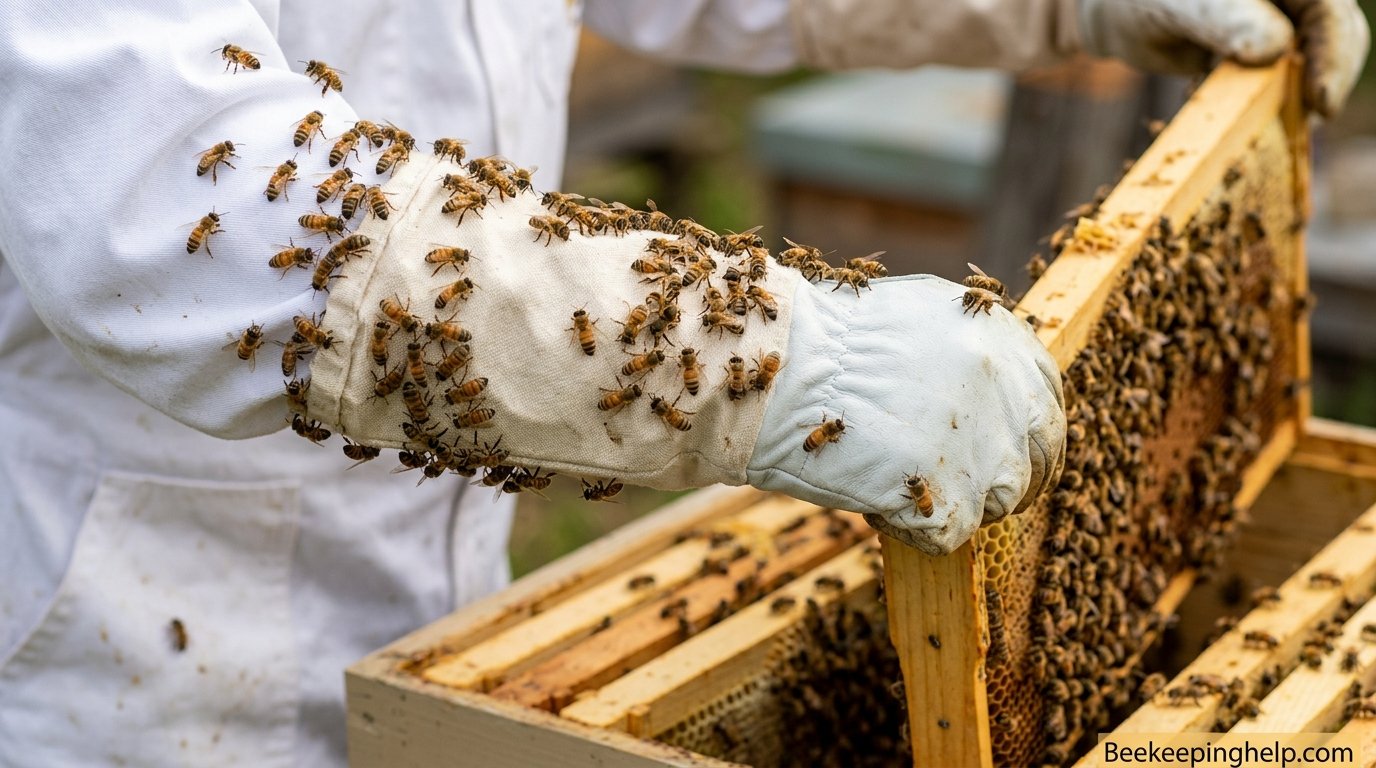
When a honey bee stings, she releases a chemical blend dominated by isopentyl acetate — the compound responsible for the sharp banana-sweet smell many beekeepers notice around an agitated colony. That blend is a recruitment signal. It marks a location and effectively says: sting here. The marker does not vanish when the bee dies or the sting is removed. It soaks into the fabric.
Cotton is particularly absorbent, which makes it comfortable and breathable but also makes it an excellent sponge for volatile oils. A suit that has taken thirty stings across a difficult summer inspection is carrying thirty small chemical flags. The next time you open that colony, the bees smell the accumulated signal before you have even lifted the crown board, and they respond to it as though an attack is already underway.
This is the single most common reason experienced beekeepers give for washing gear more often than beginners do. They have noticed that a freshly laundered suit produces calmer inspections, and once you have noticed it, you cannot un-notice it. If you keep finding that your colonies are more defensive than their reputation suggests, the suit is worth checking before you blame the genetics.
The pheromone test
Hold the chest and forearms of your suit close to your face in a room with no other smells. If you detect anything sweet, sharp, or faintly like overripe banana, the suit is carrying alarm compounds. Wash it before the next inspection, not after.
Reason Two: Disease and Spore Transfer Between Colonies
Beekeepers are one of the main vectors for moving pathogens around. Hive tools, gloves, and suits all carry material between boxes and between apiaries. Spores of foulbrood, chalkbrood fungus, and nosema can survive on fabric, and small quantities of honey or larval residue on a sleeve are a perfectly viable transport medium.
If you manage a single home apiary, the risk is contained — whatever is in one hive is probably already in the yard. The moment you inspect somebody else’s bees, collect a swarm from an unknown source, or help a neighbour, the calculus changes completely. A wash between apiaries is one of the cheapest biosecurity measures available to any beekeeper, and it costs nothing but a cycle of the machine.
Reason Three: Sting Penetration Increases as Fabric Degrades
Protection depends on the gap between the outer fabric surface and your skin. A stinger is roughly two to three millimetres of usable length. Clean, lofted cotton holds a stinger away from you. Fabric that has been compressed by sweat, salt crystals, dried nectar, and grime becomes stiffer and flatter, and the stand-off distance drops.
Salt is the underrated culprit here. Perspiration leaves mineral deposits in the weave, and those crystals abrade fibres every time you move. Over a season, that mechanical wear thins the fabric in exactly the high-flex areas — armpits, elbows, the seat, the backs of the knees — which are also the places you least want a sting to arrive. Washing removes the salt before it does its damage. It is genuinely a protective measure, not just a cosmetic one.
Reason Four: Visibility, Comfort and Heat
White is not a fashion choice in beekeeping. Bees have evolved to react defensively to dark, fuzzy shapes, because the mammals that historically raided their nests were dark and fuzzy. A grey, grubby suit reads closer to “bear” than a bright white one does. Beyond the behavioural point, a clean white suit reflects more sunlight, which matters enormously when you are wearing a sealed garment in July.
There is also the simple matter of comfort. A suit stiff with old sweat is unpleasant to put on, restricts movement slightly, and makes long inspections harder than they need to be. If you have ever cut an inspection short because you were miserable inside your gear, part of that misery was laundry-shaped.
| Contaminant | Where it collects | Consequence if left | Difficulty to remove |
|---|---|---|---|
| Alarm pheromone | Chest, forearms, veil collar | Increased defensive behaviour at every inspection | Easy — normal wash |
| Propolis | Knees, cuffs, front of thighs | Permanent brown staining, stiff patches | Hard — needs pre-treatment |
| Beeswax | Sleeves, chest, gloves area | Greasy translucent marks, attracts dirt | Moderate — freeze or heat method |
| Honey & nectar | Cuffs, hands, lower sleeves | Stickiness, ant and wasp attraction, mould | Easy — cold rinse first |
| Smoker soot & creosote | Chest, right forearm, hood front | Grey shadowing, tar smell | Moderate |
| Perspiration salts | Armpits, back, waistband | Fibre abrasion, yellowing, odour | Easy — but needs frequency |
| Pollen & plant stains | Everywhere, especially lower legs | Yellow-orange speckling | Moderate |
| Spores & pathogens | Gloves, cuffs, front torso | Cross-apiary disease transfer | Easy — hot wash where fabric allows |
The pattern in that table is worth noticing. Almost everything that is easy to remove becomes hard to remove if you leave it long enough. Propolis that is two days old lifts with a freeze and a scrape. Propolis that has been through six sunny afternoons and two wash cycles at the wrong temperature is effectively permanent. Speed matters more than technique.

Ventilated Beekeeping Suit with Fencing Veil
A three-layer mesh suit runs dramatically cooler than cotton, resists propolis staining better, and dries in a fraction of the time after washing — which makes it far easier to keep genuinely clean through a busy season.
Check Ventilated Suits on Amazon →2. Know Your Fabric Before You Wash Anything
Every instruction in this guide bends slightly depending on what your suit is made from. Washing a heavyweight cotton smock the way you would wash a three-layer ventilated jacket will shrink one and delaminate the other. Before the suit goes anywhere near water, work out which of the four main categories you own.
Type One: 100% Cotton
The traditional choice, still favoured by many commercial operators and by anyone who works with a smoker in close quarters. Cotton is breathable, comfortable, naturally flame-resistant compared to synthetics, and it takes repeated washing well. Its weaknesses are shrinkage at high temperatures, slow drying, and a tendency to hold stains and odours because the fibre is so absorbent.
Cotton suits usually tolerate a warm wash of 40 °C comfortably and can take 60 °C if the manufacturer allows it, but the first wash after purchase will shrink the garment noticeably. This is why experienced beekeepers buy cotton suits a size up and wash them once before the first inspection rather than discovering the fit problem in the field.
Type Two: Poly-Cotton Blends
Typically a 65/35 or 50/50 mix. These dry faster than pure cotton, shrink far less, wrinkle less, and cost less. The trade-off is heat: polyester does not breathe as well, and it melts rather than chars if a spark from the smoker lands on it. For washing purposes, blends are the most forgiving fabric of the four, but they must not be washed hot because heat sets synthetic fibres permanently and can cause pilling.
Type Three: Ventilated Three-Layer Mesh
The modern premium option: two layers of tough outer mesh separated by a thick spacer layer that holds the stinger away from the skin. These suits are extraordinarily cool to work in and genuinely change how pleasant summer beekeeping is. They also demand the gentlest laundry of any suit type. The spacer layer can compress or delaminate if it is spun aggressively, wrung out, or tumble dried. Hot water softens the adhesives used at seams and bindings.
Wash ventilated suits cool, on the gentlest available cycle, with a low spin, and always line dry. The good news is they drip dry astonishingly quickly — often in a couple of hours on a breezy day — because there is almost no solid fabric to hold water.
Type Four: Ripstop and Technical Synthetics
Lightweight nylon or polyester ripstop suits are popular for hot climates and for travel. They are easy to wash and quick to dry, but they are the most heat-sensitive of all. Never tumble dry, never iron directly, and keep sparks well away in the field. Washing is simple: cool water, mild detergent, minimal agitation.
| Fabric type | Max safe temp | Spin speed | Tumble dry? | Shrink risk | Dry time (line) |
|---|---|---|---|---|---|
| 100% cotton (heavyweight) | 40 °C standard, 60 °C if labelled | Medium (800–1000 rpm) | Low heat only, not recommended | High | 6–12 hours |
| Poly-cotton 65/35 | 40 °C | Medium | Low heat, brief | Low | 3–6 hours |
| Poly-cotton 50/50 | 40 °C | Medium | Low heat, brief | Low | 3–5 hours |
| Three-layer ventilated mesh | 30 °C | Low (400–600 rpm) | Never | Very low | 1–3 hours |
| Ripstop nylon / polyester | 30 °C | Low | Never | Very low | 1–2 hours |
| Veil mesh (all types) | Hand wash, lukewarm | None — do not spin | Never | None, but creases | 2–4 hours flat |
Reading the Label — and What to Do When There Isn’t One
Many bee suits arrive with a label that has faded, been cut out, or was never informative to begin with. If you genuinely cannot identify the fabric, use the conservative default: 30 °C, gentle cycle, low spin, mild detergent, line dry in shade. That combination is safe for every suit type listed above. You may need to wash twice to shift heavy soiling, but you will not destroy the garment.
A simple identification trick: rub a small hidden area between your fingers. Pure cotton feels slightly dry and matte, creases sharply when folded, and does not spring back. Polyester blends feel smoother and cooler, and a fold springs open. Mesh is obvious by sight. If you are still unsure, the fabric burn test is definitive but destructive, and it is rarely worth sacrificing a corner of a working garment.
Cotton suits — laundry advantages
- Tolerate hot washes for disinfection
- Bleach-safe for whitening (diluted, occasionally)
- Stand up to scrubbing at stain sites
- Can be ironed to restore crispness
- Stain removers rarely damage them
Cotton suits — laundry drawbacks
- Shrink significantly on first hot wash
- Take a full day to dry in humid weather
- Absorb odour deep into the fibre
- Heavy when wet — hard on washing machine drums
- Yellow over time from sweat and sunlight
If you are still choosing a suit or considering an upgrade, the fabric decision has more downstream consequences than almost any other piece of kit you buy. Our detailed bee suit review breaks down how each construction type performs in real apiary conditions, and it is worth reading before you commit — particularly if you are also wondering whether bee suits protect from wasps, because wasp defence depends heavily on fabric thickness and weave density.

Fragrance-Free Gentle Laundry Detergent
Scented detergents leave florals and musks in the weave that confuse bees and irritate sensitive skin under a sealed suit. A free-and-clear liquid rinses cleanly out of cotton and mesh alike.
See Gentle Detergents on Amazon →3. How Often Should You Wash a Bee Suit?
There is no single correct answer, because the right frequency depends on how many colonies you run, how defensive they are, what the weather is doing, and whether you move between apiaries. What follows is a practical schedule that experienced beekeepers converge on, along with the trigger events that override any schedule.
The Baseline Schedule
For a hobbyist with one to three colonies in a single home apiary, washing every four to six weeks through the active season is comfortable. That usually works out to roughly once a month from spring build-up through late summer, plus a thorough end-of-season wash before the suit goes into winter storage.
If you run ten or more colonies, or you inspect several times a week during swarm season, every two weeks is more realistic. Commercial operators often keep two or three suits in rotation specifically so that one can always be in the wash without interrupting work.
| Situation | Spring | Summer (peak) | Autumn | Winter |
|---|---|---|---|---|
| 1–3 hives, hobbyist | Every 4–6 weeks | Every 3–4 weeks | Every 6 weeks | Once before storage |
| 4–10 hives, sideliner | Every 3–4 weeks | Every 2 weeks | Every 4 weeks | Once before storage |
| 10+ hives or multiple yards | Every 2 weeks | Weekly | Every 2–3 weeks | Once before storage |
| Swarm collection / cut-outs | After every single call-out, without exception | N/A | ||
| Inspecting other people’s bees | Before and after each visit | N/A | ||
| Hot climate, heavy sweating | Every 2 weeks | Weekly | Every 2 weeks | Once before storage |
Trigger Events That Override the Schedule
Ignore the calendar entirely and wash immediately if any of the following happen:
- You took more than a handful of stings. The pheromone load is now high enough to affect your next visit.
- You crushed bees against the fabric. Squashed bee residue is both a pheromone source and an organic stain that attracts ants and wasps.
- Honey or nectar soaked through. Sugar left in fabric ferments, smells sour, and draws robbers to you in the yard.
- You visited another apiary. Biosecurity. Wash before and after if you can.
- You handled a colony with suspected disease. Hot wash if the fabric allows, and disinfect gloves and hive tool at the same time.
- The suit smells. Trust your nose — it is a better sensor than a calendar.
- You are storing it for more than a month. Never store a dirty suit. Organic residue invites moths, mice, and mildew.
The one mistake that costs people suits
Putting a sweaty, honey-stained suit into a sealed plastic tub at the end of the season and forgetting about it until spring. It will come out mildewed, yellowed, and in bad cases eaten by wax moth larvae attracted to the wax residue. A single wash in October prevents a replacement purchase in March.
Can You Wash a Bee Suit Too Often?
Yes, but it is rarely the problem people think it is. Every wash cycle causes a small amount of mechanical wear, and aggressive washing — hot water, high spin, harsh detergents, tumble drying — accelerates that wear considerably. Gentle washing, though, does very little damage. A cotton suit washed monthly on a gentle 40 °C cycle will comfortably last several seasons.
Where over-washing genuinely bites is with ventilated mesh suits, because the spacer layer is the component under stress. Twenty gentle washes will not harm it. Twenty hot, high-spin washes may compress it enough to reduce protection. The fix is not to wash less — it is to wash correctly.

Large Mesh Laundry Bag
A zipped mesh bag keeps veils, elastic cuffs, and thumb loops from snagging on the drum and stops metal zipper pulls hammering the machine. The single cheapest way to add years to a suit.
View Mesh Laundry Bags on Amazon →4. Pre-Wash Prep: Stripping the Suit Down Properly
Preparation is where most of the outcome is decided. Ten minutes of careful prep produces a better result than any premium detergent, and skipping it is how veils get crushed and zippers get ruined. Work through these stages in order, ideally outdoors or in a garage rather than over your kitchen floor.
1 Remove the Veil and Hood Completely
Almost every modern suit has a detachable veil, attached by a heavy-duty zipper that runs around the collar, sometimes with additional snap fasteners or hook-and-loop tabs at the throat. Unzip the veil slowly and fully, supporting the mesh with your other hand so it does not fold sharply as it comes free. Set it aside on a flat surface — never bundled, never folded against its own hoops.
If your veil is permanently sewn in, you are in the small minority, and the whole garment must be hand washed or washed on the most delicate setting available with the veil protected inside a mesh bag. Do not attempt a normal cycle.
2 Empty Every Pocket and Check Every Cuff
Bee suits have deep pockets, and beekeepers put remarkable things in them. Hive tools, queen cages, marking pens, drawing pins, matches, rubber bands, frame nails, and lighters all turn up in washing machine drums. A forgotten marking pen will ruin a white suit permanently. A lighter can rupture. A hive tool will chew the drum.
Turn out every pocket, run a finger inside each one, then check elastic cuffs and thumb loops, where small debris collects and stays. Shake the suit out vigorously. You will be surprised what falls out.
3 Brush Off Loose Wax, Propolis Flakes and Dead Bees
Take the suit outside and work over it with a stiff-bristled brush or a plastic hive tool edge. The goal is to remove everything that will come off dry, because anything solid that goes into the machine either redistributes itself across the fabric as a grease smear or ends up clogging the filter.
Pay attention to the knees, the front of the thighs, the cuffs, and the chest — the four places that make contact with hive boxes and frames. Dead bees lodge in cuff elastic and in the gathered fabric at the ankles surprisingly often. Remove them by hand. A bee that goes through a wash cycle disintegrates and leaves a yellow-brown stain that is harder to shift than the bee was.
4 Close Every Zipper and Fasten Every Strap
Open zippers behave like saw blades in a washing machine. The metal or nylon teeth catch fabric, chew mesh, and score the drum. Close the main body zipper fully, close pocket zippers, close ankle and wrist zippers, and fasten any hook-and-loop tabs onto themselves so the hooks cannot grab.
Hook-and-loop is a particular menace. A single open patch of hooks will attach itself to the veil mesh or to the suit’s own fabric and pull threads with every rotation of the drum. Thirty seconds of fastening prevents a hundred pulled fibres.
5 Turn the Suit Inside Out
This is a small step with a disproportionate payoff. Turning the suit inside out puts the dirtiest surface — the inside, where sweat, salts, and skin oils accumulate — directly in contact with the water and detergent. It simultaneously protects the outer face from abrasion, which is what keeps a white suit looking white for longer.
Inside out also protects printed logos, reflective strips, and any branded panelling, all of which crack and peel under repeated friction against the drum.
Prep checklist — print this and pin it above the machine
- Veil detached and set aside flat
- All pockets emptied and finger-checked
- Wax, propolis, and dead bees brushed off outdoors
- Elastic cuffs and ankle gathers cleared of debris
- All zippers closed, all hook-and-loop fastened
- Heavy stains pre-treated (see next section)
- Suit turned inside out
- Washing alone — nothing else in the drum

Stiff-Bristle Utility Scrub Brush
A firm nylon brush lifts dry wax and propolis flakes out of the weave before the suit ever sees water. Far more effective than picking at them and far safer than scraping with a hive tool.
Shop Scrub Brushes on Amazon →5. Removing Propolis, Wax, Honey and Sting Marks
This is the section that separates beekeeping laundry from ordinary laundry. Propolis in particular does not behave like any household stain, and treating it as though it were mud or grease produces a permanent brown shadow. Deal with these contaminants before the suit goes in the machine, because a wash cycle sets several of them permanently.
Propolis: The Hardest Stain in Beekeeping
Propolis is a resin the bees collect from tree buds and bark, mixed with wax and enzymes. It is sticky at hive temperature, brittle when cold, and soluble in alcohol but almost entirely insoluble in water. That last fact is the whole problem. No amount of soaking, scrubbing, or hot washing will dissolve propolis, and heat actively makes it worse by softening the resin and pressing it deeper into the weave.
There are two reliable approaches, and they work best in sequence.
Method A — The Freeze and Crack
Put the suit, or the affected garment section, into a freezer for one to two hours. Propolis becomes glass-brittle at low temperature. Take the suit out and flex the fabric sharply at the stained point, then scrape with a blunt edge — the back of a butter knife, a plastic card, or a hive tool used carefully. Most of the deposit will shatter and fall away in flakes.
This removes the bulk but usually leaves a brown ghost in the fibres. That ghost is the part alcohol handles.
Method B — Isopropyl Alcohol Lift
Lay the stained area face down on a folded white towel. Apply isopropyl alcohol — 70% works, 90% works better — to the back of the fabric, dabbing rather than rubbing. The alcohol dissolves the resin and gravity carries it downward into the towel rather than spreading it sideways through the weave. Move to a clean section of towel as it discolours, and keep dabbing until no more brown transfers.
Rinse the area with cool water afterwards to remove the alcohol, then wash normally. Always test alcohol on a hidden seam first, particularly on ventilated suits where it may affect bonded edges or printed logos.
Never use these on propolis
Acetone, nail polish remover, petrol, white spirit, paint thinner, and chlorine bleach. Acetone and solvents will dissolve synthetic fibres outright and can destroy elastic, stitching thread, and mesh bonding. Bleach reacts with propolis resin and permanently fixes an orange-brown colour into the fabric. Alcohol is the only household solvent that is both effective and reasonably safe.
6 Treating a Propolis Stain Correctly
Freeze, crack, scrape, then dab alcohol from the reverse side onto an absorbent backing. The direction of treatment is the key insight — you are pushing the stain out the way it came in, not driving it further through the fabric.
Beeswax: Freeze or Melt, Never Scrub
Wax is easier than propolis because it has a low melting point and no pigment. There are two routes.
The freeze route is identical to the propolis method — chill until brittle, flex, and pick the flakes off. This works best on thick deposits where wax has built up in a lump.
The heat route handles the thin translucent greasy marks that freezing leaves behind. Place a sheet of brown paper, a paper towel, or a clean cotton cloth over the mark. Press with a warm iron on a low setting, no steam. The wax melts and wicks into the paper. Move to a fresh area of paper and repeat until no more grease transfers. Do not do this on synthetic or ventilated suits — the iron will melt them faster than it melts the wax.
Any remaining greasy shadow responds to a small amount of dish soap worked in with a fingertip before washing. Dish soap is formulated for exactly this kind of lipid, and it is genuinely more effective on wax than laundry detergent.
Honey and Nectar: Cold Water First, Always
Sugar dissolves readily, which makes honey the easiest of the three main contaminants — provided you get to it with the right temperature. Rinse honey-soaked fabric under cold running water. Hot water caramelises sugars and can set a faint amber tone into white cotton that never fully leaves.
Rinse until the fabric stops feeling tacky between your fingers. If a sticky patch persists, work a drop of liquid detergent directly into it and rinse again. Do not let honey dry into the suit and sit for weeks; fermentation produces a sour smell that requires a vinegar soak to remove.
Stings, Squashed Bees and Protein Stains
Crushed bee residue is a protein stain, and protein stains have one absolute rule: never use hot water on them first. Heat coagulates protein exactly the way it cooks an egg white, and a cooked protein stain bonds to the fibre permanently.
Soak the affected area in cold water with a pinch of salt or a biological detergent containing protease enzymes. Twenty to thirty minutes is usually enough. Then wash normally. Enzyme detergents are worth keeping specifically for this — they are dramatically more effective on bee residue, blood, and sweat stains than non-enzyme formulas.
Remove any stingers still lodged in the fabric before washing, using tweezers or by scraping sideways with a card. A barbed stinger left in a suit will work its way through to the inside over time and deliver a small unpleasant surprise later.
Smoker Soot, Creosote and Scorch Marks
Smoker residue is a combination of fine carbon particles and tarry creosote condensate. The carbon shakes out; the creosote does not. Pre-treat with a liquid detergent applied neat and left for fifteen minutes, then wash warm. Persistent tar marks respond to the same isopropyl alcohol treatment used for propolis.
Actual scorch marks — where a hot smoker body has rested against fabric — are heat damage rather than a stain, and they cannot be washed out. Light scorching on cotton sometimes fades with a diluted oxygen bleach soak. Melted synthetic fabric is permanent and, importantly, represents a hole in your protection. Patch it or retire the suit. If you find yourself scorching gear regularly, our guides on how a bee smoker works and what to use in a bee smoker cover fuel choices and handling techniques that produce cool, dense smoke rather than flames and sparks.
| Stain | Water temp | Pre-treatment | What sets it permanently | Success rate |
|---|---|---|---|---|
| Propolis | Cool | Freeze, scrape, then isopropyl alcohol from reverse | Hot water, bleach, ironing | 70–85% if fresh |
| Beeswax (thick) | Cool | Freeze and crack off | Rubbing it in while warm | 95% |
| Beeswax (greasy film) | Warm | Iron through paper, then dish soap | Nothing much — it’s forgiving | 90% |
| Honey / nectar | Cold rinse | Flush with cold running water | Hot water caramelisation | 98% |
| Crushed bees | Cold | Enzyme detergent soak, 30 min | Hot water (cooks the protein) | 85% |
| Smoker soot | Warm | Neat liquid detergent, 15 min | Drying in sun before treatment | 75% |
| Creosote / tar | Warm | Isopropyl alcohol, then detergent | Repeated heat cycles | 60% |
| Pollen (yellow-orange) | Cold | Shake and vacuum dry first, never wet-rub | Wetting before shaking it off | 80% |
| Grass & mud | Cool | Dry fully, brush off, then soak | Scrubbing wet mud into the weave | 90% |
| Sweat yellowing | Warm | Oxygen bleach soak, 1–4 hours | Years of neglect | 50–70% |
| Scorch / melt | N/A | None — damage, not soiling | Already permanent | 0% |

Isopropyl Alcohol (90%+)
The single most useful bottle in a beekeeper’s cleaning cupboard. It dissolves propolis on suits, gloves, hive tools, and hands, and unlike acetone or white spirit it will not eat synthetic fibres or stitching.
Get Isopropyl Alcohol on Amazon →6. Machine Washing a Bee Suit: The Full Step-by-Step
With the prep done and stains treated, the machine cycle itself is almost anticlimactic. The settings matter far more than the detergent, and the single most important instruction is the one people ignore: wash the suit by itself.
The settings, in one line
Gentle / delicate cycle · 30–40 °C (86–104 °F) · low to medium spin · mild fragrance-free detergent · no fabric softener · extra rinse · suit alone in the drum.
7 Load the Machine Correctly
The suit goes in alone. Not with towels, not with work clothes, not with the kids’ school uniforms. Two reasons: residual propolis and wax will transfer to other garments and stain them, and a bee suit is a large bulky item that needs room to tumble freely in order to get clean. A crammed drum agitates poorly and rinses worse.
If your suit has a permanently attached veil, put the veil inside a zipped mesh laundry bag before loading. Use the bag for detachable veils too if you are washing them alongside, though hand washing the veil separately is always better.
Do not overload past roughly half the drum capacity. A wet cotton bee suit is heavy, and a half-full drum gives the fabric the space it needs.
8 Set Temperature, Cycle and Spin
Temperature. 30 °C is the universal safe default and handles ordinary soiling perfectly well with a decent detergent. Step up to 40 °C for cotton and poly-cotton when the suit is genuinely grubby. Reserve 60 °C for cotton suits with a label that permits it and only when you have a disease-control reason. Never exceed 30 °C on ventilated mesh or ripstop.
Cycle. Choose delicate, gentle, or hand-wash. These cycles use slower drum rotation and longer soak phases, which is exactly the right trade for a bulky garment that does not need violent agitation. A “heavy duty” or “cottons” cycle will clean the suit but will wear it out faster and risks crushing mesh spacer layers.
Spin. Keep it low. 400–600 rpm for ventilated suits, up to 800–1000 rpm for cotton. High-speed spinning compresses fabric, creases mesh permanently, and stresses seams. A slightly wetter suit dries fine on a line; a crushed suit does not un-crush.
Extra rinse. Turn it on. Detergent residue left in fabric is a genuine problem for beekeepers — it makes the suit smell of something the bees did not agree to, and it can irritate skin under a sealed garment on a hot day. One additional rinse solves both.
9 Dose Detergent Sparingly and Skip the Softener
Use about half to two-thirds of the dose you would use for a normal load. Bee suits are bulky but not heavily soiled in the way a muddy work overall is, and excess detergent does not rinse out of thick cotton easily. Residue left in the weave attracts dirt faster, stiffens the fabric, and gives off a scent that is entirely unhelpful at the hive.
Fabric softener is the most damaging product you can put on a bee suit. It works by coating fibres with a waxy cationic film. That film flattens the loft of cotton, reduces breathability, traps heat, and — most seriously — leaves a strong fragrance embedded in the fabric. It also blocks the air gaps in ventilated mesh, which is precisely the property that makes the suit cool and sting-resistant in the first place.
If you want softness, use half a cup of white vinegar in the rinse compartment instead. It softens naturally, strips detergent residue, neutralises odours, and rinses away completely without leaving a scent.
Machine washing — pros
- Fast and effortless for a bulky garment
- Consistent agitation reaches the whole suit evenly
- Controlled temperature for disease management
- Spin cycle removes most water, cutting drying time
- Extra rinse option removes detergent thoroughly
Machine washing — cons
- Risk to veils, zippers, and mesh spacer layers
- Wax and propolis can transfer inside the drum
- Top-loaders with agitators are rough on seams
- Easy to accidentally overheat a synthetic suit
- Not suitable for suits with permanently fitted veils
Top-loader with a central agitator?
Older top-loading machines with a tall central post are the harshest laundry environment a bee suit can encounter. Sleeves wrap around the agitator, seams take enormous strain, and elastic cuffs stretch. If this is your only machine, either use the gentlest available setting with the suit loosely draped rather than wrapped, or switch to the bathtub method described in the next section.

Enzyme Stain Remover Spray
Protease enzymes break down crushed bee residue, sweat, and organic staining that ordinary detergent leaves behind. Spray, wait fifteen minutes, then run the gentle cycle — no scrubbing required.
Shop Enzyme Stain Removers →7. Hand Washing and the Bathtub Method
There are situations where a machine is either unavailable or actively the wrong tool. Suits with permanently attached veils, delicate ventilated models, heavily propolis-stained garments that need targeted attention, and any suit you are especially fond of all do better by hand. Hand washing takes longer but gives complete control, and it is almost impossible to damage a suit this way.
10 Fill, Dissolve, Submerge and Agitate by Hand
Fill a bathtub, large utility sink, or clean plastic tub with roughly fifteen to twenty centimetres of lukewarm water — comfortably warm to the hand, never hot. Add a small amount of mild liquid detergent and swirl thoroughly until it has fully dissolved. Powder that has not dissolved will sit as a gritty deposit in the weave and is a common cause of white streaks on dark trim.
Lay the suit into the water and press it down until it is fully saturated. Air trapped in cotton makes the suit float; press it out from the centre outward. Leave it to soak for fifteen to thirty minutes. Soaking does most of the work — agitation is for lifting the loosened soil away, not for forcing detergent in.
Then agitate gently: press down with flat palms, release, and repeat. Push the water through the fabric rather than rubbing fabric against fabric. Rubbing causes pilling on cotton and abrades mesh. Pay extra attention to the collar, the cuffs, the underarms, and the front of the legs.
11 Rinse Until the Water Runs Completely Clear
Drain the soapy water and refill with clean lukewarm water. Press the suit repeatedly to flush detergent out, then drain again. Repeat until the water shows no cloudiness and no foam forms when you agitate. This usually takes three rinses for a cotton suit and two for a mesh one. Under-rinsing is the most common hand-washing failure — trapped detergent stiffens fabric and holds fragrance.
On the final rinse, add half a cup of white vinegar and let the suit sit for five minutes. This neutralises any remaining alkaline detergent and helps eliminate residual odour.
Now the critical part: do not wring or twist the suit. Twisting distorts seams, breaks fibres along the fold lines, and permanently creases mesh spacer layers. Instead, gather the suit into a loose bundle, lift it, and press it against the side of the tub to squeeze water out. Then lay it flat on a large dry towel, roll the towel and suit together like a sleeping bag, and press along the roll. The towel absorbs a remarkable amount of water in about a minute.
Hand washing — pros
- Zero risk of mesh crushing or seam stress
- Works for suits with sewn-in veils
- Total control over stain-specific attention
- No machine access required
- Uses less water than many older machines
Hand washing — cons
- Takes 45–90 minutes including rinses
- Physically tiring — wet cotton is very heavy
- Much longer drying time without a spin cycle
- Harder to achieve disinfection temperatures
- Easy to under-rinse and leave detergent behind
| Factor | Machine wash | Hand wash | Dry cleaner / laundry service |
|---|---|---|---|
| Time investment | 10 min active | 45–90 min active | Drop off and collect |
| Risk to mesh & veil | Moderate | Very low | Depends entirely on the operator |
| Cleaning power | High | Moderate to high | High |
| Propolis removal | Needs pre-treatment | Needs pre-treatment | Often better solvents available |
| Disinfection capability | Good (hot wash on cotton) | Limited | Good |
| Drying time after | Short (spun) | Long (not spun) | Returned dry |
| Cost per wash | Minimal | Minimal | Moderate to high |
| Best for | Routine seasonal cleaning | Ventilated suits, sewn-in veils | Rescue jobs on badly neglected suits |
A note on dry cleaning
Conventional dry cleaning uses perchloroethylene or similar solvents, and it will strip propolis effectively. However, the solvent residue carries a distinct chemical smell that takes a long time to air out, and it is not something you want next to a colony. If you use a cleaner, request no starch, no finishing spray, and no fragrance, then hang the suit outdoors for several days before wearing it.

Large Collapsible Wash Tub
A dedicated tub keeps propolis and wax residue out of your household sink and folds flat for storage. Big enough to soak a full adult suit with room to press water through the fabric.
See Wash Tubs on Amazon →8. Washing the Veil Without Destroying It
The veil is the most fragile and the most safety-critical component of the whole outfit. A crease in the mesh is a weak point. A hole in the mesh is a direct route to your eye. A collapsed hood is a veil that now rests against your face, where a bee can sting straight through. Everything in this section exists to prevent those three outcomes.
Veil Types and Their Washing Quirks
Fencing veils are the modern standard: a self-supporting collar of stiff mesh that stands away from the face without a hat. They are the easiest to wash because the structure comes from the mesh’s own stiffness. That stiffness is exactly what a hot wash or hard spin destroys.
Round veils use a wire or plastic hoop and a separate hat. The hoop should be removed if it is removable. If it is stitched in, wash flat and never fold across the hoop.
Square or English veils use rigid stays and drape over a hat. Remove every stay before washing without exception; they will bend and never straighten.
Integrated hood veils on ventilated suits usually detach by zipper. Unzip fully rather than tugging.
The Correct Veil Washing Procedure
12 Hand Wash the Veil Flat and Air Dry It Standing
Fill a sink or basin with lukewarm water and a very small amount of mild detergent. Submerge the veil and let it soak for ten minutes. Then swirl it gently and use your fingertips to work at the areas around the face screen and the collar where breath moisture, sweat, and smoke residue collect.
Use a soft toothbrush on the mesh only if you must, and only with the mesh supported flat against a hard surface so the bristles cannot push through and stretch the weave. Rinse in clean lukewarm water at least twice.
To dry, drape the veil over an upturned bucket, a large jar, a mannequin head, or a balloon so it holds its intended three-dimensional shape while the water evaporates. Never dry a veil flat-folded, never peg it by the mesh, and never put it near a radiator. Mesh dries in a couple of hours with good airflow.
If You Must Machine Wash the Veil
Sometimes the veil is sewn in and you have no choice. In that case: put the veil inside a zipped mesh laundry bag, select the most delicate cycle available, set the temperature to 30 °C, set the spin to the lowest setting or turn it off entirely, and use a tiny amount of mild detergent. Remove the suit immediately when the cycle ends. Every minute a wet veil spends crumpled in a drum is a minute it spends learning a crease.
Inspect the veil every single time you wash it
Hold the mesh up to a bright light or a window before you put the suit away. Look for pinholes, thinning patches, separated stitching along the seam where mesh meets fabric, and any area where the weave has been pulled open. A hole you can see light through is a hole a bee can walk through. This inspection takes thirty seconds and is the most valuable thirty seconds in the entire process.
| Veil type | Remove before washing | Wash method | Drying method | Main failure mode |
|---|---|---|---|---|
| Fencing veil (self-supporting) | Nothing — it’s one piece | Hand wash lukewarm | Over a bucket or jar | Mesh loses stiffness, collapses onto face |
| Round veil with hoop | Hoop if removable, hat always | Hand wash lukewarm | Hung open on a hanger | Hoop deforms, veil sits crooked |
| Square / English veil | All rigid stays | Hand wash lukewarm | Flat but unfolded | Stays bend, structure lost |
| Integrated ventilated hood | Unzip from the suit | Hand wash or mesh bag, 30 °C | Over a rounded former | Delamination at bonded seams |
| Sewn-in veil (budget suits) | Not possible | Mesh bag, delicate, no spin | Suit hung, veil supported | Creasing from drum crumpling |

Replacement Fencing Veil
If a light check reveals pinholes or a collapsed collar, replace the veil rather than the whole suit. A spare veil also lets you keep working while one is drying, which matters during swarm season.
Browse Replacement Veils →9. Detergents, Bleach and What You Must Never Use
The product you pour into the drawer has a bigger effect on how your bees react to you than almost anything else in this guide. Bees navigate and communicate by scent, and a suit carrying synthetic floral fragrance is broadcasting confusing information at close range. This section covers what works, what to avoid, and how to whiten a yellowed suit without damaging it.
What to Look For
Fragrance-free is non-negotiable. Look for products labelled “free and clear”, “sensitive”, “fragrance free”, or “non-bio unscented” depending on your region. The concern is not only the bees — a scented suit worn in hot weather against sweaty skin is a reliable route to contact dermatitis for anyone with sensitive skin.
Enzyme detergents are your friend for organic soiling. Protease enzymes break down crushed bee residue, sweat protein, and blood. Lipase and amylase handle wax film and sugar residue. Biological detergents are noticeably more effective on a bee suit than non-biological ones, provided you rinse thoroughly. If you have sensitive skin, use a biological detergent with an extra rinse rather than switching to non-bio.
Liquid over powder. Powders rely on fully dissolving, and in cool water they frequently do not. Undissolved powder lodges in heavy cotton and in mesh cells, leaving white residue and a gritty feel. Liquids and gel capsules dissolve reliably at 30 °C.
Oxygen bleach, not chlorine bleach. Sodium percarbonate — the active ingredient in oxygen bleach powders — releases hydrogen peroxide in water. It whitens gently, deodorises, and does not attack fibres or elastic the way chlorine does. It is the correct product for a suit that has gone dingy grey or sweat-yellow.
| Product | Verdict | Best for | Cautions |
|---|---|---|---|
| Fragrance-free liquid detergent | ✅ Best overall | Every routine wash, all fabrics | Use half dose; rinse twice |
| Biological / enzyme detergent | ✅ Excellent | Crushed bees, sweat, protein staining | Rinse well if skin is sensitive |
| Oxygen bleach (percarbonate) | ✅ Good | Whitening, deodorising, soaking | Cotton and poly-cotton only; not on mesh bonding |
| White vinegar | ✅ Good | Rinse aid, odour neutraliser, softener | Never mix with bleach of any kind |
| Baking soda | ✅ Good | Odour absorption, boosting detergent | Dissolve fully or it leaves residue |
| Isopropyl alcohol | ✅ Good (spot use) | Propolis, tar, creosote | Spot treatment only; test first; never in the drum |
| Dish soap | ⚠️ Situational | Greasy wax film, spot use | Foams excessively — never in a machine |
| Chlorine bleach | ❌ Avoid | Nothing on a bee suit | Weakens fibres, fixes propolis orange, destroys elastic |
| Fabric softener | ❌ Never | Nothing | Waxy film, fragrance, blocks mesh airflow |
| Dryer sheets | ❌ Never | Nothing | Same film plus static coating and heavy scent |
| Scented detergents | ❌ Avoid | Nothing | Fragrance persists for many washes |
| Acetone / white spirit | ❌ Never | Nothing | Dissolves synthetic fibres, elastic and stitching |
| Starch / finishing spray | ❌ Avoid | Nothing | Stiffens fabric, attracts pests in storage |
Restoring a Yellowed or Grey Suit
A suit that has faded to cream or grey has usually accumulated a combination of sweat salts, body oils, sun exposure, and detergent residue. The rescue procedure is a long soak rather than a hot wash.
- Dissolve oxygen bleach powder fully in warm water in a tub, following the dosage on the pack.
- Submerge the suit — body only, veil removed — and press out air so it stays under the surface.
- Soak for two to six hours. Overnight is fine for cotton. Longer is not better beyond about eight hours.
- Drain, then wash normally on the gentle cycle with an extra rinse.
- Line dry in direct sunlight. Sunlight is a genuinely effective natural whitener for cotton and it costs nothing.
This will not reverse everything. Propolis staining that has been set by heat is permanent, and so is fibre yellowing from years of UV exposure. But it routinely takes a suit from embarrassing to respectable, which is usually enough.
A suit does not have to be pristine to be effective. It has to be intact, unscented, and free of pheromone. A honest working suit with a few faded propolis shadows and no holes is better protection than a brand new one washed in something floral.
The Vinegar Deodorising Soak
For a suit that smells sour, musty, or simply of old beekeeping, a vinegar soak outperforms any detergent. Fill a tub with cool water, add one cup of white vinegar per ten litres, submerge the suit for an hour, then wash normally. The acetic acid neutralises the alkaline compounds responsible for most persistent fabric odours, and any vinegar smell disappears completely once the suit dries.
Never combine vinegar and bleach
Mixing acid with chlorine bleach releases chlorine gas. This is genuinely dangerous in an enclosed laundry room. Do one treatment or the other, rinse thoroughly in between, and keep the two products in separate places.

Oxygen Bleach Powder (Sodium Percarbonate)
The safe way to bring a yellowed cotton suit back toward white. It lifts sweat staining and organic discolouration without the fibre damage, elastic destruction, and propolis-fixing that chlorine bleach causes.
Shop Oxygen Bleach on Amazon →10. Drying, Ironing and Re-Assembly
More bee suits are ruined in the drying stage than in the wash. Heat is the enemy: it shrinks cotton dramatically, melts synthetics, softens mesh bonding, and sets any stain you failed to remove. The correct approach is slow, cool, and outdoors.
13 Line Dry Inside Out, in Shade, on a Broad Hanger
Hang the suit on a wide, shoulder-shaped hanger rather than pegging it by the shoulders. Pegs create permanent dimples in cotton and stress points in mesh, and a heavy wet suit pegged by two corners will stretch out of shape along the shoulder line.
Zip the suit partly open so air can circulate through the interior as well as around the exterior. Turn it inside out for the first half of the drying time — this dries the sweat-holding lining fastest, which is the part most likely to develop mildew if it stays damp. Turn it right side out for the second half so the exterior finishes evenly.
Dry in shade with good airflow rather than in direct hot sun, with one exception: if you are specifically trying to whiten a cotton suit after an oxygen bleach soak, direct sun is helpful. For routine drying, UV exposure over many cycles degrades fibres and yellows some synthetics, so shade is the default.
Tumble Drying: Almost Always a Mistake
The short version is: don’t. Tumble dryers shrink cotton suits by a full size, melt or pill synthetics, crush the spacer layer in ventilated suits, and bake any remaining propolis permanently into the weave. The heat also degrades elastic in cuffs and waistbands faster than anything else you can do to a suit.
If circumstances genuinely require it — you have an inspection in two hours and the suit is soaked — use the lowest heat or air-only setting, run it for fifteen minutes maximum, and remove the suit while it is still noticeably damp. Finish on a hanger. Never tumble dry a veil under any circumstances.
Ironing and Restoring Crispness
Cotton suits can be ironed on a medium setting, which flattens wrinkles and makes a suit noticeably easier to get into. Iron inside out to protect the outer face and any printed logo. Do not iron over zippers — the plastic teeth on many bee suits will deform, and metal teeth get hot enough to scorch surrounding fabric.
Never iron ventilated mesh, ripstop, or any veil. These fabrics will melt, shrink, or deform, and there is no repair. If a ventilated suit has creases from storage, hanging it in a steamy bathroom for twenty minutes usually relaxes them out.
14 Reattach the Veil and Test Everything Before Storing
Both the suit and the veil must be completely dry before they go back together. Any residual moisture trapped between layers, particularly around the collar zip where fabric is doubled, becomes mildew within days.
Reattach the veil by starting the zipper carefully at the correct starting point — most collar zips have a specific alignment mark or a fabric tab that indicates where the teeth should mesh. Work slowly around the collar, keeping the mesh supported so it does not fold under the zip path.
Then run the full function check: zip the suit fully closed and open again, check every pocket zip, test elastic cuffs by stretching gently, fasten and unfasten every hook-and-loop tab, hold the veil to the light, and check thumb loops and ankle elastic. Two minutes now prevents discovering a failure while standing over an open hive.
| Method | Time | Risk level | Suitable fabrics | Notes |
|---|---|---|---|---|
| Line dry, outdoor shade | 3–12 hours | None | All | The default. Airflow matters more than temperature. |
| Line dry, direct sun | 2–6 hours | Low | Cotton only | Whitens cotton; degrades synthetics over time |
| Indoor airer near a fan | 6–18 hours | None | All | Good winter option; ensure real airflow, not a closed room |
| Dehumidifier room | 4–10 hours | None | All | Excellent in humid climates |
| Tumble dry, low / air | 15–30 min | Moderate | Poly-cotton only, briefly | Remove while damp, finish on a hanger |
| Tumble dry, normal heat | 40–60 min | High | None | Shrinks, melts, crushes mesh, sets stains |
| Radiator or heater | Varies | High | None | Scorches contact points, distorts fabric |

Broad-Shoulder Wooden Hangers
Wire hangers dent wet cotton and leave rust marks. A wide contoured hanger supports the shoulder line of a heavy wet suit and keeps it in shape through the whole drying cycle and into storage.
Find Broad Hangers on Amazon →11. Storage, Odour Control and Pest Protection
Washing solves today’s problem. Storage decides whether the suit survives the winter. A suit stored badly emerges in spring smelling of mildew, spotted with mould, or — in the worst case — riddled with holes chewed by insects that were attracted to the wax residue you did not fully remove.
Between Inspections: Short-Term Storage
During the active season, hang the suit somewhere with airflow. A hook in a garage, shed, or utility room is ideal. Avoid the back of a car, where heat cycles bake in odours, and avoid a sealed plastic box, where any residual moisture has nowhere to go.
Many beekeepers keep the suit in the vehicle for convenience. If you do, use a breathable garment bag rather than a bin bag, and take it out at the end of each week to air.
Over Winter: Long-Term Storage
Wash the suit thoroughly at the end of the season — this is the non-negotiable one. Then dry it completely, which for heavy cotton means giving it a full extra day beyond when it feels dry. Store it on a broad hanger inside a breathable cotton garment bag, hung in a cool, dry place away from direct light.
Do not use a vacuum-sealed bag. Compressing a suit for months creates hard creases, and vacuum bags trap any moisture that was present at sealing. Do not use a sealed plastic tub for the same reason.
Pests That Eat Bee Suits
Three culprits, in order of likelihood:
- Wax moths. They are drawn to beeswax residue, and a suit with wax still in the weave is a legitimate target. The larvae chew tunnels through fabric while feeding. A thorough wash is the primary prevention.
- Clothes moths. These feed on keratin and are more interested in any wool content or in sweat and skin residue. Again, clean storage is the defence.
- Mice. They will shred a stored suit for nesting material given the chance, particularly in a shed or barn. Hang the suit off the ground and away from walls.
For deterrence, use cedar blocks or dried lavender sachets rather than mothballs. Naphthalene mothballs impregnate fabric with a smell that is extremely persistent, unpleasant to wear, and genuinely disruptive around a colony. Cedar and lavender fade within a wash.
The spring restart routine
Before the first inspection of the year, take the stored suit out, shake it hard, hold the veil to the light, check every seam for pest damage, and give it a quick freshening wash if it has been in storage more than a couple of months. Dust and storage odour both accumulate even in a clean bag, and the first inspection is not the moment to discover a chewed cuff.
| Storage method | Airflow | Pest protection | Crease risk | Verdict |
|---|---|---|---|---|
| Hung in breathable garment bag | Good | Good | None | ✅ Best for winter |
| Hung open on a hook, indoors | Excellent | Fair | None | ✅ Best in season |
| Folded in an open cupboard | Fair | Fair | Moderate | ⚠️ Acceptable short-term |
| Sealed plastic tub | None | Good | High | ❌ Mildew risk |
| Vacuum bag | None | Excellent | Severe | ❌ Crushes mesh permanently |
| Left in vehicle boot | Poor | Poor | High | ❌ Heat-bakes odour into fabric |
| Shed floor or bench | Good | None | High | ❌ Mice, damp, dirt |
Storage discipline applies to the rest of your kit as well. A clean suit hung next to a smoker still full of damp, half-burnt fuel will pick up creosote odour through the bag. Empty and clean the smoker at the same time — our guide to the best bee smoker models covers which designs are easiest to clean out and keep dry between uses.

Breathable Cotton Garment Bag
Keeps dust, light, and moths off a stored suit while letting moisture escape — the one thing plastic bags and vacuum sacks fundamentally cannot do. Essential for overwintering gear in a shed or garage.
See Garment Bags on Amazon →12. Repairs, Zipper Care and Extending Suit Life
Washing is maintenance, and maintenance includes fixing what the wash reveals. A suit that is cleaned regularly gets inspected regularly, which is why beekeepers who wash their gear tend to catch problems while they are still cheap to solve.
Zipper Maintenance
The collar zipper on a bee suit is the single hardest-working fastener you own. It gets opened and closed several times per visit, it collects propolis and grit, and it is under tension whenever you turn your head. Zippers fail more often than fabric does.
After each wash, while the suit is drying, run a zipper lubricant along the closed teeth and work the slider back and forth a few times. A dedicated zipper wax, paraffin wax, a graphite pencil rubbed along the teeth, or even a candle stub all work. Do not use oil-based lubricants like WD-40 on fabric-adjacent zippers — they migrate into the surrounding cloth and create permanent grease marks.
If a slider is no longer closing the teeth behind it, the slider jaws have spread. Squeeze the slider gently with pliers — a very small amount, checking after each squeeze — until it grips again. Replacement sliders are inexpensive and easier to fit than most people expect.
Patching Holes and Tears
Any hole in a bee suit is a protection failure and needs fixing before the next use. The approach depends on location and fabric:
- Small holes in solid fabric: iron-on repair patch on the inside, plus a few stitches around the perimeter for durability. Cotton takes patches well.
- Seam splits: restitch with heavy-duty polyester thread, backstitching at both ends. Hand stitching is fine.
- Tears in ventilated mesh: mesh repair tape or a stitched patch of matching mesh. Do not iron.
- Any hole in the veil: replace the veil. Do not patch a veil over the face area — a patch obstructs vision and a repaired veil is never as reliable as a new one where your eyes are concerned.
- Worn cuff elastic: unpick the casing, replace the elastic, restitch. Or fit an elastic wrist strap over the top as a field fix.
When a Suit Is Genuinely Finished
Retire a suit when the fabric has thinned to the point that you can see light through it in the high-wear areas, when the ventilated spacer layer has compressed flat and no longer springs back, when seams are failing in multiple places at once, or when repairs have reached the point where you no longer trust the garment. Fabric that tears when you tug it firmly with two hands is done.
Old suits are not waste. Cut them up for hive cover cloths, smoker fuel rags, swarm bag liners, frame-wiping cloths, or entrance reducers stuffed with clean offcuts. The zipper hardware is worth salvaging too.
Habits that extend suit life
- Wash monthly rather than annually
- Always remove propolis while it is fresh
- Line dry every single time
- Lubricate the collar zip after each wash
- Own two suits and alternate them
- Store hung, dry, and breathable
Habits that kill suits early
- Hot washing “to really get it clean”
- Tumble drying on normal heat
- Fabric softener every cycle
- Storing damp in a sealed tub
- Wringing out by twisting
- Leaving stains for the end of the season
Gear maintenance sits alongside everything else in a well-run apiary. If you are still assembling your setup, our walkthrough on how to start beekeeping covers the full equipment list, and if you are deciding what to house your bees in, the comparisons in best beekeeping hives and Flow Hive vs Langstroth are the logical next reads.

Zipper Lubricant & Repair Kit
A waxed zipper stick and a set of replacement sliders costs a fraction of a new suit and fixes the component most likely to fail first. Apply after every wash while the suit hangs drying.
Get a Zipper Repair Kit →Common Mistakes and How to Fix Them
Most bee suit problems come from a small set of repeated errors. Here they are, with the fix for each.
Mistake 1: Washing the Suit With Other Laundry
Propolis and wax residue transfer readily in a warm drum, and you will find brown speckling on light-coloured shirts. Worse, the suit does not tumble freely in a full load and comes out unevenly clean. Fix: always wash the suit alone, even if that feels wasteful. Batch it with the end of the week rather than compromising.
Mistake 2: Using Hot Water on Propolis or Protein Stains
Heat softens propolis resin so it flows deeper into the weave, and it coagulates protein from crushed bees so the stain bonds to the fibre. Fix: cool water for all pre-treatment. Heat only after the organic material is gone.
Mistake 3: Leaving the Veil Attached
The single most expensive laundry error in beekeeping. A crumpled veil emerges creased, and creased mesh is weakened mesh. Fix: detach it every time. If it cannot detach, bag it and use the no-spin delicate cycle.
Mistake 4: Fabric Softener or Dryer Sheets
The coating traps heat, blocks mesh airflow, and leaves a fragrance that persists through several subsequent washes. Fix: white vinegar in the rinse drawer. If softener has already been used, run two or three vinegar-rinse cycles with no detergent to strip the film.
Mistake 5: Tumble Drying on Heat
Cotton shrinks a full size, synthetics pill and melt, and mesh spacer layers crush flat. Fix: line dry. If a suit has already shrunk, cotton can sometimes be stretched back slightly by soaking in lukewarm water with hair conditioner for thirty minutes and then pulling gently while damp. Results are partial at best.
Mistake 6: Storing the Suit Dirty
Wax residue attracts moths, sugar residue attracts ants, and moisture produces mildew. Fix: the end-of-season wash is mandatory. If mildew has already set in, soak in a solution of one part white vinegar to four parts water for an hour, wash with oxygen bleach, and dry in the sun.
Mistake 7: Ignoring Pinholes in the Mesh
They do not stay small. A pinhole in a veil becomes a tear within a season and, long before that, becomes a route for a single determined bee to get inside where you cannot see her. Fix: light-test the veil after every wash. Replace rather than patch.
Mistake 8: Using Chlorine Bleach to Whiten
It weakens cotton fibres, destroys elastic at cuffs and waistband, and reacts with propolis to fix an orange stain permanently. Fix: oxygen bleach soak plus sunlight.
Troubleshooting Table
| Symptom | Likely cause | Fix |
|---|---|---|
| Suit still smells after washing | Under-rinsed detergent, or pheromone deep in cotton | Vinegar soak 1 hour, rewash, extra rinse, dry outdoors |
| Brown shadows that won’t shift | Propolis set by heat | Isopropyl from the reverse side; accept partial result if old |
| White streaks on trim | Undissolved powder detergent | Switch to liquid; rewash with no detergent |
| Suit is stiff and scratchy | Detergent residue or hard-water minerals | Vinegar rinse; reduce detergent dose by half |
| Suit feels hotter than it used to | Fabric softener film blocking airflow | Two or three vinegar-only rinse cycles |
| Veil sits against your face | Mesh stiffness lost to heat or creasing | Replace the veil |
| Suit shrank | Hot wash or tumble dry | Damp-stretch with conditioner soak; partial recovery only |
| Grey overall dinginess | Sweat salts, body oils, redeposited soil | Oxygen bleach soak, then wash, then sun-dry |
| Zipper jams mid-collar | Propolis and grit in the teeth | Clean with alcohol, rinse, then wax the teeth |
| Bees more defensive than usual | Pheromone load in unwashed fabric | Wash the suit; retest at next inspection |
| Small holes in stored suit | Wax moth or clothes moth larvae | Wash, patch, store clean in a breathable bag with cedar |
| Mesh layers separating | Hot water softening bonded seams | Mesh repair tape; drop to 30 °C in future |
The five-minute weekly habit
After every inspection, before the suit goes on its hook: shake it out, brush off fresh wax and propolis while they are still soft enough to lift, remove any stingers, check the veil against the sky, and note anything that needs attention. This single habit prevents roughly eighty percent of the problems in the table above from ever developing.

Goatskin Beekeeping Gloves with Gauntlets
Gloves collect more propolis than any other item and they need their own cleaning routine — wipe with alcohol, wash in cool soapy water, and condition the leather. A second pair keeps you working while one dries.
Shop Beekeeping Gloves →Frequently Asked Questions
Can you machine wash a bee suit?
Yes, and for most cotton and poly-cotton suits it is the best option. Remove the veil first, close every zipper, turn the suit inside out, and run a gentle cycle at 30–40 °C with a mild fragrance-free detergent and a low spin. Wash the suit by itself. Ventilated three-layer suits can also be machine washed, but keep them at 30 °C on the most delicate setting with the lowest spin, and never tumble dry them.
What temperature should I wash a bee suit at?
30 °C (86 °F) is the universal safe default and handles normal soiling well. Cotton and poly-cotton can go to 40 °C when the suit is genuinely dirty. Reserve 60 °C for cotton suits whose label permits it, and only when you have a disease-control reason — it will shrink the garment. Never exceed 30 °C on ventilated mesh or ripstop synthetics, because heat softens the bonded seams and can delaminate the spacer layer.
How do I get propolis out of my bee suit?
Freeze the suit for an hour or two so the resin becomes brittle, then flex the fabric and scrape the flakes away with a blunt edge. For the brown residue left behind, lay the stain face down on a clean white towel and dab isopropyl alcohol onto the reverse side so the resin is pushed out into the towel rather than sideways through the weave. Rinse cool, then wash normally. Never use acetone, white spirit, or chlorine bleach — they damage fibres and bleach permanently fixes propolis as an orange stain.
Can I put my bee suit in the dryer?
It is strongly discouraged. Tumble dryer heat shrinks cotton suits by a full size, causes synthetics to pill or melt, crushes the spacer layer in ventilated suits, degrades cuff elastic, and bakes any remaining propolis permanently into the fabric. If you absolutely must, use the air-only or lowest heat setting for no more than fifteen minutes and finish the drying on a hanger. Never put a veil in a dryer under any circumstances.
How often should a bee suit be washed?
For a hobbyist with one to three hives, every three to six weeks during the active season works well. With ten or more colonies or frequent inspections, every one to two weeks is more appropriate. Override the schedule and wash immediately after taking multiple stings, after crushing bees against the fabric, after honey soaks through, after visiting another apiary, and before any storage period longer than a month.
Why can’t I use fabric softener on a bee suit?
Fabric softener works by depositing a waxy cationic film on the fibres. On a bee suit that film flattens the loft of cotton, blocks the open cells in ventilated mesh so the suit runs hotter, reduces the stand-off distance that keeps stingers away from your skin, and — most significantly — embeds a strong synthetic fragrance in the fabric that persists through several subsequent washes. Half a cup of white vinegar in the rinse compartment softens naturally with none of these drawbacks.
How do I wash a beekeeping veil safely?
Hand wash it separately. Soak the veil in lukewarm water with a very small amount of mild detergent for about ten minutes, agitate gently with your fingers around the face screen and collar, and rinse at least twice in clean lukewarm water. Do not wring it. To dry, drape it over an upturned bucket, a large jar, a balloon, or a mannequin head so it holds its three-dimensional shape while it air dries. Never fold a veil flat while wet, never peg it by the mesh, and never apply heat.
Does washing a bee suit make bees less aggressive?
In practice, yes — though the mechanism is about chemistry rather than temperament. When a bee stings, she leaves alarm pheromone in the fabric, and that compound marks the location as a target for further stinging. Those marks accumulate over a season in an unwashed suit. Removing them by washing means your colonies are no longer reacting to an accumulated attack signal before you have even opened the hive. Many beekeepers report noticeably calmer inspections in a freshly laundered suit.
What detergent is best for a bee suit?
A fragrance-free liquid detergent, used at about half the normal dose, with an extra rinse. Biological or enzyme-based formulas are more effective on the organic soiling beekeepers deal with — crushed bee residue, sweat protein, and sugar films — provided you rinse thoroughly afterwards. Avoid anything scented, avoid powders that may not dissolve in cool water, avoid chlorine bleach entirely, and never use fabric softener or dryer sheets.
How do I whiten a yellowed bee suit?
Dissolve oxygen bleach powder (sodium percarbonate) in warm water in a tub, submerge the suit with the veil removed, and soak for two to six hours or overnight. Then wash on the gentle cycle with an extra rinse, and line dry in direct sunlight, which is an effective natural whitener for cotton. This will not reverse heat-set propolis staining or long-term UV yellowing, but it reliably lifts sweat discolouration and general dinginess. Never use chlorine bleach — it weakens cotton, destroys elastic, and permanently fixes propolis as an orange stain.
Should I wash a new bee suit before wearing it?
Yes, and for cotton suits it is genuinely important. New cotton carries manufacturing residues, sizing starch, and sometimes a factory smell, all of which wash out. More practically, cotton shrinks most on its first wash — so washing before the first inspection means you discover the true fit in your laundry room rather than while trying to zip the suit at the apiary gate. This is also why experienced beekeepers buy cotton suits a size larger than they need.
Can I wash a bee suit with gloves and other gear?
Not together. Leather gloves must never go through a washing machine — they stiffen, shrink, and crack. Clean them separately by wiping with isopropyl alcohol to lift propolis, then washing gently in cool soapy water by hand and conditioning the leather once dry. Nitrile and rubber gloves can be washed by hand in soapy water. The suit itself should always be washed alone so wax and propolis residue does not transfer to anything else in the drum.
My bee suit smells even after washing — what now?
Persistent odour usually means one of two things: detergent residue trapped in thick cotton, or deep-set organic compounds that a single cycle could not shift. Start with a vinegar soak — one cup of white vinegar per ten litres of cool water, one hour — then rewash with a small dose of enzyme detergent and two rinse cycles. Dry the suit outdoors in moving air rather than indoors. If the smell is musty rather than sour, it is mildew from damp storage, and the vinegar soak plus a sunlight dry is exactly the right treatment.

Complete Beekeeping Starter Kit
If your suit is genuinely past repair, a full kit usually costs little more than a good suit alone and brings the smoker, hive tool, brush, and feeder into one purchase — handy if the rest of your kit has aged alongside the suit.
View Beekeeping Kits on Amazon →Conclusion: A Clean Suit Is Better Protection
Washing a bee suit properly is not complicated, but it does require you to unlearn a few laundry habits. Cool water instead of hot. Gentle cycle instead of heavy duty. Vinegar instead of softener. A washing line instead of a dryer. A detached veil instead of a convenient shortcut. None of these steps is difficult, and none of them costs anything beyond a little attention.
What you get in return is worth far more than the effort. A clean suit produces calmer inspections, because the accumulated alarm pheromone that was quietly telling your colonies to sting you is gone. It protects better, because the fabric retains the loft and stand-off distance that keeps stingers off your skin. It reduces the chance of carrying disease between your hives. It is dramatically more comfortable to wear on a hot day. And it lasts years longer, which means the money you spent on good gear keeps working.
If you take only one thing away, make it this: deal with propolis while it is fresh, detach the veil every time, and never let heat near any part of the suit. Those three rules prevent the overwhelming majority of ruined suits. Everything else in this guide is refinement on top of them.
Set a reminder for the first of every month through your active season. Fifteen minutes of prep, a gentle cycle, and an afternoon on the line is all it takes. Your bees will notice the difference before you do.
Ready for a Suit That’s Easier to Keep Clean?
Ventilated three-layer suits stain less, dry in a fraction of the time, and stay cooler through a long summer inspection — which means you sweat less into them in the first place. If your current suit is on its last season, this is the upgrade most beekeepers wish they had made sooner.
Compare Bee Suits on Amazon →