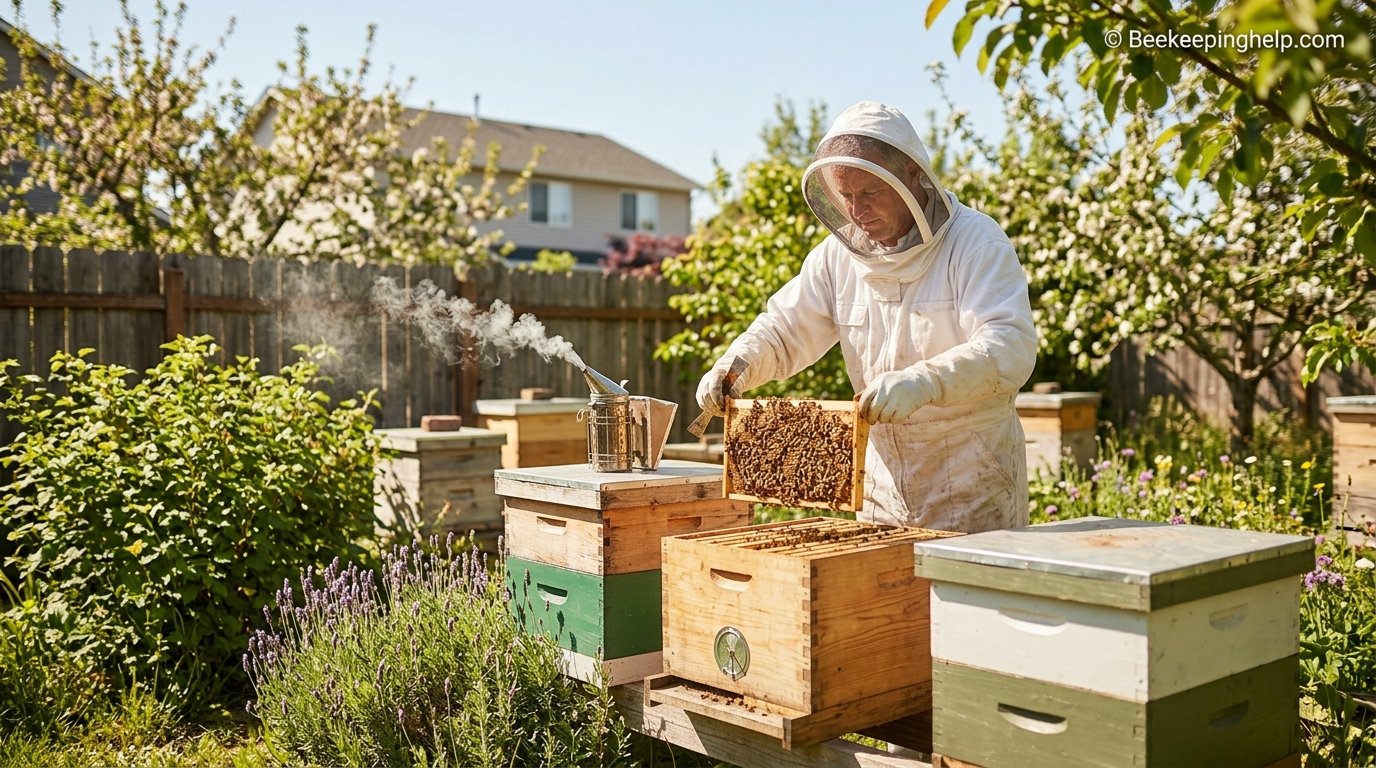
What Is a Nuc in Beekeeping? A Complete Guide to Nucleus Colonies
Everything new and experienced beekeepers need to know about nucs — what they are, why they matter, and how to use one to grow a healthy apiary.
1. What Does “Nuc” Actually Mean?
If you’ve spent any time around beekeeping forums, local bee clubs, or supplier catalogs, you’ve probably run into the word “nuc” and wondered exactly what people are talking about. A nuc — short for “nucleus colony” — is a small, fully functioning honey bee colony built around a handful of frames rather than a full-size hive box. Think of it as a starter colony: smaller in population and footprint, but complete in every way that matters biologically. It has a laying queen, workers of various ages, developing brood, and enough stored pollen and nectar to sustain itself while it grows.
The word is pronounced “nuke,” which trips up a lot of newcomers the first time they hear it said out loud after only ever reading it in print. Functionally, a nuc is exactly what its name implies: the nucleus, or core, around which an entire colony can be built. Give it time, space, and resources, and a five-frame nuc can expand into a full ten-frame hive within a single active season.
For most people just getting into the hobby, understanding nucs is one of the first practical decisions they’ll face. When you’re ready to start beekeeping, you’ll typically choose between starting with a package of loose bees, purchasing a nuc, or in rarer cases capturing a swarm. Each path has trade-offs, but nucs have become the preferred entry point for a large share of both new and experienced keepers because of how much biological groundwork is already done for you.
A nuc isn’t defined by a specific bee count, since populations vary by season and source, but rather by its structure: a small number of drawn or partially drawn frames, already populated with a working colony, housed in a nuc box sized to match. That structure is the heart of the definition, and it’s what separates a nuc from a swarm, a package, or a full colony.
It’s also worth noting that the term “nuc” is sometimes used as a verb in beekeeping conversation — a keeper might say they’re going to “nuc out” a strong colony, meaning they intend to pull frames from it to create one or more new nucleus colonies. This dual use, as both a noun describing the small colony itself and a verb describing the act of creating one, is a good sign of just how central the concept is to everyday apiary management, not just something reserved for beginners buying their first bees.
Ready to get started with a healthy nuc setup?
Shop Nuc Boxes on Amazon2. Where the Nuc Concept Came From
The nucleus colony isn’t a modern marketing invention — it has deep roots in queen-rearing practice going back well over a century. Long before nucs were sold commercially to hobbyists, professional queen breeders used small “mating nucs” to house virgin queens while they took mating flights and began laying. These mini colonies gave breeders a controlled, low-resource way to test and evaluate a queen’s performance before introducing her to a full-size colony.
Over time, beekeepers realized that the same small-colony structure worked beautifully as a way to sell and transport entire starter colonies, not just queens. Instead of shipping loose bees in a screened package with a caged queen — a method that stresses bees and forces them to draw comb from scratch — a nuc lets a buyer receive bees that are already organized around drawn comb, established brood, and a laying queen the workers have already accepted.
As commercial queen rearing and regional bee breeding operations expanded through the twentieth century, especially in response to challenges like colony losses from mites and disease, the five-frame nuc became something of an industry standard. It struck a practical balance: small enough to be affordable and transportable, large enough to contain a genuinely self-sufficient colony.
Today, nucs are a cornerstone of how bees are distributed. Local bee clubs often organize group nuc orders each spring, commercial queen producers sell them by the thousands, and many experienced keepers make their own nucs each year as a way to increase their colony count without buying anything at all — a process usually called “splitting.” Understanding this history helps explain why nucs look and function the way they do: everything about the format is inherited from decades of trial and error in queen rearing.
3. What’s Inside a Nuc Box
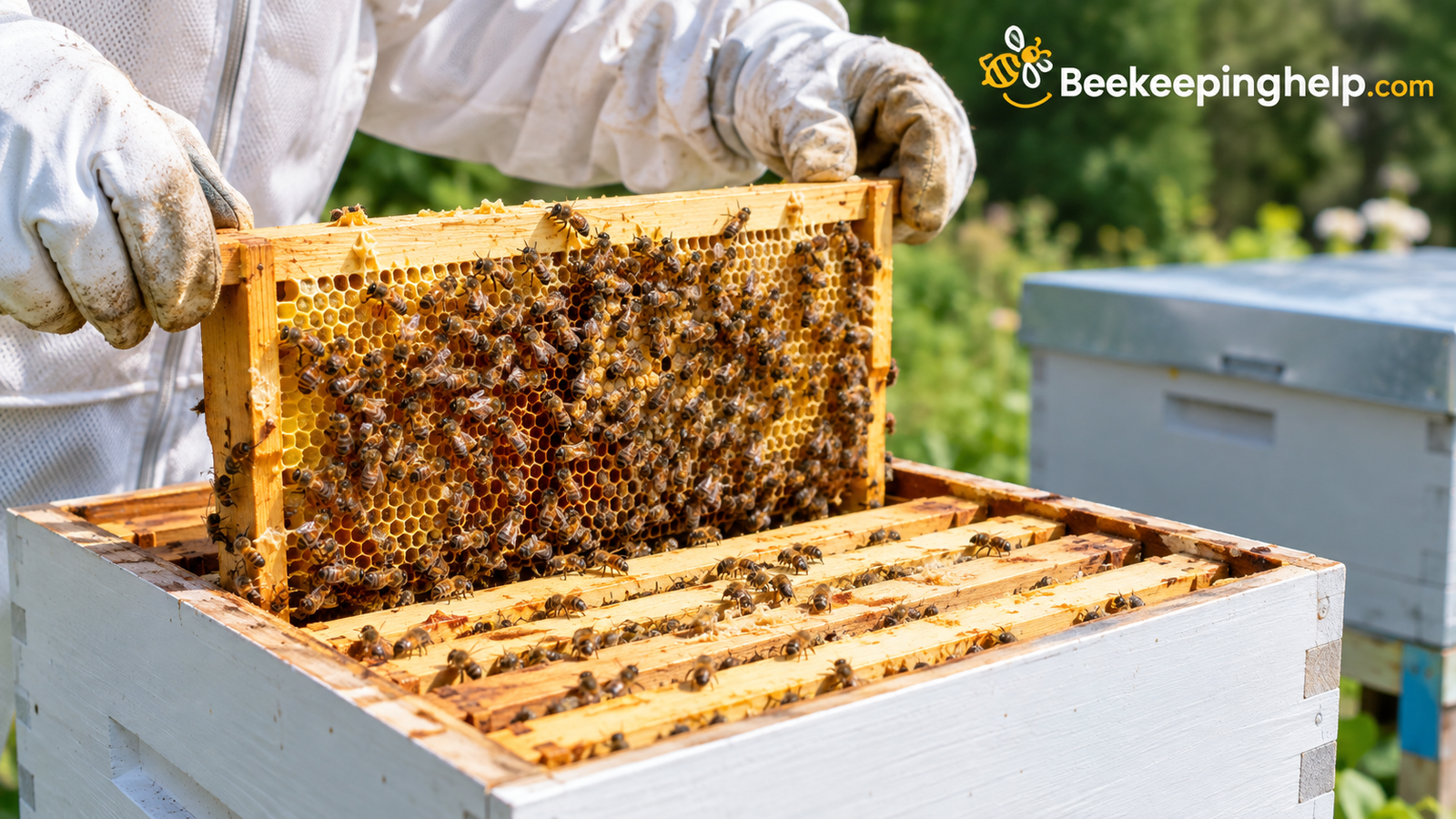
Open the lid of a healthy nuc and you’ll typically find four or five frames, each playing a distinct role in keeping the small colony alive and growing. Understanding what you’re looking at is a foundational skill, closely related to knowing the parts of a bee hive and their functions, since a nuc is really just a hive in miniature.
Brood Frames
Most nucs include two to three frames of brood in various stages — eggs, larvae, and capped pupae. This is arguably the most valuable part of the package, since brood represents the colony’s future workforce already in motion. A good brood pattern should look tight and consistent, with capped cells forming a solid, even patch rather than a scattered, spotty arrangement.
The Laying Queen
Every nuc is built around a single mated, laying queen, usually already accepted by the colony (unlike a package, where she often arrives in a separate cage and must be introduced gradually). Her presence and performance are what justify the price of the entire nuc, since a strong queen is the single biggest predictor of colony success.
Food Frames
At least one frame is generally dedicated to stored honey and pollen, giving the colony a buffer of food while it acclimates to a new location and, often, less-than-ideal weather during transport and installation.
Worker Bees at Every Age
Because the frames come straight from an established colony, the workers you receive span a full range of ages — from newly emerged nurse bees to older foragers. This age diversity matters because different tasks in a colony (nursing brood, building comb, foraging, guarding) are handled by bees at different life stages, so a nuc functions as a complete, self-managing team from day one.
All of this sits inside a compact nuc box, a scaled-down hive body designed to hold exactly this number of frames snugly, which is a big part of why nucs travel and establish so much more smoothly than loose packages of bees.
Want to see the frames up close before you buy?
Browse Frame Tools on Amazon4. Types of Nucs You’ll Encounter
Not all nucs are produced the same way, and the method behind a particular nuc can tell you a lot about what to expect once you get it home. Here are the three you’re most likely to run into.
Overwintered Nucs
These are colonies that were built up the previous season and successfully carried through winter at reduced size. Because they’ve already proven they can survive cold weather with a laying queen intact, overwintered nucs are often considered the gold standard — they tend to build up fast in spring since the queen and workers are already established as a team.
Walk-Away Split Nucs
A walk-away split is created by taking frames of brood, food, and bees from a strong existing colony and letting that new group raise its own queen from young larvae, with no purchased queen introduced. These nucs take longer to become productive since the colony has to go through the full queen-rearing cycle (roughly three to four weeks before a new queen is laying), but they’re a low-cost way for existing beekeepers to expand their own operation.
Requeened or “Made” Nucs
Commercial producers often build nucs by combining frames of brood and bees with a separately mated queen purchased from a queen breeder. This approach lets producers scale up nuc production quickly and offer buyers a specific, sometimes named genetic line (Italian, Carniolan, Russian hybrid, and so on) rather than whatever queen the source colony happened to raise naturally.
Each type has its place. If you’re brand new and want the fastest path to a strong first-year colony, an overwintered nuc from a reputable local supplier is usually worth the premium. If you already keep bees and want to grow your apiary for free, a walk-away split from your strongest hive is a smart, low-cost strategy.
5. Nuc vs. Package vs. Full Colony: Key Differences
New beekeepers are almost always choosing between three starting points: a nuc, a package, or a full established colony purchased outright. The table below breaks down how they compare across the factors that matter most.
| Factor | Nuc | Package | Full Colony |
|---|---|---|---|
| What you get | 4–5 frames with queen, brood, bees, and food | Loose bees (2–3 lbs) with a caged queen, no comb | A complete, established hive at full strength |
| Comb status | Already drawn or partially drawn | None — must be built from scratch | Fully drawn, often multiple boxes |
| Establishment speed | Fast — weeks, not months | Slower — comb-building delays growth | Immediate productivity |
| Typical cost | Moderate | Lower | Highest |
| Queen acceptance risk | Low — already accepted | Higher — must be introduced | None — already established |
| Disease/pest history | Some carryover risk from source colony | Lower carryover risk | Full carryover risk |
| Best for | Most new and expanding beekeepers | Budget-conscious, comb-building experience | Buyers wanting instant production |
Understanding this comparison also connects to a related debate many new keepers eventually run into once they’ve chosen their bees: which hive system to house them in. If you haven’t yet compared Flow Hive vs. Langstroth designs, it’s worth doing before your nuc arrives, since transferring frames is far easier when your equipment is compatible with standard nuc frame sizing from the start.
Comparing hive systems for your new nuc?
Shop Langstroth Hive Kits6. Why Beekeepers Choose Nucs
Nucs have grown in popularity for good reason, but they aren’t automatically the right choice for every situation. Here’s an honest breakdown of the trade-offs.
Pros
- Faster buildup thanks to drawn comb and existing brood
- Lower stress on bees during transport compared to shaken packages
- Queen is already accepted, removing introduction risk
- Age-diverse workforce covers all colony jobs immediately
- Often sourced locally, meaning bees are pre-adapted to regional climate
Cons
- Generally more expensive than a package
- Comb and equipment carry some risk of transferring pests or disease
- Frame sizing must match your own hive equipment exactly
- Limited availability — local nuc producers often sell out early in spring
- Harder to ship long distances compared to a package
For most people weighing how hard it is to start beekeeping, the nuc route tends to lower the learning curve considerably, since so many of the early failure points — queen rejection, slow comb building, absconding — are already handled before the box reaches your yard.
That said, cost sensitivity is a real factor for many first-time keepers, and it’s worth being honest about the trade-off: paying more upfront for a nuc often means paying less in frustration, replacement bees, or a lost season later on. Beekeepers who have tried both approaches frequently report that the extra cost of a quality nuc pays for itself the first time a package colony struggles to accept its queen or fails to build comb fast enough before a nectar dearth sets in.
7. How to Evaluate a Nuc Before Buying
Not every nuc on the market is created equal, and a little bit of inspection knowledge goes a long way toward avoiding a disappointing first season. Whenever possible, ask the seller if you can open the box and look through the frames before committing, or at minimum ask detailed questions if you’re buying sight unseen.
Check the Brood Pattern
Look for a tight, consistent pattern of capped brood rather than a “shotgun” pattern with scattered empty cells throughout the brood area. A shotgun pattern can indicate an aging or failing queen, or in rarer cases, disease.
Confirm the Queen Is Present and Laying
You don’t necessarily need to spot the queen herself (she can be hard to find even for experienced keepers), but you should be able to see eggs — tiny, rice-grain-sized and standing upright in fresh cells — which confirms she was laying within the last three days.
Ask About the Frame Count and Age
Confirm exactly how many frames of brood versus food you’re getting, and ask how old the comb is. Very dark, old comb can hold onto chemical residues and disease spores over time, so many experienced keepers prefer nucs built on comb that’s a few years old at most.
Ask About Mite Treatment History
A reputable nuc seller should be able to tell you what, if anything, they’ve done to manage varroa mites in the source colonies. This single question filters out a large share of low-quality sellers.
Match the Frame Size to Your Equipment
This one trips up more new beekeepers than almost anything else. Confirm the nuc uses standard deep frames (or whatever size matches your own hive bodies) before you buy, since a mismatched frame size can mean the difference between a five-minute transfer and a frustrating rebuild.
If you’re also budgeting for your first season, it helps to review how much it costs to start beekeeping so the nuc purchase fits into a realistic total, alongside a hive body, protective gear, and basic tools.
Get the right tools to inspect a nuc before you buy it.
Shop Beekeeping Starter Kits8. Installing a Nuc Into a Full Hive
Once your nuc arrives, the goal is simple: transfer the frames into a full-size hive body with as little disruption to the colony as possible. Here’s the general process most keepers follow.
Gather Your Gear
Before you open anything, suit up properly. It’s worth reading a bee suit review ahead of time if you haven’t already invested in protective gear, since a poorly fitted suit is one of the most common reasons new keepers get stung during their very first hive manipulation.
Light Your Smoker
A few gentle puffs of smoke at the entrance and under the lid calms the colony before you start moving frames. If you’re unfamiliar with the process, it helps to understand how a bee smoker works and what to use in a bee smoker so you’re not fumbling with fuel on installation day. A reliable bee smoker is one of the few tools worth spending a little extra on.
Transfer Frames in the Same Order
Lift each frame out of the nuc box carefully and place it into the center of your hive body in the same relative order it came in. Keeping the brood nest arrangement intact minimizes stress and helps the colony resume normal activity faster.
Fill the Remaining Space With Empty or Drawn Frames
A standard ten-frame hive body will have empty space left after your four or five nuc frames are transferred in. Fill the gaps with empty frames (ideally with foundation) so the colony has room to expand naturally as the queen continues laying and workers draw new comb.
Close Up and Leave Them Alone
Resist the urge to open the hive again for at least a week. Constant inspection in the first days after installation does more harm than good, disrupting the colony’s effort to reorganize itself in its new home. Understanding how a beehive works as a self-regulating system helps explain why a hands-off approach in this early window actually speeds up establishment.
Suit up and gear up before installation day.
Shop Suits & Smokers9. Feeding and Caring for a New Nuc
Even a strong nuc benefits from a little extra support during its first few weeks in a new hive, especially since it’s simultaneously adjusting to a new location and trying to draw comb faster than its small starting population would otherwise manage on its own.
Sugar Syrup for Comb Building
A light sugar syrup (roughly a 1:1 ratio of sugar to water by volume) mimics a nectar flow and encourages workers to draw new comb quickly. Understanding what to feed a bee at different times of year prevents common mistakes, like feeding syrup that’s too thin or too thick for the season.
Choosing a Feeder Type
Entrance feeders, frame feeders, and top feeders all work, but each has trade-offs in capacity, robbing risk, and ease of refilling. It’s worth comparing options in a guide to the best bee feeders before deciding, and some keepers even prefer to make their own bee feeder from simple materials rather than buying one outright.
Pollen Patties When Natural Pollen Is Scarce
If your nuc arrives before natural pollen sources are fully available in your area, a store-bought pollen patty placed directly on top of the brood frames can help nurse bees keep pace with brood-rearing demands.
Monitor, Don’t Micromanage
Check weekly for signs of steady progress — new comb being drawn, brood pattern expanding, syrup consumption — rather than performing full frame-by-frame inspections every few days. A light touch during the establishment phase reduces stress on a colony that’s still finding its footing.
Watch the Weather, Not Just the Calendar
A cold snap or an unexpected stretch of rain shortly after installation can slow foraging and syrup uptake dramatically, even in the middle of what’s supposed to be prime nuc season. Rather than sticking rigidly to a feeding schedule, adjust syrup volume and frequency based on what the colony is actually consuming and how much natural forage is realistically available on any given week.
10. Common Nuc Problems (and How to Fix Them)
Even well-sourced nucs can run into hiccups. Here are the issues that come up most often, along with practical fixes.
| Problem | Likely Cause | What to Do |
|---|---|---|
| No eggs or brood visible | Queen failed or was lost in transit | Wait a few more days, then requeen if still absent after 1–2 weeks |
| Bees clustering outside the box | Overheating or overcrowding | Provide shade, ensure ventilation, add space promptly |
| Slow comb-building | Weak nectar flow or insufficient feeding | Increase syrup feeding, check for adequate ventilation |
| Aggressive defensive behavior | Queenlessness or genetics | Confirm queen status; consider requeening if persistent |
| Robbing by other colonies | Small entrance not reduced during vulnerable period | Use an entrance reducer until the colony strengthens |
| Visible mites on bees | Carryover from source colony | Test mite levels and treat according to an integrated pest management plan |
Most nuc problems are timing-related rather than catastrophic — a colony that looks a little slow in week one is often thriving by week four. Resist the temptation to intervene too aggressively before giving the bees a fair chance to settle in.
Keep a mite-testing kit on hand from day one.
Shop Mite Testing Kits11. Nuc Box Materials and Designs
Whether you’re buying a nuc that arrives in its own box, or building nuc equipment for your own splits, it’s worth understanding the material trade-offs involved. This overlaps closely with the broader question of how to make a beehive, since nuc boxes follow many of the same construction principles as full hive bodies, just at a smaller scale.
| Material | Pros | Cons | Best For |
|---|---|---|---|
| Cardboard / corrugated plastic | Lightweight, cheap, disposable | Short lifespan, weak insulation | One-time shipping or temporary transport |
| Solid wood | Durable, good insulation, reusable for years | Heavier, needs periodic maintenance | Long-term apiary equipment |
| Polystyrene | Excellent insulation, lightweight | Less durable against physical damage | Cold climates, overwintering nucs |
If you’re curious about the manufacturing side, a closer look at how beehives are made explains the joinery, dimensioning, and finishing steps that also apply to well-built nuc boxes. And once your box is built or purchased, giving it a coat of protective finish — covered in a dedicated guide on how to paint a beehive — extends its usable life significantly, particularly for wooden equipment left outdoors year-round.
12. Best Time of Year to Get a Nuc
Timing matters enormously when it comes to nucs, arguably more than with any other beekeeping decision. Most nuc producers sell out for spring delivery months in advance, so planning ahead is essential rather than optional.
Spring: The Prime Window
Early to mid-spring, once temperatures are reliably above freezing and early forage is available, is by far the most common and most successful time to install a nuc. This timing gives the colony a full active season to build up strength, draw comb, and store enough honey to survive its first winter.
Early Summer: A Workable Backup
If spring nucs aren’t available, an early summer nuc can still succeed, though it gives the colony less time to build up reserves before fall. Extra feeding support is usually necessary to help these later-season nucs catch up.
Late Summer or Fall: Higher Risk
Installing a nuc late in the season is generally discouraged for new beekeepers, since the colony has little time to build comb, raise a healthy population of winter bees, and store adequate food before cold weather arrives. If it’s your only option, be prepared for intensive feeding and possibly supplemental insulation.
Because timing is so tightly linked to local nuc availability, it pays to place orders with a reputable local supplier as early as late winter, particularly if you’re also trying to figure out how hard it is to start beekeeping in your specific region and climate.
Plan ahead — grab your hive setup before nuc season sells out.
Shop Complete Hive KitsFrequently Asked Questions About Nucs
Is a nuc the same thing as a swarm?
No. A swarm is a naturally occurring group of bees that has left an existing colony in search of a new home, often with no drawn comb or established food stores. A nuc is a deliberately assembled, box-housed colony with drawn comb, brood, and food already in place.
How many bees are typically in a nuc?
Population varies by season and source, but a healthy five-frame nuc commonly holds several thousand adult bees, plus additional brood that will emerge over the following weeks.
How long does it take a nuc to grow into a full hive?
Under good conditions, a strong nuc installed in spring can fill a full ten-frame hive body within four to eight weeks, though this depends heavily on local forage, weather, and queen quality.
Can I keep bees permanently in a nuc box?
Nuc boxes are designed as a temporary, transitional home. A colony will quickly outgrow the space, so it should be transferred into a full hive body within a few weeks of arrival in most cases.
Do I need special equipment to accept a nuc?
You’ll need a full-size hive body with frames matching the nuc’s frame dimensions, plus basic protective gear and a smoker for the transfer itself.
Are nucs more expensive than packages?
Generally yes. The added cost reflects the drawn comb, established brood, and lower installation risk that come with a nuc compared to a shaken package of loose bees.
What should I do if my nuc’s queen seems to be missing?
Wait several days and check again for fresh eggs before assuming the queen is truly gone — she may simply be hard to spot. If there’s still no evidence of laying after one to two weeks, it’s time to requeen.
Can I make my own nuc instead of buying one?
Yes. Many experienced beekeepers create their own nucs by splitting frames of brood, food, and bees from a strong existing colony, either introducing a purchased queen or letting the colony raise its own.
What’s the ideal frame count in a nuc?
Four to five frames is the most common configuration, balancing enough resources for self-sufficiency against a manageable size for transport and handling.
Is it normal for a nuc to seem calm right after installation?
Yes, a period of reduced activity is normal as the colony reorients itself to a new location and hive orientation. Increased foraging activity typically resumes within a few days.
Do nucs carry disease risks?
Because nucs are built on existing comb from a source colony, there’s some risk of carrying over pests or pathogens, which is why asking about a seller’s mite treatment and disease history is an important step before buying.
What’s the difference between a nuc and a “starter hive”?
The terms are sometimes used loosely, but “nuc” specifically refers to the small-frame-count structure of the colony itself, while “starter hive” is a more general marketing term that may refer to a nuc, a package, or a small full-size hive kit depending on the seller.
Final Thoughts on Nucs
A nuc is one of the most practical and forgiving ways to bring honey bees into your life, whether you’re starting your very first colony or expanding an apiary you’ve been building for years. By giving you a laying queen, developing brood, and an already-functioning worker population on drawn comb, a nuc removes several of the biggest risk points that trip up new beekeepers working from a package alone. The keys to success are the same ones that apply throughout beekeeping in general: buy from a reputable source, inspect carefully, match your equipment, and give the colony room and time to settle in without excessive interference.
If you’re ready to move forward, make sure your equipment, protective gear, and feeding setup are ready before your nuc ever arrives — a smooth installation day sets the tone for the entire season ahead.
Shop Beekeeping Equipment on Amazon