What Is Swarming in Beekeeping? A Complete Guide for Beekeepers
Understand why honey bee colonies swarm, how to spot the warning signs early, and what steps you can take to prevent, control, or capture a swarm before you lose a hive.
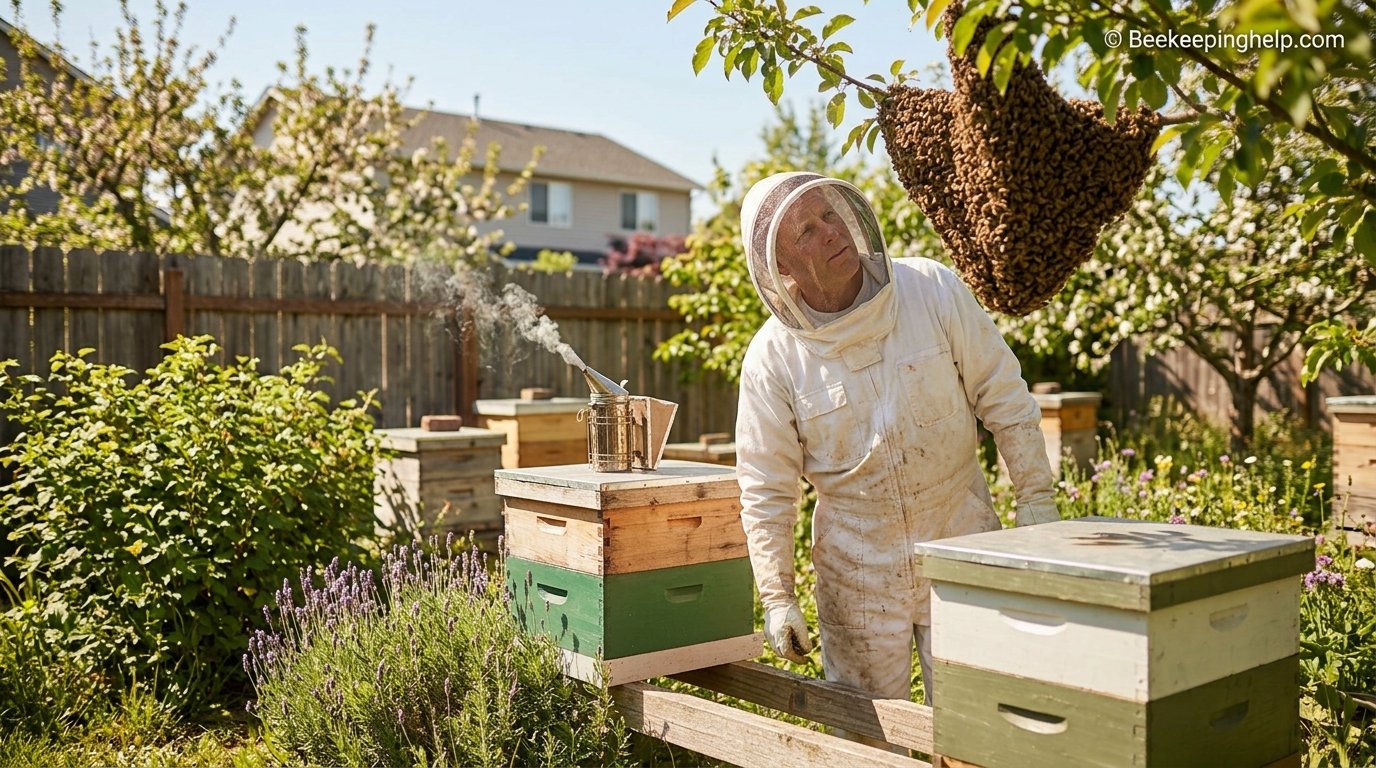
Every spring, beekeepers open a hive expecting business as usual and instead find half the colony gone, a handful of queen cells hanging from the comb, and a very different-looking population inside the box. That single event — swarming — is one of the oldest and most misunderstood behaviors in beekeeping. It is not a disaster, and it is not a disease. It is reproduction. This guide breaks down exactly what swarming is, why it happens, how to read the warning signs, and what a beekeeper can realistically do about it.
1. What Is Swarming?
Swarming is the natural way a honey bee colony reproduces itself at the colony level. Instead of one bee making more bees, an entire established colony splits into two (or more) separate, self-sufficient colonies. The old queen leaves the hive with roughly half to two-thirds of the worker bees, while a newly reared queen stays behind to head the original colony. Both halves then continue on independently, each capable of building comb, raising brood, and storing honey.
To an outside observer, a swarm in flight looks chaotic — a dense, humming cloud of thousands of bees moving through the air together. In reality, it is one of the most organized events in the insect world. The bees that leave are not abandoning the hive out of distress; they are executing a decision the colony made collectively, days or even weeks earlier, based on resource availability, population density, and the physical condition of the nest.
For anyone new to the hobby, it helps to first understand the basics of beekeeping as a whole before diving into swarm behavior specifically, since swarming only makes sense in the context of how a colony grows, forages, and manages space throughout the season.
2. Why Do Bees Swarm? Root Causes Explained
Swarming is triggered by a combination of internal and external pressures on the colony. No single factor causes it in isolation; instead, several conditions tend to line up at once, pushing the colony toward the decision to split.
Overcrowding and Congestion
The most commonly cited trigger is simple lack of space. As a colony grows through late winter and early spring, the queen’s laying rate increases, brood nest expands, and incoming nectar fills any remaining open comb. When the box becomes physically congested — full frames, little open cell space, bees clustering on the outside of the entrance — the colony reads this as a signal that it has outgrown its current home.
Queen Pheromone Dilution
A healthy, actively laying queen produces pheromones that are passed from bee to bee throughout the hive, signaling to the workers that the queen is present and productive. As colony population balloons, this pheromone gets diluted across a much larger number of individuals. Workers in the outer edges of a large, crowded colony may receive so little queen pheromone that they behave as though the queen is failing or absent, which is one of the internal cues that initiates queen cell construction.
Nectar Flow and Nutritional Abundance
Paradoxically, swarming tends to spike during periods of strong nectar flow rather than scarcity. Abundant incoming nectar and pollen fuel rapid brood rearing and give the colony the nutritional surplus needed to raise new queens and provision a departing swarm with enough stored energy to survive. A colony under nutritional stress or during a nectar dearth is actually far less likely to swarm, since it lacks the resources to gamble on reproduction.
Age and Genetics of the Queen
Older queens, particularly those in their second or third year, are statistically more likely to preside over colonies that swarm. Older queens produce somewhat reduced pheromone output and tend to be replaced more readily by the colony. Certain genetic lines are also simply more “swarmy” than others — some commercial queen breeders select specifically against this trait, while some feral and survivor stock retains a strong swarming instinct as part of its natural reproductive strategy.
Poor Ventilation and Hive Design
Heat and humidity buildup inside an overcrowded hive with limited airflow can accelerate the timeline toward swarming. This is one of several reasons hive design and construction matter — a well-ventilated hive with enough internal volume gives the colony more runway before congestion becomes a problem. Understanding the parts of a bee hive and their functions makes it much easier to identify where airflow and space bottlenecks are likely to occur.
3. The Biology Behind Swarming: Queen Cells and Colony Instinct
Understanding swarming at a biological level starts with queen cells. Unlike regular worker or drone cells, which are built horizontally into the comb, queen cells are large, peanut-shaped structures that typically hang vertically from the bottom or edges of a frame. When a colony decides to swarm, workers select a handful of young larvae — genetically identical to any other female larva at that stage — and begin feeding them exclusively royal jelly in disproportionately large quantities.
This exclusive royal jelly diet triggers a developmental cascade: the larva develops full reproductive organs, grows larger, and matures into a queen rather than a worker in roughly 16 days, compared to 21 days for a worker bee. Beekeepers refer to these as “swarm cells” when they appear along the bottom of frames in the context of overcrowding, distinguishing them from “supersedure cells,” which usually appear singly or in small numbers near the face of the comb when a colony is quietly replacing a failing queen without swarming.
The Role of the Old Queen
Interestingly, the old queen does not simply wait around for a new queen to emerge and then get evicted. In the days leading up to swarming, worker bees deliberately reduce her food intake, causing her to slim down and become capable of sustained flight again — something a full-bodied, heavily laying queen typically cannot do well. This “queen diet” is a critical preparatory step; without it, the swarm would leave with a queen too heavy to fly any meaningful distance.
Scout Bees and Collective Decision-Making
Before a swarm ever leaves the hive, a subset of older forager bees begin acting as scouts, searching the surrounding area for potential new nest sites — hollow trees, wall cavities, or abandoned structures. This search often begins before the swarm departs and continues intensely once the swarm has settled temporarily on a nearby branch. Scouts return and perform a specialized “waggle dance” to advertise candidate sites, and through a remarkable process of decentralized quorum-sensing, the swarm collectively converges on a single best option, usually within a day or two.
Why This Process Evolved
From an evolutionary standpoint, swarming solves a problem that no individual bee could solve alone: how does a superorganism reproduce when its “body” is actually tens of thousands of separate insects working as one unit? The answer nature arrived at is elegant — rather than producing a single offspring, the colony effectively clones itself, splitting its accumulated knowledge, labor force, and genetic material into two independent, functioning units. This is fundamentally different from how a solitary insect reproduces, and it’s part of why honey bees are often studied as a model organism for understanding collective intelligence and decentralized decision-making in biology and even computer science.
It’s also worth noting that swarming carries real risk for the bees themselves. A departing swarm has no guarantee it will find a suitable cavity before running out of stored honey, and unseasonably cold or wet weather during the scouting phase can kill a significant portion of the cluster. The instinct persists because, on average across evolutionary time, the reproductive payoff of successfully establishing a second colony outweighs the risk — but it is very much a gamble each time it happens, not a guaranteed success.
4. Signs and Symptoms a Hive Is About to Swarm
Catching the warning signs early is the single most valuable skill for any beekeeper who wants to prevent unwanted swarming or, at minimum, be prepared for it. Below are the most reliable indicators, roughly in order of how early they typically appear.
| Sign | What You’ll Observe | How Far Out From Swarming |
|---|---|---|
| Congestion at the entrance | Bees clustering or “bearding” outside the hive, even in cool weather | 2–4 weeks |
| Reduced open comb | Most frames full of brood, honey, or pollen with little empty space for the queen to lay | 2–3 weeks |
| Queen cups appearing | Small, unused peanut-shaped cups along frame bottoms | 1–3 weeks |
| Queen cells with eggs/larvae | Cups now provisioned and being actively fed | 1–2 weeks |
| Capped swarm cells | Queen cells sealed with wax, larvae fully developed inside | Days (often under a week) |
| Reduced queen laying | Queen visibly slimmer, laying rate drops sharply | Days |
| Sudden colony calm or “roar” | An audible pitch change in hive sound just before or during departure | Hours |
Understanding how a beehive works as an integrated system makes it much easier to interpret these signs correctly rather than mistaking normal seasonal buildup for imminent swarming.
5. The Swarming Process: A Step-by-Step Timeline
While every colony behaves slightly differently, most swarms follow a broadly predictable sequence from the moment queen cells are started to the moment the new colony is fully established.
Stage 1 — Preparation (2–4 Weeks Before)
The colony reaches peak population, congestion builds, and worker bees begin constructing queen cups. Foragers continue bringing in nectar and pollen at a high rate, feeding both brood and the developing queen larvae.
Stage 2 — Queen Slimming (1–2 Weeks Before)
Workers restrict the old queen’s food, and her abdomen shrinks as egg production drops. She becomes noticeably more mobile and is often found moving around the outer frames rather than concentrated in the brood nest.
Stage 3 — Departure Day
Typically on a warm, calm, sunny day (often late morning), a large portion of the workforce — anywhere from 30% to 70% of the colony — engorges itself with honey and exits the hive in a rush, forming a dense flying cloud around the old queen.
Stage 4 — The Bivouac
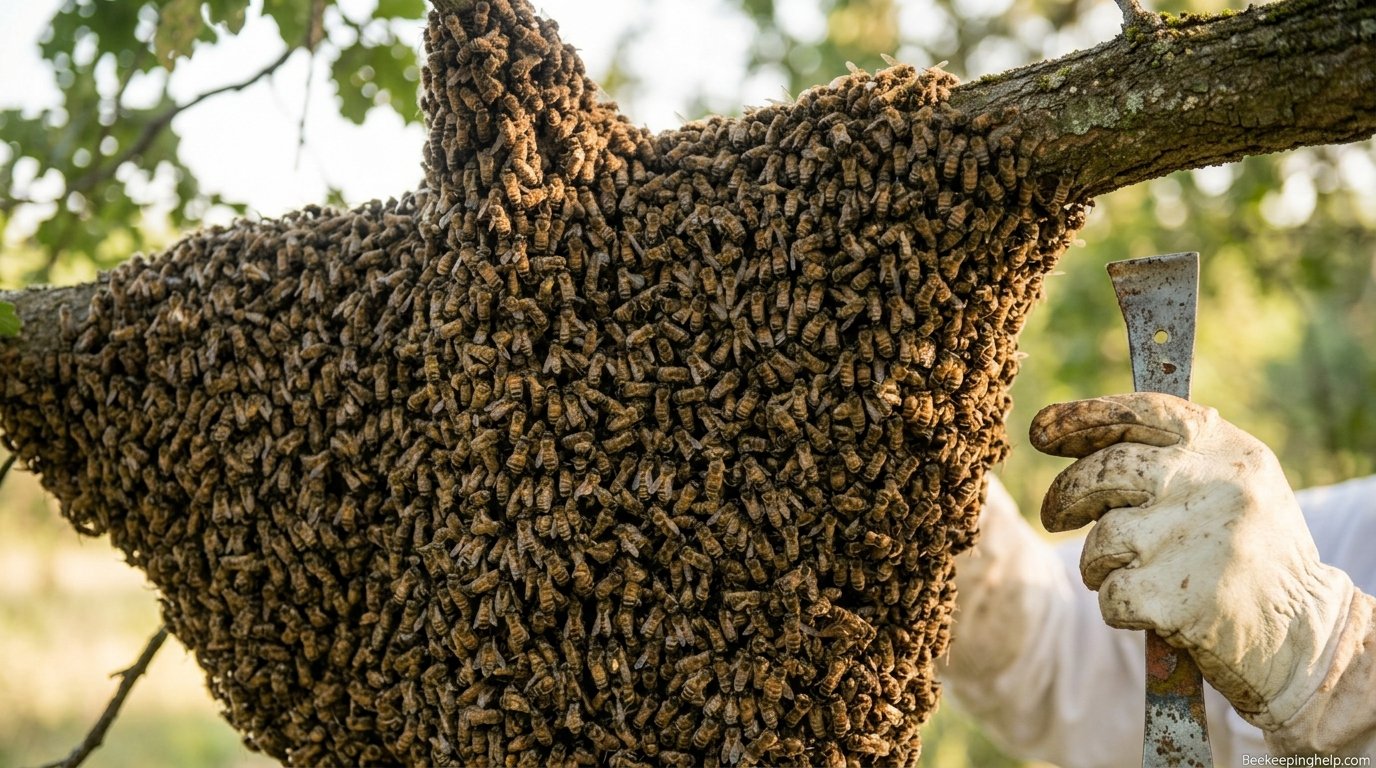
Within a few hundred feet of the original hive, the swarm settles onto a branch, fence, or other surface, forming a tight, teardrop-shaped cluster around the queen. This typically lasts anywhere from a few hours to two or three days.
Stage 5 — Scouting and Consensus
Scout bees search the surrounding area (often up to several miles) for a suitable cavity, then return to perform waggle dances advocating for the sites they’ve found. Over time, dances for the best site are reinforced while others fade, until the swarm reaches a quorum.
Stage 6 — Relocation and Establishment
The swarm takes flight again and moves directly to the chosen site, where workers immediately begin drawing new comb, and the queen resumes laying within a day or two.
Meanwhile, back in the original hive, the first virgin queen to emerge from her cell will typically seek out and destroy any remaining unemerged queen cells (unless the colony is strong enough to throw an afterswarm — more on that below), then take a mating flight within about a week and begin laying roughly two to three weeks after the original swarm departed.
6. Primary Swarms vs. Afterswarms (Casts)
Not every swarming event is a single, clean split. Strong colonies with abundant resources sometimes throw multiple swarms from the same hive in succession.
Primary Swarm
- Leaves with the original mated queen
- Largest in size — often 50%+ of the colony
- Departs as soon as the first queen cell is capped
- Highest survival odds of any swarm from that hive
Afterswarm (Cast)
- Leaves with one or more virgin (unmated) queens
- Much smaller — sometimes only a few thousand bees
- Can occur repeatedly over several days if multiple virgins emerge
- Lower survival odds due to smaller population and unmated queen risk
Afterswarms happen when the parent colony was strong enough, and had enough surplus bees, to risk sending out a second or even third group despite the reduced odds of any one cast surviving. Beekeepers who are choosing equipment to house captured swarms should think carefully about the best beekeeping hives for smaller starter colonies, since an afterswarm rarely has the numbers to defend or heat a full-sized box right away.
Interestingly, when multiple virgin queens emerge close together in a colony throwing repeated afterswarms, they will sometimes leave together in the same cast, only fighting to the death for sole leadership once safely settled at the eventual nest site rather than battling it out inside the original hive. In other cases, the first virgin to emerge will actively seek out and sting her rival queen cells before they can hatch, effectively eliminating the competition before an afterswarm is even necessary. Which of these two outcomes occurs largely depends on how much surplus population the parent colony still has to spare — a very strong colony tends to tolerate multiple virgins long enough for several casts to leave, while a more modest colony typically settles the succession internally after just one swarm.
7. Seasonal Patterns: When Does Swarming Season Happen?
Swarming is strongly seasonal, though the exact timing shifts depending on climate and local forage availability.
- Early spring: The classic swarm season in temperate climates, driven by rapid population buildup after overwintering combined with the first strong nectar flows (fruit trees, dandelion, early clover).
- Late spring to early summer: A secondary peak in many regions as populations continue climbing and major nectar flows (clover, tulip poplar, basswood) hit their strongest points.
- Mid-to-late summer: Swarming activity drops sharply as nectar dearth sets in and colonies shift focus toward defense and honey conservation rather than expansion.
- Fall: Rare but not unheard of, usually limited to unusually strong colonies in mild climates with a late nectar flow, though this timing is risky since a late swarm has little time to build stores before winter.
New beekeepers are especially prone to being caught off guard during their very first spring. If you’re still working through the fundamentals of how to start beekeeping, it’s worth building a standing calendar reminder to begin weekly inspections as soon as daytime temperatures consistently clear 55–60°F (13–16°C).
8. Swarming vs. Absconding vs. Supersedure: What’s the Difference?
Beekeepers frequently confuse three distinct colony behaviors that all involve a queen and a group of bees leaving or replacing themselves. Understanding the difference matters because each one calls for a completely different response.
| Behavior | Who Leaves | Colony Left Behind | Primary Trigger |
|---|---|---|---|
| Swarming | Old queen + large portion of workers | Healthy, with new queen cells | Overcrowding, reproduction |
| Absconding | Entire colony, including queen | Nothing — hive is completely empty | Stress, pests, starvation, disturbance |
| Supersedure | No one leaves | Old queen quietly replaced in place | Failing or injured queen |
Absconding in particular is often mistaken for swarming by beginners, but it is a far more serious event — the colony has judged its current location unviable and left entirely, taking all resources with it. This is more common in feral colonies, including those found nesting in unconventional locations; comparing photos of types of beehives found in trees can help you recognize a natural nest that may be prone to absconding under stress. Supersedure, by contrast, is the least dramatic and generally the healthiest outcome — no bees are lost, and the transition happens quietly within the same box, similar in concept to choosing between hive systems like the Flow Hive vs. Langstroth debate, where the underlying colony biology stays the same regardless of the equipment housing it.
One practical way to tell these apart during an inspection is to look at what’s left behind. If you open a hive and find it completely empty of bees but still full of honey, pollen, and capped brood, that is almost always absconding — a swarm never leaves useful stores and developing brood behind voluntarily. If instead you find a reduced but still-present population, some empty swarm cells, and eggs from a new queen, that’s the aftermath of a normal swarm. And if the population and stores look essentially untouched but you simply notice a new, unmarked queen where you previously had a marked one, that’s a textbook sign of a quiet supersedure that happened without you catching it in progress.
9. How Swarming Affects Honey Production and Colony Health
From a purely economic standpoint, swarming is expensive for the beekeeper, even though it is a triumph for the bees themselves.
Immediate Population Loss
Losing 50–70% of the foraging workforce mid-season sharply cuts nectar collection at precisely the moment strong flows are often available. The parent colony essentially resets its productive capacity and needs several weeks to rebuild numbers before it can meaningfully contribute to a honey harvest.
Brood Break and Queen Gap
Between the old queen’s departure and the new queen’s first laying cycle — typically two to three weeks — there is no new brood being started. This “brood break” temporarily reduces varroa mite reproduction (a minor silver lining) but also means the workforce numbers will dip further before recovering, since older bees continue to age out with no replacements yet emerging.
Nutritional Stress on the Swarm Itself
The departing swarm, meanwhile, starts from zero: no comb, no stored food beyond what individual bees carried in their honey stomachs, and no brood. If it settles somewhere with poor forage or during unfavorable weather, it can struggle to establish itself, which is why supplemental feeding is often critical for a freshly hived swarm — understanding what to feed a bee colony in its first weeks can make the difference between establishment and failure.
If you’re weighing feeder styles for a newly caught swarm, a side-by-side look at the best bee feeders currently on the market is a useful next step before you commit to one system.
10. Swarm Prevention Techniques for Beekeepers
While no method guarantees a colony will never swarm — the instinct is simply too deeply wired — several proactive management practices measurably reduce the odds.
Give the Colony Room Early
Adding supers or additional boxes before the colony feels crowded, rather than after, is the single highest-leverage prevention technique. Checking honey stores and brood congestion every 7–10 days during buildup season lets you stay ahead of the curve.
Requeen Regularly
Because older queens are statistically more prone to swarming, many commercial and hobbyist beekeepers requeen every one to two years with young, vigorous queens from lines selected for reduced swarming tendency.
Reverse Hive Bodies
In a two-box Langstroth setup, the brood nest often migrates upward over winter, leaving the lower box empty. Physically swapping the top and bottom boxes in early spring gives the queen fresh open comb to expand into without the colony needing to build new comb from scratch.
Remove Queen Cells (With Caution)
Cutting out swarm cells can delay swarming by a week or two, but it is rarely a complete fix on its own — if the underlying congestion and pheromone dilution aren’t addressed, the colony will simply start new cells within days. It also carries the risk of missing a hidden cell and rendering the colony queenless if you accidentally remove all of them without another option in place.
Choose the Right Equipment From the Start
Hive design itself plays a role. Boxes with better ventilation and more usable internal volume give colonies more runway before congestion sets in. If you’re building your own equipment, understanding how to make a beehive — and more broadly how beehives are made at a manufacturing level — helps you choose or build boxes with swarm prevention already factored into the design. Comparing different beehive types with pictures side by side is also a helpful way to visualize how internal volume and box configuration differ across systems.
11. Swarm Control Methods: Splits, Checkerboarding, and More
When prevention alone isn’t enough, active swarm control lets a beekeeper get ahead of the colony’s decision by essentially performing the split on their own terms.
The Walk-Away Split
The beekeeper physically divides frames of brood, bees, and stores between two boxes, ensuring at least one side has eggs or very young larvae so it can raise its own queen if needed. This mimics natural swarming but keeps both resulting colonies under the beekeeper’s control rather than losing bees to the wild.
Making a Nuc
A smaller-scale version of the split, a nucleus colony (nuc) uses just a handful of frames to start a compact new colony, often for requeening purposes or to bank a spare queen. If the term is unfamiliar, it’s worth reading a full explainer on what a nuc is in beekeeping before attempting your first split.
Checkerboarding
This technique involves alternating frames of honey with frames of empty drawn comb in the uppermost box during late winter, which is thought to disrupt the colony’s perception of being “full” and delay the swarming decision into a later, more manageable point in the season.
The Demaree Method
A more advanced technique that separates the queen from the majority of brood within the same stack of boxes (using a queen excluder), simulating some of the effects of swarming — reduced congestion, reduced pheromone concentration around most of the workforce — without the colony actually losing any bees.
| Method | Skill Level | Bees Lost? | Best For |
|---|---|---|---|
| Walk-away split | Beginner | No | General swarm control, colony increase |
| Making a nuc | Beginner–Intermediate | No | Requeening, backup colonies |
| Checkerboarding | Intermediate | No | Late-winter prevention |
| Demaree method | Advanced | No | Keeping full workforce together while suppressing swarm urge |
Whichever method you choose, a good smoker helps keep the colony calm during the more invasive parts of a split or Demaree setup. If you’re unsure how the tool actually works, it helps to review how a bee smoker works and, before buying one, compare a few options in a best bee smoker roundup, along with guidance on what to use as smoker fuel.
12. What to Do If You Catch a Swarm
Whether it’s your own hive’s swarm settled on a nearby fence post or a wild swarm you’ve been called out to collect, the process of hiving it safely follows a similar pattern.
Gear Up Properly
A freshly settled swarm is usually remarkably docile — the bees have no comb or brood to defend and are focused on protecting the queen — but a proper suit still matters, especially with an unknown colony’s temperament. Reading a bee suit review before you buy, and checking whether your suit will protect you from wasps as well as bees, is worth doing before your first swarm call.
Capture the Cluster
Most swarms can be captured by positioning a box or container beneath the cluster and giving the branch a firm, single shake so the bees drop in as a mass, then covering the container and waiting for stragglers (and the queen’s scent) to draw the rest inside over the following hour.
Transport and Hive Placement
Once collected, the swarm should be transported in a ventilated, secure container and hived as soon as possible, ideally in the evening or during cooler hours to reduce stress and bee loss during the move.
Feed and Monitor
A newly hived swarm has no stores, so light feeding for the first one to two weeks — combined with a way to build a simple feeder if you don’t have one on hand, as covered in this guide on how to make a bee feeder — helps it draw comb quickly. Check back within 5–7 days to confirm the queen is laying.
Good Swarm Signs
- Calm, low-defensive behavior
- Tight, organized cluster shape
- Queen visible or confirmed laying within a week of hiving
Warning Signs
- Unusually aggressive defensive behavior (possible Africanized influence in some regions)
- Visible signs of disease or heavy mite load
- No queen present or laying after 10+ days
New hobbyists often underestimate the total setup cost before their first swarm season, so it’s worth reviewing both how much it costs to start beekeeping and an honest look at how hard it actually is to start beekeeping before committing to housing a caught swarm long-term. It’s also worth keeping your equipment in good shape once you’re up and running — routine maintenance like learning how to paint a beehive for weatherproofing and periodically washing your bee suit keeps your gear ready for the next swarm call.
Frequently Asked Questions
Is swarming bad for bees?
No — swarming is a natural and generally healthy reproductive event for a bee colony. It only becomes a problem from the beekeeper’s perspective, since it reduces honey production and worker population in the parent hive.
Will a swarm of bees sting me?
A swarm in transit or freshly settled is usually very calm, since it has no hive or brood to defend. Stings are still possible if the cluster is handled roughly, but swarms are statistically far less defensive than an established colony being inspected.
How long does a swarm stay in one place before moving on?
Most swarms bivouac for anywhere from a few hours to two or three days while scout bees search for and agree on a permanent nest site, though some move on within hours if a great site is found quickly.
What time of year do bees swarm the most?
Swarming peaks in spring and early summer in most temperate climates, coinciding with rapid colony population growth and the year’s strongest nectar flows.
Can I stop a colony from swarming once queen cells are capped?
Once cells are capped, the decision is essentially final; removing capped cells rarely prevents the swarm at that stage and can even trigger it early or leave the colony queenless. Earlier intervention — before capping — is far more effective.
Do I lose the queen when a colony swarms?
You lose the original queen, since she leaves with the swarm, but the parent colony left behind raises a new queen from the cells that were prepared in advance.
What’s the difference between a swarm and a wasp nest?
A honey bee swarm is a temporary, exposed cluster of bees with no comb, usually hanging from a branch or structure, while a wasp nest is a papery, enclosed structure the colony builds and lives in permanently.
Can a swarm survive without a beekeeper catching it?
Yes, many swarms successfully find a cavity in the wild — hollow trees, wall voids, or similar spaces — and establish a fully independent feral colony without any human intervention.
How big is a typical swarm?
Primary swarms often range from 10,000 to 20,000 bees or more, while afterswarms (casts) can be as small as a few thousand bees.
Should I call someone if I see a swarm in my yard?
In most cases, yes — many local beekeeping associations maintain swarm-removal lists, and a beekeeper can usually collect the swarm safely and free of charge, since a captured swarm is a valuable free colony.
Does requeening every year stop swarming completely?
It significantly reduces the odds, since younger queens produce stronger pheromone signals, but it does not eliminate the instinct entirely — congestion and nectar flow can still trigger swarming even with a young queen present.
Is it normal to see drones flying with a swarm?
Yes, a percentage of drones typically leave with the swarm as well, since the new colony will eventually need drones present for future queen mating within its own population or nearby colonies.
Final Thoughts on Swarming
Swarming is not a sign that something has gone wrong in your apiary — it’s a sign that a colony has thrived to the point of reproducing. The goal for most beekeepers isn’t to eliminate swarming entirely, since that instinct is baked into the biology of the species, but to manage it: catch the early signs, intervene with splits or added space before the colony forces the issue, and be ready to hive a swarm quickly and confidently if one does get away from you. With a bit of seasonal planning and the right equipment on hand, swarming shifts from a frustrating surprise into just another predictable part of the beekeeping calendar.
Shop Beekeeping Starter Kits