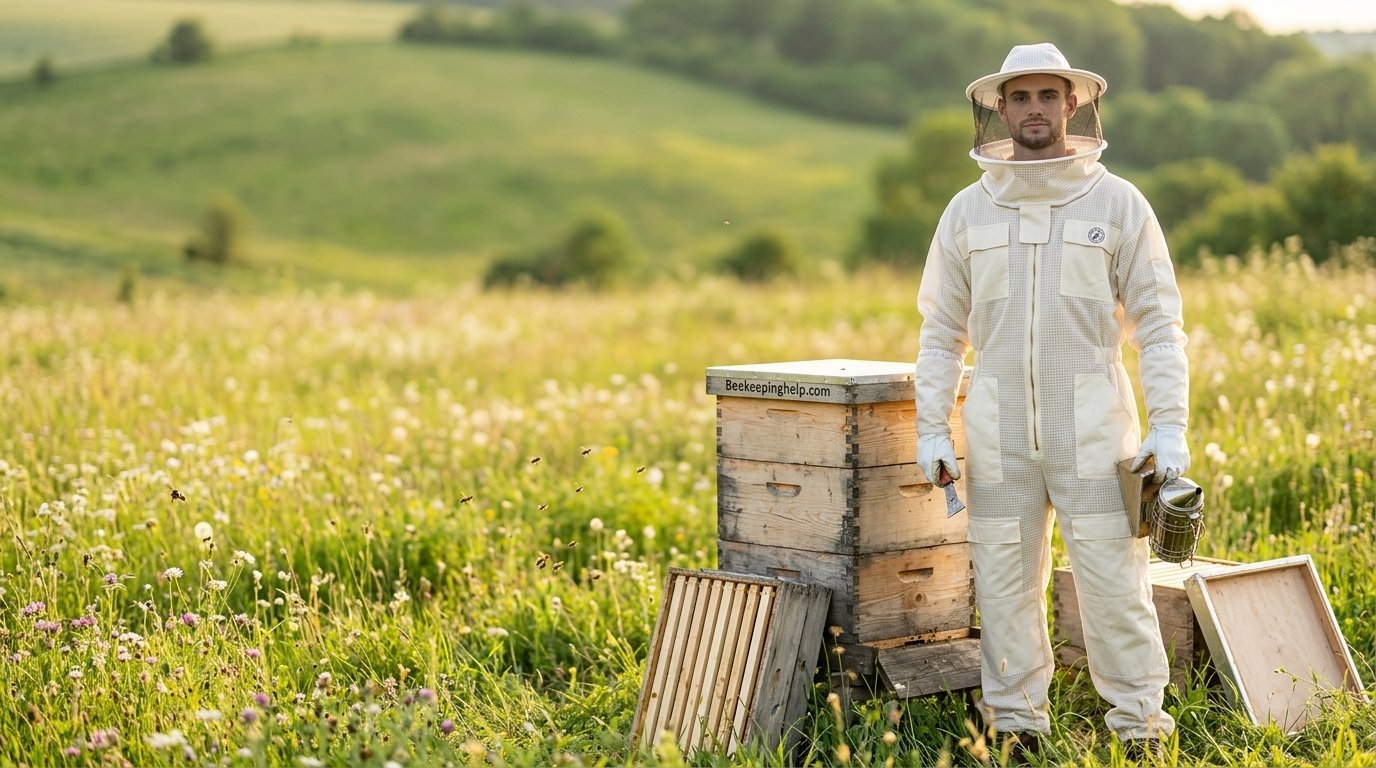
Best Beekeeping Suits: 7 Tested Picks for Comfort, Sting Protection and Value
Ask ten beekeepers what the best beekeeping suit is and you will get ten opinions, usually shaped by the climate they work in and the worst sting they ever took. This guide cuts through that noise. We compared seven popular full-body suits on fabric, ventilation, veil design, closures and price, so you can match a suit to your own apiary instead of guessing.

Why Your Beekeeping Suit Matters More Than You Think
A good suit does more than stop stings. It keeps you calm, and calm beekeepers make gentler movements, which keeps colonies calmer. If you are still planning your first season, our guide on how to start beekeeping covers the wider gear list. Protective clothing belongs at the top of it.
Suits also matter for reasons beyond honeybees. Many people wonder whether bee suits protect from wasps, and the answer depends heavily on fabric thickness, which we cover below.
Confidence changes how you work
New beekeepers often flinch when a bee lands on the veil, and flinching is exactly what agitates a colony. A suit you trust lets you slow down, breathe and read the hive. Experienced keepers say the same thing in different words: the best suit is the one that lets you forget you are wearing it.
What a suit actually has to do
Four jobs matter. It must keep stingers away from skin, keep bees from crawling inside, keep you cool enough to concentrate, and survive years of washing, kneeling and hive-tool scrapes. Most suits handle two or three of these well. Very few handle all four, which is why the right choice depends on where and how you keep bees.
Full suit, jacket or half suit
Jackets are quick and cheap, but they leave a gap at the waist and expose trousers to ankle-crawlers. A full suit closes those gaps with elastic cuffs, ankle bands and boot-friendly zippers. For a first season, a full suit removes an entire category of unpleasant surprises.

Humble Bee 410 Polycotton Suit
Check Price on AmazonHow We Compared These Suits
We looked at five things: sting resistance, breathability, veil quality, closures (zippers, elastic and thumb loops) and value for money. Fabric weight and construction drove most of the differences. Single-layer cotton is light and cheap, while triple-layer mesh suits trade bulk for airflow and a physical gap between the fabric and your skin.
What we did not reward
Extra pockets and fancy carrying cases are nice, but they never outranked fit and ventilation in our scoring.
Protection first
We scored sting resistance by looking at fabric construction rather than marketing claims. A honeybee sting is roughly a couple of millimetres long, so anything that keeps skin farther than that from the outer layer earns credit. Multi-layer mesh does this by design. Single-layer cotton relies on loose fit.
Comfort and heat
Overheating is the top reason beekeepers cut inspections short. We considered fabric weight, whether ventilation panels exist, and how quickly a suit traps heat in warm weather. The Humble Bee, for example, is comfortable but is honest about struggling above 85°F (29°C).
Veils, zippers and closures
The veil is the most safety-critical component. We favored designs that hold mesh clear of the face, then checked zipper quality and closures such as thumb loops, heel loops and elastic bands. Brass and metal YKK zippers scored higher because plastic teeth are the first thing to fail.
Value over time
A cheap suit that lasts one season costs more than a durable suit that lasts five. We weighed price against seam quality, fabric density and how well each suit holds up to repeated washing.
Oz Armour 3-Layer Ventilated Suit
Check Price on AmazonQuick Comparison Table
| Suit | Fabric | Best for | Main drawback |
|---|---|---|---|
| Humble Bee 410 | 50/50 polycotton, 280 gsm | Everyday comfort | Hot above 85°F (29°C) |
| Oz Armour | 3-layer mesh | Hot climates | Price and bulk |
| VIVO Cotton | 100% cotton | Budget backyard use | Stings can pass when tight |
| Natural Apiary Max | 65/35 cotton-poly | Durability, smoker use | Runs small |
| Ultra Breeze | Premium 3-layer mesh | Maximum protection | Premium price, stiff at first |
| Mann Lake Economy | 60/40 blend | Starter suit | Veil can sit close to face |
| LONGADS | Polycotton, 3D mesh panels | Cheap ventilation | Thinner mesh |

Ultra Breeze Ventilated Suit
Check Price on AmazonHumble Bee 410 Polycotton Beekeeping Suit
The 410 is a tailored, no-nonsense suit made from a 280 gsm blend of half cotton and half synthetic polycotton. It features a removable round veil, brass YKK zippers, thumb and foot elastic loops, four hive-tool pockets and a canvas carrying case.
- Comfortable tailored fit
- Durable double-stitched seams
- Round veil keeps mesh clear of the face
- No ventilated mesh
- Retains heat above 85°F (29°C)
Choose it if you keep bees in mild climates and want a suit that feels like proper workwear.
Fit, fabric and feel
At 280 gsm, the Humble Bee 410 is heavier than budget cotton suits, and you feel it when you pull it on. The polycotton blend resists tearing and drapes more like a work coverall than a costume. Double-stitched seams are placed where beekeepers actually stress a garment: shoulders, crotch, knees and underarms.
The veil
The removable round veil is one of its best features. Mesh sits a comfortable distance from your face, so a bee crawling on the outside cannot reach skin. Because the veil detaches, you can wash the suit without worrying about crushing the netting.
Who should buy it
This suit suits keepers in cooler and temperate regions, or anyone who mostly inspects in the morning and evening. The four hive-tool pockets are practical, and the canvas carrying case is a genuine convenience for people who travel between apiaries.
Who should skip it
If summer afternoons regularly climb past the mid-80s, the lack of ventilated mesh will wear on you. In that case, look at the ventilated suits later in this guide.
Humble Bee 410 Polycotton Suit
Check Price on AmazonOz Armour 3-Layer Ventilated Beekeeping Suit
Its triple-layer mesh sandwich lets air move while keeping stingers far from skin. You can choose a fencing or round veil, and it adds rubberized knee padding, leg-high boot zippers and heavy-duty YKK zippers.
- Outstanding hot-weather airflow
- Thick depth blocks stingers
- Leg zippers slip on over boots
- Higher price
- Heavier and bulkier than cotton
How the three layers work
The construction is a sandwich: a mesh outer layer, an air-holding middle mesh and an inner mesh. Air circulates through the gaps, so sweat evaporates while the physical depth keeps stingers from reaching your skin. It is the closest thing to air conditioning a beekeeping suit can offer.
Practical details that matter
Rubberized knee padding is a quiet luxury when you spend an afternoon kneeling beside low hives. Leg-high boot zippers let you step into the suit while wearing boots, which saves time and reduces the chance of a bee finding a gap at the ankle. Heavy-duty YKK zippers back up the durability story.
Veil choice
Choosing between a fencing and a round veil is personal. Fencing veils are lighter and fold flat, while round veils give more face clearance. Try both if you can, because comfort here affects every inspection you do.
The trade-off
You pay more and carry more bulk. If you keep a couple of hives and work in a cool climate, that is probably overkill. If you keep bees in the heat or work defensive colonies, it is money well spent.
Oz Armour 3-Layer Ventilated Suit
Check Price on AmazonVIVO Professional Cotton Full Body Suit
A lightweight, 100% cotton entry suit with a detachable fencing hood, elastic cuffs and waistband, and front and leg pockets. It is easy to wash and easy to move in.
- Very affordable
- Light and flexible
- Simple to wash
- Stings possible where fabric pulls tight
- Basic veil durability
A light, simple starter
The VIVO suit is what many beekeepers wear for their first year. Lightweight cotton breathes reasonably well, moves easily and washes without fuss. Elastic cuffs and a waistband keep bees out of the usual entry points.
The honest limitation
Single-layer cotton offers less protection when the fabric pulls tight across shoulders, elbows or knees. A bee that lands on taut fabric can sting straight through. The fix is simple: size up, wear a thin base layer, and avoid working in a crouch that stretches the suit.
Best use cases
It suits quick backyard inspections, gentle colonies and short sessions. Many keepers also keep it as a spare for visitors or helpers. If you later upgrade to a ventilated suit, this one still earns a place in the shed.

VIVO Professional Cotton Suit
Check Price on AmazonNatural Apiary Max Protection Polycotton Suit
Built from a 65% cotton, 35% polyester blend with a flame-retardant veil mesh, metal YKK zippers, reinforced knees and deep pockets. The flame-resistant netting is a real plus if you use a smoker; see our guides on the best bee smoker for tools that pair well.
- Very durable seams
- Spark-resistant veil
- Snug protective seals
- Runs small; order 1 to 2 sizes up
- Average summer breathability
Built for real work
This suit uses a higher cotton share than most polycotton blends, which helps comfort, while the polyester content adds strength. Reinforced knees and deep chest and leg pockets show it was designed by people who spend time in apiaries.
Smoker-safe veil
The flame-retardant veil mesh is unusual at this price and worth noting. Ash and sparks from a smoker can pit ordinary netting over time. If you are still choosing fuel, our article on what to use in a bee smoker is a useful companion.
Sizing warning
Reviewers consistently report that it runs small, so order one to two sizes up. That extra room also solves the tight-fabric sting problem and lets you wear a layer beneath in cool weather.

Natural Apiary Max Protection Suit
Check Price on AmazonUltra Breeze Ventilated Beekeeping Suit
The Ultra Breeze pairs premium 3-layer mesh with brass YKK zippers, a detachable fencing hood, deep hive-tool pockets and elastic wrist and ankle closures with thumb and heel loops. It is the suit to buy if you work large or defensive colonies in heat.
- Top-tier sting defense
- Maximum breathability
- Commercial-grade durability
- Premium price
- Stiff until broken in
Why premium mesh matters
The Ultra Breeze uses thick, premium three-layer construction that keeps the outer fabric well away from skin. That gap is the reason it earns top marks for sting defense, and airflow through the mesh is why it also earns top marks for comfort in heat.
Commercial-grade build
Brass YKK zippers, deep hive-tool pockets, and elastic wrist and ankle closures with thumb and heel loops make it suit heavy use. Commercial beekeepers who work dozens of hives per day appreciate gear that does not fail mid-inspection.
Breaking it in
Expect stiff fabric at first. A few washes and a couple of inspections soften it. If you are choosing between this and the Oz Armour, both are excellent, so let veil style and price decide.
Ultra Breeze Ventilated Suit
Check Price on AmazonMann Lake Economy Beekeeper Suit
A 60% cotton, 40% polyester blend from a trusted commercial supplier, with a self-supporting collapsible veil, thumb holds and leg zippers.
- Trusted brand
- Cost-effective starter suit
- Zippers and loops close gaps
- Veil may sit close to face unless adjusted
- Single layer holds heat
A trusted name
Mann Lake is a familiar supplier to commercial beekeepers, and the brand’s economy suit reflects that background. It is a straightforward cotton-polyester blend without fancy features, but it gets the fundamentals right.
Closures that prevent gaps
Thumb holds keep sleeves from riding up, and leg zippers help the suit slide over boots. These small details matter because a single gap is all a bee needs.
Adjust the veil
The collapsible, self-supporting veil is convenient to pack, but if it is not adjusted well it can rest closer to the face. Take a minute to set it before opening a hive.

Mann Lake Economy Suit
Check Price on AmazonLONGADS Professional Full-Body Ventilated Suit
A polycotton body with 3D mesh ventilation panels, a detachable hood, elastic wrist and ankle bands and a multi-pocket layout. It is the cheapest way to get some airflow.
- Budget-friendly ventilation
- Lightweight
- Handy tool pockets
- Mesh thinner than premium suits
- Less suited to heavy commercial use
Ventilation on a budget
The LONGADS suit combines a polycotton body with 3D mesh ventilation panels. You get some cooling airflow without paying premium prices, which is a rare combination for entry-level gear.
Where it falls short
The mesh layer is thinner than that of premium three-layer suits, so it offers less sting resistance and less durability under commercial use. For hobby beekeepers with a few hives, that is a reasonable compromise.
Ideal buyer
Choose it if you live somewhere warm, keep a small apiary and want ventilation without stretching your budget.

LONGADS Ventilated Suit
Check Price on AmazonFabric and Fit Guide
Cotton and polycotton are comfortable and affordable, but they can flatten against your body and let stings through. Ventilated multi-layer suits hold fabric away from skin, which is why they protect better and run cooler. Size loosely enough to move, and remember that a suit that fits over your regular clothes needs room.
Cotton and polycotton
Cotton breathes well and feels soft, while polyester adds tear resistance and helps the suit dry faster. Blends like 50/50 or 65/35 balance the two, which is why most mid-range suits use them.
Ventilated mesh suits
Mesh sandwiches create an air gap. That gap is why they run cooler and protect better, but it also adds weight and bulk. They are ideal for hot regions and defensive colonies.
Choosing your size
Measure height, chest and inseam, then compare with the seller’s size chart. When between sizes, go up. You want room to raise your arms, crouch and lift a full box without the fabric tightening.
Color
Light colors are traditional because bees tend to be calmer around them than around dark, fuzzy or leathery materials.
Natural Apiary Max Protection Suit
Check Price on AmazonCare and Maintenance
Wash your suit regularly to remove propolis and alarm pheromone. We explain the process in how to wash a bee suit. Check zippers and veil seams before each season, and store the suit dry.
Washing routine
Propolis, wax and venom residue build up over time, and venom scent can make bees more defensive. Rinse and wash the suit after several uses, and always remove the veil first if it detaches.
Drying and storage
Air dry away from direct heat, which can damage elastic and mesh. Store in a dry, ventilated place, ideally in the carrying bag if the suit came with one.
Seasonal inspection
Before each season, check zippers, veil seams, elastic cuffs and knee patches. Small tears are quick to repair, but a hole you do not notice until you are surrounded by bees is not.
Mann Lake Economy Suit
Check Price on AmazonWhich Suit Fits Your Climate and Situation?
Most buyers ask “what is the best suit” when the better question is “best for what?” A suit that is perfect in a cool coastal garden can be miserable in a humid summer. Use the situations below as a shortcut.
Hot and humid climates
Heat is the enemy of good beekeeping. Sweat soaks single-layer fabric, and damp fabric clings to skin, which makes it easier for a stinger to reach you. Ventilated three-layer mesh solves both problems, because air keeps moving and the outer layer stays away from your body. The Ultra Breeze and Oz Armour are the strongest fits here, with the LONGADS as a lower-cost way to get some airflow.
Mild or cool climates
If summer rarely pushes past the low 80s (around 27°C), a solid polycotton suit is perfectly comfortable. The Humble Bee 410 and Natural Apiary Max both work well, and the extra fabric weight feels reassuring rather than stifling. Cooler regions also make it easy to wear a base layer without overheating.
Defensive colonies and dearth periods
Some colonies are simply touchy, and every colony gets edgier when nectar runs short. In those weeks you want thick protection and a suit that has no gaps. Multi-layer suits give the best sting resistance, and a snug set of closures matters as much as the fabric itself.
Beginners versus experienced keepers
A first-year keeper tends to move less smoothly, so a forgiving suit with some extra thickness and a secure veil is money well spent. Experienced keepers with gentle bees often choose lighter suits, because their calm handling does more of the protecting. Both groups benefit from a suit that fits loosely enough that fabric never pulls tight.
| Your situation | Best match | Why |
|---|---|---|
| Hot summers | Ultra Breeze, Oz Armour | Three-layer airflow and sting depth |
| Mild climate, small apiary | Humble Bee 410 | Durable and comfortable tailored fit |
| Tight budget | VIVO, Mann Lake | Low entry price, simple design |
| Smoker-heavy work | Natural Apiary Max | Flame-retardant veil mesh |
| Warm weather on a budget | LONGADS | Mesh panels at a lower price |
Oz Armour 3-Layer Ventilated Suit
Check Price on AmazonVeils, Gloves and Boots: Completing Your Kit
A suit only covers part of the job. Hands, ankles and the space around your face are where most stings actually happen, so a complete kit matters as much as the suit itself.
Fencing veil or round veil?
Fencing veils are the oval, mask-style hoods that fold flat and weigh very little. Round veils, sometimes called round-brim hats with mesh, hold the netting further from your face and give you a little shade. The Humble Bee 410 uses a round veil and the Oz Armour offers both. If you wear glasses or work in bright sun, a round veil is usually more comfortable. If you carry your gear on foot, a fencing veil packs down smaller.
Check the veil connection
A removable veil that zips to the suit is a good sign. It lets you wash the suit without crushing the mesh and lets you replace a damaged veil without buying a new suit. Look for a zipper that closes fully around the neck with no gap where a bee could slip through. Every suit in this guide has a detachable or collapsible veil, which is one reason they made the list.
Gloves
Most beginners want gloves, and most experienced keepers eventually wear them only for difficult colonies. Thick leather gloves protect well but reduce feel, which can lead to crushed bees, and crushed bees release alarm pheromone. Thinner goatskin gloves with long cuffs strike a good balance. Whatever you choose, pull the cuff over the elastic sleeve of your suit, not under it, so a bee cannot crawl up your arm.
Boots and ankle protection
Ankle stings are among the most common complaints. Wear tall, smooth-sided boots and put your suit legs over them, or use the leg-high zippers on suits like the Oz Armour to slide in over the boot. The elastic loops that hook under your heel, found on the Humble Bee 410 and the Ultra Breeze, stop the suit from riding up when you kneel.
Smoker and hive tool
Protective clothing and a smoker work together. A well-lit smoker calms the colony before you open the box, which means you rely on your suit less. If you want to understand how one works, read how a bee smoker works.
Humble Bee 410 Polycotton Suit
Check Price on AmazonWhat to Wear Under a Bee Suit and Mistakes to Avoid
How you dress underneath changes how well the suit performs. Get the basics right and even an inexpensive suit will feel better.
Best base layers
A light, moisture-wicking long-sleeve shirt and thin long pants make a good starting point. They soak up sweat so the suit does not stick to your skin, and they add a little extra thickness at pressure points such as shoulders and knees. In hot weather, keep the layers thin and choose synthetic or merino fabrics that dry quickly. Avoid thick jeans or fleece, which trap heat and undo the benefit of a ventilated suit.
Colors and scents
Light colors are traditional, and bees tend to be calmer around them than around dark, fuzzy materials. Skip perfumes, scented lotions and strong-smelling sunscreen before an inspection. Bees react to strong scents, and some can make a colony more defensive.
Common mistakes beginners make
The first mistake is buying a suit that is too small. A tight suit pulls against skin and invites stings, and it restricts your movement when you lift a heavy box. The second is skipping the ankle and wrist closures. Elastic loops are there for a reason. The third is forgetting to check the veil zipper before opening a hive, which is how many beekeepers end up with a bee inside their hood. The fourth is neglecting washing, because old venom scent can make bees more defensive.
Suit safety checklist
Before every inspection, zip the veil fully, tuck pant legs over boots, pull gloves over cuffs, and ask a helper to check your back. Small habits like these do more than an expensive upgrade. If you are still learning the basics, our guide to starting beekeeping walks through the essentials.
Ultra Breeze Ventilated Suit
Check Price on AmazonSizing and Fit Guide: Adults, Women and Kids
Sizing is where most disappointing suit purchases go wrong. Bees sting where fabric touches skin, so fit is a safety feature and not just a comfort issue. A well-sized suit hangs loosely, moves when you move and never stretches taut across your shoulders or knees.
Take four measurements
Measure your height, chest at the fullest point, waist, and inseam. Then add the shirt and trousers you plan to wear underneath. Compare all four against the seller’s size chart rather than relying on a single number, because two people of the same height can need different sizes. If you land between sizes, choose the larger one. A slightly big suit is easy to cinch with elastic cuffs, while a small one cannot be fixed.
Suits that run small
Some suits are cut snugly. The Natural Apiary Max, for example, is known for running small, and buyers commonly order one or two sizes up. Read recent buyer comments on any suit you are considering, because sizing notes are among the most useful details in reviews.
Fit for women
Many beekeeping suits are unisex, and a few are cut with women in mind. The main trouble spots are the torso length, hips and shoulder width. Suits that fit well through the hips often bunch at the shoulders, and the reverse is also true. If you fall between sizes, prioritize the hips and the crotch seam, since a suit that pulls when you crouch is one that gets you stung. Fabric with a little stretch, or elastic waistbands like those on the VIVO, can make the fit more forgiving.
Suits for kids
Children make wonderful beekeeping helpers, but kid sizing needs care. Age labels are only a rough guide. The better method is to measure your child’s height and the length from crotch to the top of the shoulder, then match both against the size guide. A tall seven-year-old may need a bigger size than an average one. Choose a suit with a secure zippered veil, elastic wrists and ankles, and gloves sized for small hands. Kids overheat quickly, so ventilated fabric is worth the extra cost in warm regions. Also remember that an adult suit rolled at the cuffs leaves gaps, so buy a proper youth size.
Test the fit at home
When your suit arrives, try it over your base layers. Raise both arms, crouch, sit on a low stool and reach forward. If the fabric tightens on your back, knees or elbows, exchange it. Check that the veil sits away from your face when you turn your head, and confirm that every zipper closes without pulling.
| Fit check | Pass | Fail |
|---|---|---|
| Arms raised | Cuffs stay near the wrists | Sleeves ride up the forearm |
| Deep crouch | Seat and knees stay loose | Fabric pulls tight at the knees |
| Head turned | Veil stays clear of the face | Mesh touches nose or cheeks |
| Standing still | Fabric hangs freely | Fabric clings to the body |
Natural Apiary Max Protection Suit
Check Price on AmazonFull Suit vs Jacket vs Coverall: Which Style Should You Choose?
Every suit in this guide is a full-body design, but it is worth asking whether a jacket or a two-piece setup would suit you better. Each style has honest strengths.
Full-body suits
A full suit covers you from neck to ankle and removes almost every gap. It is the safest choice for beginners, for defensive colonies, and for anyone who kneels or crouches a lot. The trade-off is heat and the extra time it takes to put on. Suits with leg-high zippers reduce that hassle considerably.
Jackets with veil
A jacket is light, quick and inexpensive, which makes it popular for short inspections with gentle colonies. The catch is the waist gap and exposed legs. Bees that land on your trousers can crawl upward, and ankles are always at risk. Many beekeepers wear jackets in cool weather and switch to a full suit later.
Two-piece sets
Two-piece sets give you a jacket and trousers you can mix and match. They are convenient when your top and bottom sizes differ. Just make sure the jacket overlaps the trousers generously, and tuck your shirt in so the seam cannot open when you bend.
Which is best for you?
If you keep a few hives at home and inspect on calm days, a jacket may be enough. If you are new, allergic to stings, or expect defensive bees, wear the full suit. In hot climates, a ventilated full suit is often more comfortable than a thick jacket and trousers layered together.
| Style | Protection | Heat | Best for |
|---|---|---|---|
| Full suit | Highest | Higher, unless ventilated | Beginners, defensive bees |
| Jacket and veil | Moderate | Lower | Quick checks, calm colonies |
| Two-piece set | High if overlapped well | Moderate | Mixed sizing, flexibility |
LONGADS Ventilated Suit
Check Price on AmazonAllergies, Budgeting and When to Replace Your Suit
A word on allergies
If you have ever had a serious reaction to a sting, talk to a doctor before keeping bees. A suit lowers your risk but cannot eliminate it, since a bee can still sting through a tight spot or get inside a gap. Many keepers with allergies choose thick multi-layer suits and add gloves, boots and a helper who stays nearby. Nothing here is medical advice, so please get personal guidance from a professional.
How much should you spend?
Think in tiers. Entry-level suits like the VIVO and Mann Lake are enough to start and to learn what you like. Mid-range polycotton suits such as the Humble Bee 410 and Natural Apiary Max add better seams, better zippers and better veils. Premium ventilated suits like the Ultra Breeze and Oz Armour cost the most, and they pay you back in comfort and sting resistance if you work in heat. If you plan to keep bees for years, buying one good suit often costs less than replacing cheap ones.
Signs it is time to replace it
Look for thin patches where fabric has worn transparent, zippers that no longer close fully, torn veil mesh, stretched-out elastic and seams that have opened. A small repair is fine, but repeated stings through the same spot mean the fabric has lost its strength. Never patch a veil with tape when your face is at stake. Replace it or the whole suit.
Repair and care habits that extend life
Stitch small seam openings early, rinse off propolis before it hardens, and keep zippers clean and lightly lubricated. Follow the care advice in our washing guide. Treat the suit as safety equipment, and it will last many seasons.
Oz Armour 3-Layer Ventilated Suit
Check Price on AmazonFrequently Asked Questions
What is the best beekeeping suit overall?
For hot climates and top protection, the Ultra Breeze and Oz Armour lead. For mild weather, the Humble Bee 410 balances comfort and value.
What is the best budget suit?
The VIVO Cotton and Mann Lake Economy suits are the most affordable starting points.
Do ventilated suits really keep you cooler?
Yes. Mesh layers allow airflow, so they run noticeably cooler than single-layer cotton in heat.
Can bees sting through a cotton suit?
They can if the fabric pulls tight against skin. Looser fit or multi-layer mesh reduces the risk.
Fencing veil or round veil?
Round veils sit farther from the face; fencing veils are lighter and fold flat. Both work when fitted correctly.
How should a suit fit?
Roomy enough to bend and reach without fabric tightening over shoulders, knees or elbows.
Is a full suit better than a jacket?
A full suit covers lower legs and waist gaps, which is safer for beginners.
How often should I wash my suit?
After several inspections, or whenever it is visibly soiled or smells of venom.
Do suits protect against wasps?
Thicker suits help. Read more in our wasp protection guide.
Are flame-retardant veils necessary?
They are a helpful extra when you use a smoker, since sparks can damage ordinary mesh.
What should I wear under a beekeeping suit?
Thin, moisture-wicking long sleeves and long pants. They add a little protection without trapping heat.
Do I need gloves and boots as well?
Yes, for most keepers. Hands and ankles are where stings happen most, so pair the suit with gloves that cover the cuffs and tall smooth boots.
Conclusion: Which Beekeeping Suit Should You Buy?
Match the suit to your climate and budget. Hot regions and heavy colonies call for the Ultra Breeze or Oz Armour, while mild climates suit the Humble Bee 410 or Natural Apiary Max. New beekeepers on a tight budget can start with the VIVO or Mann Lake suits and upgrade later. If you are also choosing a hive, see our best beekeeping hives roundup.
Ready to suit up? See today’s price on our top pick.
Get the Ultra Breeze on Amazon