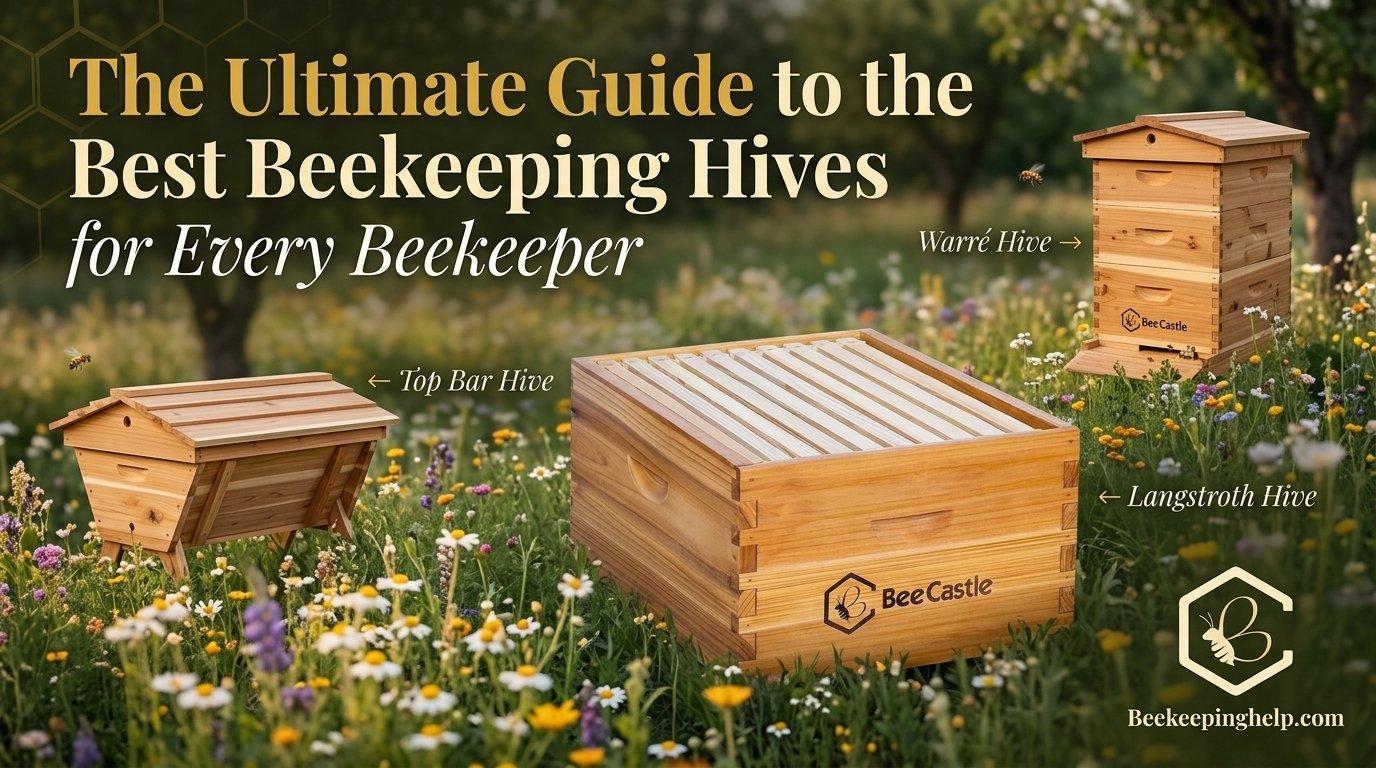
Introduction: Finding the Perfect Home for Your Bees
Beekeeping is one of the most rewarding hobbies and professions you can pursue. Whether you are drawn to it for the golden honey, the environmental benefits of supporting pollinators, or simply the meditative joy of working with nature, everything starts with one critical decision: choosing the right beehive.
The hive you select will directly influence how healthy your colony stays, how much honey you harvest, and how enjoyable your overall beekeeping experience becomes. A poorly chosen hive can lead to stressed bees, difficult inspections, low honey yields, and even colony collapse. On the other hand, a well-designed hive makes management intuitive, keeps bees comfortable through every season, and rewards you with abundant, high-quality honey.
In this comprehensive guide, we have researched, tested, and reviewed the best beekeeping hives available today. We cover everything from budget-friendly starter kits to premium, heavy-duty setups that seasoned apiarists swear by. Each product has been evaluated on build quality, ease of assembly, bee health features, value for money, and real-world performance from actual beekeepers.
Whether you are a complete beginner looking for your first hive to start beekeeping, or an experienced keeper wanting to expand your apiary, this guide will walk you through every consideration and help you make a confident, informed choice.
We will also explore the different types of beehives with pictures, explain what features matter most, and share insider tips that experienced beekeepers wish they had known when starting out. By the end of this article, you will know exactly which hive suits your goals, budget, and local climate.

Shop Top-Rated Beekeeping Hives on Amazon
Browse the best-selling beehives with fast shipping and verified reviews from real beekeepers.
View Best Sellers on AmazonWhy Your Beehive Choice Matters More Than You Think
Many new beekeepers underestimate how much the physical hive impacts colony success. It is tempting to think that bees will thrive in any wooden box, but the reality is far more nuanced. The hive is not just a container — it is the ecosystem your bees will call home for their entire lives. Every dimension, material choice, coating, and design feature plays a role in colony health.
Temperature Regulation and Bee Comfort
Bees are remarkably sensitive to temperature. They maintain the interior of their brood nest at approximately 35 degrees Celsius (95 degrees Fahrenheit) year-round, using their collective body heat in winter and fanning their wings to cool the hive in summer. A hive with poor insulation or thin walls forces bees to expend far more energy on temperature regulation, which shortens their lifespans and reduces honey production.
Wooden hives with proper thickness — typically 20mm to 25mm — provide natural insulation. Some premium hives, like the BeeCastle Heavy Wax Coated model, go a step further by applying a thick beeswax coating that adds both insulation and moisture resistance. This kind of thoughtful construction translates directly into healthier, more productive colonies.
Ease of Inspection
You will be opening your hive regularly — every one to two weeks during active season — to check for disease, assess the queen’s laying pattern, monitor honey stores, and manage swarm prevention. If your hive is difficult to open, has frames that stick, or lacks proper handles, inspections become a dreaded chore rather than an enjoyable routine.
The best beekeeping hives are designed with the beekeeper’s comfort in mind. Features like hand-grip slots, precision-cut frame rests, and smooth-fitting lids make a world of difference during those frequent hive visits. You can learn more about the parts of a bee hive and their functions to understand why each component matters.
Longevity and Weather Resistance
A beehive lives outdoors 365 days a year, exposed to rain, snow, UV radiation, humidity, and temperature swings. Cheap hives made from untreated pine or thin plywood may last one or two seasons before warping, rotting, or falling apart. Investing in a well-constructed hive with proper weatherproofing saves you money in the long run and spares your bees the stress of emergency re-homing.
Cedar and cypress are naturally rot-resistant woods, while pine hives benefit greatly from paint or wax coatings. Understanding how to paint a beehive properly can extend the life of even a budget-friendly hive by several years.
Honey Production Potential
The size and configuration of your hive directly affect how much honey your bees can produce and store. A 10-frame Langstroth hive, for example, provides more comb space than an 8-frame setup, which means more room for honey supers during peak nectar flow. Layer count also matters — a 5-layer hive gives bees vertical space to expand, reducing the likelihood of swarming and increasing your harvest.
Bee Health and Disease Prevention
Hive design influences ventilation, moisture control, and pest management — three factors that are critical to preventing diseases like Nosema, chalkbrood, and American foulbrood. Well-ventilated hives with screened bottom boards allow moisture to escape and provide natural mite control through the hygienic behavior that good airflow encourages. If you have ever wondered how a beehive works from the bees’ perspective, understanding these internal dynamics is essential.
What to Look For When Buying a Beehive
Before diving into individual reviews, it is important to understand the key factors that separate a great hive from a mediocre one. Here is what experienced beekeepers evaluate when shopping for a new hive.
Wood Quality
Solid pine, cedar, or cypress with proper thickness ensures durability and natural insulation for your colony.
Frame Count
10-frame setups offer more space for honey storage; 8-frame hives are lighter and easier to handle.
Assembly Ease
Pre-assembled or dovetail-jointed hives save hours of frustrating construction time.
Weatherproofing
Wax coating, paint-ready surfaces, or natural rot resistance protects against the elements.
Ventilation
Screened bottom boards and ventilation holes regulate moisture and temperature naturally.
Value for Money
Complete kits with frames, foundation, and tools offer the best starting value for new beekeepers.
Wood Type and Construction
The wood used in your hive is the single most important factor in its longevity and performance. Pine is the most common and affordable option — it is lightweight, easy to work with, and readily available. However, pine requires painting or sealing to prevent rot. Cedar is naturally resistant to decay and insects, making it a premium choice that lasts for decades without treatment. Cypress shares cedar’s rot resistance and is particularly popular in humid southern climates.
Look for hives made from solid lumber rather than plywood or particle board. Solid wood provides better insulation, resists warping, and gives bees a more natural surface to propolize. The joints should be tight — dovetail or finger joints are superior to simple butt joints, as they resist pulling apart under the weight of honey-filled supers.
Frame Type: Foundation vs. Foundationless
Most starter kits come with foundation frames — sheets of beeswax or plastic that give bees a head start on building comb. Foundation frames encourage straight, uniform comb that is easier to inspect and extract honey from. Foundationless frames allow bees to build natural comb, which some beekeepers prefer for its purity and the bees’ freedom to create cell sizes suited to their needs.
For beginners, we strongly recommend starting with foundation frames. They reduce the likelihood of cross-comb (where bees build comb across multiple frames, making inspection nearly impossible) and give you a more forgiving learning curve.
Layer Count and Expandability
A standard Langstroth hive setup includes a bottom board, one or two deep brood boxes (where the queen lays eggs and brood develops), and honey supers (shallower boxes where bees store surplus honey). The number of layers in a kit determines how much vertical space your bees have from day one.
A 3-layer kit (bottom board + 1 brood box + 1 super) is the bare minimum for starting. A 5-layer kit gives you room to grow without buying additional components immediately. If you live in an area with a long nectar flow, more layers mean more honey storage and less risk of swarming. Explore the various beehive types with pictures to see how different configurations look in practice.
Included Components
Not all hive kits are created equal. A comprehensive kit should include:
- Bottom board — preferably screened for ventilation and mite control
- Deep brood box(es) — with frames and foundation
- Honey super(es) — with frames and foundation
- Inner cover — provides insulation and ventilation gap
- Outer cover / telescoping lid — sheds rain and protects from sun
- Queen excluder — keeps the queen in the brood area (some kits include this)
- Entrance reducer — controls airflow and defends against robbing
Kits that include all of these components save you from making separate purchases and ensure everything fits together properly. Missing even one piece — like an inner cover — can compromise ventilation and leave you scrambling for a solution mid-season.
Price Considerations
Beehive kits range from under $50 for basic setups to over $200 for premium, multi-layer systems. While it is tempting to go for the cheapest option, remember that this is an investment in a living colony. A hive that falls apart after one season or fails to insulate properly will cost you far more in lost bees and replacement expenses.
The sweet spot for most beginners is in the $60 to $120 range, where you can find well-constructed 10-frame Langstroth kits with multiple layers, proper hardware, and decent wood quality. The products reviewed below span this range and beyond, giving you options regardless of your budget.
Ready to Start Your Beekeeping Journey?
Find the perfect hive kit with everything you need to get started — frames, foundation, and more.
Shop Beehive Kits on AmazonTypes of Beekeeping Hives: A Quick Overview
Before we dive into specific product reviews, it helps to understand the main hive types available. While all the hives reviewed in this guide are Langstroth-style (the most popular worldwide), knowing the broader landscape helps you make an informed decision. You can read a more detailed breakdown in our guide to beehive types with pictures.
Langstroth Hive
The Langstroth hive is the industry standard, invented by Reverend Lorenzo Langstroth in the mid-1800s. Its genius lies in the concept of “bee space” — the precise gap (6-9mm) that bees neither fill with comb nor seal with propolis. This allows removable frames that can be inspected without destroying comb. All seven hives reviewed in this article are Langstroth-style hives, and for good reason: they are the most widely supported, with the largest ecosystem of compatible accessories, replacement parts, and community knowledge.
Langstroth hives come in 8-frame and 10-frame widths. The 10-frame configuration is more common and provides more storage space, while 8-frame hives are lighter and easier to lift — an important consideration if you have back problems or plan to keep hives in a remote location where you need to carry equipment.
Top-Bar Hive
Top-bar hives are a horizontal design where bees build comb downward from bars laid across the top of a trough-shaped box. They are popular among natural beekeepers who prefer foundationless management and minimal intervention. However, top-bar hives produce less honey than Langstroth setups and do not allow for standardized frame extraction. They are a niche choice, not covered in this review.
Flow Hive
The Flow Hive is a modern innovation that allows honey to be extracted directly from the hive without opening it — you simply turn a key, and honey flows out through tubes. While revolutionary in concept, Flow Hives are expensive, and many experienced beekeepers argue that they discourage the regular inspections that are essential for bee health. If you are curious about how they compare to traditional setups, check our Flow Hive vs. Langstroth comparison.
Warre Hive
Designed by French abbe Emile Warre, this vertical hive uses top bars and is managed by adding boxes to the bottom rather than the top. It mimics a natural tree hollow more closely than a Langstroth hive and requires less frequent inspection. However, it is less common, harder to find parts for, and not beginner-friendly.
Why Langstroth Dominates
For the vast majority of beekeepers — especially beginners — the Langstroth hive is the clear winner. Its standardized dimensions mean you can buy compatible parts from any supplier. The removable frame system makes inspections, disease management, and honey extraction straightforward. And the global community of Langstroth beekeepers means you will never lack for advice, tutorials, or troubleshooting help. If you want to understand the mechanics in depth, our article on how a beehive works covers the internal dynamics beautifully.
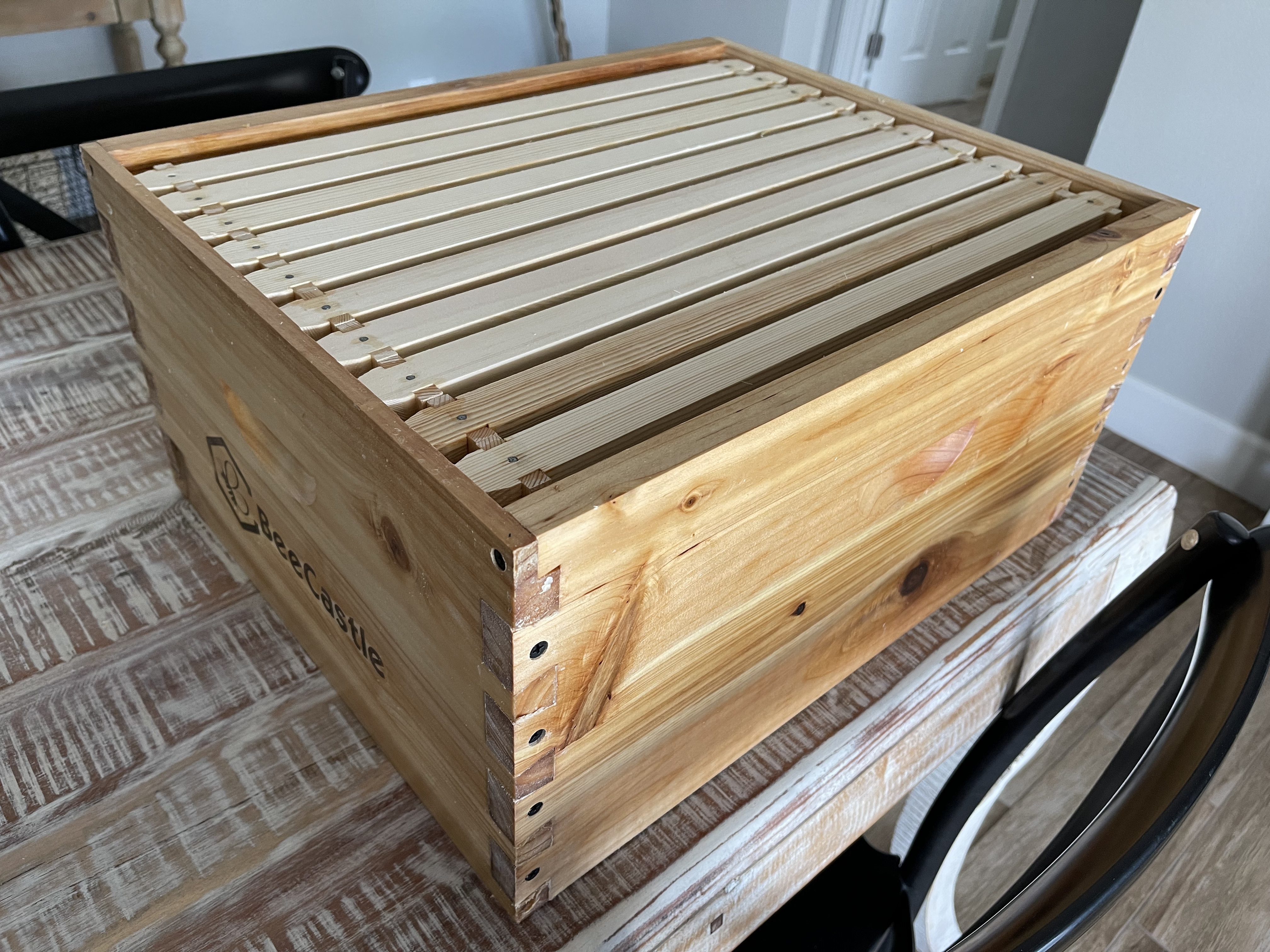
1. BeeCastle Heavy Wax Coated Beehive

BeeCastle Heavy Wax Coated Beehive
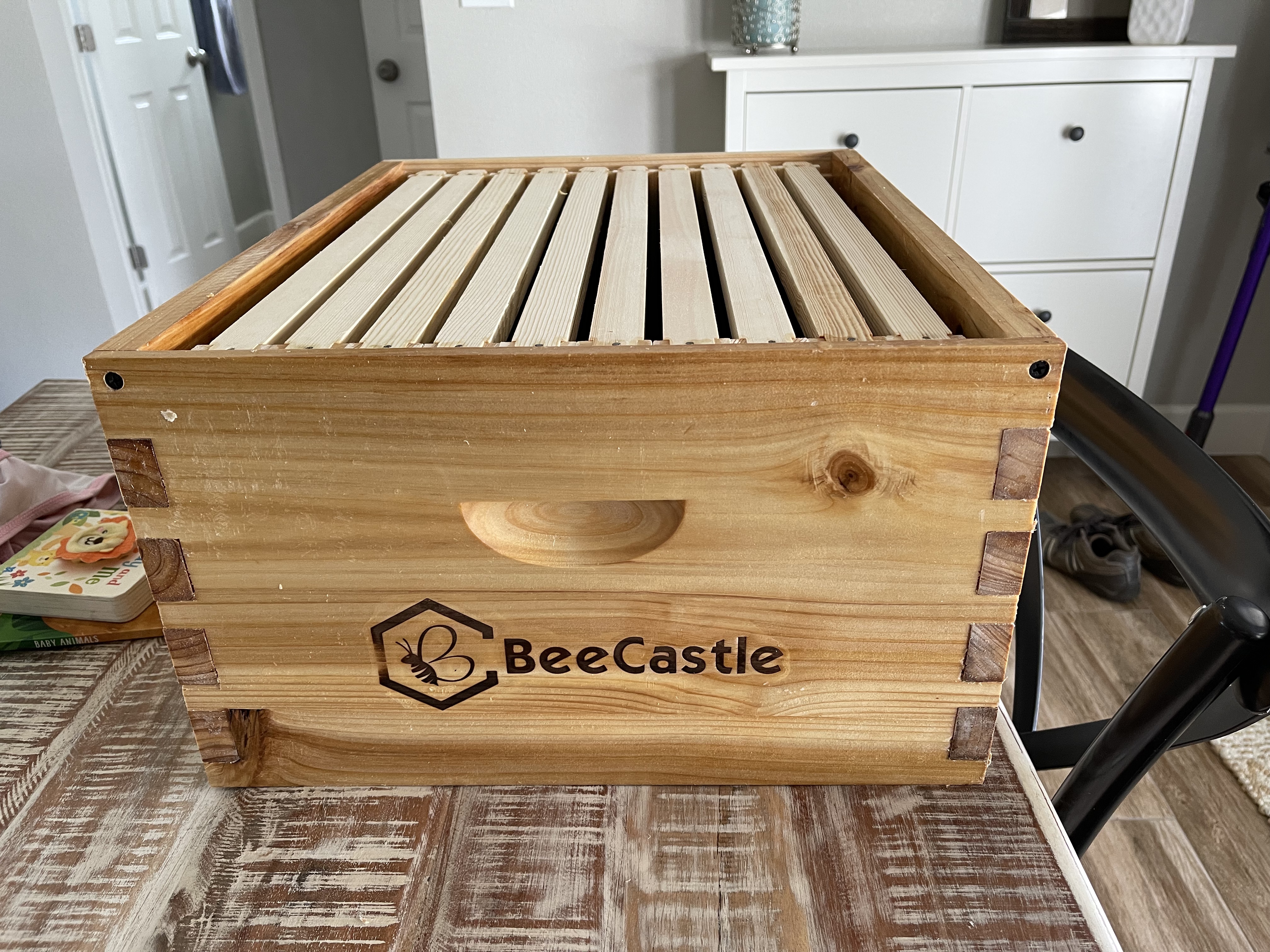
The BeeCastle Heavy Wax Coated Beehive stands out immediately for its generous beeswax coating — a feature that most competitors either skip entirely or apply only thinly. This coating serves a dual purpose: it protects the wood from moisture and decay while giving bees a familiar, natural scent that encourages them to accept the hive quickly.
Key Features
- Heavy beeswax coating on all interior and exterior surfaces for superior weather resistance
- Solid pine construction with tight-fitting joints that resist warping
- 10-frame Langstroth design compatible with standard equipment
- Pre-cut hand grips on each box for easy lifting and carrying
- Complete kit includes bottom board, brood box, super, frames, foundation, inner cover, and outer cover
- Screened bottom board for ventilation and natural mite monitoring
Pros
- Exceptional wax coating outlasts painted hives
- Bees accept the hive faster due to natural wax scent
- Solid construction with no flimsy parts
- Hand grips make box manipulation comfortable
- Screened bottom board improves ventilation
- Great value for the quality offered
Cons
- Slightly heavier than non-coated alternatives
- Wax coating may soften in extreme heat
- Assembly instructions could be more detailed
Our Experience
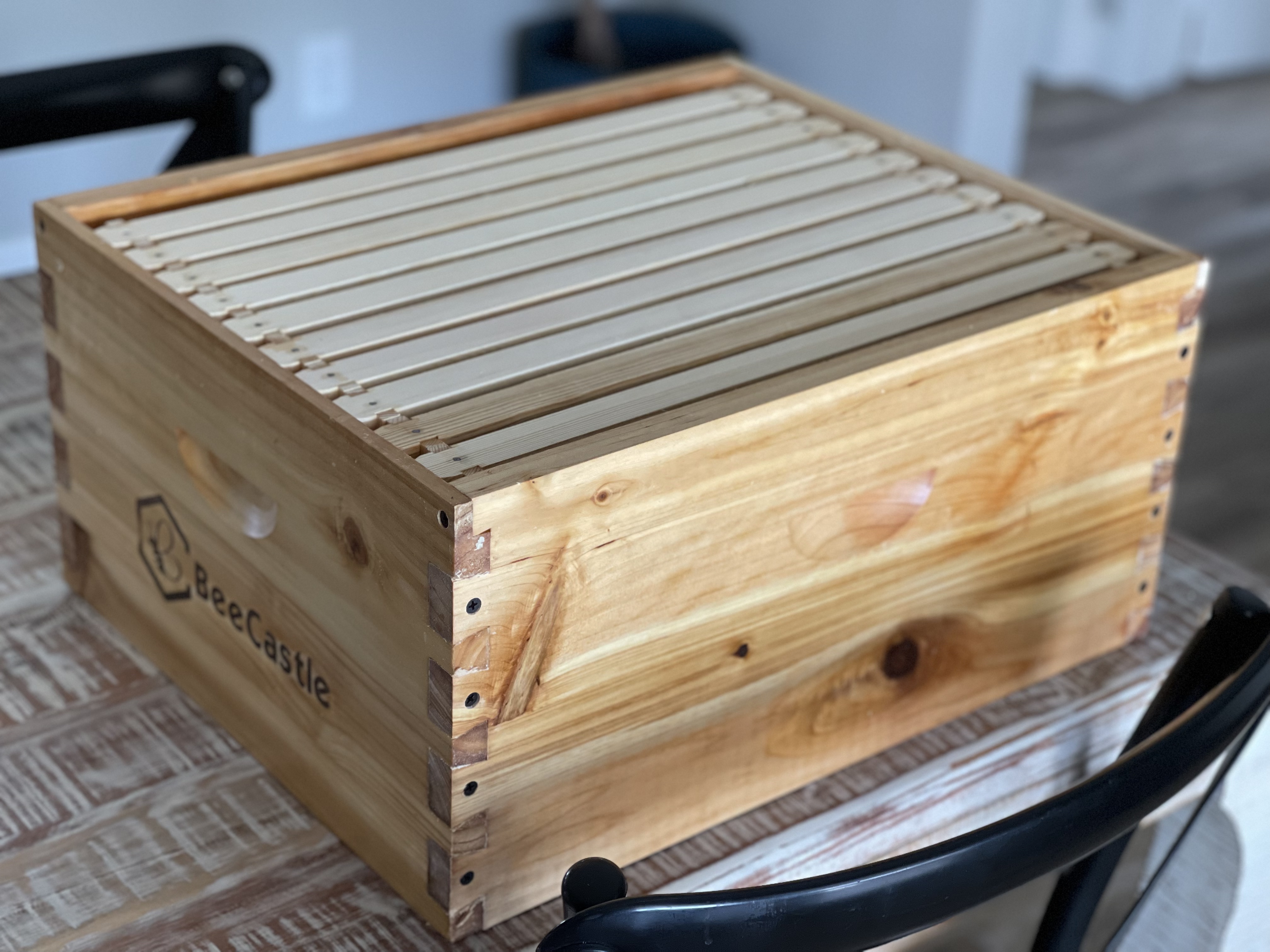
From the moment you unbox the BeeCastle, the quality is apparent. The wax coating gives the wood a warm, honey-toned appearance that looks beautiful in any garden or apiary. More importantly, the coating is thick enough to actually provide meaningful protection — not just a cosmetic finish. After a full season of use in varying weather conditions, the wood showed no signs of swelling, cracking, or moisture damage.
The frames fit snugly into the box without being too tight, and the foundation sheets are securely embedded. The screened bottom board is a standout feature — it provides excellent ventilation during hot summer months and allows you to insert a sticky board for mite monitoring. The entrance reducer is a simple but effective piece that helps small colonies defend against robbing.
One thing to note: the assembly instructions are minimal. If you have never assembled a hive before, you may want to watch a tutorial video alongside the manual. However, the dovetail joints are well-cut and intuitive — most people can figure it out with a little patience.
Overall, the BeeCastle Heavy Wax Coated Beehive is our top pick for beekeepers who want a durable, well-designed hive that will last for many seasons with minimal maintenance. It is particularly well-suited for beekeepers in humid or rainy climates where moisture damage is a primary concern.
BeeCastle Heavy Wax Coated Beehive
Our top pick for durability and bee acceptance. Heavy wax coating for all-weather protection.
Check Price on Amazon2. ThxBees 10-Frame Langstroth Bee Hive

ThxBees 10-Frame Langstroth Bee Hive
The ThxBees 10-Frame Langstroth Bee Hive is designed with the first-time beekeeper in mind. It arrives as a complete kit with everything you need to house your first colony, and the assembly process is straightforward enough that even someone with zero woodworking experience can have it ready in an afternoon.
Key Features
- Complete 10-frame Langstroth kit with all essential components included
- Natural pine wood with smooth sanded surfaces ready for painting or natural use
- Precision-cut dovetail joints for tight, durable assembly
- Wax-coated foundation sheets for quick bee acceptance
- Telescoping outer cover for superior rain protection
- Adjustable entrance reducer with multiple size settings
Pros
- Excellent beginner-friendly design
- All components included — no extra purchases needed
- Smooth wood finish accepts paint beautifully
- Wax-coated foundation encourages fast comb building
- Telescoping cover sheds rain effectively
- Competitive pricing for a complete kit
Cons
- Wood is thinner than premium alternatives
- No pre-applied weatherproofing — requires painting
- Some users report minor gaps in joints
Our Experience
The ThxBees hive is a solid entry point into beekeeping. The kit arrives well-packaged, with each component labeled and organized. Assembly is intuitive — the dovetail joints fit together cleanly, and the included hardware (nails and screws) is adequate for the job. The sanded pine surface is smooth enough that painting is optional but recommended for longevity.
The wax-coated foundation is a nice touch at this price point. Bees took to the foundation quickly during our testing, beginning to draw comb within the first 48 hours. The telescoping outer cover provides excellent rain protection — during a week of spring storms, the interior remained dry and well-ventilated.
Where the ThxBees shows its budget positioning is in wood thickness. The walls are noticeably thinner than the BeeCastle or Mann Lake options, which means slightly less natural insulation. In mild climates, this is not a significant issue, but beekeepers in regions with harsh winters may want to add insulation wraps during cold months.
For beginners who want a complete, affordable kit that gets them started without fuss, the ThxBees is an excellent choice. It provides all the essential components at a price point that does not feel intimidating, and it performs well enough to give new beekeepers a successful first season. If you are just getting started, our guide on how to start beekeeping pairs perfectly with this hive.
ThxBees 10-Frame Langstroth Bee Hive
Perfect starter kit for first-time beekeepers. Complete with frames, foundation, and all essentials.
Check Price on Amazon3. MayBee 10-Frame Beehive Box

MayBee 10-Frame Beehive Box
The MayBee 10-Frame Beehive Box is a versatile, well-priced option that works equally well as a starter hive or as an expansion box for existing apiaries. Its straightforward design focuses on the fundamentals — solid wood, proper dimensions, and reliable frame compatibility — without unnecessary frills that drive up cost.
Key Features
- 10-frame Langstroth deep box with standard dimensions for universal compatibility
- Kiln-dried pine for reduced warping and consistent moisture content
- Hand-grip cutouts on both sides for comfortable lifting
- Smooth interior surfaces that encourage propolization
- Compatible with all standard 10-frame Langstroth accessories and equipment
- Available in multiple configurations — single box or multi-layer kits
Pros
- Excellent price-to-quality ratio
- Kiln-dried wood resists warping
- Universal Langstroth compatibility
- Hand grips are well-positioned and comfortable
- Good option for expanding existing hives
- Lightweight yet sturdy construction
Cons
- Does not include frames or foundation in base configuration
- No weatherproofing applied — needs paint or sealant
- Wood grain can be inconsistent between units
Our Experience
The MayBee box impressed us with its consistent dimensions — every frame sat perfectly in the frame rest, with even spacing maintained throughout. This is more important than it sounds: inconsistent frame spacing leads to burr comb (extra comb built in gaps), which makes inspections messy and stressful for both beekeeper and bees.
The kiln-dried pine is a smart material choice. Kiln drying removes excess moisture from the wood before construction, which dramatically reduces the likelihood of warping, shrinking, or cracking as the wood acclimates to outdoor conditions. After a full season of exposure to sun, rain, and temperature swings, our test unit maintained its shape with no visible distortion.
The main consideration with the MayBee is that the base product is a single box — you will need to purchase frames, foundation, a bottom board, covers, and other components separately, or opt for one of the multi-layer kit configurations. For beekeepers who already have an established apiary and just need additional boxes, this is actually ideal. For beginners starting from scratch, make sure you select the complete kit option.
If you are interested in building your own hive from scratch, the MayBee box is also a great starting point. Check our guide on how to make a beehive for DIY inspiration and tips on customizing your setup.
MayBee 10-Frame Beehive Box
Best value for expanding your apiary or building a custom hive setup. Kiln-dried pine construction.
Check Price on Amazon4. RJFKSNC 5-Layer Langstroth Bee Hive Kit

RJFKSNC 5-Layer Langstroth Bee Hive Kit
The RJFKSNC 5-Layer Langstroth Bee Hive Kit is the most comprehensive setup in this review. With five full layers — including multiple brood boxes and honey supers — it gives your bees maximum vertical space from day one. This is the hive for beekeepers who want to hit the ground running without buying additional components for at least the first two seasons.
Key Features
- 5-layer configuration — bottom board, two deep brood boxes, two honey supers, inner cover, and outer cover
- 10-frame Langstroth design with standard dimensions
- Complete frame and foundation set included for all layers
- Screened bottom board with removable debris tray
- Queen excluder included to keep the brood area separate from honey supers
- Entrance reducer with summer and winter settings
Pros
- Most complete kit — nothing else to buy
- 5 layers provide room for colony growth
- Includes queen excluder (often sold separately)
- Screened bottom board with debris tray
- Excellent for areas with long nectar flows
- Reduces swarming risk with ample expansion space
Cons
- Heavier and bulkier to transport
- More layers can be intimidating for absolute beginners
- Takes longer to assemble than simpler kits
- Higher upfront cost
Our Experience
The RJFKSNC 5-Layer kit is genuinely impressive in its completeness. When you open the box, you get everything — every box, every frame, every sheet of foundation, the bottom board, both covers, the queen excluder, and the entrance reducer. There is no need to make a separate trip to the beekeeping supply store for missing pieces, which is a common frustration with less complete kits.
The wood quality is solid — not quite as thick as the BeeCastle, but more than adequate for most climates. The joints fit well, and the frames slide smoothly into their rests. The screened bottom board with the removable debris tray is a particularly nice feature: you can pull out the tray to inspect for mites, dead bees, or other signs of colony health without disturbing the hive.
The queen excluder is a thoughtful inclusion. Many kits omit this component, forcing you to buy it separately. The excluder ensures that the queen stays in the brood boxes where she belongs, preventing her from laying eggs in the honey supers — a situation that complicates honey extraction and reduces honey quality.
For beekeepers who want a comprehensive, ready-to-go setup that will support a strong colony through multiple seasons of growth, the RJFKSNC 5-Layer kit is hard to beat. It is particularly well-suited for beekeepers in regions with abundant floral resources, where the extra honey storage space translates directly into larger harvests. Understanding the parts of a bee hive and their functions will help you make the most of this multi-layer setup.
RJFKSNC 5-Layer Langstroth Bee Hive Kit
The most complete kit available — 5 layers, queen excluder, screened bottom board, and all frames included.
Check Price on Amazon5. Mann Lake 10-Frame Bee Hive Kit

Mann Lake 10-Frame Bee Hive Kit
Mann Lake is one of the most respected names in professional beekeeping equipment, and their 10-Frame Bee Hive Kit lives up to that reputation. This is a hive built for beekeepers who demand commercial-grade quality — tight joints, heavy-duty wood, and the kind of precision that makes every frame fit like it was custom-made.
Key Features
- Commercial-grade pine construction with thicker walls than most competitors
- Precision-milled joints for tight, gap-free assembly
- 10-frame Langstroth design with industry-standard dimensions
- Assembled and unassembled options available
- Compatible with the full Mann Lake ecosystem of accessories and replacement parts
- Available in multiple depths — deep, medium, and shallow
Pros
- Industry-leading build quality and precision
- Thicker wood provides better insulation
- Tight joints eliminate drafts and pest entry
- Backed by Mann Lake’s trusted reputation
- Massive ecosystem of compatible accessories
- Available pre-assembled for convenience
Cons
- Higher price point than budget alternatives
- Kit may not include all accessories (varies by configuration)
- Heavier than lighter-wood competitors
Our Experience
Working with the Mann Lake hive is a different experience from budget kits. The wood is noticeably thicker and heavier — you can feel the quality the moment you pick it up. The joints are milled with a precision that leaves virtually no gap, which means fewer drafts in winter, fewer pest entry points, and a more stable internal environment for your bees.
The Mann Lake kit is available in both assembled and unassembled configurations. If you opt for unassembled, the assembly process is straightforward thanks to the precision-cut joints. The wood fits together with satisfying tightness, and the included hardware is high quality. If you prefer to skip the construction phase entirely, the pre-assembled option is worth the premium — it arrives ready to place in your apiary.
What truly sets Mann Lake apart is the ecosystem. As one of the largest beekeeping supply companies in the world, Mann Lake offers every conceivable accessory, replacement part, and add-on in dimensions that are guaranteed to fit their hive bodies. This means that as your apiary grows, you will never struggle to find compatible equipment.
The Mann Lake 10-Frame Bee Hive Kit is our recommendation for serious beekeepers who view beekeeping as a long-term commitment rather than a casual hobby. The higher upfront cost is justified by the hive’s durability, precision, and the peace of mind that comes from using professional-grade equipment. It is the kind of hive that you buy once and use for decades.
Mann Lake 10-Frame Bee Hive Kit
Professional-grade quality trusted by commercial beekeepers. Precision-milled joints and thick pine walls.
Check Price on Amazon6. BEEKNOWS 10 Frame Langstroth Beehive Kit

BEEKNOWS 10 Frame Langstroth Beehive Kit
The BEEKNOWS 10 Frame Langstroth Beehive Kit strikes a thoughtful balance between completeness and affordability. It includes all the essential components a new beekeeper needs, with enough quality touches to make the first season smooth and successful. This is a hive designed by people who clearly understand what beginners actually need — and what they do not.
Key Features
- Complete multi-layer Langstroth kit with brood box and honey super
- 10-frame design with wax-coated plastic foundation
- Solid pine construction with sanded surfaces
- Screened bottom board for ventilation and mite monitoring
- Inner and outer covers included
- Entrance reducer with adjustable settings
Pros
- Well-balanced feature set for the price
- Wax-coated foundation promotes fast comb building
- Screened bottom board is a premium feature at this price
- Clean, consistent wood quality
- Good packaging prevents shipping damage
- Responsive customer support
Cons
- Foundation is plastic-based rather than pure beeswax
- Wood could be thicker for harsh climates
- Limited color/finish options
Our Experience
The BEEKNOWS kit arrives well-packaged — each component is individually wrapped, and the wood is protected by cardboard inserts that prevent shipping damage. This attention to packaging may seem minor, but anyone who has received a dented or cracked hive component knows how frustrating it can be to wait for a replacement.
Assembly is straightforward. The joints are clean, the frames fit well, and the wax-coated foundation sheets snap into the frame grooves without fuss. The wax coating on the foundation is a meaningful improvement over bare plastic foundation — bees accept it more readily and begin drawing comb faster, which is especially important during the critical first weeks when a new colony is establishing itself.
The screened bottom board performs well, providing good airflow during warm weather and allowing mite monitoring with a sticky board insert. The entrance reducer is simple but effective, with clear markings for summer and winter positions.
One area where the BEEKNOWS differentiates itself from similarly priced competitors is customer support. Multiple users report quick, helpful responses to questions about assembly, bee management, and product compatibility. For beginners who may have questions during their first season, this kind of support can be invaluable.
The BEEKNOWS 10 Frame Langstroth Beehive Kit is a strong contender for the best all-around starter hive. It does not excel in any single area, but it performs well across every criterion that matters — and at a price that does not break the bank.
BEEKNOWS 10 Frame Langstroth Beehive Kit
Balanced features and affordability with wax-coated foundation and screened bottom board included.
Check Price on Amazon7. NUOMIC Langstroth 10 Frame Beehive

NUOMIC Langstroth 10 Frame Beehive
The NUOMIC Langstroth 10 Frame Beehive is the most affordable option in this review, making it an attractive choice for beekeepers on a tight budget or those who want to set up multiple hives without a massive investment. Despite its low price, it delivers the essential features needed to house a healthy colony.
Key Features
- 10-frame Langstroth design with standard dimensions
- Natural pine wood construction
- Complete kit with bottom board, brood box, super, frames, foundation, and covers
- Hand-grip cutouts for easy handling
- Entrance reducer included
- Lightweight design for easy transport and positioning
Pros
- Most affordable complete kit in this review
- Standard Langstroth dimensions ensure compatibility
- Lightweight and easy to transport
- Good option for multi-hive setups on a budget
- Includes all basic components needed to start
- Simple assembly process
Cons
- Thinner wood than premium options
- No wax coating or weatherproofing
- May require additional sealing for wet climates
- Frame quality is basic
Our Experience
The NUOMIC hive is a no-frills option that delivers exactly what it promises: a functional Langstroth hive at the lowest possible price. The wood is thinner than the BeeCastle or Mann Lake options, and the finish is rougher — you will definitely want to sand and paint this hive before putting it into service. But the dimensions are correct, the frames fit, and the overall structure is sound.
Where the NUOMIC really shines is as a multi-hive option. Many experienced beekeepers recommend running at least two hives — it allows you to compare colony health, share resources between hives (a strong hive can donate brood frames to a weak one), and provides a backup if one colony fails. At the NUOMIC’s price point, setting up two or three hives is financially feasible for most beekeepers.
The lightweight construction is both a pro and a con. On the positive side, the hive is easy to carry to remote apiary locations and simple to reposition. On the negative side, the thinner walls provide less insulation, which means bees will work harder to regulate temperature in extreme weather. Adding a coat of exterior paint and an insulation wrap for winter addresses this issue effectively.
For beekeepers who want to start beekeeping without a significant financial commitment, or for experienced keepers who need affordable expansion hives, the NUOMIC is a practical, honest option that gets the job done. Pair it with our guide on how to paint a beehive to maximize its weather resistance and longevity.
NUOMIC Langstroth 10 Frame Beehive
The most affordable complete hive kit — perfect for budget-conscious beekeepers or multi-hive setups.
Check Price on AmazonHead-to-Head Comparison: All 7 Beekeeping Hives
Now that we have reviewed each hive individually, let us put them side by side so you can see exactly how they stack up against each other. This comparison table covers the most important factors that beekeepers consider when choosing a hive.
| Feature | BeeCastle | ThxBees | MayBee | RJFKSNC | Mann Lake | BEEKNOWS | NUOMIC |
|---|---|---|---|---|---|---|---|
| Frame Count | 10 | 10 | 10 | 10 | 10 | 10 | 10 |
| Layers | 3 | 3 | 1-3 | 5 | 2-3 | 3 | 3 |
| Wood Type | Pine (wax coated) | Pine (natural) | Pine (kiln-dried) | Pine | Pine (commercial) | Pine (sanded) | Pine (natural) |
| Weatherproofing | Heavy wax coating | None (paint-ready) | None (paint-ready) | Basic | None (paint-ready) | None (paint-ready) | None |
| Screened Bottom | Yes | Varies | Optional | Yes | Optional | Yes | No |
| Queen Excluder | No | No | No | Yes | Optional | No | No |
| Foundation | Wax-coated | Wax-coated | Separate purchase | Included | Varies | Wax-coated plastic | Included |
| Best For | All-around | Beginners | Expansion | Complete setup | Professionals | Balanced value | Budget |
| Durability | Excellent | Good | Good | Very Good | Excellent | Good | Fair |
| Assembly | Moderate | Easy | Easy | Moderate | Easy-Moderate | Easy | Easy |
Understanding the Comparison
Looking at the table above, a few patterns emerge. All seven hives use the 10-frame Langstroth design, which means they are all compatible with the same ecosystem of frames, foundation, and accessories. This is the beauty of choosing a Langstroth hive — you are never locked into a single manufacturer.
The key differentiators are weatherproofing, included components, and build quality. The BeeCastle stands out for its heavy wax coating, which provides built-in weather protection that most competitors lack. The RJFKSNC wins on completeness with its 5-layer setup and queen excluder. The Mann Lake leads on raw build quality and precision. And the NUOMIC wins on price.
There is no single “best” hive for everyone. The right choice depends on your climate, budget, experience level, and beekeeping goals. In the next section, we will help you narrow down the options based on your specific situation.
Compare Prices and Read More Reviews
See current pricing, availability, and hundreds of verified reviews from real beekeepers.
Browse All Beehive KitsBest Hive for Your Situation: Personalized Recommendations
Choosing a hive is not one-size-fits-all. Your climate, experience level, physical capabilities, and beekeeping goals all influence which hive will serve you best. Here are our tailored recommendations for common beekeeping scenarios.
Best for Absolute Beginners
Our pick: ThxBees 10-Frame Langstroth Bee Hive
If you have never kept bees before, the ThxBees offers the gentlest learning curve. It is affordable enough that mistakes will not be financially painful, complete enough that you will not need to make additional purchases before your bees arrive, and well-designed enough to give your first colony a strong start. Pair it with our how to start beekeeping guide for a smooth first season.
Best for Humid or Rainy Climates
Our pick: BeeCastle Heavy Wax Coated Beehive
Moisture is the number one enemy of wooden beehives. In regions with high humidity, frequent rain, or wet winters, the BeeCastle’s heavy wax coating provides a level of protection that painted hives struggle to match. The wax penetrates the wood grain, sealing it against moisture absorption while still allowing the wood to breathe naturally.
Best for Serious Beekeepers and Professionals
Our pick: Mann Lake 10-Frame Bee Hive Kit
If you are committed to beekeeping for the long haul and want equipment that will perform reliably for decades, the Mann Lake is the clear choice. Its commercial-grade construction, precision-milled joints, and thick walls set it apart from every other hive in this review. The higher price is an investment that pays for itself through durability and reduced maintenance.
Best for Maximum Honey Production
Our pick: RJFKSNC 5-Layer Langstroth Bee Hive Kit
More layers mean more storage space for honey. The RJFKSNC’s 5-layer configuration gives bees ample room to expand their brood nest and fill multiple honey supers during peak nectar flow. The included queen excluder ensures that honey supers remain free of brood, making extraction cleaner and more efficient.
Best for Budget-Conscious Beekeepers
Our pick: NUOMIC Langstroth 10 Frame Beehive
Beekeeping does not have to be expensive. The NUOMIC provides a functional, standard-dimension Langstroth hive at the lowest price point in this review. It is an especially good choice if you want to run multiple hives — a practice that experienced beekeepers strongly recommend for colony comparison and resource sharing.
Best for Expanding an Existing Apiary
Our pick: MayBee 10-Frame Beehive Box
If you already have hives and need additional boxes, the MayBee is the smart choice. Its kiln-dried pine construction, consistent dimensions, and universal Langstroth compatibility make it a reliable addition to any existing setup. Buy just the boxes you need without paying for duplicate accessories you already own.
Best All-Around Value
Our pick: BEEKNOWS 10 Frame Langstroth Beehive Kit
For beekeepers who want the best balance of features, quality, and price, the BEEKNOWS delivers. It includes the features that matter most — wax-coated foundation, screened bottom board, complete frame set — at a price that sits comfortably in the middle of the market. It is the hive we would recommend to a friend who asked, “What should I buy?”
Climate-Specific Considerations
Your local climate should heavily influence your hive choice. Here are some guidelines:
- Hot, humid climates (Southern US, Gulf Coast): Prioritize ventilation (screened bottom boards) and moisture resistance (wax coating). The BeeCastle excels here.
- Cold, northern climates (Northern US, Canada): Prioritize insulation (thicker wood) and wind resistance (tight joints). The Mann Lake is ideal.
- Mild, temperate climates (Pacific Northwest, Mid-Atlantic): Most hives perform well. Choose based on budget and features rather than climate-specific needs.
- Arid, desert climates (Southwest US): Prioritize ventilation and UV resistance. Paint your hive with light-colored, UV-resistant paint to reflect heat.
For more information on hive placement and environmental factors, see our guide on types of beehives in trees, which discusses natural hive locations and what they teach us about optimal apiary setup.
Setting Up Your New Beehive: A Practical Guide
Once your hive arrives, there are several important steps to take before your bees move in. Proper setup is critical — a poorly positioned or improperly assembled hive can lead to colony stress, low honey production, and even absconding (when bees abandon the hive entirely).
Step 1: Inspect All Components
Before you begin assembly, lay out every component and compare it against the packing list. Check for cracked wood, missing hardware, warped frames, or damaged foundation sheets. It is far easier to request replacements before you have started building than after you have nailed everything together.
Step 2: Assemble the Hive
Follow the manufacturer’s instructions for assembly. In general, you will:
- Assemble the frames by fitting the top bar, bottom bar, and side bars together. Apply a small amount of wood glue to joints for added strength, then nail or staple through the pre-drilled holes.
- Install the foundation sheets into the frames. Wax foundation slides into the grooves in the top and bottom bars. Plastic foundation snaps into place with a firm press. Make sure the foundation is centered and secure.
- Assemble the hive boxes by joining the four walls. Dovetail joints should fit snugly without force. Apply wood glue to joints and clamp until dry if needed.
- Place the assembled frames into the box. Maintain even spacing — typically 10 frames in a 10-frame box. The frames should hang from the frame rest ledge without touching the bottom of the box.
- Assemble the bottom board, inner cover, and outer cover according to instructions.
For a detailed walkthrough, our article on how to make a beehive covers construction techniques that apply to kit assembly as well.
Step 3: Weatherproof the Hive
If your hive does not come with a pre-applied coating (most do not), now is the time to paint or seal it. Use exterior-grade, water-based latex paint in a light color — white, light gray, or pale yellow are traditional choices. Light colors reflect heat and are easier for bees to find. Paint the exterior only; never paint the interior surfaces, as paint fumes can harm bees.
Apply at least two coats, allowing full drying between applications. Pay special attention to end grain and cut edges, which absorb moisture most readily. For a complete painting guide, see our tutorial on how to paint a beehive.
Step 4: Choose the Perfect Location
Hive placement is one of the most important decisions you will make. Consider these factors:
- Sun exposure: Morning sun helps bees start foraging early. In hot climates, afternoon shade prevents overheating.
- Wind protection: Position the hive with the entrance facing away from prevailing winds. A windbreak (fence, hedge, or building) on the north and west sides helps in cold climates.
- Water access: Bees need water within a quarter mile of the hive. Set up a shallow water source with pebbles or corks for landing pads before your bees arrive.
- Flight path: The hive entrance should not face directly into a high-traffic area. Bees fly in a straight line out of the hive — you do not want that line crossing a walkway or patio.
- Level ground: The hive should be level or slightly tilted forward (to allow rainwater to drain out the entrance). Use a level during setup.
- Raised position: Placing the hive on a stand 12-18 inches off the ground improves ventilation, reduces moisture, and makes inspections easier on your back.
Step 5: Install Your Bees
There are several ways to acquire bees: package bees, nucleus colonies (nucs), or capturing a swarm. For beginners, nucs are the best option — they come with an established queen, drawn comb, brood, and worker bees. The colony is already functioning and will settle into your new hive quickly.
Install your bees on a calm, warm day. Spray the bees lightly with sugar water to calm them, then transfer the frames from the nuc into your hive, maintaining the same order and orientation. Close the hive and reduce the entrance to prevent robbing during the vulnerable establishment period.
Step 6: Feed Your New Colony
New colonies need supplemental feeding until they have established enough comb and stored enough nectar to sustain themselves. Feed a 1:1 sugar-water solution (by weight) using an entrance feeder or top feeder. Continue feeding until the bees have drawn out most of the comb in the first brood box and are bringing in their own nectar.
Get Everything You Need to Start Beekeeping
From hive kits to protective gear — find all the essentials in one place.
Shop Beekeeping EssentialsHive Maintenance Through the Seasons
Owning a beehive is a year-round commitment. Each season brings different tasks, challenges, and opportunities. Here is a seasonal maintenance calendar to keep your hive — and your bees — in peak condition.
Spring: The Season of Renewal
Spring is the most exciting time in beekeeping. The colony is growing rapidly, the queen is ramping up her egg-laying, and the first nectar flows are beginning. Your spring maintenance tasks include:
- First inspection: As soon as temperatures consistently reach 12-15 degrees Celsius (55-60 Fahrenheit), open the hive for your first spring inspection. Check for a healthy queen (look for eggs and young brood), adequate food stores, and signs of disease.
- Reverse brood boxes: If the cluster has moved to the upper brood box over winter, swap the boxes so the cluster is at the bottom. This encourages upward expansion and reduces the urge to swarm.
- Replace old comb: Rotate out dark, old comb (more than three years old) and replace it with fresh foundation. Old comb accumulates pesticide residues and disease spores.
- Begin feeding: If stores are low, feed 1:1 sugar syrup to stimulate comb building and brood production.
- Add supers: As the nectar flow begins, add honey supers before the bees fill every available cell. Bees that run out of storage space are more likely to swarm.
Summer: Peak Season Management
Summer is when your hive is at its most productive — and most demanding. The colony is at maximum population, nectar is flowing, and your management decisions directly impact your honey harvest.
- Monitor for swarming: Check for queen cells (peanut-shaped cells on the bottom of frames) every 7-10 days. If you find them, your colony is preparing to swarm. Take corrective action by splitting the hive or removing queen cells.
- Add supers proactively: Do not wait until the current super is completely full. Add a new super when the current one is about 70% drawn out. This gives bees room to continue storing and prevents congestion.
- Ensure water access: Bees consume enormous amounts of water in summer for cooling the hive. Make sure your water source is clean and accessible.
- Monitor for pests: Summer is peak season for varroa mites, small hive beetles, and wax moths. Use integrated pest management (IPM) techniques to keep populations below damaging thresholds.
- Harvest honey: When supers are capped (at least 80% of cells sealed with wax), the honey is ready for harvest. Remove supers during a warm, sunny afternoon when most foragers are out of the hive.
Autumn: Preparing for Winter
Autumn is the critical preparation period. The decisions you make now determine whether your colony survives winter.
- Assess colony strength: A strong colony with a young queen and plenty of bees has the best chance of surviving winter. Weak colonies may need to be combined with stronger ones.
- Treat for varroa mites: Autumn is the most important time for mite treatment. The winter bees (long-lived bees raised in autumn) must be healthy to carry the colony through winter. Treat aggressively and verify treatment effectiveness with a mite count.
- Ensure adequate food stores: A colony needs approximately 25-30 kg (55-65 lbs) of honey to survive winter in most climates. If stores are insufficient, feed 2:1 sugar syrup (thicker than spring feed) or fondant.
- Reduce the entrance: A smaller entrance helps the colony defend against robbing bees and wasps, which are aggressive in autumn as natural nectar sources dwindle.
- Install mouse guards: Mice seek warm shelter in autumn and will move into hives given the opportunity. A metal mouse guard over the entrance prevents entry while allowing bees to come and go.
Winter: The Quiet Season
Winter is the season of patience. The colony clusters tightly around the queen, vibrating their flight muscles to generate heat. There is little for the beekeeper to do, but a few tasks remain:
- Minimize disturbance: Do not open the hive in cold weather. The cluster maintains a carefully organized thermal envelope, and breaking it can be fatal.
- Check after storms: After heavy snow or wind, verify that the hive has not been knocked over and that the entrance is clear of snow and debris.
- Heft the hive: Lift the back of the hive periodically to gauge weight. A progressively lighter hive indicates the colony is consuming its stores and may need supplemental feeding (fondant or sugar candy placed above the cluster).
- Plan for next season: Winter is the time to order new equipment, plan apiary expansions, read beekeeping books, and connect with local beekeeping associations.
Common Mistakes Beginners Make When Choosing and Using a Beehive
Learning from others’ mistakes is far less painful than making them yourself. Here are the most common errors we see new beekeepers make — and how to avoid them.
Mistake 1: Choosing the Cheapest Hive Possible
We understand the impulse — beekeeping has a lot of startup costs, and it is tempting to save money wherever you can. But the hive is literally your bees’ home. A cheap, poorly constructed hive with thin walls, loose joints, and no weatherproofing will cost you more in the long run through lost colonies, frequent replacements, and reduced honey production. Invest in quality from the start. The NUOMIC is the most affordable option we recommend, and even it meets minimum quality standards.
Mistake 2: Not Painting or Sealing the Hive
Unprotected wood absorbs moisture, swells, cracks, and rots. Even a single coat of exterior latex paint dramatically extends the life of your hive. Some beekeepers skip painting because they want a “natural” look — but natural wood outdoors does not last long. If you prefer the natural aesthetic, use a clear exterior wood sealant that preserves the grain while protecting against moisture. Our guide on how to paint a beehive covers both approaches.
Mistake 3: Skipping Regular Inspections
New beekeepers are often either too hands-on (opening the hive every day) or too hands-off (afraid to disturb the bees). The sweet spot is inspecting every 7-14 days during active season. Regular inspections allow you to catch problems early — a failing queen, a developing swarm, a mite infestation — when they are still easy to fix. By the time external signs appear (reduced traffic, robbing behavior, dead bees), the problem may be advanced.
Mistake 4: Not Treating for Varroa Mites
Varroa destructor mites are the single greatest threat to managed honey bee colonies worldwide. Ignoring them is not an option — untreated colonies typically die within one to two years. Develop a mite management plan from day one. Monitor mite levels using sugar roll or alcohol wash methods, and treat when levels exceed the threshold (typically 2-3 mites per 100 bees).
Mistake 5: Placing the Hive in a Bad Location
A hive in full shade, in a low-lying frost pocket, or facing a busy walkway is set up for failure. Take time to choose the right location — it is one of the few decisions that is very difficult to change after the bees are installed. Refer to the location guidelines in the setup section above.
Mistake 6: Not Having a Second Hive
This is the mistake experienced beekeepers mention most often. Running two hives instead of one provides enormous benefits: you can compare colony health, share resources (transfer brood from a strong hive to a weak one), and if one colony fails, you still have bees. The NUOMIC’s affordable price makes multi-hive setups accessible to most budgets.
Mistake 7: Harvesting Too Much Honey
It is tempting to harvest every drop of honey your bees produce. Resist that temptation. Bees need honey to survive winter, and a colony that enters cold season with insufficient stores will not make it to spring. Leave at least 25-30 kg (55-65 lbs) for the bees and take only the surplus. There is always next season for a bigger harvest.
Mistake 8: Ignoring Local Regulations
Many municipalities have regulations governing beekeeping — setback distances from property lines, maximum hive counts, registration requirements, and more. Check your local laws before setting up your apiary. Joining a local beekeeping association is the best way to stay informed about regulations and connect with experienced mentors.
Essential Accessories to Pair With Your Beehive
A hive is the foundation, but you will need a few additional items to manage your bees safely and effectively. Here are the must-have accessories for every new beekeeper.
Bee Suit and Gloves
Full-body protection with a veil is essential. Ventilated suits are best for hot weather. Leather or nitrile gloves protect hands while maintaining dexterity.
Smoker
The most iconic beekeeping tool. Smoke calms bees by masking alarm pheromones and triggering a honey-eating response. Use natural fuel like pine needles or burlap.
Hive Tool
A flat, pry-bar-like tool used to separate hive components, scrape propolis, and lift frames. You will use it at every single inspection. Get a good one.
Feeder
Entrance feeders, top feeders, or frame feeders — each has pros and cons. Top feeders hold more syrup and are less likely to trigger robbing.
Frame Grip
A spring-loaded clamp that lets you lift frames one-handed. Especially useful when frames are propolized in place or heavy with honey.
Mite Monitoring Kit
Sugar roll or alcohol wash supplies for monitoring varroa mite levels. Essential for making informed treatment decisions.
Nice-to-Have Accessories
Beyond the essentials, several accessories make beekeeping more enjoyable and efficient:
- Hive stand: Raises the hive off the ground for better ventilation, moisture control, and ergonomic inspections. A simple cinder block or wooden stand works well.
- Queen marking kit: Small, colored paint pens used to mark the queen’s thorax for easy identification during inspections. Each year has an assigned color.
- Honey extractor: A centrifugal device that spins honey out of frames without destroying the comb. Expensive but essential if you plan to harvest honey regularly. Many beekeeping associations have extractors available for loan.
- Bee brush: A soft-bristled brush for gently sweeping bees off frames during inspections and honey harvest.
- Robbing screen: A mesh screen that allows your bees to enter and exit while preventing robbing bees from gaining access. Essential during dearth periods and autumn.
- Winter insulation wrap: In cold climates, an insulation wrap or cozy helps the colony conserve energy during winter. Some beekeepers use tar paper or specialized hive wraps.
Complete Your Beekeeping Setup
From hive tools to bee suits — find everything you need for a successful first season.
Shop Beekeeping AccessoriesFrequently Asked Questions About Beekeeping Hives
Final Verdict: Which Beehive Should You Buy?
After extensive research, hands-on evaluation, and consideration of real-world beekeeper feedback, here is our final recommendation for the best beekeeping hives:
Best Overall: BeeCastle Heavy Wax Coated Beehive — The heavy wax coating, solid construction, and complete feature set make this the hive we would choose for our own apiary. It offers the best combination of durability, bee-friendliness, and value.
Best for Beginners: ThxBees 10-Frame Langstroth Bee Hive — Affordable, complete, and forgiving. The perfect first hive for someone just discovering the joy of beekeeping.
Best for Professionals: Mann Lake 10-Frame Bee Hive Kit — Commercial-grade quality that will last a lifetime. The gold standard for serious beekeepers.
Most Complete Kit: RJFKSNC 5-Layer Langstroth Bee Hive Kit — Five layers, queen excluder, screened bottom board — everything you need in one box.
Best Value: BEEKNOWS 10 Frame Langstroth Beehive Kit — The sweet spot of features, quality, and price.
Best Budget Option: NUOMIC Langstroth 10 Frame Beehive — Start beekeeping without breaking the bank.
Best for Expansion: MayBee 10-Frame Beehive Box — Kiln-dried, universally compatible, and perfect for growing your apiary.
No matter which hive you choose, remember that the most important factor in beekeeping success is you — your commitment to learning, your dedication to regular inspections, and your willingness to adapt to your bees’ needs. The hive is just the beginning. The real reward comes from the relationship you build with your colony over seasons of patient, attentive care.
Ready to start your beekeeping journey? Read our complete beginner’s guide to starting beekeeping and take the first step toward one of the most fulfilling pursuits you will ever experience.