How to Clean Beekeeping Gloves: A Complete Step-by-Step Guide
Sticky propolis, dried wax, and the faint (but unmistakable) smell of an active hive build up on your gloves faster than almost any other piece of beekeeping gear. Here’s exactly how to get them clean, keep the leather supple, and make them last for seasons instead of months.
1. Why Clean Your Beekeeping Gloves Regularly
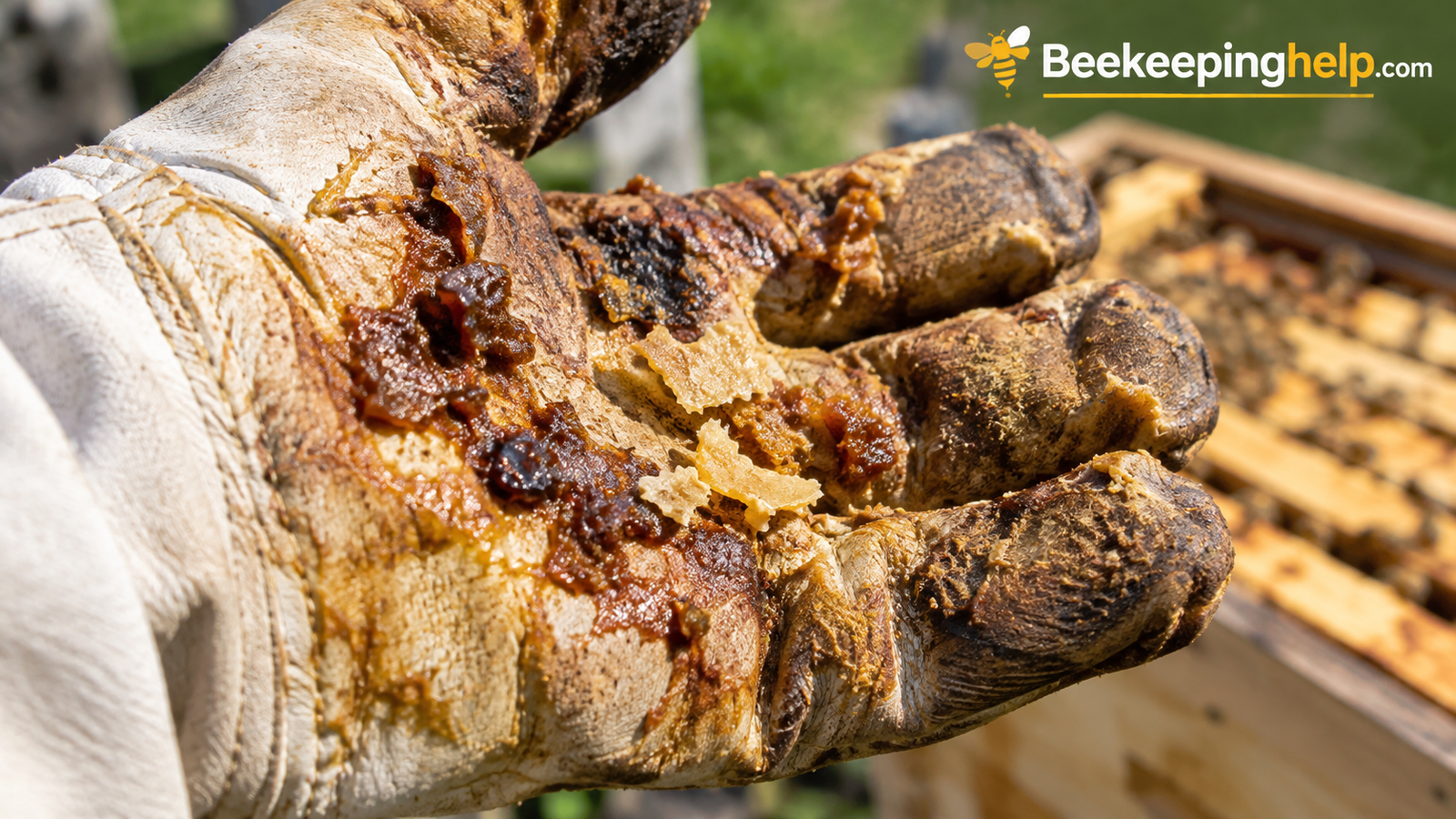
Most beekeepers treat their gloves as an afterthought — something you pull on before opening a hive and toss in a bucket afterward. That habit is exactly why so many gloves fail within a single season. Propolis, the resinous “bee glue” that colonies use to seal gaps in the hive, is one of the stickiest and most stubborn substances you’ll ever handle. Left untreated, it hardens into a shell that stiffens leather, cracks seams, and turns a flexible glove into something closer to a rigid mitt. Add in dried wax, pollen dust, and the accumulated grime of a full inspection season, and you have a recipe for gloves that smell bad, feel uncomfortable, and eventually tear at the fingers.
There’s also a practical hive-health argument for cleaning. Gloves that have handled a colony with early signs of disease can carry spores or pathogens to the next hive you inspect, especially if you manage more than one colony or help out at a local bee club apiary. A quick wipe-down after every inspection, plus a deeper clean every few weeks during active season, dramatically reduces that cross-contamination risk. If you’re just getting into the hobby, this is one of the habits worth building early — right alongside the basics covered in our guide on how to start beekeeping.
Finally, there’s the simple economics of it. Quality leather beekeeping gauntlets aren’t cheap, and a pair that’s properly cleaned and conditioned can easily outlast two or three pairs that are left to bake in a shed, propolis-crusted, until they’re unusable. The time investment here is small — usually 15 to 30 minutes — compared to the cost of replacing gloves every season.
There’s a comfort dimension too, one that’s easy to underestimate until you’ve worn a neglected pair for an entire inspection. Gloves stiffened by dried propolis lose the flexibility that lets you manipulate frames, tighten hive tools, or gently brush bees off a comb without crushing anything. A stiff glove forces you to grip harder and move less precisely, which slows you down during exactly the moments when calm, deliberate movements matter most for keeping a colony settled. Beekeepers who skip regular glove maintenance often report their hands tiring faster during long inspection sessions, simply because they’re fighting the material instead of working with it.
There’s also a seasonal rhythm worth building around. Early spring, when colonies are building up and you’re inspecting more frequently, is when gloves take the heaviest daily wear. A clean, conditioned pair at the start of that stretch — rather than a pair that’s been sitting crusted since last fall — sets you up for a smoother season. Many experienced keepers treat a spring glove clean-and-condition session as part of the same seasonal prep that goes into checking hive equipment and reviewing their overall plan for the year ahead.

2. Know Your Glove Material Before You Clean
Not all beekeeping gloves are built the same, and the cleaning method that works beautifully on one pair can ruin another. Before you grab a bucket and soap, take thirty seconds to identify what you’re actually working with.
Leather Gauntlet Gloves
The most common style, usually made from cowhide, goatskin, or sheepskin on the palm and fingers, with a longer canvas or leather cuff that protects the forearm. Leather is durable and sting-resistant but sensitive to heat, harsh detergents, and prolonged soaking — all of which can cause cracking, shrinking, or stiffening.
Goatskin Gloves
Thinner and more dexterous than cowhide, goatskin gloves are popular with beekeepers who want better finger sensitivity for tasks like queen marking. They’re more delicate, though, and generally need gentler cleaning and more frequent conditioning.
Canvas or Cotton Gauntlet Cuffs
Even leather-palmed gloves usually have a canvas or heavy cotton cuff. This portion is far more forgiving — it can typically handle a machine wash inside a mesh bag, unlike the leather palm.
Nitrile or Rubber-Coated Gloves
Some beekeepers, especially those doing hive inspections in warmer climates, prefer thin nitrile gloves for maximum dexterity. These are the easiest to clean — most can simply be rinsed, wiped with alcohol, or even run under warm soapy water without any risk of damage.
Suede-Palmed Hybrid Gloves
A less common but increasingly popular option pairs a sting-resistant leather back-of-hand with a thin suede or split-leather palm for extra grip and feel. Suede is more porous than smooth leather, which means it absorbs stains faster but also responds well to a suede brush used in one direction to lift dried debris. Avoid soaking suede outright — spot-clean it and let it air-dry slowly, then brush again once fully dry to restore the nap.
If you’re unsure what your gloves are made of, check the inside seam or original packaging, or look at our breakdown of protective gear in the bee suit review guide, which covers glove materials that typically pair with each suit style.
It’s also worth noting that many gloves aren’t a single uniform material from wrist to fingertip. A common construction pairs a thicker, more sting-resistant leather across the back of the hand and fingers with a softer, more breathable panel across the palm for grip and dexterity — and sometimes a mesh insert near the wrist for ventilation on hot days. Each of these panels can react differently to the same cleaning method, which is why a quick material check before you start saves you from, say, soaking a mesh ventilation panel that was never meant to get wet, or scrubbing a suede palm with the same firm brush strokes that work fine on thicker cowhide. When gloves combine materials, always clean according to the most delicate material present rather than the toughest one.
| Material | Hand-Wash Safe | Machine-Wash Safe | Needs Conditioning |
|---|---|---|---|
| Cowhide leather | Yes (palm only) | No | Yes |
| Goatskin leather | Yes, gently | No | Yes, frequently |
| Canvas/cotton cuff | Yes | Yes (mesh bag) | No |
| Nitrile/rubber | Yes | No | No |
3. Supplies You’ll Need
Gathering everything before you start makes the process faster and prevents you from reaching for something abrasive out of impatience — which is how leather gets ruined.
- A stiff-bristled brush or old toothbrush
- Mild soap (saddle soap or a gentle dish soap — avoid anything with bleach or strong solvents)
- Isopropyl alcohol (70% or higher) for spot-treating propolis
- Cotton pads or a soft cloth
- Lukewarm water in a basin
- A mesh laundry bag (if your gloves have a washable canvas cuff)
- Leather conditioner or a small amount of neatsfoot oil
- A flat drying rack or hanger away from direct sun
- Optional: white vinegar or a fabric-safe disinfectant spray for deodorizing
You don’t need every item on this list for a quick post-inspection wipe-down — a brush, some mild soap, and a basin of water covers most routine cleanings. Save the alcohol, conditioner, and deeper disinfecting supplies for a more thorough monthly or seasonal clean. Keeping a small dedicated kit in a labeled bin near your beekeeping gear means you’re far more likely to actually clean gloves promptly, rather than putting it off because the supplies are scattered around the house.
4. Remove Loose Debris and Propolis
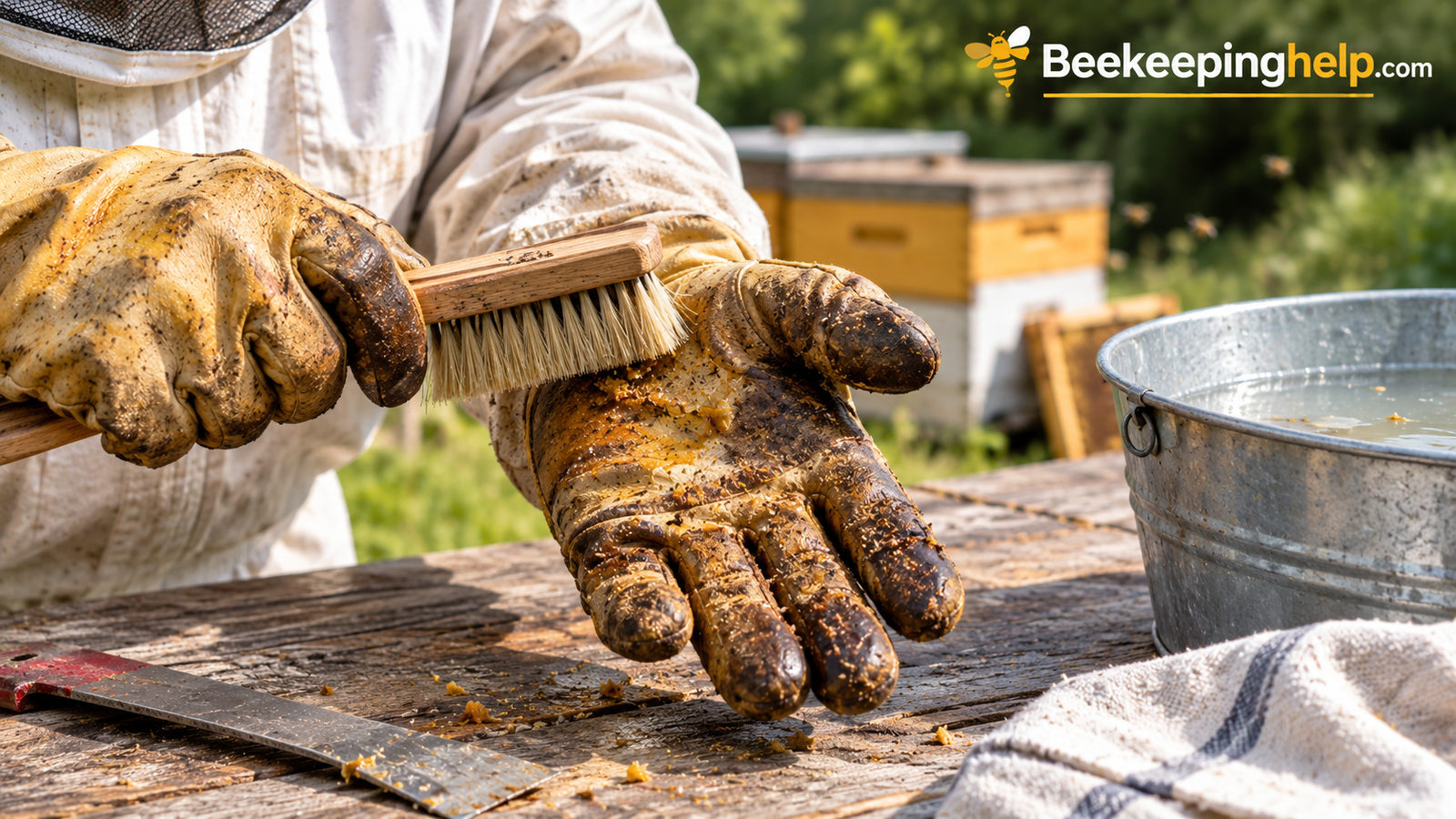
Start dry. Before any soap or water touches the gloves, brush off everything that’s loose — dried mud, pollen dust, bits of wax, and flaky propolis that hasn’t fully bonded to the leather yet. Use a stiff brush and work in short strokes along the grain of the leather, paying particular attention to the seams and finger creases where debris tends to collect. This step matters more than it seems: wetting a glove that’s still coated in loose grit just grinds that grit into the leather’s pores, making stains harder to remove later.
If you handle a smoker regularly, you’ll also notice soot and creosote residue near the wrist area, especially if you’ve been reading up on how a bee smoker works and using it heavily during inspections. Brush this off the same way — dry, before any liquid cleaning begins.
Work outdoors or over a trash bin if you can, since dry propolis and wax flakes scatter as you brush and are genuinely difficult to get out of carpet or upholstery later. A shop vacuum with a brush attachment, run lightly over the glove surface after hand-brushing, catches the finer dust that a bristle brush alone tends to leave behind. Take your time on the finger creases in particular — this is where sting protection matters most, so it’s also where you want the leather in the best possible condition once it’s fully cleaned, dried, and conditioned.
A brush with natural boar bristles rather than synthetic nylon tends to be gentler on leather grain while still being firm enough to dislodge dried debris, and it’s the same style of brush often recommended for cleaning boots and saddles. If you only own a synthetic-bristle brush, that’s fine too — just use lighter pressure and more passes rather than pressing hard in an attempt to remove everything in one go.

5. Spot-Treat Propolis and Wax Stains
Once loose debris is gone, you’ll usually be left with darker, glossy patches where propolis has actually bonded to the leather or hardened wax has smeared in. This is where isopropyl alcohol earns its place in your supply kit. Dab — don’t soak — a cotton pad with alcohol and press it against the stain for 10 to 15 seconds to let it soften the resin, then gently rub in small circles. Propolis will usually lift as a dark residue on the cotton pad; keep rotating to a clean section of the pad so you’re not just smearing it back onto the leather.
For wax specifically, a slightly different approach works better: place a clean paper towel over the wax spot and run a warm (not hot) hairdryer over it for a few seconds. The wax will soften and transfer onto the paper towel rather than deeper into the leather. Avoid direct high heat on leather for more than a few seconds at a time, since sustained heat is what causes cracking.
This is also a good moment to check your smoker fuel habits — resinous or overly sappy fuel tends to leave heavier residue on gloves during use. Our guide on what to use in a bee smoker covers fuel choices that burn cleaner and leave less soot behind.
Fresh propolis, still soft and tacky from a recent inspection, actually responds better to a brief chill than to alcohol. Popping gloves in a plastic bag in the freezer for 20 to 30 minutes hardens fresh propolis to the point where it flakes off cleanly with a light scrape from a dull knife edge or your fingernail, before it has a chance to smear deeper into the leather grain. This trick works especially well right after an inspection, when propolis is at its stickiest — waiting a day or two lets it cure and bond more stubbornly, at which point alcohol becomes the more reliable tool.
6. Hand-Wash Leather Gauntlet Gloves
With debris and heavy stains addressed, it’s time for an overall wash — but leather demands restraint. Fill a basin with lukewarm (never hot) water and work in a small amount of mild soap or saddle soap using a soft cloth or sponge. Wipe the entire glove surface, palm and cuff, using gentle circular motions. Never submerge leather gloves fully or let them sit soaking; leather absorbs water quickly and can warp or shrink as it dries if it’s been saturated.
Pay extra attention to finger creases and the seam where the leather palm meets the cuff — these areas trap grime and dry slowly if oversaturated, which can lead to mildew if not addressed. Work in sections rather than trying to clean the whole glove at once.
If your gloves came as part of a full protective suit, it’s worth cleaning the suit itself on the same schedule. Our guide to how to wash a bee suit walks through the process for the mesh and fabric portions, which usually tolerate a much more thorough wash than leather gloves do.
A useful rule of thumb while hand-washing: if you find yourself scrubbing hard enough that the leather’s surface starts to lighten or the texture starts to feel rough under your fingers, you’re using too much pressure or too much soap. Leather cleans best with patience — repeated light passes over a stain outperform one aggressive scrub every time, and it’s far easier to go back over a spot a second time than to repair leather that’s been abraded or over-saturated.
7. Machine-Wash Canvas or Cotton Gauntlet Cuffs (When Safe)
Many gloves use canvas or heavy cotton for the long forearm cuff, and this portion is usually far more forgiving than the leather palm. If the leather is stitched separately from the cuff — or if the whole glove is fabric with only reinforced palm patches — a gentle machine wash can work well, provided you take a few precautions.
Place the gloves inside a mesh laundry bag to prevent the cuffs from snagging on other items or getting twisted around the agitator. Use a cold, gentle cycle with a mild detergent, and skip the dryer entirely afterward — heat from a tumble dryer can shrink cotton cuffs and, if any leather is attached, will almost certainly damage it. If you’re at all unsure whether your specific gloves are machine-safe, default to hand-washing; it’s slower but essentially risk-free.
Before loading the washer, double-check every stitch line where fabric meets leather. Machine agitation puts real stress on these seams, and a cuff that’s already fraying slightly can tear the rest of the way in a single wash cycle. If you notice loose threads or a seam that’s starting to separate, hand-wash that pair instead and consider a quick repair stitch first — a $2 spool of heavy-duty thread is a lot cheaper than a full glove replacement caused by a wash-cycle blowout.

8. Rinse Thoroughly to Remove Soap Residue
Leftover soap is one of the most overlooked causes of stiff, uncomfortable gloves. Residue that isn’t fully rinsed out dries into the leather’s fibers and canvas weave, leaving a slightly crusty, less flexible finish — and it can also irritate skin on your next wear. Rinse hand-washed leather with a barely damp cloth run over the surface multiple times, changing the water as needed, rather than holding the glove under a running tap. For canvas cuffs washed by hand or machine, rinse until the water runs completely clear with no suds.
Squeeze out excess moisture gently by pressing the glove between two towels — never wring or twist leather, which distorts its shape permanently.
If you’re rinsing multiple pairs at once — say, after a club apiary day with several volunteers — resist the temptation to speed things up by soaking everything together in one basin. Water that’s already carrying soap and grime from one glove will simply redeposit it onto the next. Change your rinse water between pairs, or at minimum after every second glove, and you’ll avoid the frustrating experience of gloves coming out of a “clean” rinse still feeling slightly tacky.
9. Dry and Condition Properly
Drying is where more beekeeping gloves get ruined than at any other stage. Never dry leather gloves near a heater, on a sunny windowsill, or with a hairdryer for extended periods — direct or intense heat pulls moisture out too fast and causes cracking and shrinkage. Instead, stuff the fingers loosely with paper towel to help them hold their shape, then lay the gloves flat or hang them on a rack in a well-ventilated, shaded spot. Expect leather to take anywhere from 12 to 24 hours to dry fully.
Once completely dry, apply a small amount of leather conditioner (or neatsfoot oil) with a soft cloth, working it in with light circular motions. This restores the oils that washing strips out and keeps the leather flexible rather than stiff and prone to cracking. Canvas cuffs don’t need conditioning — just make sure they’re fully dry before storing to avoid mildew.
A good test for whether conditioning is needed: flex the dry glove at the knuckles. If it creaks, resists bending, or feels noticeably board-like compared to how it felt new, it’s telling you the natural oils are depleted. Apply conditioner sparingly at first — a little goes a long way, and over-conditioning can leave leather feeling greasy or attract more dust than it repels. Let the conditioner absorb for a few hours before wearing the gloves again, and buff lightly with a dry cloth if any residue remains on the surface.
Do
- Dry in shade with airflow
- Condition leather once fully dry
- Reshape fingers while damp
Avoid
- Direct sun or heaters
- Wringing or twisting leather
- Storing while still damp
10. Disinfecting and Deodorizing Your Gloves
Beyond visible grime, gloves accumulate bacteria and a distinct sour-sweet odor from sweat, wax, and hive debris combined over repeated use. A light disinfecting pass is worth doing periodically, especially if you’re lending gloves to a helper or moving between multiple apiaries.
For fabric portions, a diluted white vinegar spray (roughly one part vinegar to three parts water) works as a natural deodorizer — mist lightly, let sit for a few minutes, then wipe with a damp cloth and air-dry. Avoid spraying vinegar directly onto leather, since the acidity can dry it out; instead, wipe leather with a barely damp cloth and finish with conditioner afterward. If odor is severe, a fabric-safe enzymatic spray (the kind made for sports gear) can be more effective than vinegar alone, though always test on a hidden area first.
Baking soda is another simple trick: sprinkle a small amount inside dry gloves, let them sit overnight, then shake and brush out. It absorbs odor without any moisture or chemical risk to the material.
If you’re sharing gloves among multiple beekeepers, or moving between apiaries that might have different disease pressures, consider a UV glove sanitizer box — the kind marketed for shoes and sports gear works just as well here. These use ultraviolet light rather than moisture or chemicals to reduce bacterial load, which means zero risk of the leather damage that can come from more aggressive liquid disinfectants, and they’re fast enough to run between back-to-back hive visits.
It’s worth being cautious with essential-oil-based deodorizers that have become popular for general gear care. Strong essential oils, especially citrus and tea tree, can be attractive or irritating to bees at close range, and a heavily scented glove is the last thing you want brushing against a hive entrance during your next inspection. If you want a pleasant scent alongside the odor removal, choose something mild and let the gloves air out fully — ideally a full day — before your next time near the bees.

11. Storage Tips That Prevent Future Buildup
How you store gloves between inspections has almost as much impact on their lifespan as how you clean them. A few habits make a real difference:
- Store fully dry, never damp: even a little residual moisture invites mildew and a musty smell that’s hard to remove later.
- Keep them flat or loosely hung: balling gloves up in a bucket or bag creates permanent creases and traps moisture against the leather.
- Avoid airtight containers: a breathable canvas bag or open shelf is far better than a sealed plastic tub, which can trap humidity.
- Keep them away from direct sunlight in storage: UV exposure over months will dry out and fade leather even when the gloves aren’t in use.
- Store separately from your smoker and fuel: residual soot and moisture from smoker fuel can transfer onto clean gloves sitting nearby.
A simple hook near your other apiary tools — smoker, hive tool, and suit — keeps everything accessible and dry between visits, and makes it easy to spot when gloves need another cleaning pass before your next visit to the apiary.
Seasonal storage deserves its own note. If you’re putting gloves away for winter rather than between weekly inspections, give them a full clean-and-condition treatment first rather than storing them “good enough.” Months of sitting untouched gives any residual propolis or moisture far more time to cause damage than the few days between active-season inspections. Wrap conditioned leather loosely in a breathable cotton pillowcase rather than plastic before placing it in storage — plastic traps whatever humidity is present and can encourage mold growth over a long off-season.

12. When to Repair or Replace Instead of Clean
Even with careful cleaning, gloves eventually reach a point where washing won’t help. Watch for these signs that it’s time to repair or retire a pair:
Still Salvageable
- Stiff but crack-free leather (conditioning fixes this)
- Surface stains without odor
- Minor seam fraying at the cuff
Time to Replace
- Visible cracks or holes in the palm
- Torn seams at finger joints
- Persistent odor after multiple cleanings
- Leather that’s gone brittle despite conditioning
A hole or crack in the palm isn’t just a comfort issue — it’s a sting risk, which defeats the entire purpose of the glove. If you’re at that point, it’s worth reading through current options rather than patching something that’s structurally compromised. Building good habits now, including the small maintenance routines covered here, is part of what separates beekeepers who improve their beekeeping skills steadily over time from those who keep re-buying the same gear every season.
Small, isolated damage is often repairable rather than a reason to replace the whole glove outright. A leather patch kit and a heavy-duty needle can close a minor seam separation at the wrist or cuff, and leather glue works well on small surface splits that haven’t fully torn through. What isn’t worth repairing is damage across the palm or fingers themselves — the exact zones that take the most contact during an inspection, and the zones where a repair patch is most likely to shift, peel, or fail at the worst possible moment. When in doubt, weigh the cost of a patch kit and your time against the cost of a new pair; for anything beyond a single small seam repair, replacement is usually the more sensible choice.
Frequently Asked Questions
Can I put leather beekeeping gloves in the washing machine?
It’s not recommended. Machine agitation combined with water saturation and heat from the spin cycle tends to warp, shrink, and crack leather. If your gloves have a separate canvas cuff, that portion alone can often go in a mesh bag on a cold, gentle cycle — but keep the leather palm section hand-washed only.
What’s the fastest way to remove propolis from gloves?
Isopropyl alcohol on a cotton pad is the quickest reliable method. Dab the stain, let it sit briefly to soften the resin, then rub gently. For wax specifically, a warm hairdryer over a paper towel pressed against the spot lifts it without alcohol.
How often should I clean my beekeeping gloves?
A quick brush-down after every inspection, plus a full wash every two to four weeks during active beekeeping season, keeps most gloves in good shape without over-washing the leather.
Is it safe to use dish soap on leather gloves?
A very mild, unscented dish soap in small amounts is generally safe, but saddle soap or a dedicated leather cleaner is gentler on the hide’s natural oils and less likely to leave leather feeling dry afterward.
Why do my gloves feel stiff after washing?
Stiffness after washing almost always comes from one of two causes: leftover soap residue that dried inside the fibers, or drying too quickly near heat. Rinse thoroughly, dry slowly in shade, and finish with a leather conditioner to restore flexibility.
Can I use vinegar to clean beekeeping gloves?
Diluted vinegar works well as a deodorizer on fabric cuffs but should be used sparingly, if at all, on leather, since its acidity can dry out the hide over repeated use. Always follow a vinegar treatment with conditioner if it touches leather.
How do I get rid of the smell in my gloves?
Sprinkle baking soda inside dry gloves and let them sit overnight, or lightly mist fabric portions with a diluted vinegar solution. For persistent odor, an enzymatic gear spray designed for sports equipment is usually more effective.
Should I condition my gloves every time I wash them?
Yes, for leather. Washing strips natural oils from the hide, and conditioning afterward replaces them, keeping the leather flexible and crack-resistant. Canvas or cotton portions don’t need conditioning.
Can beekeeping gloves be dried in a clothes dryer?
No. Tumble-dryer heat is one of the most common causes of cracked, shrunken leather and warped canvas cuffs. Always air-dry gloves flat or on a hanger, away from direct heat and sunlight.
How do I know if my gloves are too worn to keep using?
If you see cracks or holes in the palm, torn seams at the finger joints, or leather that stays brittle even after conditioning, it’s time to replace them. A compromised palm is a sting risk, not just a comfort issue.
Do nitrile beekeeping gloves need special cleaning?
Not really — nitrile gloves can typically be rinsed under warm water with a small amount of soap or wiped down with alcohol, and they dry quickly without any risk of the cracking or stiffening leather can develop.
What should I avoid using on beekeeping gloves?
Avoid bleach, strong solvents, machine washing for leather, direct high heat while drying, and prolonged soaking. All of these accelerate cracking, discoloration, or structural damage to both leather and fabric portions.
Final Thoughts
Cleaning beekeeping gloves isn’t complicated, but it does reward a little patience and the right order of operations: brush off debris dry, spot-treat stubborn propolis and wax, hand-wash leather gently while machine-washing fabric cuffs only when safe, rinse thoroughly, and dry slowly away from heat before conditioning. Build that routine into your regular hive-inspection habits, and a single pair of quality gloves can comfortably last for several full seasons instead of needing replacement every few months.
If your current pair is past the point of saving, or you’re assembling a fresh beekeeping kit, take a look at current glove options below to find a pair that matches your hand size and preferred material.
As with most beekeeping gear, the goal isn’t perfection — it’s consistency. A glove that gets a quick brush after every inspection and a proper wash every few weeks will outperform a glove that gets an occasional, overly aggressive scrub-down once it’s already caked in months of buildup. Fold the routine into whatever post-inspection checklist you already follow for your smoker, hive tool, and suit, and cleaning gloves stops feeling like a chore and just becomes part of closing out a hive visit.