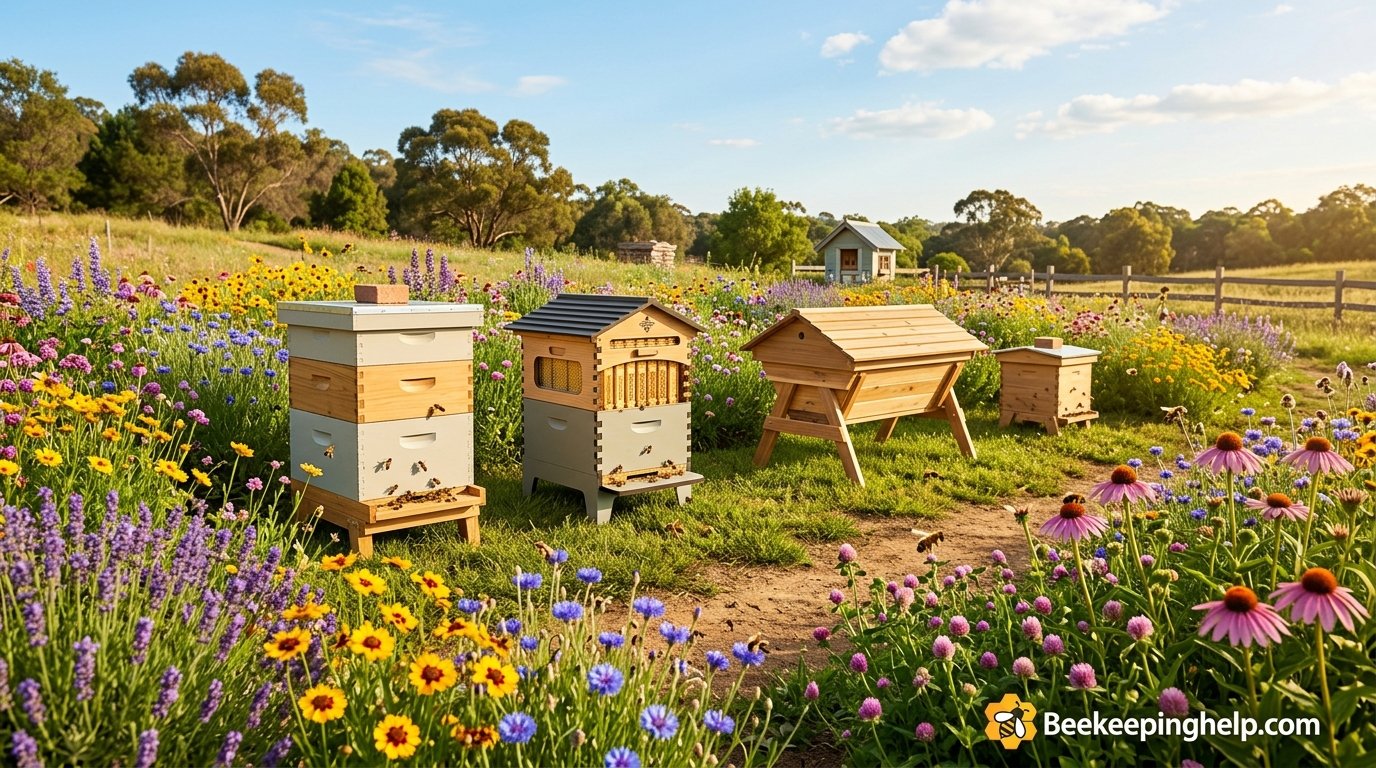
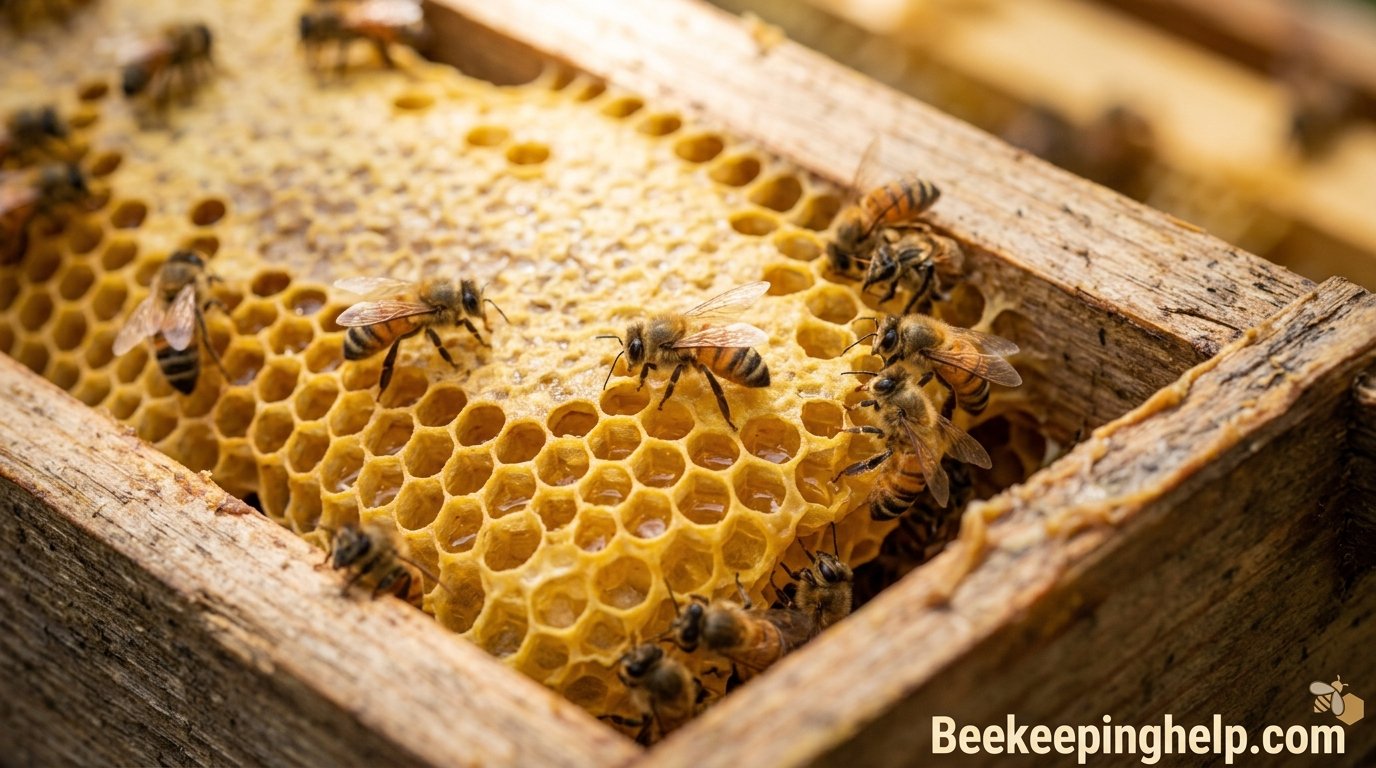
Walking into the world of beekeeping is a little like stepping into a garden for the first time — there is far more variety than you expected, and every option seems to have its own personality. One of the very first decisions you will face is choosing which type of beehive to set up in your yard, farm, or rooftop garden. The hive you select will shape everything from how often you inspect your colonies to how much honey you harvest and even how comfortable your bees are through the seasons.
This guide walks you through every major beehive type in existence today, complete with pictures, detailed descriptions, pros and cons, and side-by-side comparisons. Whether you are a complete beginner looking for your first hive or an experienced beekeeper curious about branching out into a different style, you will find the answers here. We cover the classic Langstroth hive, the natural-minded Top Bar, the elegant Warré, the modern Flow Hive, and many more — including some historical designs that still have a place in today’s apiaries.
By the end of this article, you will know exactly which beehive type fits your goals, your climate, and your beekeeping philosophy. Let’s dive in.

Ready to Start Beekeeping?
Get a complete beekeeping starter kit with everything you need to set up your first hive and welcome your bees home.
Shop Beekeeping Kits on AmazonWhy Your Beehive Type Matters More Than You Think
Some newcomers assume that a beehive is just a box with bees in it. While that description is technically not wrong, it dramatically undersells the importance of hive design. The type of hive you choose will influence nearly every aspect of your beekeeping journey, and switching hive types mid-stream is neither cheap nor easy — your bees build comb that is specific to the dimensions and orientation of their home.
Hive Management and Inspection Style
Different hives demand different management approaches. A Langstroth hive requires you to lift heavy boxes (called supers) to inspect frames from the top down. A Top Bar hive, on the other hand, lets you inspect individual bars from above without lifting anything heavier than a single bar of comb. A Warré hive was specifically designed to minimize inspections altogether, relying on the bees’ natural tendency to build downward. Your physical abilities, your schedule, and your comfort level with disturbing the colony all play into which management style suits you best.
Honey Harvest Methods
The way you harvest honey varies dramatically between hive types. Langstroth hives use removable frames that go into an extractor — a centrifugal machine that spins honey out of the comb while leaving the wax intact for the bees to reuse. Top Bar hives produce “cut comb” honey, where you slice the comb directly from the bar and crush it to release the liquid gold. The Flow Hive revolutionized harvesting by allowing you to turn a tap and watch honey flow directly into a jar without ever opening the hive. Each method has its own charm, labor requirements, and impact on the colony.
Climate and Regional Considerations
Not every hive performs equally in every climate. In cold northern regions, hives with good insulation and the ability to manage moisture — like the Warré or a well-wrapped Langstroth — tend to overwinter colonies more successfully. In hot, humid climates, hives with excellent ventilation, such as the Top Bar, can help prevent overheating and reduce moisture-related problems. Understanding your local climate patterns will help you narrow down the hive types most likely to keep your bees thriving year-round.
Bee Health and Natural Comb Building
There is a growing movement among beekeepers toward “natural” or “foundationless” beekeeping, where bees are allowed to build their own comb without the pre-embossed wax or plastic foundation sheets used in conventional hives. Hives like the Top Bar, Warré, and Sun Hive are designed with this philosophy at their core. Proponents argue that natural comb allows bees to regulate cell size — producing smaller cells for worker bees and larger cells for drones — which may contribute to better resistance against pests like varroa mites. Whether you subscribe to this philosophy or prefer the structure of foundation-based frames will significantly influence your hive choice.
The Langstroth Beehive — The Industry Standard
Overview
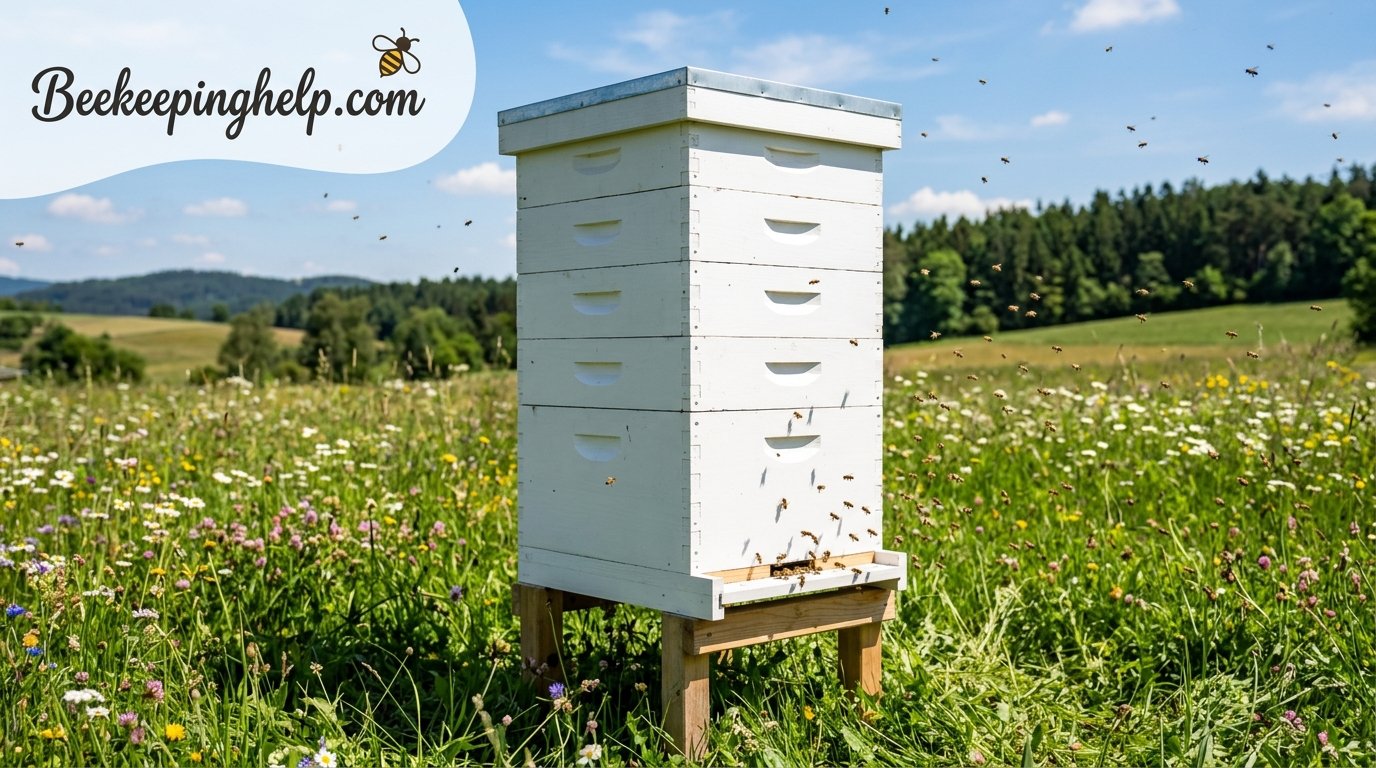
If there is one hive that deserves the title “the king of beekeeping,” it is the Langstroth. Invented by Reverend Lorenzo Langstroth in the mid-1800s, this hive introduced the concept of “bee space” — the precise gap of approximately 6 to 9 millimeters that bees leave open for movement, rather than filling with propolis or comb. This discovery was revolutionary because it meant that frames could be removed individually without the bees gluing everything together, making inspection and honey harvest practical on a large scale.
The Langstroth hive consists of stacked rectangular boxes, each containing either 8 or 10 removable frames. The bottom box, called the deep or brood box, is where the queen lays eggs and the colony raises brood. Above that, beekeepers add medium or shallow “supers” — boxes filled with frames where bees store surplus honey. A lid and a bottom board complete the structure. The entire system is modular, which means you can add or remove boxes as the colony grows or shrinks through the seasons.
How It Works
The genius of the Langstroth lies in its standardization. Every component — boxes, frames, lids, and bottom boards — is manufactured to precise dimensions. This means that parts from one manufacturer fit perfectly with parts from another, and beekeepers can mix and match components freely. The frames hang vertically inside the box, and bees build comb downward from a strip of foundation (wax or plastic) embedded in each frame. When it is time to inspect, the beekeeper simply lifts the lid, pulls out individual frames, examines both sides, and slides them back in.
For honey harvesting, full frames of capped honey are removed from the super, uncapped with a heated knife, and placed in a centrifugal extractor. The extracted frames — now empty of honey but still containing intact wax comb — are returned to the hive for the bees to refill. This reuse of comb is one of the Langstroth system’s greatest efficiency advantages, saving the colony enormous amounts of energy they would otherwise spend rebuilding wax from scratch.
Pros
- Industry standard with widely available parts and accessories
- Removable frames allow thorough inspections
- Compatible with extractors for efficient honey harvest
- Expandable — add supers as the colony grows
- Tons of educational resources and community support
- Works well in most climates
Cons
- Boxes can be very heavy (up to 30 kg / 65 lbs when full)
- Requires foundation, which adds cost
- Less “natural” than foundationless hive designs
- Vertical design means lifting boxes to access lower levels
- Can be expensive to set up initially
Best For Beginners Most Popular Worldwide

Top-Rated Langstroth Hive Kits
Find the perfect Langstroth hive setup — from beginner kits to professional-grade equipment with all the frames and foundation you need.
View Langstroth Hives on AmazonThe Top Bar Beehive — Simplicity and Natural Beekeeping
Overview
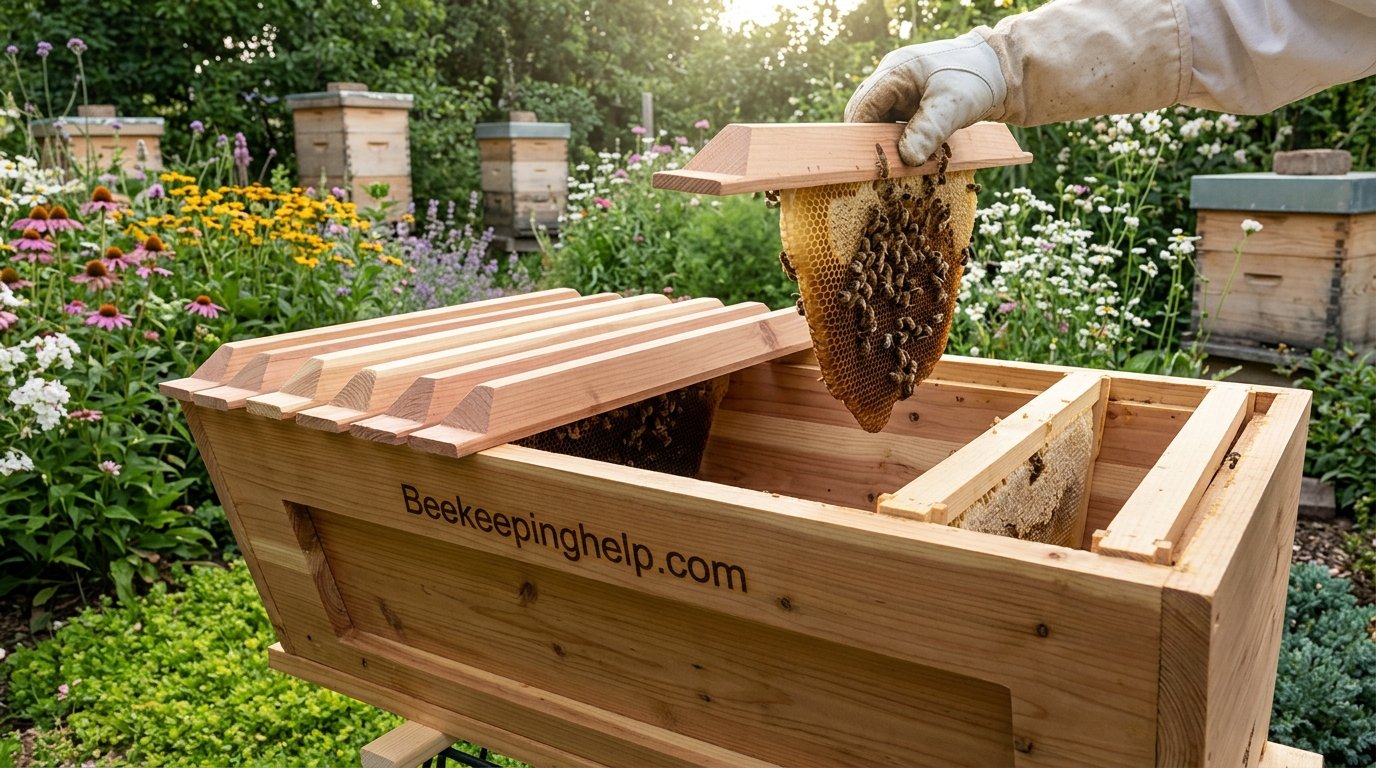
The Top Bar hive (often abbreviated as TBH) is one of the oldest and simplest hive designs in the world. Its basic form is a trough-shaped body — usually trapezoidal in cross-section — with a series of wooden bars laid across the top. Each bar serves as a guide for the bees to build their comb downward, hanging freely like curtains from a curtain rod. There are no frames, no foundation, and no boxes to stack. Everything happens at waist height, making it one of the most physically accessible hive designs available.
Top Bar hives have deep roots in African and Asian beekeeping traditions, where they were (and still are) constructed from hollowed logs, clay pots, or simple woven baskets. The modern version, popularized in the Western world by beekeepers like Les Crowder and Phil Chandler, uses a wooden trough with a removable lid and a set of interchangeable top bars. The design philosophy centers on allowing bees to build natural comb in the size and pattern they choose, without human-imposed foundations or cell-size templates.
How It Works
Management of a Top Bar hive is fundamentally different from a Langstroth. Instead of pulling frames out of stacked boxes, you remove individual bars from the top of the hive one at a time. The comb hangs below each bar, and you inspect it by gently lifting the bar and tilting it to see both sides. This “one bar at a time” approach means you never need to lift heavy boxes, and the risk of rolling or crushing bees between frames is greatly reduced.
Honey harvesting in a Top Bar hive is a “cut and crush” affair. When a comb is full of capped honey, you remove the entire bar, slice the comb off with a knife, and crush it through a strainer to separate the honey from the wax. This means that unlike the Langstroth system, the bees must rebuild their comb after every harvest — which costs the colony energy (they need to consume roughly 6 to 8 pounds of honey to produce 1 pound of wax). For this reason, many Top Bar beekeepers harvest less frequently and leave more honey in the hive for the bees.
Pros
- Extremely affordable — can even be built from scrap lumber
- No heavy lifting; all work done at waist height
- Promotes natural comb building without foundation
- Gentle on bees — minimal disruption during inspections
- Great for beekeepers with physical limitations
- Simple design with few parts to buy or maintain
Cons
- Lower honey yields compared to Langstroth hives
- Comb is fragile and can break during inspections
- Not compatible with standard extractors
- Less standardized — dimensions vary between builders
- Bees may build cross-comb if bars are not properly spaced
- Limited expansion — cannot add supers
Great for Beginners Best for Natural Beekeeping

Master Top Bar Beekeeping
Explore the best books and tools for natural top bar beekeeping — from hive construction guides to essential inspection tools.
Shop Top Bar Hive SuppliesThe Warré Beehive — The People’s Hive
Overview
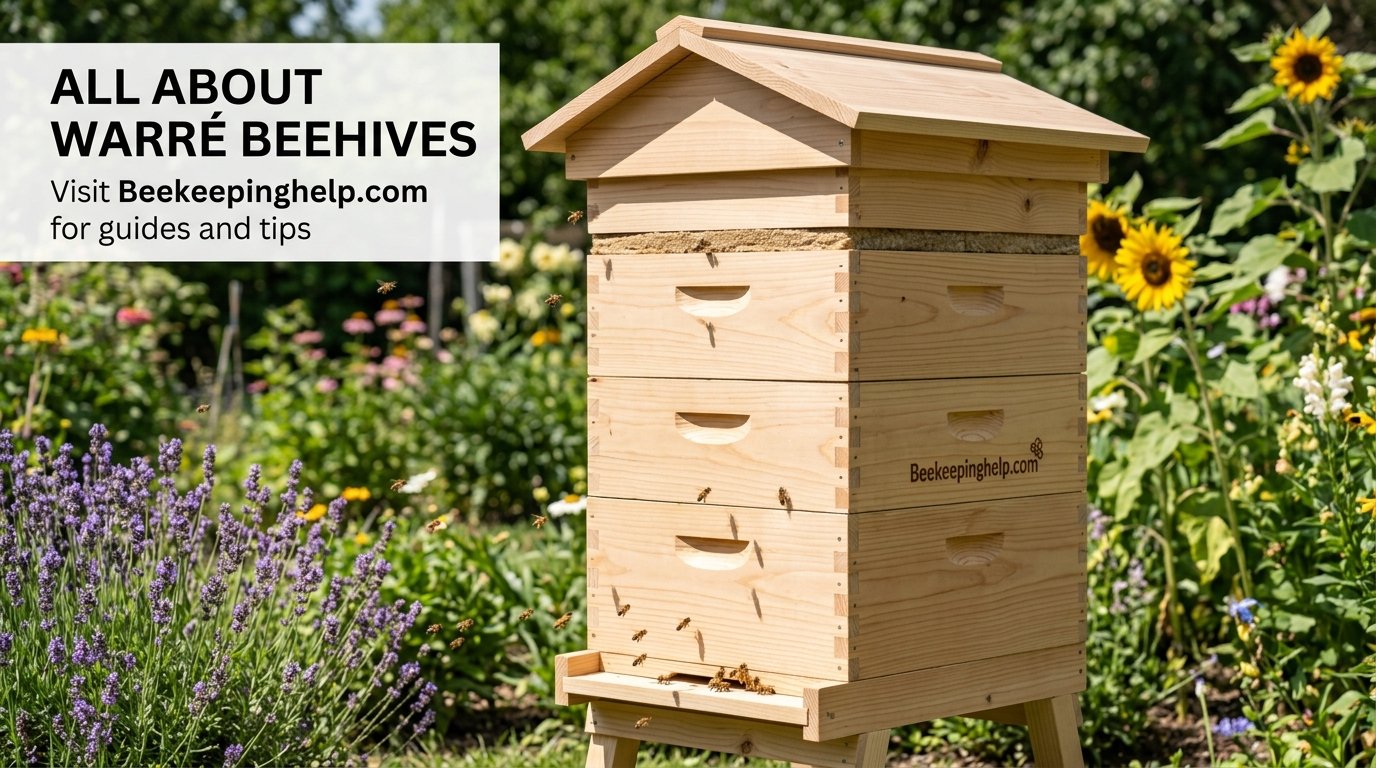
Designed by French abbot Émile Warré after decades of experimentation with over 350 different hive designs, the Warré hive — sometimes called “the People’s Hive” — was created to be the simplest, cheapest, and most bee-friendly hive possible. Warré’s philosophy was rooted in observation: he believed that the best beekeeping mimicked the conditions of a natural tree hollow as closely as possible, with minimal human interference.
The Warré hive looks like a stack of identical square boxes, each smaller than a Langstroth deep box. Instead of removable frames, it uses top bars (similar in concept to a Top Bar hive) with the option of adding thin guide strips of wax to encourage straight comb building. The hive grows downward — when the colony needs more space, a new box is added to the bottom of the stack, not the top. This “nadiring” technique mimics the way bees naturally expand their nest downward in a tree cavity.
How It Works
The most distinctive feature of the Warré hive is its quilt box — a layer of wood shavings or other insulating material placed above the top box and below the roof. This quilt absorbs moisture rising from the colony, preventing condensation from dripping back down onto the bees (a major cause of winter colony losses). The roof is typically a sloped, gabled design that sheds rain and snow effectively.
Warré believed that frequent inspections stressed the colony and disrupted the bees’ carefully organized environment. His management approach called for only one or two inspections per year — typically in spring and autumn. Honey is harvested once per year, usually from the top box or two, which the colony has filled during the main nectar flow. Because the comb is not returned after extraction (it is crushed and strained), the bees must rebuild, which Warré considered a natural and healthy process.
Pros
- Excellent insulation and moisture management
- Mimics natural hive conditions closely
- Very low cost to build — simple box construction
- Minimal management required (1–2 inspections per year)
- Downward expansion follows bees’ natural instincts
- Strong overwintering performance in cold climates
Cons
- No removable frames — harder to inspect individual combs
- Lower honey yields than Langstroth
- Comb must be crushed for harvest (no frame extraction)
- Adding boxes to the bottom requires lifting the entire hive
- Less widely available commercially
- Not ideal for beekeepers who want frequent inspections
Intermediate Level Best for Cold Climates

Essential Beekeeping Tools
Every beekeeper needs a quality smoker, hive tool, and protective gear. Get the essentials to manage your Warré hive safely and confidently.
Shop Beekeeping ToolsThe Flow Hive — Honey Harvesting Revolutionized
Overview
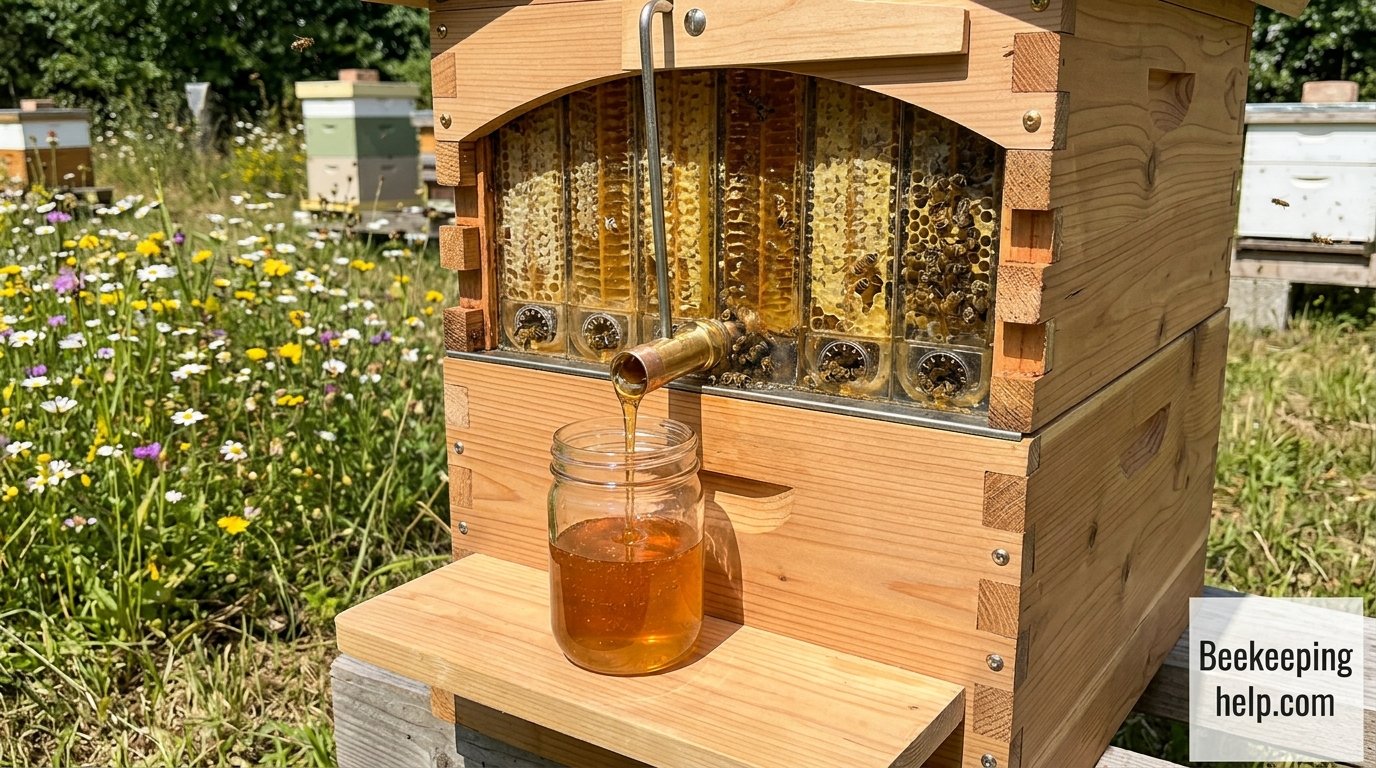
The Flow Hive burst onto the beekeeping scene and immediately captured the public imagination. Designed by Australian father-son team Stuart and Cedar Anderson, the Flow Hive is essentially a modified Langstroth hive with a revolutionary twist: specially designed plastic frames that allow honey to be harvested by simply turning a key. The internal structure of each Flow frame splits vertically, creating channels through which honey flows downward and out of the hive into a waiting jar — all without opening the hive, disturbing the bees, or lifting a single box.
The concept is genuinely ingenious. The bees build their comb on the pre-formed plastic cells of the Flow frame, fill them with honey, and cap them with wax just as they would in any other hive. When the beekeeper inserts the Flow key into the end of the frame and turns it 90 degrees, the cells split apart internally, creating a channel for the honey to drain. Once the honey stops flowing, the key is turned back, the cells realign, and the bees repair the wax caps — ready to fill the frame again.
How It Works
A standard Flow Hive setup includes a brood box at the bottom (with conventional frames for the queen and brood) and one or more Flow supers on top. The Flow super contains the patented frames, each with a viewing window on the side so you can check honey levels without lifting the lid. When the frames are full and capped, you place a tube or hose at the outlet, insert the key, and turn. Golden honey flows out like a tap. It is as satisfying to watch as it sounds.
The Flow Hive is compatible with standard Langstroth equipment, so you can mix Flow supers with conventional supers on the same hive. Many beekeepers use Flow frames for their top super (the easiest to harvest) and conventional frames below for additional honey storage. The brood box always uses standard frames, since you would never want to “flow” the brood area.
For a detailed comparison with the traditional Langstroth approach, check out our guide on Flow Hive vs. Langstroth.
Pros
- Incredibly easy honey harvesting — no extractor needed
- Minimal disturbance to the colony during harvest
- Viewing windows allow non-invasive monitoring
- Compatible with standard Langstroth equipment
- Fun and satisfying harvesting experience
- Great for urban beekeepers with limited space
Cons
- Significantly more expensive than standard Langstroth setups
- Plastic frames may not appeal to natural beekeeping advocates
- Honey can crystallize in the frames if left too long
- Still requires a standard brood box with conventional frames
- Replacement Flow frames are costly
- Some beekeepers report bees reluctant to draw comb on plastic
Beginner Friendly Easiest Harvest

Stay Protected While Beekeeping
A quality beekeeping suit is essential no matter which hive type you choose. Browse top-rated full-body suits, gloves, and veils.
Shop Beekeeping SuitsThe Log Beehive — Ancient Roots, Modern Appeal
Overview
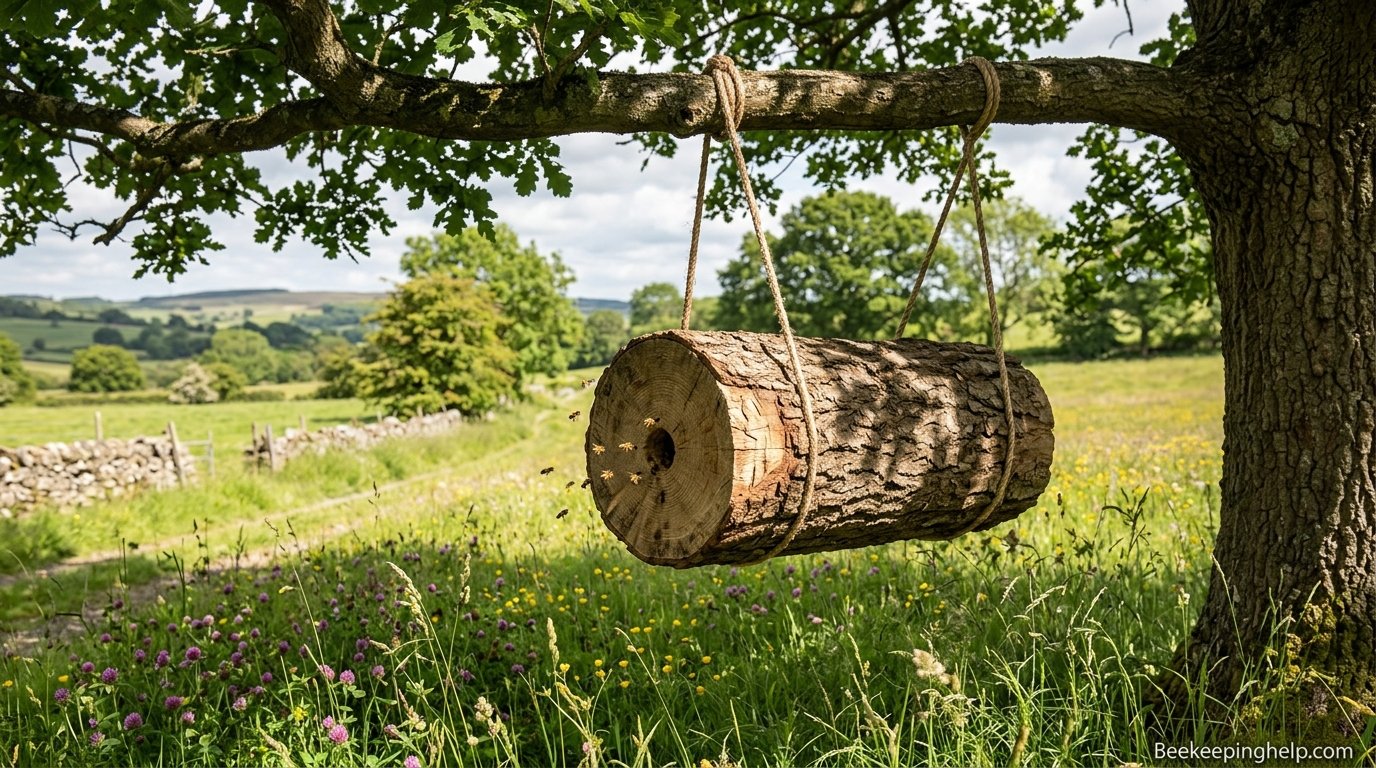
Long before anyone dreamed of standardized boxes and removable frames, people kept bees in hollow logs. The log hive is arguably the original beehive — a section of tree trunk, typically from a softwood species like pine, poplar, or linden, hollowed out to create a cavity that closely mimics the natural nesting site of wild honeybees. In many parts of the world — particularly in Eastern Europe, Africa, and parts of Asia — log hives remain in active use today.
The appeal of the log hive lies in its simplicity and its closeness to nature. A log hive provides thick wooden walls with excellent natural insulation, a rough interior surface that gives bees plenty of attachment points for their comb, and a dark, enclosed space that feels like home to a colony evolved to live in tree cavities. There are no frames to manage, no boxes to stack, and no foundation to buy. The bees build their comb exactly as they please, attaching it to the walls and ceiling of the hollow.
How It Works
Traditional log hives are managed with a “cut and come again” approach. The beekeeper opens the hive from one end (usually the bottom), smokes the bees upward, and cuts away sections of honeycomb for harvest — leaving enough brood and honey for the colony to survive and rebuild. Some modern log hive enthusiasts have adapted the design with a top-bar system at the opening, allowing for slightly more controlled management while preserving the natural interior.
Log hives can be stood upright like a column, hung horizontally from a tree or wall (as is common in parts of Ethiopia and Poland), or placed on a simple stand. The entrance is typically a small hole near the bottom, which the bees propolize to their preferred size. In cold climates, the thick log walls provide superb insulation, often outperforming thin-walled commercial hives in winter survival rates.
Pros
- Excellent natural insulation — warm in winter, cool in summer
- Mimics natural tree hollow perfectly
- Virtually free if you have access to suitable logs
- Bees build completely natural comb
- Beautiful, rustic aesthetic
- Long-lasting — a good log hive can last decades
Cons
- Very difficult to inspect the colony
- Honey harvest involves destroying comb
- Not standardized — every log hive is unique
- Heavy and awkward to move
- Not compatible with modern beekeeping equipment
- May not meet local apiary regulations in some areas
Advanced / Traditional Best Natural Insulation
The Skep Beehive — A Historic Icon
Overview
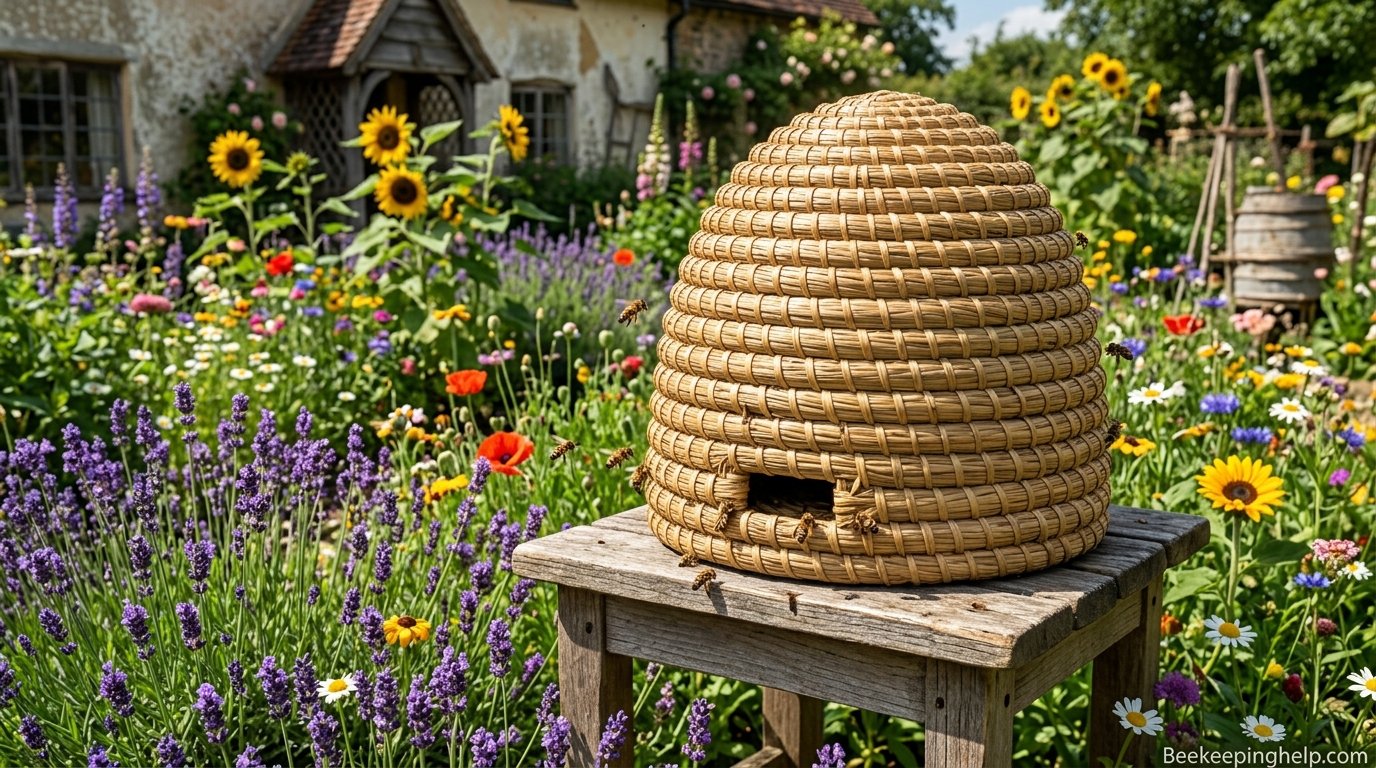
When most people picture “a beehive,” they are imagining a skep — the iconic dome-shaped basket woven from straw or dried grass that has symbolized beekeeping for centuries. Skeps were the dominant hive design in Europe from the medieval period through the 1800s, and they remain a powerful cultural symbol even though their practical use has declined dramatically. You will still see skeps in historical demonstrations, decorative gardens, and the logos of beekeeping organizations around the world.
A skep is constructed by coiling a long rope of straw or dried grass into a spiral, binding each layer to the one below with thin strips of willow or string. The result is a lightweight, breathable basket with a small entrance hole at the bottom. Skeps were traditionally placed on a flat stone or wooden board (called a “skep board”) with a hole in the center, and sometimes covered with a thatched cap or clay daubing for weather protection.
How It Works
Managing a skep is a far cry from modern frame-based beekeeping. Because there are no removable frames, the only way to inspect the colony or harvest honey is to destroy the comb. Traditional skep beekeepers would “take up” the colony in autumn by driving the bees out with smoke, cutting away the honeycomb, and either killing the colony (historically common) or hiving the bees into a fresh skep with some old comb as a starter. This destructive harvest method is the primary reason skeps fell out of favor once the Langstroth frame hive became available.
Today, skeps are sometimes used in combination with a “bee beard” demonstration, where the queen is placed in the skep and the colony clusters around her in a dramatic display. Some heritage beekeepers maintain skeps for educational purposes, and a few natural beekeepers use modified skeps with a top-bar opening that allows for less destructive management. However, in most jurisdictions, beekeeping regulations require the ability to inspect for disease, which is essentially impossible with a traditional skep.
Pros
- Historically significant and culturally iconic
- Can be made from locally sourced natural materials
- Lightweight and portable
- Good ventilation through woven walls
- Beautiful decorative and educational piece
Cons
- No removable frames — destructive harvest only
- Cannot inspect for disease (may not meet regulations)
- Short lifespan — straw degrades over 2–3 seasons
- Very low honey yields by modern standards
- Not practical for modern beekeeping goals
Heritage / Educational

New to Beekeeping? Start Here
These top-rated beekeeping books cover everything from hive selection to honey harvesting — perfect for first-time beekeepers.
Browse Beekeeping BooksThe Long Langstroth Hive — Horizontal and Heavy-Duty
Overview
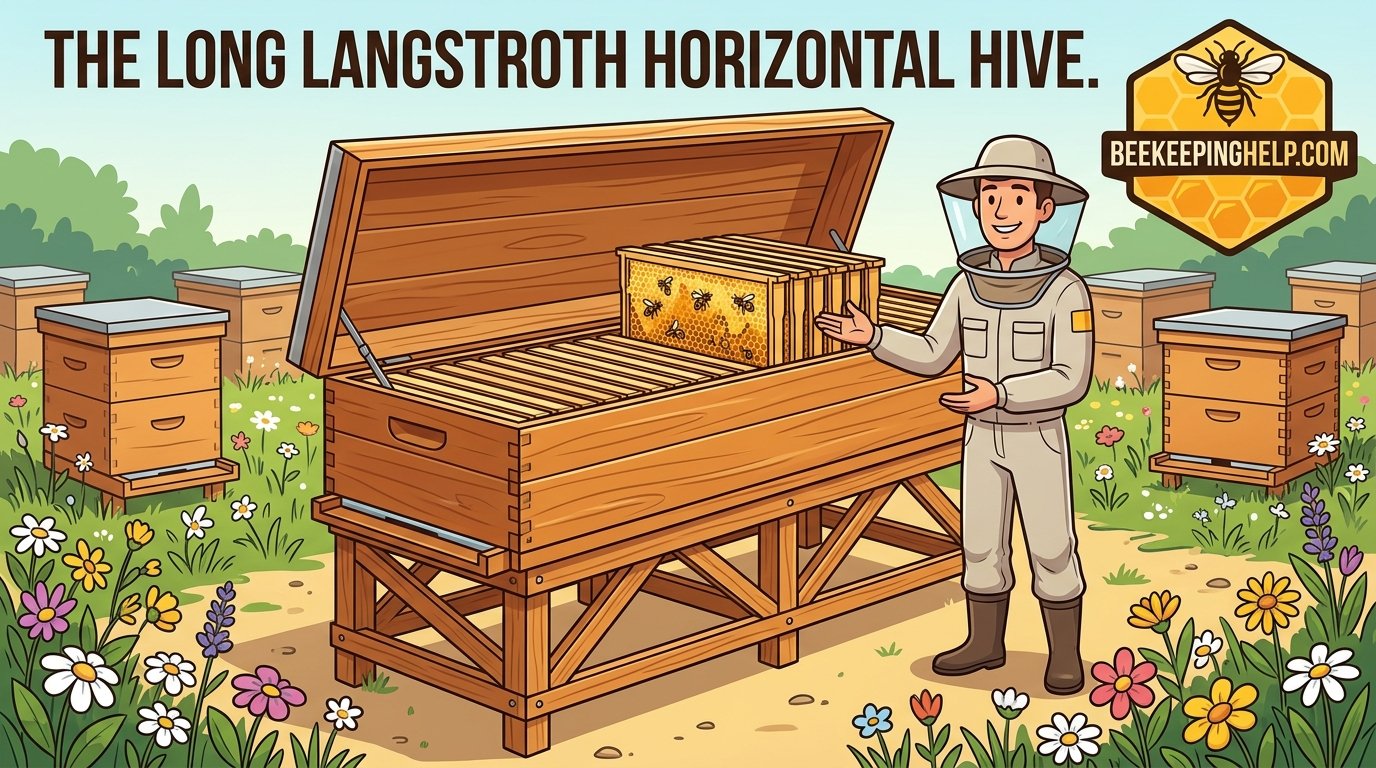
The Long Langstroth is exactly what it sounds like — a Langstroth hive turned on its side. Instead of stacking boxes vertically, all the frames are arranged horizontally in a single, elongated box. Think of it as a compromise between the standard Langstroth and a Top Bar hive: you get the familiar Langstroth frame dimensions and compatibility with extractors, but in a format that eliminates heavy lifting entirely.
A typical Long Langstroth holds 28 to 32 frames in a single tier, with a divider (called a follower board) separating the brood area from the honey storage area. The hive sits on a stand at a comfortable working height, and the lid lifts off to reveal all the frames in a row. It is a popular choice among beekeepers who love the Langstroth system’s standardization and extractor compatibility but struggle with the physical demands of lifting stacked deep boxes.
How It Works
Management is similar to a standard Langstroth, but everything happens in one horizontal plane. You lift the lid, slide out individual frames for inspection, and use the follower board to manage the brood-to-honey ratio. During a strong nectar flow, the follower board is moved further from the entrance to give the colony more room for honey storage. In winter, the follower board is positioned closer to the entrance to create a smaller, more manageable space for the cluster.
Honey harvesting works exactly like a standard Langstroth — frames go into an extractor. This is a major advantage over Top Bar hives, where comb must be crushed. The Long Langstroth gives you the best of both worlds: horizontal convenience and extractor compatibility.
Pros
- No heavy lifting — all frames at one level
- Compatible with standard Langstroth frames and extractors
- Good for beekeepers with back or shoulder problems
- Single-box design simplifies winter management
- Can be built to custom lengths
Cons
- Large footprint — needs significant ground space
- Heavier overall hive body (though individual frames are light)
- Not as widely available as standard Langstroth equipment
- Requires a long, sturdy stand
- Less expandable than vertical stacking systems
Beginner Friendly Best for Mobility Issues
The National Beehive — Britain’s Standard
Overview
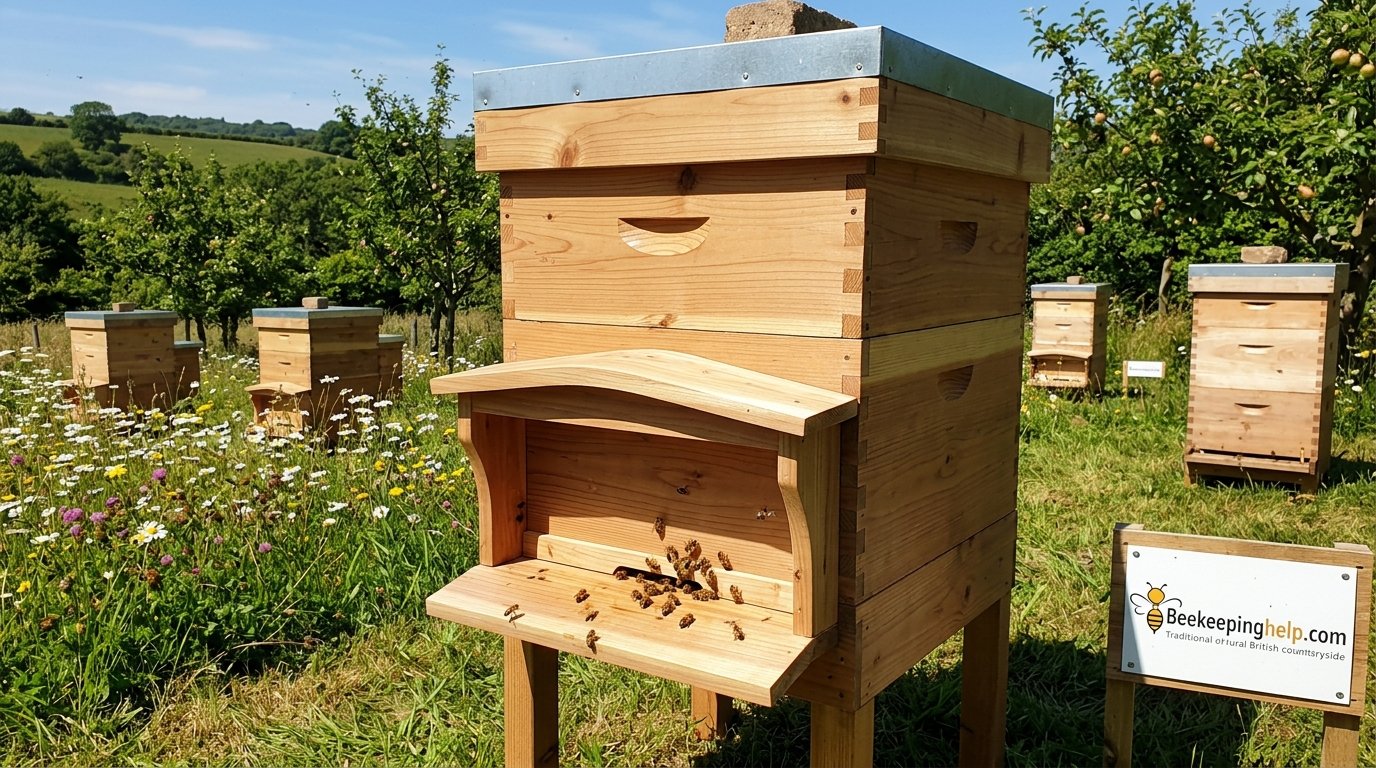
The National hive is the most widely used beehive in the United Kingdom and Ireland, and it holds a similar position in British beekeeping culture as the Langstroth does in North America. Developed in the early twentieth century as a standardized design for British beekeepers, the National hive features a distinctive shape — the brood box is slightly wider at the bottom than the top, with chamfered (angled) corners that give it a tapered profile.
Like the Langstroth, the National hive uses removable frames and a vertically stacked box system. However, its dimensions are different — National frames are shorter and narrower than Langstroth frames, and the boxes themselves are a unique size that does not interchange with Langstroth equipment. The hive typically uses a “brood and a half” configuration, where a standard brood box is supplemented by a half-depth brood box to provide enough laying space for the queen.
How It Works
Management of a National hive is virtually identical to a Langstroth — you lift boxes, pull frames, inspect, and add supers as needed. The main practical difference is size: National boxes are lighter than Langstroth deep boxes, which some beekeepers appreciate. The tapered shape of the brood box was originally designed to encourage the bees to fill the corners with honey rather than leaving empty space, though opinions vary on whether this actually makes a meaningful difference.
National hive supers come in several depths — shallow, medium, and deep — giving beekeepers flexibility in how they configure their hives. The most common honey harvesting setup uses shallow or medium supers, which are light enough to handle comfortably. National frames are compatible with radial extractors, making honey extraction efficient.
Pros
- Standardized in the UK with wide parts availability
- Lighter boxes than Langstroth deeps
- Removable frames for easy inspection
- Extractor compatible
- Well-suited to British and Northern European climates
Cons
- Not interchangeable with Langstroth equipment
- Smaller frames may require “brood and a half” setup
- Less common outside the UK and Ireland
- Tapered shape can complicate DIY construction
Standard in UK

Feed Your Bees Right
Proper feeding is critical for new colonies. Browse top-rated entrance feeders, frame feeders, and sugar syrup kits.
Shop Hive FeedersThe Commercial Beehive — Built for Production
Overview
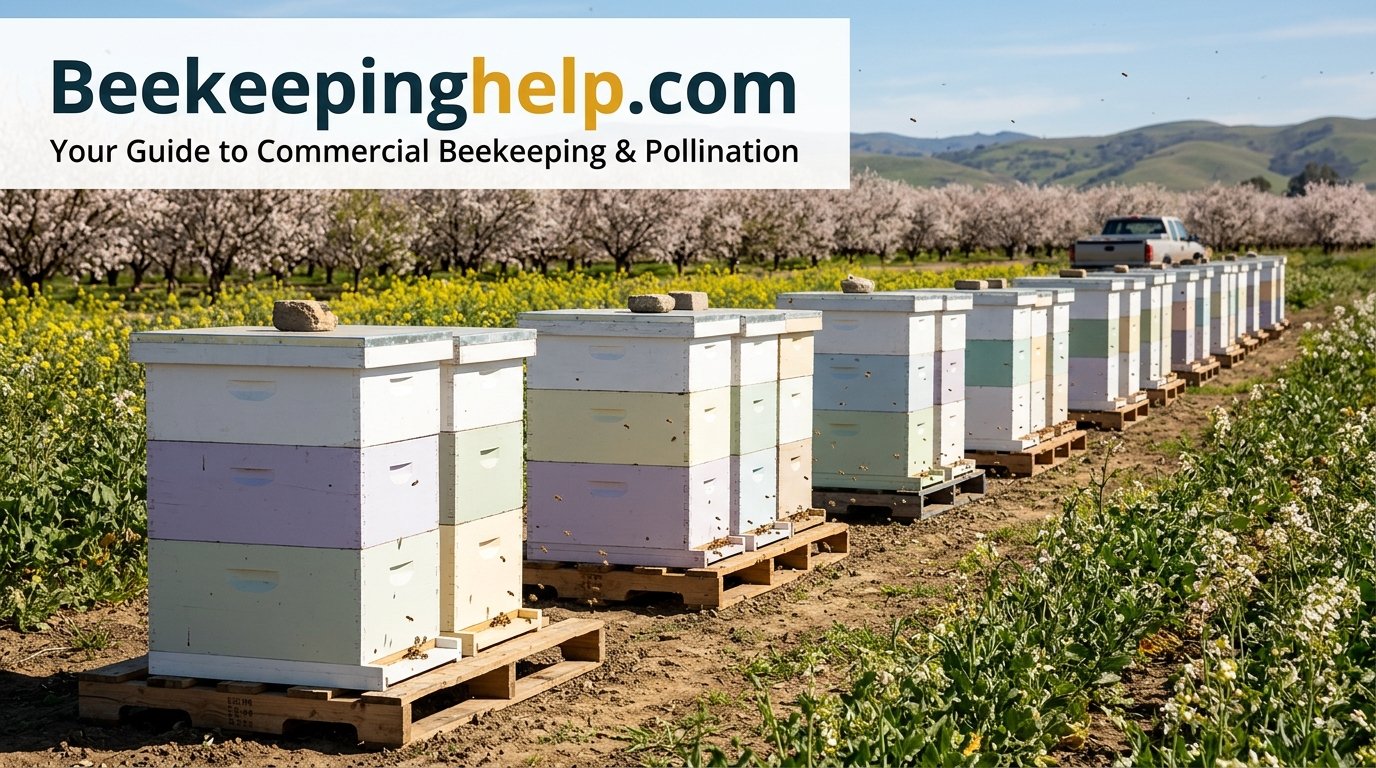
The Commercial hive, widely used in the UK, Australia, and New Zealand, is a larger cousin of the National hive designed specifically for beekeepers who need maximum production capacity. Its defining feature is a larger brood box — wider and deeper than the National — which provides more space for the queen to lay eggs and for the colony to store pollen and brood food. This extra capacity translates into stronger colonies, which in turn produce more honey and are more effective pollinators.
Commercial hives use the same basic stacked-box architecture as National and Langstroth hives, but their larger dimensions mean that Commercial frames are not interchangeable with National frames. The boxes are heavier when full, which is a consideration for beekeepers who work alone. However, for professional beekeepers running hundreds of colonies, the increased brood capacity and resulting colony strength more than compensate for the extra weight.
How It Works
Commercial hive management follows the same principles as any frame-based vertical hive. The larger brood box typically provides enough laying space for the queen without needing a “brood and a half” configuration, which simplifies management. Supers are added above the brood box during nectar flows, and honey is harvested using standard extraction equipment sized for Commercial frames.
One advantage of the Commercial hive’s larger brood box is that colonies tend to build up faster in spring, reaching full strength earlier in the season. This can be a significant advantage for beekeepers who rent their colonies for crop pollination, where timing is critical. The larger internal volume also provides better thermal mass, which can improve overwintering success in variable climates.
Pros
- Larger brood box supports stronger colonies
- Single brood box management (no “brood and a half”)
- Faster spring buildup
- Better thermal mass for overwintering
- Ideal for commercial pollination operations
Cons
- Heavier boxes — full deeps can exceed 30 kg
- Not interchangeable with National or Langstroth equipment
- More expensive per hive due to larger components
- Overkill for hobbyist beekeepers with small apiaries
Professional / Commercial
The Dartington Beehive — Designed for the Hobbyist
Overview
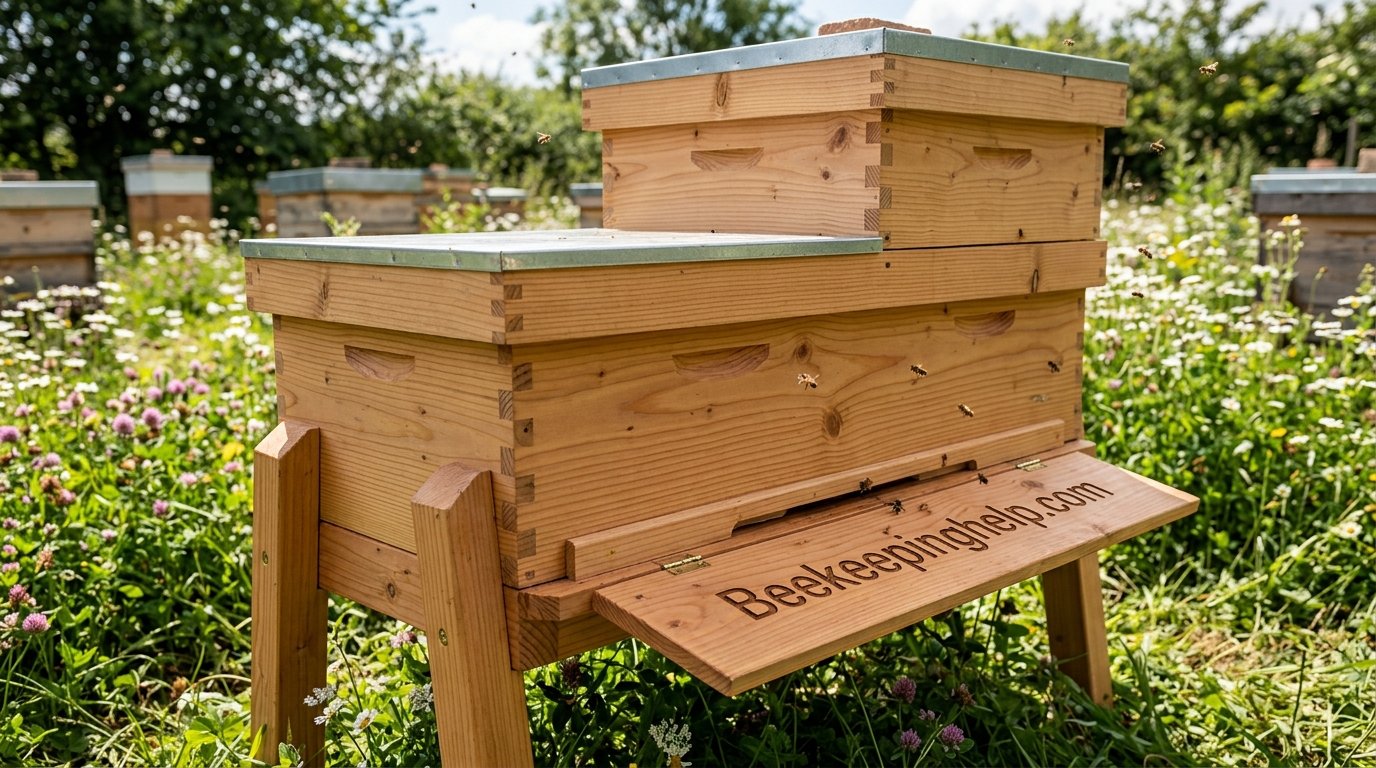
The Dartington hive was designed by Robin Dartington specifically with the hobbyist beekeeper in mind. Its most distinctive feature is a two-story design: a deep brood box on one side and a shallower honey super on the other, connected by a shared entrance. The hive is mounted on a stand at waist height, and the entire structure is designed to be manageable by a single person without heavy lifting.
The Dartington uses National-standard frames, making it compatible with the UK’s most common beekeeping equipment. The brood area sits at the back of the hive, and the honey super is positioned at the front, closer to the entrance. This arrangement is based on the observation that bees tend to store honey near the entrance and raise brood further back — a pattern the Dartington hive exploits to simplify management.
How It Works
Inspecting a Dartington hive is straightforward: you open the lid and work through the frames from one end to the other. The brood frames are clearly separated from the honey frames by a queen excluder, so you always know which section you are working in. Honey harvesting is done by removing frames from the honey super and extracting them in a standard extractor.
The Dartington’s waist-height design means no bending or lifting heavy boxes overhead. The hive is also relatively compact compared to a Long Langstroth, making it suitable for smaller gardens. However, its unique design means that replacement parts are not as widely available as for standard National or Langstroth hives, and some beekeepers find the two-section layout confusing at first.
Pros
- Waist-height design — no heavy lifting
- Uses National-standard frames
- Compact footprint for small gardens
- Logical brood/honey separation
- Comfortable for single-person management
Cons
- Unique design — parts less widely available
- Smaller capacity than a full National or Langstroth
- Two-section layout can confuse beginners
- Limited expansion options
Hobbyist Friendly

Protective Gear for Every Beekeeper
Quality gloves, veils, and suits keep you safe while working with any hive type. Browse top-rated protective gear.
Shop Protective GearThe Sun Hive — Biomimicry at Its Finest
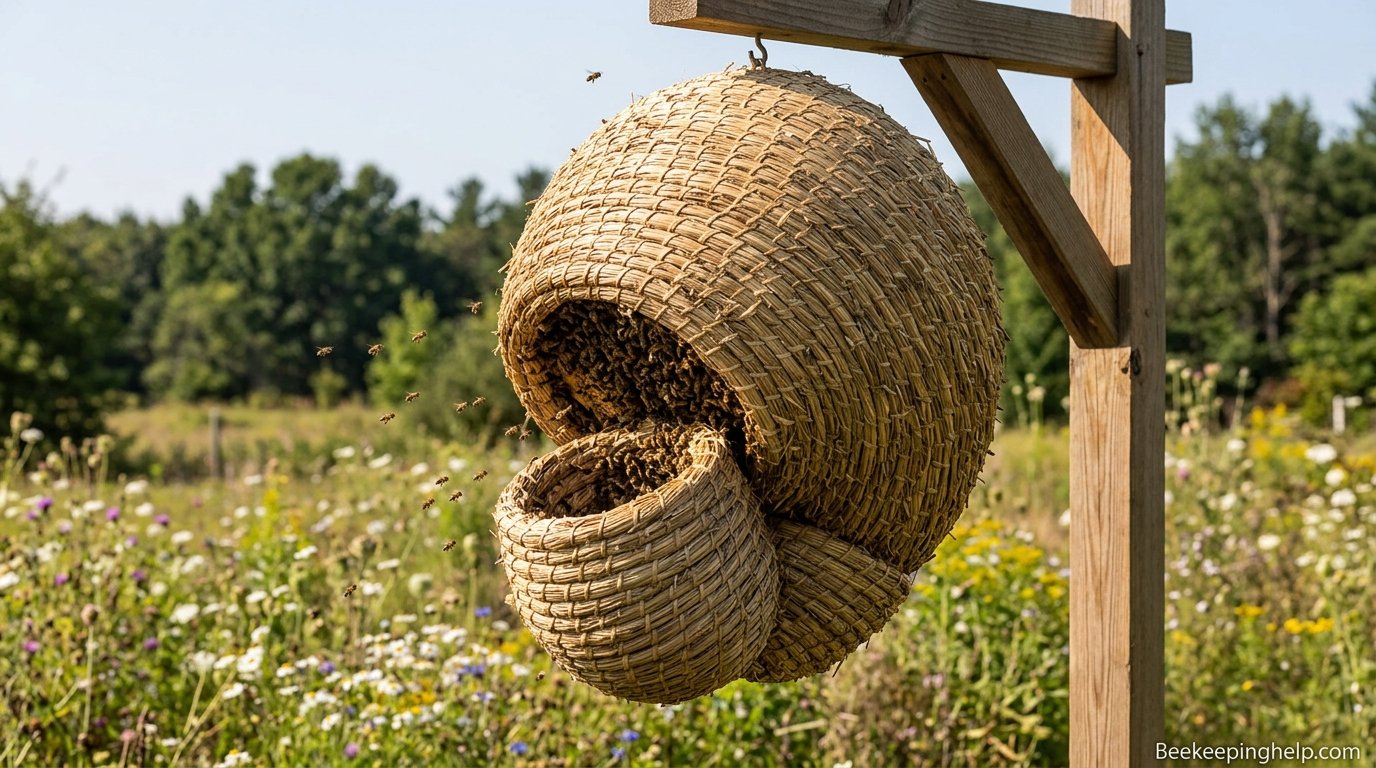
Overview
The Sun Hive (German: Sonnenstock) is perhaps the most visually striking beehive ever designed. Created by German sculptor and beekeeper Guenther Mancke, the Sun Hive is a work of art as much as it is a functional hive. Its distinctive crescent or gourd shape is inspired by the natural forms of wild bee nests, and its construction uses entirely natural materials — woven skep-like baskets coated in a mixture of cow dung and clay, with a straw insulation layer.
Mancke designed the Sun Hive to be hung at a height of approximately 2.5 meters (about 8 feet), with the entrance hole facing south or southeast. The elevated position and the hive’s shape encourage the bees to build their comb in a natural catenary curve (the shape a chain takes when hung between two points), which Mancke believed was essential for the colony’s health and vitality. The hive has no frames, no foundation, and no standardized components — it is as close to a natural tree cavity as a human-made structure can get.
How It Works
Management of a Sun Hive is minimal by design. Mancke believed that bees thrive best when left largely alone, and the Sun Hive reflects this philosophy. There are no routine inspections — the beekeeper observes the bees’ behavior at the entrance and makes management decisions based on external cues. If the colony swarms, that is considered a natural and healthy process, not a problem to be prevented.
Honey harvesting from a Sun Hive is rare and limited. Some Sun Hive keepers never harvest honey at all, viewing their role as stewards rather than producers. Others harvest small amounts by carefully removing comb from the lower portion of the hive. The Sun Hive is not about honey production — it is about providing the best possible home for bees and observing their natural behavior in a setting that respects their evolutionary adaptations.
Pros
- Closest to a natural bee nest as possible
- Beautiful sculptural design
- Promotes natural comb building and behavior
- Excellent for conservation-focused beekeeping
- Encourages minimal intervention management
Cons
- Very difficult to build — requires specialized skills
- No standardized parts or commercial availability
- Cannot inspect for disease
- Minimal to no honey harvest
- Must be hung at height — requires sturdy support structure
- Not practical for most beekeepers
Advanced / Conservation
The Horizontal Hive — One Level, Many Possibilities
Overview
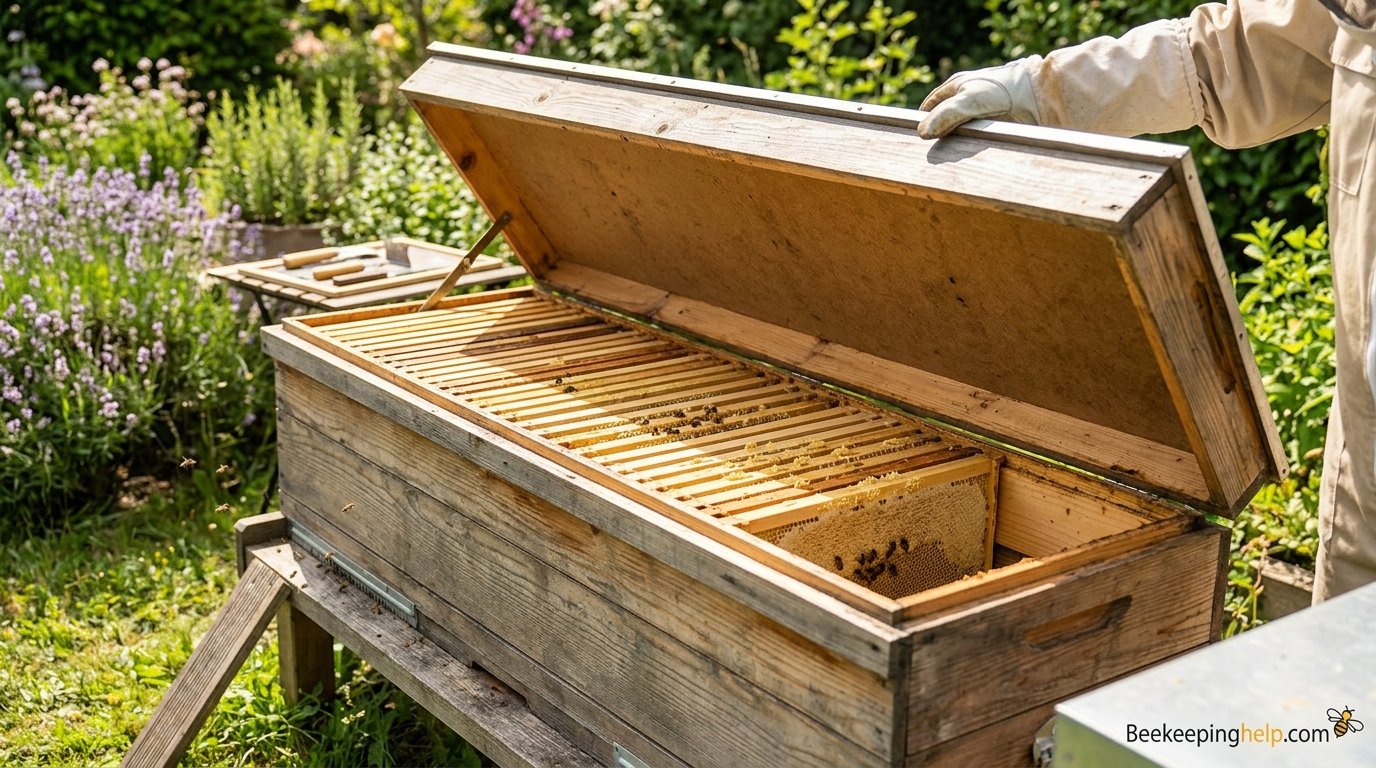
“Horizontal hive” is a broad category that encompasses any hive design where the frames or bars are arranged side by side in a single tier, rather than stacked vertically. The Long Langstroth, the Top Bar hive, and the Dartington are all technically horizontal hives, but the term is also used to describe a range of custom and hybrid designs that borrow features from multiple traditions. The common thread is simple: no heavy lifting, everything at one level.
Horizontal hives have surged in popularity in recent years, driven by several factors. First, the growing interest in natural and treatment-free beekeeping has drawn many newcomers to Top Bar-style horizontal designs. Second, aging beekeepers who can no longer handle heavy boxes are discovering that horizontal hives let them continue the hobby they love. Third, the maker and DIY movements have inspired countless beekeepers to build their own horizontal hives, often incorporating creative features like insulated walls, observation windows, and integrated feeding systems.
Common Horizontal Hive Variations
| Design | Frame Type | Extractor Compatible | Typical Length | Best For |
|---|---|---|---|---|
| Long Langstroth | Langstroth frames | Yes | ~100 cm (40 in) | Standardization fans |
| Top Bar Hive | Top bars only | No | ~90 cm (36 in) | Natural beekeeping |
| Dartington | National frames | Yes | ~80 cm (32 in) | Small gardens |
| Kenyan TBH | Top bars (wedge) | No | ~100 cm (40 in) | Tropical climates |
| Tanzanian TBH | Top bars (flat) | No | ~90 cm (36 in) | Beginners |
| Horizontal Layens | Layens frames | Yes (Layens size) | ~120 cm (48 in) | Cold climates |
How It Works
Regardless of the specific design, all horizontal hives share a common management approach: you open the lid from above and work through the frames or bars from one end to the other. A follower board or dummy board divides the hive into a brood zone and a honey zone, and you adjust this division as the colony grows. The entrance is typically at one end, and the brood area is kept closest to the entrance.
The main variation between horizontal hive types is whether they use removable frames (Long Langstroth, Dartington, Layens) or top bars (Top Bar hives). Frame-based horizontal hives offer the advantage of extractor compatibility and more secure comb handling, while top bar designs are simpler and cheaper to build but require crush-and-strain harvesting.

Build Your Beekeeping Setup
From hive tools to honey extractors, find everything you need to set up and maintain your apiary at any scale.
Shop All Beekeeping EquipmentSide-by-Side Comparison of All Beehive Types
Choosing between so many hive types can feel overwhelming. This comprehensive comparison table puts all the key factors side by side so you can quickly identify which hives match your priorities. For a deeper dive into specific matchups, see our guides on Flow Hive vs. Langstroth and the best beekeeping hives available today.
| Hive Type | Difficulty | Honey Yield | Cost | Lifting Required | Natural Comb | Extractor OK |
|---|---|---|---|---|---|---|
| Langstroth | Beginner | High | $$ | Heavy | No (foundation) | Yes |
| Top Bar | Beginner | Low–Medium | $ | None | Yes | No |
| Warré | Intermediate | Medium | $ | Moderate | Yes | No |
| Flow Hive | Beginner | High | $$$$ | Heavy | No (plastic) | Built-in |
| Log Hive | Advanced | Low | $ | Very Heavy | Yes | No |
| Skep | Advanced | Very Low | $ | Light | Yes | No |
| Long Langstroth | Beginner | High | $$ | None | No (foundation) | Yes |
| National | Beginner | High | $$ | Moderate | No (foundation) | Yes |
| Commercial | Intermediate | Very High | $$$ | Heavy | No (foundation) | Yes |
| Dartington | Intermediate | Medium | $$ | None | No (foundation) | Yes |
| Sun Hive | Advanced | None | $$$ | N/A (hung) | Yes | No |
| Horizontal (generic) | Beginner | Medium–High | $–$$ | None | Varies | Varies |
Quick Decision Matrix
Still not sure? Here is a quick way to narrow down your choice based on your top priority:
Maximum Honey
Langstroth, Flow Hive, or Commercial hive
Bee Health First
Top Bar, Warré, or Sun Hive
No Heavy Lifting
Top Bar, Long Langstroth, or Dartington
Lowest Cost
Top Bar, Warré, or DIY Log Hive
Most Natural
Sun Hive, Log Hive, or Skep
Easiest Harvest
Flow Hive (turn a tap!)

Extract Honey Like a Pro
A quality honey extractor makes harvest day a breeze. Browse manual and electric extractors for every hive type and budget.
Shop Honey ExtractorsHow to Choose the Right Beehive for You
With so many options on the table, how do you actually make a decision? The truth is, there is no single “best” beehive — only the best beehive for your specific situation. Here are the key factors to weigh as you make your choice.
Consider Your Physical Abilities
This is the factor most beginners underestimate. A full Langstroth deep box can weigh over 30 kilograms (65 pounds), and you may need to lift it overhead to access the boxes below. If you have back problems, shoulder issues, or simply prefer not to wrestle with heavy boxes, a horizontal hive design — Top Bar, Long Langstroth, or Dartington — will make your beekeeping experience far more enjoyable. There is no shame in choosing a hive that works with your body rather than against it. Many experienced beekeepers switch to horizontal designs later in their careers specifically for this reason.
Think About Your Goals
Are you primarily interested in honey production? A Langstroth or Flow Hive will give you the highest yields. Are you more focused on bee conservation and natural management? A Top Bar, Warré, or Sun Hive aligns better with those values. Do you want the easiest possible setup and maintenance? A Flow Hive or a well-designed Top Bar hive minimizes the learning curve. Be honest about what you want from beekeeping, and let that guide your choice rather than following the crowd.
Evaluate Your Climate
Cold-climate beekeepers should prioritize hives with good insulation and moisture management. The Warré hive’s quilt box system is specifically designed for this. In hot climates, ventilation is more important — Top Bar hives with their open-bottom design and single-tier layout allow excellent airflow. If you live in an area with extreme temperature swings, a well-insulated Langstroth with proper winter preparation can handle both extremes. For more information about how different hive designs handle environmental challenges, see our article on beehives in trees and how natural nesting sites inform modern hive design.
Factor in Your Budget
Beekeeping costs vary enormously depending on hive type. A basic Top Bar hive can be built for almost nothing from scrap lumber. A Warré hive is similarly inexpensive. A standard Langstroth setup — hive body, frames, foundation, lid, and bottom board — typically costs between $150 and $300 for a basic kit. A Flow Hive is the most expensive option, often running $500 or more for a complete setup. Factor in ongoing costs too: replacement frames, foundation, feed, and treatments add up over time regardless of hive type.
Check Local Regulations
Before you commit to a hive type, check your local beekeeping regulations. Some jurisdictions require that beekeepers be able to inspect their colonies for disease, which effectively rules out skeps, log hives, and Sun Hives. Others have specific setback requirements (distance from property lines, roads, or neighboring buildings) that may influence where you can place your hive. Joining a local beekeeping association is the best way to learn about regulations in your area and get hands-on advice from experienced beekeepers who know the local conditions.
Consider Equipment Ecosystem
The Langstroth hive benefits from the largest equipment ecosystem in the world. Every beekeeping supplier carries Langstroth-compatible frames, foundation, extractors, feeders, queen excluders, and accessories. If you choose a less common hive type — like a Warré, Dartington, or Sun Hive — you may need to source specialty parts or build your own. This is not necessarily a dealbreaker, but it is worth considering if you value convenience and easy access to replacement parts.
Understanding the parts of a bee hive and their functions will also help you make a more informed decision, as many components serve similar purposes across different hive types even if they look quite different.
Essential Tips for First-Time Beekeepers Choosing a Hive
Selecting your first beehive is an exciting milestone, but it can also be a source of anxiety. Here are some battle-tested tips from experienced beekeepers to help you start on the right foot.
Start With One Hive, Not Ten
It is tempting to go all-in and set up multiple hives right away. Resist that urge. Start with one hive (or at most two) and spend your first season learning. Two hives have the advantage of allowing you to compare — if one colony struggles, you can transfer resources from the stronger one. But more than two in your first year will stretch your attention and budget too thin.
Join a Local Beekeeping Club
No amount of reading replaces hands-on mentorship. A local beekeeping club will connect you with experienced beekeepers who know your specific climate, local flora, and common pest pressures. Many clubs offer beginner courses, mentorship programs, and even shared equipment. The collective knowledge of a beekeeping community is invaluable, and most members are thrilled to welcome newcomers.
Paint and Protect Your Hive
Regardless of which hive type you choose, protecting the wood from the elements will extend its lifespan dramatically. A coat of exterior-grade paint or natural wood stain on the outside surfaces keeps moisture out and prevents rot. For detailed instructions, check out our guide on how to paint a beehive properly without harming your bees.
Location, Location, Location
Where you place your hive matters as much as which hive you choose. Ideally, your hive should face south or southeast (in the Northern Hemisphere) to catch the morning sun, be sheltered from strong prevailing winds, have a clear flight path, and be near a water source. Avoid low-lying areas where cold air pools in winter, and keep hives away from high-traffic footpaths. Elevating the hive on a stand — even just 30 to 45 centimeters off the ground — improves ventilation, reduces moisture problems, and makes inspections more comfortable.
Understand the Bee Colony Lifecycle
Before your bees arrive, take time to understand how a colony functions throughout the seasons. The queen lays eggs, workers forage and build comb, drones mate with queens from other colonies. In spring, the colony expands rapidly. In summer, nectar flows bring honey. In autumn, the colony contracts and evicts drones. In winter, the cluster huddles for warmth. Understanding this cycle will help you time your management activities — when to add space, when to harvest, when to feed, and when to leave the bees alone. Our guide on how to start beekeeping covers the colony lifecycle in detail.
Invest in Quality Protective Gear
Stings are part of beekeeping, but they do not have to be a regular occurrence. A good beekeeping suit with a zippered veil, leather or goatskin gloves, and closed-toe boots will keep you safe and confident during inspections. Cheap suits often have gaps at the wrists and ankles where bees find their way in — invest in quality gear from the start and you will enjoy your hive visits far more.
Keep Records
A simple hive journal — even just notes on your phone — is one of the most valuable tools in beekeeping. After each inspection, record the date, weather conditions, what you saw (queen, eggs, brood pattern, honey stores, signs of disease), and what you did (added a super, removed a frame, fed sugar syrup). Over time, these records become an invaluable reference that helps you spot trends, anticipate problems, and make better management decisions.

Everything You Need to Get Started
From hive kits to protective suits to honey jars — get your complete beekeeping starter package delivered to your door.
Shop Starter PackagesHive Placement and Setup Essentials
Once you have chosen your hive type, the next critical step is setting it up correctly. Proper placement and initial setup can make the difference between a thriving colony and a struggling one. These principles apply regardless of which hive type you have selected.
Orientation and Sun Exposure
In most climates, hives should face south or southeast to capture the earliest morning sun. This warms the hive entrance and gets foragers moving earlier in the day, which translates to more productive foraging. In very hot climates, however, some afternoon shade is beneficial to prevent overheating. A tree or structure that casts shade after 2 PM is ideal — the bees get morning warmth without the stress of full afternoon sun.
Wind Protection
Strong winds can chill a hive, blow rain into the entrance, and make foraging difficult. Position your hives with a windbreak on the prevailing wind side — a fence, hedge, building, or row of trees works well. The windbreak should be close enough to provide protection but not so close that it blocks the flight path. A general rule of thumb is to place the windbreak at a distance of about twice its height from the hive.
Water Access
Bees need water for cooling the hive, diluting honey for feeding, and mixing with pollen to create bee bread. A colony can consume a surprising amount of water during hot weather. Providing a dedicated water source — a shallow dish with pebbles for landing, a dripping faucet, or a small birdbath — within 100 meters of the hive prevents your bees from becoming a nuisance at neighbors’ pools, pet bowls, or birdbaths.
Hive Stand and Elevation
Raising your hive off the ground has multiple benefits: it improves air circulation, reduces moisture from ground contact, keeps the entrance clear of grass and snow, and makes inspections easier on your back. For Langstroth and National hives, a stand that places the bottom board 30 to 45 centimeters (12 to 18 inches) off the ground is standard. Top Bar and Long Langstroth hives are typically placed on stands at waist height (about 90 cm / 36 inches) for comfortable working access.
Spacing Between Hives
If you plan to run multiple hives, space them at least 1 to 2 meters (3 to 6 feet) apart. Bees navigate partly by landmarks, and hives placed too close together can cause “drifting” — foragers accidentally entering the wrong hive, which can spread disease and create uneven colony populations. Angling hives slightly so they do not all face the same direction can also help reduce drifting.
Legal Considerations
Before setting up your hive, check local ordinances, homeowner association rules, and state or provincial regulations. Many areas have specific requirements for hive placement, including setback distances from property lines, maximum colony numbers, water source requirements, and registration with agricultural authorities. Compliance is not just about avoiding fines — it also helps maintain good relationships with your neighbors and supports the broader beekeeping community’s reputation.
Understanding Beehive Components Across Different Types
While beehive types differ significantly in their overall design, many of the individual components serve similar functions. Understanding these universal components will help you evaluate any hive type more effectively and make informed decisions about upgrades and modifications. For a comprehensive breakdown, see our detailed guide on parts of a bee hive and their functions.
The Entrance
Every hive has an entrance — the doorway through which bees come and go. In Langstroth and National hives, the entrance is a slot at the bottom of the front wall, often adjustable with an entrance reducer. In Top Bar hives, the entrance is typically a small notch or hole at one end. In log hives and skeps, it is a single round hole. The entrance size matters: too large, and the colony struggles to defend against robbing bees and predators; too small, and ventilation suffers in hot weather.
The Brood Area
The brood area is the heart of every hive — the zone where the queen lays eggs and workers raise developing bees. In vertical hives (Langstroth, National, Commercial), the brood area occupies the bottom box or boxes. In horizontal hives (Top Bar, Long Langstroth), it occupies one end. In the Warré hive, the brood area is in the upper boxes (since the colony grows downward). Regardless of placement, the brood area must be protected, well-insulated, and large enough for the queen to lay at full capacity during the buildup season.
Honey Storage
Bees store honey above or beside the brood area, depending on the hive design. In Langstroth hives, honey supers are stacked above the brood box, separated by a queen excluder (a grid that allows workers through but blocks the larger queen). In Top Bar hives, honey is stored in combs at the end of the hive farthest from the entrance. In the Warré hive, honey naturally accumulates in the upper boxes as the colony expands downward into fresh boxes below.
Ventilation and Moisture Control
Proper ventilation prevents moisture buildup, which is one of the leading causes of winter colony losses. Different hive types handle ventilation differently. Langstroth hives rely on the entrance and sometimes a screened bottom board. The Warré hive uses its quilt box to absorb and release moisture. Top Bar hives benefit from their single-tier design, which allows warm, moist air to rise and escape more easily. Understanding how your chosen hive manages moisture will help you take additional steps if needed — such as adding moisture quilts, upper entrances, or insulation.
Protective Features
All hives need some form of protection against predators and pests. A mouse guard (a metal plate with small holes) prevents mice from entering the hive in autumn. An entrance reducer narrows the opening to help the colony defend against robbing bees. A hive stand with a slippery surface or a moat can deter ants. In areas with bears, electric fencing is essential regardless of hive type. These protective features are largely universal — the specific implementation just varies with the hive design.

Deepen Your Beekeeping Knowledge
From hive management to queen rearing, these expert beekeeping books cover advanced topics for every hive type.
Browse Advanced GuidesBeehive Types by Region — What Beekeepers Around the World Prefer
Beekeeping is a global practice, and different regions have developed strong preferences for specific hive types based on local climate, available materials, bee subspecies, and cultural tradition. Understanding these regional patterns can give you useful context for your own hive choice.
North America
The Langstroth hive dominates North American beekeeping, both commercially and among hobbyists. Its standardized dimensions, wide parts availability, and compatibility with migratory beekeeping operations (where hives are trucked across the country for pollination services) make it the default choice. However, Top Bar hives have a strong and growing following among natural beekeeping advocates, and the Flow Hive has captured significant market share among urban and suburban hobbyists who prioritize ease of harvest.
United Kingdom and Ireland
The National hive is the standard in the UK, with the Commercial hive as a close second for larger operations. The British Beekeeping Association (BBKA) and most local associations teach and recommend the National hive for beginners. Warré hives and Top Bar hives have niche followings, primarily among natural beekeeping practitioners. The Dartington hive, designed specifically for British conditions, is popular among hobbyists with small gardens.
Continental Europe
Europe has the greatest diversity of hive types in the world. Germany and Austria favor the Zander hive and the Dadant hive (both frame-based vertical designs similar to the Langstroth). France has a strong Warré tradition alongside the Dadant-Blatt hive. Eastern European countries — particularly Poland, Lithuania, and Ukraine — still maintain significant numbers of log hives and skeps alongside modern frame hives. The Layens hive (a horizontal design with deep frames) is popular in mountainous regions of France and Spain.
Africa
African beekeeping uses a remarkable range of hive types. Traditional log hives and bark hives remain widespread, particularly in East Africa. The Kenyan Top Bar Hive (KTBH) — a horizontal hive with sloped sides to discourage comb attachment to the walls — was developed specifically for African conditions and is now used across the continent. Modern Langstroth equipment is increasingly common in commercial operations in South Africa, Kenya, and Ethiopia.
Asia and Australasia
In Asia, traditional beekeeping methods coexist with modern equipment. Log hives and wall hives are still common in rural areas of China, India, and Nepal, while commercial operations use Langstroth-style hives. Australia and New Zealand primarily use Langstroth and Commercial hives, with the Flow Hive (an Australian invention) gaining significant popularity among hobbyists.
Seasonal Maintenance Across Different Beehive Types
Every hive type requires some level of seasonal maintenance, though the specific tasks and timing vary. Here is a general overview of what to expect throughout the year, with notes on how different hive types affect each season’s work.
Spring — The Rebuilding Season
Spring is the busiest time for beekeepers of all hive types. As temperatures warm and early flowers bloom, the colony begins its rapid buildup. Your spring checklist should include: a thorough first inspection to assess the colony’s winter survival, checking for a healthy queen and fresh eggs, evaluating food stores (and feeding if necessary), adding space for the growing colony, and checking for signs of disease or pests. In a Langstroth hive, this means adding supers. In a Top Bar hive, it means ensuring the follower board gives the colony enough room. In a Warré hive, it means adding a new box to the bottom if the colony has expanded into the upper boxes.
Summer — The Honey Flow
Summer is prime time for honey production. The colony is at full strength, foragers are bringing in nectar, and the hive is buzzing with activity. Your main tasks are adding honey supers before the bees run out of space (which can trigger swarming), monitoring for swarm preparations, and ensuring adequate ventilation during hot weather. For Langstroth and Flow Hive beekeepers, this is when you watch those supers fill up. For Top Bar beekeepers, you are watching the honey bars at the far end of the hive for capped combs ready for harvest.
Autumn — Preparation for Winter
Autumn is about consolidation and preparation. The colony reduces its population, evicts drones, and shifts focus from brood rearing to winter survival. Your autumn tasks include: harvesting surplus honey (leaving enough for the colony — typically 25 to 35 kg / 55 to 75 pounds for a Langstroth hive in a cold climate), reducing the entrance to help the colony defend against robbing, treating for varroa mites if needed, and ensuring the hive is weatherproof. Warré hive beekeepers may harvest the top box and replace it with an empty one lined with fresh comb guides, giving the bees a clean space above the cluster.
Winter — The Quiet Season
Winter is the season of patience. The colony clusters together for warmth, vibrating their flight muscles to generate heat. There is little for the beekeeper to do except monitor from the outside: check that the entrance is clear of dead bees and snow, heft the hive occasionally to gauge weight (a rough measure of remaining food stores), and resist the urge to open the hive. Every winter inspection exposes the cluster to cold air and can be fatal. Trust your autumn preparations and let the bees manage their own warmth.

Protect Your Colony From Pests
Varroa mites, wax moths, and small hive beetles are serious threats. Browse effective, bee-safe treatments and monitoring tools.
Shop Pest TreatmentsFrequently Asked Questions About Beehive Types
What is the best beehive type for a complete beginner?
For most beginners, the Langstroth hive is the best starting point. It is the most widely used hive in the world, which means you will find the most educational resources, community support, and available equipment. If you want to avoid heavy lifting, a Top Bar hive or Long Langstroth are excellent alternatives that still provide a great learning experience. The key is to choose a hive type that matches your physical abilities and goals — there is no single “right” answer for everyone.
How much does it cost to set up a beehive?
Startup costs vary widely by hive type. A basic Top Bar hive can be built for $30–$50 in materials. A Langstroth starter kit (hive body, frames, foundation, lid, bottom board) typically costs $150–$300. A Flow Hive starts around $500–$700. On top of the hive itself, budget for a beekeeping suit ($50–$150), a smoker ($20–$40), a hive tool ($10–$20), and your first package of bees or nucleus colony ($100–$250). A realistic total budget for a first-year beekeeper is $300–$800 depending on hive type and equipment choices.
Can I switch from one hive type to another later?
Switching hive types is possible but not always straightforward. Bees build comb that conforms to their current hive’s dimensions, so you cannot simply transfer frames from a Langstroth hive into a Top Bar hive or vice versa. The most practical approach is to let the old colony build up in the new hive by transferring the bees (shaking them in) and giving them starter strips or foundation to build new comb. Alternatively, you can start a second hive in the new style while maintaining your original one. Many beekeepers eventually run multiple hive types simultaneously.
How much honey can I expect from each hive type?
Honey yields depend on many factors — local nectar availability, colony strength, weather, and management skill — but general ranges are: Langstroth: 25–50 kg (55–110 lbs) per year in a good location. Flow Hive: similar to Langstroth, since it uses the same frame dimensions. Top Bar hive: 10–20 kg (22–44 lbs) per year. Warré hive: 15–25 kg (33–55 lbs) per year. Log hive and Skep: highly variable, often 5–15 kg (11–33 lbs). These are rough estimates — your actual results will vary based on your specific conditions.
Do different hive types affect bee health?
Hive type can influence bee health, but management practices matter more. Hives that allow natural comb building (Top Bar, Warré, Sun Hive) may give bees more control over cell size, which some research suggests can improve resistance to varroa mites. Hives with good ventilation and moisture management (Warré with its quilt box, well-ventilated Top Bar hives) reduce winter losses from condensation. However, the biggest factors in bee health are regular monitoring, timely treatment of pests and diseases, and ensuring adequate nutrition — all of which depend on the beekeeper, not the hive.
What is the difference between a Top Bar hive and a Warré hive?
Both are popular with natural beekeeping advocates, but they differ significantly in design. A Top Bar hive is horizontal — bars are arranged side by side in a single tier, and you work from above. A Warré hive is vertical — boxes are stacked, and the colony grows downward by adding new boxes to the bottom. Top Bar hives allow individual bar inspection without lifting boxes, while Warré hives require lifting the entire stack to add boxes below. Top Bar hives are simpler to build and manage; Warré hives offer better insulation and moisture management. Both produce “cut comb” honey rather than extracted honey.
Is the Flow Hive worth the extra cost?
It depends on your priorities. If ease of honey harvesting is your top concern and you have the budget, the Flow Hive delivers on its promise — harvesting honey is genuinely as simple as turning a key and watching it flow into a jar. This is especially valuable for urban beekeepers, those with physical limitations, or anyone who finds the traditional extraction process intimidating. However, if you are budget-conscious, comfortable with traditional extraction, or philosophically opposed to plastic comb, a standard Langstroth hive with an extractor will give you the same honey yields at a fraction of the cost. The Flow Hive is a premium product with a premium price — whether it is “worth it” is a personal decision.
Can I keep bees in a residential area with any hive type?
In most places, yes — but check your local regulations first. Many cities and suburbs allow beekeeping with specific rules about hive placement, setback distances from property lines, and maximum colony numbers. Langstroth and Flow Hive setups are the most commonly accepted in urban areas because they are well-understood and easy to inspect. Top Bar hives are also popular in residential settings due to their gentle management style. Regardless of hive type, good neighbor relations are essential: provide a water source so your bees do not visit the neighbor’s pool, ensure your bees’ flight path does not cross high-traffic areas, and consider a fence or hedge to direct bee traffic upward.
How many bees are in a typical hive?
A strong, healthy colony at peak population (typically mid-summer) contains approximately 40,000 to 60,000 worker bees, a few hundred drones, and one queen. In winter, the population drops to around 10,000 to 20,000 bees as the colony contracts into a tight cluster. The exact numbers vary by hive type — larger hives like the Commercial hive can support bigger colonies, while smaller hives like the Top Bar may cap out at lower populations. The queen’s laying rate (up to 2,000 eggs per day at peak) is the primary driver of colony size.
What hive type is best for cold climates?
For cold climates, the Warré hive is often considered the best choice due to its excellent insulation (quilt box system), moisture management, and compact cluster-friendly design. A well-prepared Langstroth hive with winter insulation wraps and a moisture quilt also performs very well. Log hives provide outstanding natural insulation thanks to their thick wooden walls. The key factors for cold-climate success are: good insulation, effective moisture control (to prevent condensation dripping on the cluster), adequate ventilation, and sufficient honey stores (25–35 kg / 55–75 lbs for a Langstroth in a cold winter).
Do I need a queen excluder with every hive type?
No. Queen excluders are used primarily in Langstroth, National, Commercial, and Flow Hive setups to prevent the queen from laying eggs in the honey supers. In Top Bar hives, the follower board serves a similar purpose by keeping the queen in the brood zone. In Warré hives, queen excluders are generally not used — the bees naturally keep brood in the upper (older) boxes and store honey in the lower (newer) boxes. Some beekeepers choose not to use queen excluders at all, relying on the natural tendency of bees to store honey above the brood nest. The decision to use an excluder is partly practical and partly philosophical.
How do I prevent my bees from swarming?
Swarming is the natural reproductive process of a honeybee colony — it is not a sign of poor management, but it does reduce your colony’s population and honey production. Key swarm prevention strategies include: giving the colony plenty of space before they need it (add supers or bars proactively), ensuring good ventilation, replacing old queens with young ones (young queens produce stronger pheromone signals that suppress swarming), and performing “splits” (dividing a strong colony into two) when you see swarm preparation signs like queen cells. Different hive types handle swarm management differently — in a Langstroth hive, you can perform artificial splits easily; in a Top Bar hive, you can remove bars with queen cells; in a Warré hive, the minimal-intervention philosophy accepts occasional swarming as natural.

The Perfect Gift for Beekeepers
Know someone who loves bees? These beautifully illustrated beekeeping books and hive kits make wonderful gifts for beekeepers of every level.
Shop Beekeeping GiftsFinal Thoughts — Finding Your Perfect Beehive
Choosing a beehive is one of the most personal decisions you will make as a beekeeper. There is no universally “correct” answer — only the hive that best fits your body, your budget, your climate, your philosophy, and your goals. The Langstroth remains the world’s most popular hive for good reason: it is standardized, efficient, and backed by an enormous support ecosystem. But the Top Bar hive offers a gentler, more natural approach. The Warré hive provides unmatched insulation and minimal management. The Flow Hive makes harvesting a joy. And the traditional designs — log hives, skeps, and Sun Hives — connect us to centuries of beekeeping heritage.
Whatever hive you choose, remember that the bees themselves are remarkably adaptable. They have been thriving in tree hollows, caves, and human-made structures for millions of years. Your job as a beekeeper is to provide a good home, stay observant, and let the bees do what they do best. The hive is just the beginning — the real magic happens inside it.
Ready to take the next step? Explore our guide on how to start beekeeping for a complete walkthrough from hive selection to your first honey harvest. And if you are still weighing your options, our comparison of Flow Hive vs. Langstroth dives deep into the two most popular modern hive designs.