Books & Resources
Best Beekeeping Books: 10 Field-Tested Guides for Every Stage of Your Apiary
Choosing your first beekeeping book is quietly one of the most important decisions you will make as a new beekeeper. We read the beginner shelf so you don’t have to — here is what each of the ten most recommended titles actually teaches, and who each one is truly written for.
There is a particular moment almost every new beekeeper experiences. The bees are ordered, the hive is sitting in the garage, and the excitement has curdled into a very specific kind of panic: what do I actually do when I open that box? That is the moment a good beekeeping book earns its keep.
Beekeeping is unusual among hobbies in how much it punishes improvisation. A misplaced frame, a misread queen cell, an inspection skipped during a nectar dearth — small errors compound quietly and then announce themselves all at once. Books do something that videos and forum threads rarely do: they give you a sequence. They tell you what matters in April is not the same as what matters in October, and they give you the vocabulary to understand the answers when you go looking for help.
But the beginner shelf is crowded, and the differences between titles are not obvious from a thumbnail. Some are reference manuals that will sit open on the hood of your car during inspections. Some are gentle, encouraging walkthroughs that treat your first season like a guided course. A few push a particular philosophy of management — natural treatment-free methods, backyard-scale hobby keeping, or straight commercial-style Langstroth practice — and that philosophy matters more than most buyers realize, because it shapes everything you do with your colony.
So we did the reading. This guide covers the ten books that come up most often when experienced beekeepers are asked what a beginner should buy — from the long-running friendly overviews to the technical handbooks that get handed down from mentor to student. For each one, we look at what it actually teaches, how it is structured, where it falls short, and who will get the most value from it.
Two things worth saying up front. First, no book replaces a local mentor or a club, because forage, winter length, and disease pressure are all intensely local. If you have not already, read through our guide on how to start beekeeping and be honest with yourself about the commitment — how hard is it to start beekeeping is a question better asked before the bees arrive than after. Second, the right book for you depends on how you learn: some people want a story they can read end to end, others want a lookup table they can consult mid-inspection.
With that in mind, here is the full breakdown — starting with the comparison that will tell you at a glance which of these belongs on your shelf.
Just Want the Shortlist?
If you are shopping for beekeeping books today, browse the full category before you commit.
Browse Beekeeping Books on AmazonQuick Comparison: Our Top Picks
Ten books, one screen. Read across for the format, the teaching approach, and who each title is really written for — then jump to the full review below.
| # | Image | Product | Key Specs | Verdict | Check Price |
|---|---|---|---|---|---|
| 1 | |
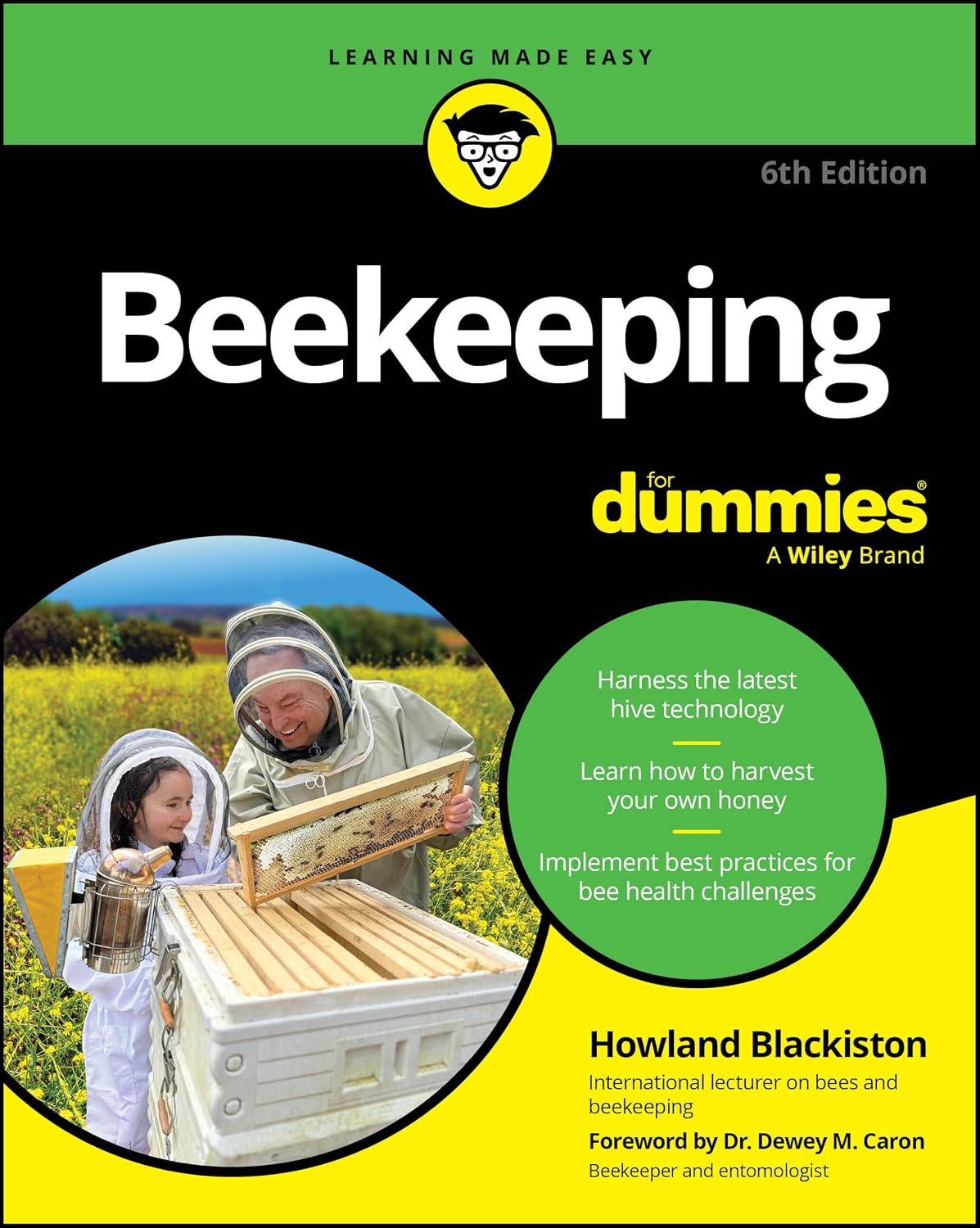
Beekeeping For DummiesBest Overall for Total Beginners |
|
The most forgiving entry point, and genuinely useful later too. Top Pick | Check Price on Amazon |
| 2 |  |
Beekeeping for Beginners — Amber BradshawBest Encouraging First Read |
|
Turns intimidating first inspections into a calm checklist. | Check Price on Amazon |
| 3 |  |
The Beekeeper’s HandbookBest Long-Term Reference |
|
The book you keep consulting after the beginner phase ends. | Check Price on Amazon |
| 4 |  |
Common Sense Natural BeekeepingBest for Low-Intervention Methods |
|
A grounded look at doing less, without the dogma. | Check Price on Amazon |
| 5 |  |
The Backyard BeekeeperBest for Small-Scale Hobbyists |
|
Made for hives behind a fence, not on a farm. | Check Price on Amazon |
| 6 |  |
Beginning Beekeeping — PhillipsBest Straight-Line Starter |
|
Strips the subject down to what a beginner must know. | Check Price on Amazon |
| 7 |  |
Beekeeping for Beginners — Michael YorkBest Budget-Friendly Primer |
|
A quick, readable map of the territory before you buy gear. | Check Price on Amazon |
| 8 |  |
Backyard Beekeeping — BurnsBest Neighborhood-Focused Guide |
|
Grounded advice for hives in ordinary residential spaces. | Check Price on Amazon |
| 9 |  |
The First-Year Beekeeping BookBest Season-by-Season Plan |
|
Reads like a calendar of what to expect in year one. | Check Price on Amazon |
| 10 |  |
Beekeeping for Beginners All-in-1Best Wide-Angle Overview |
|
Breadth over depth — useful as a first survey. | Check Price on Amazon |
Ranking is not about which book is objectively “best written.” It is about which book gets a nervous beginner confidently through their first inspections while still being worth opening in their third season. The top of the list rewards that combination of accessibility and durability.
Ready to Pick Your First Book?
Compare current editions and formats side by side on Amazon.
Check Beekeeping Book Prices1. Why a Good Beekeeping Book Still Beats a Folder of Bookmarks
Information is everywhere. Sequence, context, and judgment are not.
You can learn almost any individual beekeeping task from a short video. How to light a smoker, how to find the queen, how to lift a honey super — each exists in hundreds of demonstrations online. What is much harder to find is the connective tissue: the sense of why a colony behaves the way it does in a given week, and what the next three weeks are likely to demand of you.
That is what a book does well. A well-organized beekeeping book gives you a mental model of the colony as a seasonal organism rather than a box of insects you occasionally open. Once you have that model, the videos make far more sense, because you can slot each demonstration into a place in the year.
Books also protect you from a specific online hazard: local advice applied globally. A management decision that is correct in a mild coastal climate can be disastrous in a continental winter, and a treatment schedule that works where mite loads peak late can fail badly where they peak early. A good book tends to explain the principle so you can adapt it, rather than handing you a rigid calendar to copy.
And there is a practical, unglamorous advantage. Books work at 6 a.m. in a veil, with gloves on, in an apiary with no signal. A reference you can thumb through with sticky hands is worth more than a bookmark folder you cannot open.
Worth knowing: If you are still working out the budget for your first colonies, the equipment chapters in most beginner books will save you more than the book costs. Start with our breakdown of how much it costs to start beekeeping and use the book to decide which purchases you can defer.
Start Your Beekeeping Library
One solid reference book is the cheapest tool in your beekeeping kit.
See Beekeeping Starter Kits2. How We Chose These Ten Books
Not a popularity contest — a usefulness test.
To make this list, a book had to clear four bars. First, it had to be genuinely usable by someone who has never kept bees, without assuming they already know what a super, a nuc, or a brood chamber is. Second, it had to be structured in a way that supports both linear reading and random lookup — because nobody reads a beekeeping book straight through once and never again. Third, it had to cover colony management as a cycle rather than a set of disconnected tips. Fourth, it had to be honest about failure: the books that acknowledge what goes wrong are the ones that help when something does.
We deliberately included books with different philosophies. Some of these titles sit comfortably within conventional Langstroth management; others lean toward low-intervention or treatment-free approaches. Neither camp has a monopoly on good advice, and reading only one side of that conversation is how beginners end up confused when their own results differ from the book’s promises.
We also weighted longevity. A book that is perfect for week one and useless by month six is a worse purchase than one that is slightly denser at the start but keeps earning space on the shelf. That is the main reason the technical handbooks rank as high as they do despite being less breezy.
One thing we did not do is invent laboratory-style scores. There is no honest way to reduce a book about living creatures to a decimal rating, and pretending otherwise helps nobody. What you will find below is a clear description of what each title does, where it is weak, and the reader it suits.
Building From Scratch?
Our beginner hub covers equipment, bees, and the full first season in order.
Shop Beehive Kits on Amazon3. Beekeeping For Dummies by Howland Blackiston
The friendly, comprehensive overview that has launched more hobby apiaries than almost anything else on the shelf.
Beekeeping For Dummies
Some books are written to impress other beekeepers. This one is written for the person standing in a garden center wondering whether they have made a mistake. That orientation — patient, plain-spoken, never condescending — is why it remains the default recommendation when someone asks where to begin.
What sets this title apart is the completeness of its walkthrough. It does not simply tell you that bees build comb and that you will eventually harvest honey; it takes you through the decisions that actually confront a beginner. Which style of hive to start with, how to think about placement, what the equipment list genuinely includes, what your first inspections should look like, and what the colony will be doing while you are not watching. The famous series format helps here, because the material is broken into clearly labeled chunks that you can revisit one topic at a time.
Key Features
- Plain-language explanations that define beekeeping vocabulary as it appears instead of assuming prior knowledge.
- Full first-year coverage — from acquiring bees through the rhythms of inspections and the run-up to winter.
- Broad equipment survey that helps you separate the gear you need now from the gear you can buy later.
- Problem-oriented chapters that frame common difficulties in terms of symptoms rather than jargon.
- Reference-friendly layout so you can find one answer quickly without rereading the chapter.
What We Like
- Extremely forgiving for readers with zero background
- Covers the whole hobby, not just hive inspections
- Good balance of explanation and instruction
- Still useful as a refresher years later
What Could Be Better
- Breadth means some topics stay surface-level
- Less depth on advanced queen-rearing or breeding
- Readers chasing a single philosophy may want more stance
Best for: First-time beekeepers who want one reassuring, complete book to read before the bees arrive — and who would rather understand the whole hobby than master one narrow technique.
Beekeeping For Dummies
Our top pick for absolute beginners.
See what formats are available today.
Pair it with a real look at the hardware you will actually handle. Once you have read the equipment chapters, walk through our guide to the best beekeeping starter kits and see which components the book is describing — the terminology sticks far better once you have held a frame.
4. Beekeeping for Beginners: How To Raise Your First Bee Colonies by Amber Bradshaw
A calm, encouraging first read for anyone who is more nervous than excited.
Beekeeping for Beginners
Plenty of beginner books explain the mechanics of beekeeping. Fewer address the emotional reality: that the first time you open a hive full of stinging insects, your hands will shake. This book is written by someone who remembers that feeling, and it makes a difference.
The strength here is pacing. The material unfolds in a way that builds confidence rather than dumping information, with each chapter ending in something you can actually do or decide. The sections on raising colonies and understanding what a healthy colony looks like are especially valuable for beginners, because so much early anxiety comes from simply not knowing what normal looks like. Once you can recognize normal, the panic drops away quickly.
The book also does a nice job with the practical logistics that larger reference works sometimes skim: where to source bees, what to have ready before they arrive, and what routine care looks like during a normal season. It is not the place to go for exhaustive detail on parasite management or queen genetics, but that is not what a first book should be doing anyway.
Key Features
- Reassuring, sequential instruction designed to be read in order before your first inspection.
- Colony health basics that help you interpret what you see inside the hive.
- Acquisition guidance covering the practical choices around obtaining your first bees.
- Routine-care framing that turns seasonal chores into a predictable schedule.
- Beginner-friendly language with unfamiliar terms explained in context.
What We Like
- Warm, non-intimidating tone throughout
- Builds confidence through clear sequencing
- Strong on what a healthy colony should look like
- Light enough to finish before your bees arrive
What Could Be Better
- Not intended as a deep technical reference
- Experienced keepers will outgrow it quickly
- Less emphasis on advanced seasonal manipulation
Best for: Nervous beginners, visual learners, and anyone who wants to feel ready rather than merely informed before their first colony arrives.
Beekeeping for Beginners
A confidence-building start for brand-new beekeepers.
Check availability and formats.
Before your colonies actually arrive, spend some time on the practical side of acquiring them. Our guide to how to buy bees for beekeeping walks through the choices, and understanding what a nuc is in beekeeping will make the ordering conversation far less confusing.
5. The Beekeeper’s Handbook by Diana Sammataro and Alphonse Avitabile
The reference volume that serious beginners graduate into — and never quite leave behind.
The Beekeeper’s Handbook
Where the friendly introductions aim to get you started, this handbook aims to make you competent. It is denser, more technical, and considerably more durable as a reference — the book you will reach for when something in the hive does not match the happy path.
The organizing idea here is understanding before action. Bee biology, colony social structure, the seasonal cycle, pests and diseases, and management techniques are laid out with a precision that rewards slow reading. Diagrams and clearly labeled illustrations carry a lot of the explanatory weight, which makes the harder material much more approachable than the page count suggests.
For a beginner, the biology sections are the hidden value. When you understand what the queen is actually doing, why brood patterns matter, and what the colony is prioritizing at different points in the season, you stop memorizing rules and start making decisions. That shift is the difference between a hobbyist who worries constantly and one who reads the hive accurately.
This is also the book that will serve you best when problems appear. Beginners tend to assume their first crisis will be unusual; in practice it is usually one of a well-known handful of situations, and having a serious treatment of those on hand at the moment you need it is enormously reassuring.
Key Features
- Thorough bee biology that explains colony behavior rather than just listing tasks.
- Illustration-led instruction with diagrams that clarify what you should be seeing.
- Strong pest and disease coverage organized around recognition and response.
- Technique depth that grows with you from beginner to competent hobbyist.
- Genuine reference value for on-the-spot lookups during the season.
What We Like
- Depth that keeps paying off for years
- Excellent explanatory diagrams
- Treats the reader as an adult learner
- Outstanding on colony biology and health
What Could Be Better
- Heavier going than the friendly introductions
- Can feel like a textbook on first approach
- Not the fastest read before your bees arrive
Best for: Beginners who want to understand the science, hobbyists planning to keep bees for many seasons, and anyone who wants a single volume that will still be useful in their fifth year.
The Beekeeper’s Handbook
The long-term reference pick.
See current pricing and formats.
The chapters on hive construction and colony internals pair beautifully with our illustrated guides. Take a look at the parts of a bee hive and their functions, then see how a beehive works as a system. If the construction side fascinates you, our walkthroughs on how to make a beehive and how beehives are made will give you the physical intuition that makes the diagrams in the handbook click.
6. Kim Flottum’s Two Essential Reads: Backyard Scale and Natural Management
Two books from one trusted voice — one about keeping bees in a small space, the about doing less to your colony.
Kim Flottum has spent a career writing about bees in a way that respects the reader’s actual life. These two titles are companions more than competitors: one is rooted in the reality of keeping hives in a yard, garden, or small property, and the other asks a genuinely important question — how much intervention does a colony really need? Together they give a beginner something most reading lists lack: a sense of scale and a sense of restraint.
| # | Image | Product | Key Specs | Verdict | Check Price |
|---|---|---|---|---|---|
| 1 | |
Common Sense Natural BeekeepingBest for Low-Intervention Methods |
|
Sensible natural methods without the absolutism. Top Pick | Check Price on Amazon |
| 2 | |
The Backyard BeekeeperBest for Small-Scale Hobbyists |
|
Built around hives in real, ordinary gardens. | Check Price on Amazon |
Common Sense Natural Beekeeping
The phrase “natural beekeeping” attracts a lot of absolutism. This book does something rarer: it presents lower-intervention management as a set of reasoned choices rather than a moral position. For a beginner trying to work out where they want to land philosophically, that framing is invaluable.
The core value is decision-making. Rather than prescribing a fixed program, it gives you a way to think about inputs, colony resilience, and the trade-offs that come with every treatment or manipulation. That is exactly the kind of thinking that keeps beginners from swinging between two extremes: intervening constantly out of anxiety, or refusing to intervene out of ideology while the colony suffers.
Key Features
- Low-intervention framework grounded in observation rather than dogma.
- Treatment decision guidance that explains when intervention is genuinely warranted.
- Colony-resilience thinking focused on building strong bees rather than chasing symptoms.
- Practical tone that acknowledges real-world constraints and imperfect outcomes.
What We Like
- Balanced, non-dogmatic approach
- Excellent for building management judgment
- Explains trade-offs instead of issuing rules
What Could Be Better
- Assumes you already know basic hive mechanics
- Less useful as a first-week orientation
Best for: Beginners leaning toward natural or low-input management, and any beekeeper who wants to think more carefully about when to intervene.
Common Sense Natural Beekeeping
For beekeepers who want fewer inputs and better judgment.
Check Price on Amazon
The Backyard Beekeeper
A great deal of beekeeping writing quietly assumes acreage. Most hobbyists do not have acreage — they have a garden, a fence line, and neighbors. This book starts from that reality and works forward, which makes it one of the most immediately relatable titles on the list.
The emphasis falls on what it actually means to keep hives at a small scale: managing limited space, thinking about flight paths and water sources, handling the harvest side of things on a modest volume, and staying organized when you have more enthusiasm than equipment. The visual presentation is generous, and the explanations tend toward the concrete rather than the abstract.
Key Features
- Small-property perspective that addresses real residential constraints.
- Approachable visual presentation that makes unfamiliar equipment recognizable.
- Harvest guidance scaled to a hobbyist’s realistic output.
- Season-round hive care framed around a small apiary.
What We Like
- Realistic about space and neighborhood context
- Encouraging and visually clear
- Well pitched for a first hive or two
What Could Be Better
- Light on advanced management techniques
- Less suited to scaling up beyond hobby level
Best for: Hobbyists keeping one to a few hives in a garden or suburban lot who want advice that matches their actual space.
Choosing the hive style is the next decision these books help you make. Compare the options in our guide to the types of beehives with pictures, see which models make our list of the best beekeeping hives, and if you are curious about the automated harvesting designs, read our Flow Hive vs Langstroth comparison before you commit.
7. Simple, Straight-Line Beginner Guides: Phillips and Michael York
When you want the essentials without the detours — two compact primers that respect your time.
Not everyone wants a 400-page commitment before their first inspection. Some readers want the map, the vocabulary, and the core routine, then they want to get outside. Both of these titles serve that reader well. They are lean, focused, and quick to finish, and they share a useful trait: they tell you what matters most without burying it.
| # | Image | Product | Key Specs | Verdict | Check Price |
|---|---|---|---|---|---|
| 1 | |
Beginning Beekeeping — PhillipsBest Straight-Line Starter |
|
Focused, practical, and refreshingly brief. Top Pick | Check Price on Amazon |
| 2 | |
Beekeeping for Beginners — Michael YorkBest Budget-Friendly Primer |
|
A quick orientation before you spend a cent. | Check Price on Amazon |
Beginning Beekeeping — Phillips
This is the book to hand someone who says “I just want to know what to do.” It trims the subject down to the essentials — how to set up, how to get started with bees, and how to handle the routine — and delivers them in a direct, uncluttered style.
Its restraint is the point. There are no long digressions and no padding, which makes it an excellent companion to a weekend course or a club mentorship. Where larger books sometimes overwhelm beginners with options, this one presents a coherent default path you can follow while you are still forming your own opinions.
Key Features
- Concise, task-oriented structure built around what you actually need to do.
- Clean setup guidance covering the essentials of getting established.
- Accessible language with minimal jargon and clear definitions.
- Efficient reading experience for busy beginners who want the core fast.
What We Like
- Quick to read and easy to revisit
- Clear, uncluttered instruction
- Great as a first orientation book
What Could Be Better
- Depth is limited by design
- Not a long-term reference volume
Best for: Beginners who want a fast, focused overview before their bees arrive, or anyone who prefers concise instruction to long-form explanation.
Beekeeping for Beginners — Michael York
Think of this one as the orientation flight. It maps the territory — what beekeeping involves, what the equipment is called, what the year looks like — so that everything else you read afterward lands in a sensible place.
The advantage of a compact primer is that you finish it. Many beginners buy a heavyweight reference with the best of intentions and never get past the first third. A shorter book gets read, and a read book is worth more than an admired one. Pair it later with a deeper title once you know which aspects of the hobby fascinate you most.
Key Features
- Broad introductory coverage of the hobby as a whole.
- Clear terminology that decodes common beekeeping language.
- Fast orientation for readers deciding whether to commit.
What We Like
- Very approachable entry point
- Helps you learn the language quickly
- Ideal for deciding if the hobby suits you
What Could Be Better
- Surface-level on complex management topics
- Best paired with a deeper second book
Best for: Curious beginners still deciding whether beekeeping is for them, and readers who want vocabulary and context before buying equipment.
Short primers shine when you read them alongside something physical. Learn the types of beehives in trees to understand natural nesting, check where a hive should actually go with our guide to where to place a beehive, and when your equipment arrives, follow our instructions on how to paint a beehive before the bees move in.
8. Backyard and First-Year Focus: Burns, Wilensky, and the All-in-1 Overview
Three books organized around the questions beginners actually ask: where do I keep them, what happens in year one, and what is the whole picture?
The final group covers three distinct niches. One is written for beekeepers in residential neighborhoods, one is built around the calendar of your first season, and one aims to survey the entire subject in a single volume. They overlap, but the organizing principle of each is different enough that they suit different readers.
| # | Image | Product | Key Specs | Verdict | Check Price |
|---|---|---|---|---|---|
| 1 | |
The First-Year Beekeeping BookBest Season-by-Season Plan |
|
The closest thing to a first-year field schedule. Top Pick | Check Price on Amazon |
| 2 | |
Backyard Beekeeping — BurnsBest Neighborhood-Focused Guide |
|
Advice that assumes a fence, not a field. | Check Price on Amazon |
| 3 | |
Beekeeping for Beginners All-in-1Best Wide-Angle Overview |
|
Covers a lot of ground at a light depth. | Check Price on Amazon |
The First-Year Beekeeping Book for Beginners
Most beginners do not struggle with information; they struggle with timing. Knowing that you should check for queen cells is very different from knowing that you should be checking for queen cells this week. This book organizes the first year chronologically, which solves exactly that problem.
The month-by-month structure makes it unusually practical to use in real time. You read ahead a few weeks, know what is coming, and then consult the relevant section as the season unfolds. It is also reassuring in a way that is hard to overstate: when a book tells you what a normal first year feels like, the anxiety about whether you are doing it right drops considerably.
Key Features
- Chronological organization that mirrors the actual beekeeping season.
- Checklist-style guidance you can work through during inspections.
- Expectation setting for what your colony should be doing at each stage.
- Beginner pacing that introduces tasks as they become relevant.
What We Like
- Excellent at answering “what do I do this month?”
- Reduces first-year anxiety with clear expectations
- Easy to use alongside real inspections
What Could Be Better
- Less useful as a long-term reference
- Seasonal timing varies by region and climate
Best for: First-year beekeepers who want a structured plan to follow, and anyone who learns best from timelines and checklists.
Backyard Beekeeping — Burns
Residential beekeeping raises questions that farm-scale writing never touches. Where does the water go? What about the neighbor’s pool? How do you work a hive when a patio is four meters away? This book takes those questions seriously, which makes it a genuinely different read from the general introductions.
The tone is geared to the absolute beginner, and the emphasis is on being a considerate keeper as much as a competent one. That social dimension — how your bees interact with the people around you — is often the difference between a hobby that lasts and one that ends after a single complaint.
Key Features
- Residential focus addressing space, access, and neighbor relations.
- Absolute-beginner tone with no assumed prior knowledge.
- Placement and setup advice suited to small properties.
What We Like
- Addresses the realities of suburban beekeeping
- Thoughtful on community considerations
- Gentle introduction for nervous starters
What Could Be Better
- Light on advanced colony management
- Not aimed at expanding apiaries
Best for: People planning to keep bees in a suburban or urban-adjacent yard who want advice grounded in neighborhood reality.
Beekeeping for Beginners All-in-1
The promise here is coverage: a single volume that touches most of what a new beekeeper will encounter. It delivers on that breadth, and breadth has real value early on, when you do not yet know which parts of the hobby will matter most to you.
Use it as a survey rather than a manual. Read it once to build a mental index of the subject, note the areas that interest you, and then buy a specialist title for the depth. Beginners who treat an all-in-one overview as their only book often end up underprepared for the messy middle of the first season — but as a companion to a reference text, it works well.
Key Features
- Wide topical coverage spanning equipment, bees, and seasonal care.
- Dip-in reference style useful for quick orientation on an unfamiliar subject.
- Beginner framing that avoids specialist depth in favor of clarity.
What We Like
- Covers a broad range of beginner questions
- Useful for discovering what interests you
- Handy as a quick-lookup companion
What Could Be Better
- Depth is limited across most topics
- Best paired with a stronger reference
Best for: Beginners who want a broad survey of the hobby before choosing where to specialize.
Beekeeping for Beginners All-in-1
A wide-angle look at the whole hobby in one book.
Check Price on AmazonBackyard-scale beekeeping comes with local rules as well as local neighbors. Before you install anything, check our guide to whether you can keep bees in your backyard and review beekeeping laws by state so your first season starts on the right side of the ordinance book.
9. How to Choose the Right Beekeeping Book for Your Situation
Four questions that will narrow the list faster than any rating system.
After reading through ten options, the honest advice is that most of them are good — they are simply good for different people. Here is how to match the book to the reader.
Question 1: How do you learn?
If you learn by narrative and reassurance, choose one of the friendly introductions and read it end to end before your bees arrive. If you learn by structure and lookup, choose a handbook and plan to keep it in the car. If you learn by doing, pick a concise guide and treat your club mentor or an experienced local beekeeper as the real teacher.
Question 2: What is your timeline?
Bees arriving in two weeks calls for a short, focused book. Bees arriving next season calls for the deeper reference, because you have time to absorb it. There is no prize for owning the hardest book if the bees arrive before you finish it.
Question 3: What is your management philosophy?
This matters more than beginners expect. If you are drawn toward low-intervention methods, a book rooted in conventional input-heavy management will quietly frustrate you, and vice versa. It is better to read the philosophy you intend to practice first, and then read the opposing view for balance.
Question 4: What is your setting?
A hive in a large garden with a flight path facing a hedge is not the same project as a hive on a small urban lot with a school next door. Books grounded in backyard realities address questions about placement, water, and neighbors that farm-oriented texts skip entirely.
Our suggestion: Buy one friendly introduction plus one reference handbook. Read the introduction first for confidence, then keep the handbook nearby for the whole season. If your budget only stretches to one, choose the friendly introduction and supplement it with local club resources and our guide to beekeeping fundamentals.
Still Deciding?
Browse beginner beekeeping books and compare formats side by side.
Browse Beginner Beekeeping Books10. Print, Ebook, or Both? Choosing the Right Format
The format decision is more practical than it looks — beekeeping books are used in unusual places.
There is a reasonable case for each format, and the strongest setup for most beekeepers is deliberately unglamorous: a physical copy at home and an ebook copy for travel and reference. Here is the reasoning.
Print wins where beekeeping books are actually used — on a workbench, next to an open hive, or on the kitchen table with a notebook. You can lay it flat, mark it, flip to a diagram instantly, and read it in bright sun. For a book you will consult during inspections, paper remains genuinely superior, and a book that has survived a few seasons of use becomes a personal reference in a way a file never does.
Ebook
Ebooks shine for the reading phase: commuting, waiting rooms, evenings before the bees arrive. Search is a real advantage when you need one answer quickly, and a digital copy means the book is always with you. The limitation is context — it is harder to browse, and using a device with gloved, sticky hands outdoors is exactly as awkward as it sounds.
Used and Older Copies
Beekeeping fundamentals change slowly. A used copy of a respected reference is often the smartest purchase a beginner can make, particularly if it frees budget for equipment. The biology is stable; only the specific product recommendations age, and those you can verify independently anyway.
What to Skip
Be wary of anything that promises a single secret method, guaranteed honey harvests, or a completely hands-off approach. Beekeeping rewards attention. Books that respect that reality are the ones worth owning.
Prefer Digital?
Check which of these titles are available as ebooks or in other formats.
See Available Formats on Amazon11. Building a Beekeeping Library Beyond Your First Book
Once the basics are covered, your reading should follow your problems and your curiosity.
A common mistake is buying five beginner books. They all cover the same ground, and the repetition feels productive while teaching you very little that is new. A better strategy is to build outward: one general book, one serious reference, and then targeted reading driven by what is actually happening in your apiary.
On Colony Pests and Problems
Most first-year crises cluster around a handful of recognizable situations. Understanding what swarming is in beekeeping before spring arrives is worth an hour of reading, and recognizing robbing behavior early can save a colony. Learn about the nectar dearth as well, because a hungry colony behaves in ways that confuse beginners.
On Equipment and Smoke
The equipment chapters in any good book make much more sense once you have used the tools. See our picks for the best bee smoker, learn how a bee smoker works, and read up on what to use in a bee smoker so you understand why calm, cool smoke matters to your inspection.
On Protective Gear
Books describe stings and protective clothing in the abstract. Experience teaches you that fit, ventilation, and confidence matter enormously. Compare options in our bee suit review and see whether bee suits protect from wasps, because the answer is not as obvious as new beekeepers assume.
On Hive Choice and Construction
Once you understand colony biology, hive design becomes fascinating rather than confusing. Our visual guide to beehive types is a good next step, and if you plan to build rather than buy, the guides on how to make a beehive and how beehives are made will deepen everything the books describe.
Level Up Your Setup
Good gear makes the lessons in your books easier to apply in the field.
Shop Bee Smokers on Amazon12. A Reading Plan for Your First Season
What to read, and when — so the knowledge is fresh when you need it.
Reading everything at once is counterproductive. Beekeeping knowledge sticks when it is attached to a task you perform within a few days. Here is a simple way to sequence your reading across the first year.
Before You Buy Anything
Read one friendly introduction end to end. Do not annotate heavily; just build the mental map. Then read our guide to how to start beekeeping and make a realistic equipment list. Understanding what a nuc is at this stage prevents an expensive ordering mistake later.
Between Ordering Bees and Their Arrival
Now go deeper. Read the colony biology sections of your reference handbook, and study the anatomy of the equipment you have bought. Our article on the parts of a bee hive and their functions is excellent preparation for your first inspection, and our walkthrough on how a beehive works ties the pieces together.
Week One with Bees
Re-read only the inspection and feeding chapters. Prepare feeders and understand why colonies sometimes need supplemental feeding — see our guide on how to make a bee feeder and the best bee feeders, along with what to actually put in them in our guide to what to feed bees. Keep gloves and veils in good order with our notes on the best beekeeping gloves and how to clean beekeeping gloves.
Mid-Season
Read the management chapters on expansion and swarming, and start the harvest-side material so you understand the goal you are working toward. Our roundup of the best honey extractors gives context for what comes later, and planning ahead for how to store honey is easier before the jars are full.
End of Season
Read the wintering and preparation sections, review your inspection notes, and decide which specialist book you want next. That is also the moment to be honest about what you still find difficult — and to seek targeted help rather than another general book.
Get Ready for Harvest Season
Plan the extraction and storage side before your supers are full.
See Honey Extractors on AmazonFrequently Asked Questions About Beekeeping Books
Do I really need a book, or can I learn beekeeping online for free?
You can learn a great deal online, and free resources from clubs and extension services are genuinely excellent. What is hard to find for free is a coherent sequence. A good book gives you a structure that scattered articles and videos cannot, and it makes everything else you read easier to evaluate. Most experienced beekeepers would tell you the book is the cheapest part of the hobby.
Should I buy one book or several before my bees arrive?
Start with one, read it fully, and then decide. Buying five beginner books at once usually produces confusion rather than competence, because they overlap heavily. A better pattern is one friendly introduction now and one deeper reference for the season.
What is the best beekeeping book for someone with absolutely no experience?
For most total beginners, Beekeeping For Dummies is the safest starting point because it assumes nothing and covers the whole hobby in plain language. If you are a nervous reader or learn best from calm step-by-step guidance, Amber Bradshaw’s beginner book is an equally good first choice.
Which book is best for understanding bee biology and colony health?
The Beekeeper’s Handbook is the standout here. Its treatment of colony biology, brood, and pest recognition gives you the underlying model that makes every management decision easier. It is denser than the beginner introductions, but it is the one most likely to still be open on your desk years from now.
Are natural or treatment-free beekeeping books suitable for beginners?
They can be, provided you read them as a philosophy of management rather than a guarantee of results. Low-intervention beekeeping requires sharper observation skills, not fewer skills. A balanced book like Common Sense Natural Beekeeping is a good way to explore that approach without adopting rigid rules.
Do beekeeping books go out of date quickly?
The biology does not. Colony behavior, seasonal cycles, and brood development are stable, and a used copy of a respected reference is often excellent value. What does change are product recommendations and some pest-management specifics, so verify those independently with local advice.
Is a regional beekeeping book better than a general one?
Regional information is extremely valuable, but it usually works best as a supplement rather than a substitute. The general books give you the framework; local clubs, mentors, and regional resources tell you how that framework applies to your specific climate and forage.
Should I read about beekeeping before buying equipment?
Absolutely. Reading first is the easiest way to avoid buying gear you will never use. A few hours with a good book will usually save more than the book costs, particularly when you are comparing starter kits and hive styles.
What should I read after my first beginner book?
Move toward depth rather than more breadth. If pests are your worry, read about colony health and problems. If construction fascinates you, explore hive design and building. If you are expanding, look at management and queen rearing. Follow your own apiary’s needs rather than a generic list.
Are ebooks as useful as print books for beekeeping?
For reading and learning, ebooks are excellent, and search is genuinely handy. For use at the hive, print still wins, because you can lay a page flat and flip to a diagram without juggling a screen in gloves. Many beekeepers end up owning both formats of the same reference.
How much should I expect to spend on beekeeping books?
Less than you would think, and far less than the equipment. One solid beginner book plus a reference handbook is plenty for the first few seasons, and used copies are a smart way to stretch the budget toward the gear you will actually need.
Have More Questions?
Our beginner hub answers the most common starting-out questions in one place.
Browse Beekeeping Books on AmazonFinal Verdict: Start With One Great Book and Build From There
If you take one thing from this guide, let it be this: the best beekeeping book is the one you will actually finish and keep using. For most beginners, that is Beekeeping For Dummies — it is complete without being overwhelming, forgiving without being shallow, and it stays useful well past the beginner phase. Pair it with The Beekeeper’s Handbook when you are ready for depth, and you have a library that will carry you through many seasons.
From there, let your situation guide you. If you are keeping hives in a small yard, the backyard-focused titles will speak to your reality. If you want a low-intervention approach, start with a book that treats that philosophy seriously. If you want a plan to follow rather than a subject to study, the first-year structured guides are a gift.
Whatever you choose, read it before the bees arrive and keep it within reach afterward. Beekeeping rewards preparation more than almost any other hobby, and the confidence that comes from understanding what you are looking at inside a hive is worth every hour you spend with a book first.
Start Your Beekeeping Journey Today
Our overall pick is the best place to begin.
Check current pricing and available formats.
You May Also Like
More from Beekeeping Help to keep your reading going.
How to Start Beekeeping in Texas
Climate, forage, and seasonal timing specific to beekeepers in Texas.
Is Beekeeping Profitable?
An honest look at the economics of keeping bees beyond the hobby stage.
Beekeeping Insurance
What cover beekeepers actually need and when it becomes worth considering.
How to Improve Your Beekeeping Skills
Practical habits that turn a beginner into a confident, observant beekeeper.
How to Store Honey
Keep your harvest fresh, clean, and crystallization-free for longer.
How to Wash a Bee Suit
Clean your protective gear properly without damaging the fabric or the veil.
Product images are the property of their respective publishers and are used for identification purposes. Always confirm current edition, format, and availability before purchasing.