Hands-On Gear Guide
Best Beekeeping Gloves: 10 Pairs That Balance Protection, Grip and Finger Feel
Sticky frames, defensive colonies, hot afternoons and one very small queen — here is how to pick gloves that protect your hands without turning your fingers into sausages.
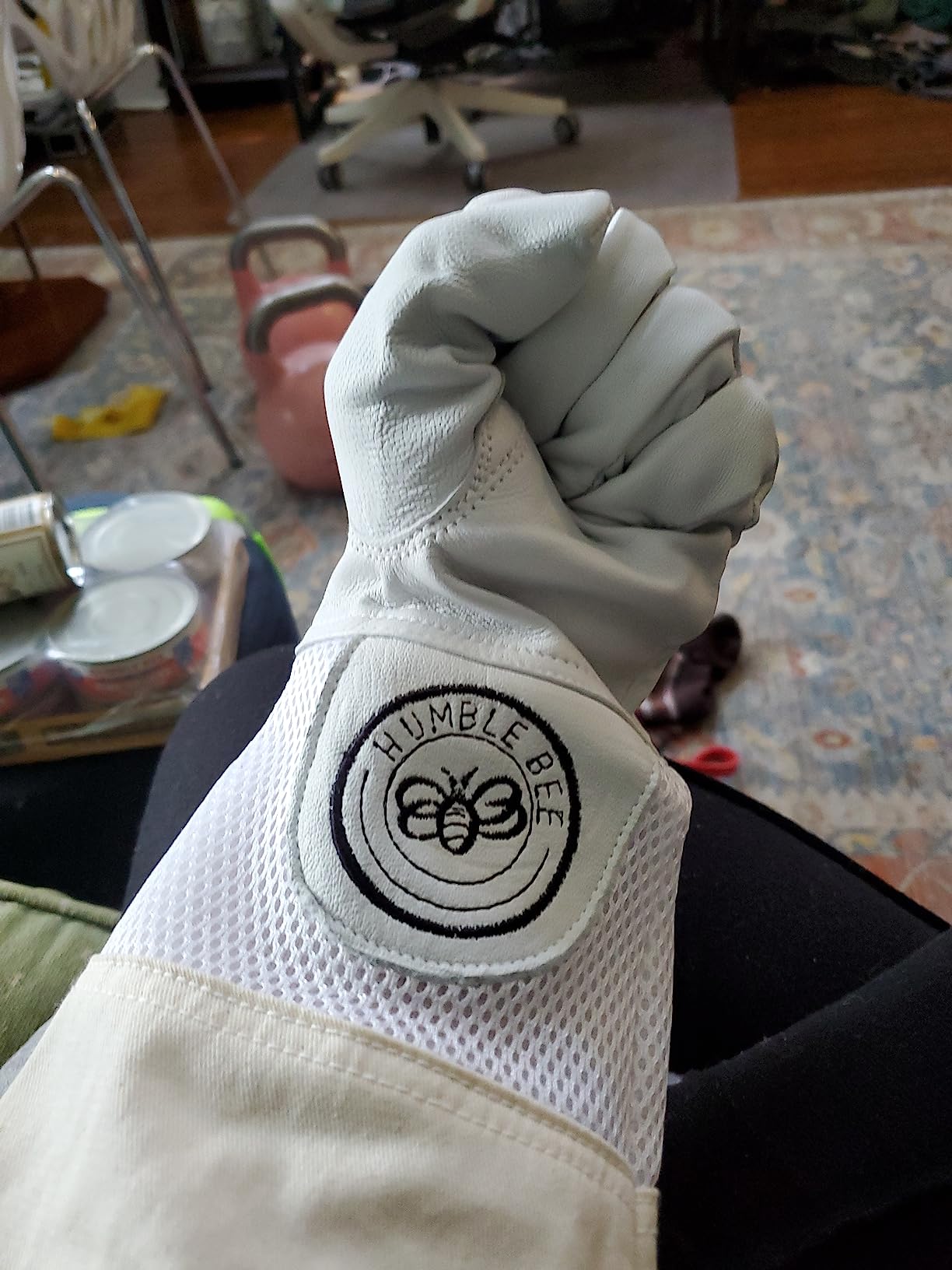
Extended-sleeve designs push the cuff higher up the forearm, which matters more than most beginners expect.
Why Your Gloves Matter More Than Almost Any Other Piece of Beekeeping Gear
Beginners spend weeks choosing a hive and roughly four minutes choosing gloves. Then they spend an entire season fighting frames with fingers that feel like they are wrapped in towels. The truth is that gloves sit at the very center of the beekeeping experience: they are the only piece of protective gear you touch everything with.
Think about what your hands actually do during an inspection. You loosen a propolis-sealed lid, pry up a frame that the bees have glued solid, turn that frame slowly to read both sides, spot a queen the size of a grain of rice, scratch out a burr comb, and set everything back without crushing anybody. Every one of those tasks depends on touch. Thick, clumsy gloves protect you from stings but cost you that touch — and crushed bees are how calm colonies turn into angry ones.
So the best beekeeping gloves are not simply the most heavily padded pair. They are the pair that gives you the most usable finger feel while still keeping the stingers on the outside of the leather. That balance shifts depending on your climate, your temperament, how defensive your bees are, and whether you are working a gentle beginner colony or doing a midday honey pull in July.
This guide covers ten popular pairs of beekeeping gloves across that entire spectrum — soft goatskin options built for dexterity, heavier protective designs for defensive colonies, budget pairs for weekend hobbyists, and complete glove-and-hat bundles for people who would rather buy everything once. You will find a full comparison table up front, detailed review blocks further down, and practical advice on fit, cleaning and sting handling in between.
If you are completely new to the craft, it is worth spending twenty minutes with our guide on how to start beekeeping before you buy anything. Gear choices make a great deal more sense once you have seen what an inspection actually looks like. And if you just want the broad landscape first, our overview of beekeeping covers the hobby from hive to harvest.
Shopping for Your First Pair?
Browse the full range of beekeeping gloves to compare materials, cuffs and sizes.
Check Price on AmazonQuick Comparison: Our Top Picks
Every glove in this guide is listed below in one place so you can scan the differences before reading the full reviews. Materials and coverage notes describe the design in general terms; always confirm current sizing and specifications on the product page before ordering.
| # | Image | Product | Key Specs | Verdict | Check Price |
|---|---|---|---|---|---|
| 1 |  |
Top PickFOREST Beekeeping Supply Goatskin GlovesBest Overall for Dexterity |
|
Supple goatskin keeps finger feel for delicate frame work. | Check Price on Amazon |
| 2 |  |
Natural Apiary Beekeeping GlovesBest for Beginners |
|
A straightforward, comfortable first pair for new beekeepers. | Check Price on Amazon |
| 3 |  |
KINGLAKE Goatskin Beekeeping GlovesBest Value Goatskin |
|
Goatskin feel without fuss — a solid everyday glove. | Check Price on Amazon |
| 4 |  |
Humble Bee 110 Goatskin Gloves with Extended SleevesBest Long Coverage |
|
Extra sleeve length when you want more forearm coverage. | Check Price on Amazon |
| 5 |  |
Apis Tactical Heavy Duty Beekeeping GlovesBest Heavy Duty |
|
More protection for defensive colonies and rough work. | Check Price on Amazon |
| 6 |  |
Newcotte Beekeeping Gloves & Hat SetBest Complete Set |
|
Hands and head sorted in a single purchase. | Check Price on Amazon |
| 7 | 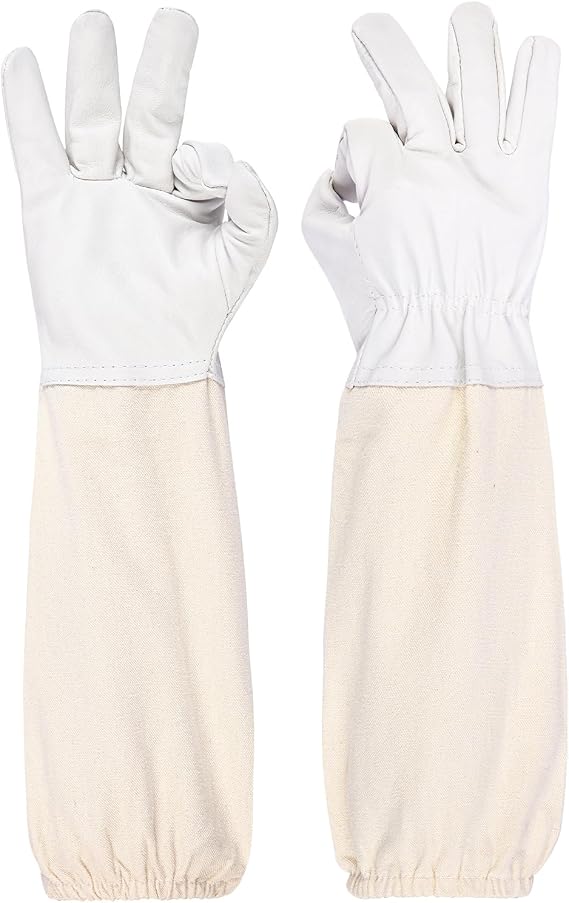 |
ZMHBKPS Thickened Beekeeping GlovesBest Extra Barrier |
|
Thicker material for extra peace of mind. | Check Price on Amazon |
| 8 |  |
Mr.Bee Beekeeping GlovesBest No-Frills Option |
|
No-frills pair for light, occasional hive work. | Check Price on Amazon |
| 9 |  |
Buzz Beekeeping Supplies GlovesBest for Occasional Checks |
|
A convenient spare to keep in the truck. | Check Price on Amazon |
| 10 |  |
VIVO Beekeeping GlovesBest All-Rounder |
|
Does everything reasonably well at a sensible cost. | Check Price on Amazon |
Ready to Compare Sizes?
Open the full glove listings to check current sizing and availability.
Check Price on AmazonHow We Picked These Gloves
Choosing gloves is oddly personal. Two beekeepers can work the exact same colony on the same afternoon and walk away with completely different opinions about the same pair, simply because one values fingertip sensitivity and the other values a thick barrier between skin and stinger. So rather than pretending there is a single winner for everybody, we evaluated these gloves across five practical dimensions that genuinely change how they behave in the apiary.
1. Finger feel and dexterity
This is the dimension most beginners underestimate until they try to find a queen. A glove can be beautifully made and still fail the test if you cannot pinch, turn or lift with any precision. We looked for leather that stays supple after repeated flexing, fingers that are not excessively wide, and seams that sit away from the fingertip where you need contact.
2. Sting protection where it counts
Bees tend to aim for hands and wrists, especially when a glove is gripped tight against the skin. Protection is about more than leather thickness: it is about whether the cuff overlaps cleanly with a jacket sleeve, whether the closure keeps bees from crawling inside, and whether the material remains a barrier even when it is damp with sweat or propolis.
3. Heat and comfort
Protective gear that overheats you becomes protective gear you stop wearing. Thick gloves in high summer are genuinely uncomfortable, and discomfort leads to rushed inspections, which leads to stings. We weighed how each design manages warmth during a slow, methodical inspection on a hot day.
4. Durability and cleanability
Leather that stiffens into cardboard after one washing is a problem. Beekeeping gloves collect propolis, wax, honey and the occasional smear of pollen, and they need to be cleaned and dried without falling apart. Construction quality, seam strength and how the leather responds to drying all fed into this category.
5. Value across a full season
Price matters, but so does how often you replace a pair. A glove that lasts three seasons at a modest cost is better value than a bargain pair that needs replacing every few months. We focused on products that make sense for their intended use rather than chasing the lowest number on a page.
A note on how we write about specs. Rather than quoting measurements or ratings that can change, we describe each glove by its materials and intended use, exactly as the product name and category suggest. Always confirm current details on the product page before you order — and if you are still assembling your kit, a good companion read is our guide to the best beekeeping starter kits, which covers how gloves fit alongside veils, jackets and tools.
It is also worth saying what this guide is not. It is not a lab test with sting-count data, because no responsible test involves deliberately agitating colonies to measure glove performance. Everything here comes from how these gloves are used in real inspections: the ordinary work of opening a hive, reading frames, closing up, and doing it again two weeks later. For another piece of protective gear in the same category, see our bee suit review, which follows a similar hands-on approach.
Building a Complete Kit?
Compare starter kits and gloves together before you commit to a brand.
Check Price on AmazonGlove Materials Explained: Goatskin, Cowhide, Synthetic and Cotton
Before you compare brands, compare materials. The leather or fabric on the back of your hand decides almost everything about how a glove behaves: how well you can feel a frame edge, how hot your hands get, how long the glove survives repeated cleaning, and how confidently you can work near a defensive colony.
Goatskin: the dexterity choice
Goatskin is the material most often recommended to new beekeepers, and for good reason. It is naturally soft and pliable, which means a goatskin glove bends with your hand instead of fighting it. You can pinch a frame ear, tease apart two boxes stuck with propolis, and grip a hive tool with much less fatigue. Most of the gloves in this guide use goatskin or a goatskin-forward construction, including the FOREST Beekeeping Supply pair, the KINGLAKE gloves and the Humble Bee 110 with extended sleeves.
The trade-off is that softness and thickness pull in opposite directions. A very supple goatskin glove gives you excellent feel but a thinner barrier; a thicker goatskin glove protects better but starts to feel like you are handling frames with oven mitts. Your ideal pair sits somewhere on that curve, and where you sit depends on your bees and your climate.
Cowhide and heavier leather: the protection choice
Heavier leather builds — the category the Apis Tactical Heavy Duty gloves are aimed at — prioritize barrier over finesse. If your colonies run hot, if you are working a large hive during a flow when foragers are pouring in, or if you simply feel more confident with more material between you and the bees, a heavier glove is a reasonable call. Just expect to spend a few inspections adapting to the reduced finger feel.
Thickened and reinforced constructions
Some gloves, like the ZMHBKPS Thickened pair, are built around the idea of extra material as extra reassurance. This is genuinely useful for people who are nervous around bees, because tension in your hands translates directly into jerky movements — and jerky movements are what trigger defensive behavior. If a thicker glove lets you work calmly and slowly, it has done its job even before it blocks a single stinger.
Cotton, canvas and fabric backs
Many beekeeping gloves pair a leather palm with a fabric back for ventilation. Fabric backs do not do much for sting protection, so they work best on calm colonies and warm days, and they are often used as a layer under or alongside heavier protective clothing. If you plan to run fabric-backed gloves, think carefully about your sleeve overlap.
| Material | Pros | Cons |
|---|---|---|
| Goatskin leather |
|
|
| Cowhide / heavy leather |
|
|
| Thickened / reinforced |
|
|
| Cotton / fabric |
|
|
One material note that gets overlooked: leather gloves behave differently when they are wet. Damp leather stretches, softens and can let a determined stinger through more easily than dry leather. That is one more reason to keep two pairs and rotate them, and one more reason to learn the right washing method — covered in detail in our guide on how to clean beekeeping gloves without ruining the leather.
Prefer the Feel of Soft Leather?
Search goatskin beekeeping gloves and compare the current options side by side.
Check Price on AmazonBest Beekeeping Gloves for Beginners
Your first pair of gloves has one job: get out of the way while you learn. Everything about an inspection is new when you start — the weight of a full frame, the sound the colony makes when the lid comes off, the strange calm required to move slowly while something buzzes around your knuckles. The last thing you need is equipment that adds friction. These three pairs are the ones we point new beekeepers toward, because they are straightforward, forgiving and comfortable enough to wear through an entire first season.
| # | Image | Product | Key Specs | Check Price |
|---|---|---|---|---|
| 1 | |
Natural Apiary Beekeeping GlovesBest for Beginners |
|
Check Price on Amazon |
| 2 | |
Newcotte Beekeeping Gloves & Hat SetBest Starter Bundle |
|
Check Price on Amazon |
| 3 | |
Mr.Bee Beekeeping GlovesBest Simple Option |
|
Check Price on Amazon |
Best for Beginners
Natural Apiary Beekeeping Gloves
The Natural Apiary pair is the kind of glove that disappears on your hands, which is exactly what a beginner needs. There is nothing exotic about the design — it is a balanced, well-proportioned leather glove built for the ordinary rhythm of hive work: lift the lid, loosen a frame, turn it, read it, put it back. New beekeepers tend to over-grip everything in their first few inspections, and a glove with a natural, relaxed fit quietly corrects that habit.
What makes this pair a strong first choice is the middle-ground approach. It offers enough material that you feel covered while working, without the bulk that makes handling frames awkward. That matters during the early weeks when you are still learning how much pressure a frame can take and how to move your hands around a colony without sweeping bees off the top bars.
Key Features
- Balanced leather construction suited to routine inspections
- Comfortable proportioning that keeps finger movement natural
- Designed to work alongside a jacket, veil or full suit
- Straightforward design with no fussy hardware to manage
- A forgiving pair for people still building inspection habits
What We Like
- Comfortable enough to wear through a full inspection
- Good balance of coverage and usable finger feel
- Approachable for first-time buyers
- Works well as a primary pair for casual hobbyists
Keep in Mind
- Serious beekeepers may eventually want a more specialized pair
- Leather needs proper drying between uses
- Not the pick for heavily defensive colonies
Who it’s best for: First-season beekeepers who want a comfortable, no-drama pair of gloves to learn on.
Start With a Comfortable First Pair
See the Natural Apiary gloves and confirm your size before ordering.
Check Price on Amazon
Best Complete Set
Newcotte Beekeeping Gloves & Hat Set
There is a specific kind of relief that comes from buying one box and covering two problems at once. The Newcotte set bundles gloves with a hat and veil, which removes the most common beginner headache: matching a veil to a jacket to gloves and hoping the overlaps all work together. For someone who has never put on beekeeping gear in the dark at six in the morning, that coherence is genuinely valuable.
As a set, it is designed for people entering the hobby rather than for beekeepers with strong preferences already formed. The gloves follow the familiar protective pattern with a cuff that tucks under a sleeve, and the head covering handles the part of the job that beginners most often forget to think about. Once you know what you like, you may well graduate to separate pieces — but this gets you through the learning curve in one step.
Key Features
- Gloves paired with a hat and veil in a single set
- Removes the guesswork of matching separate protective pieces
- Veil coverage addresses the most vulnerable area for beginners
- Straightforward to store, pack and grab on inspection day
- A sensible entry point before investing in specialized gear
What We Like
- Hands and head covered in one purchase
- Takes the stress out of assembling a first kit
- Useful even later as travel or backup gear
- Simple, practical approach with nothing extra to figure out
Keep in Mind
- Experienced beekeepers may prefer choosing pieces separately
- A set is only as comfortable as the fit you select
- You may outgrow it as your preferences sharpen
Who it’s best for: New beekeepers who want gloves and head protection sorted in one go rather than piecing a kit together.
Want Gloves and a Veil Together?
Check the Newcotte set and see what is included before you order.
Check Price on Amazon
Best No-Frills Option
Mr.Bee Beekeeping Gloves
Not every pair of gloves needs a story. The Mr.Bee gloves are a plain, honest design built for light hive work — the quick summer check where you lift the lid, glance at three frames, spot eggs and close up again in ten minutes. For that kind of job, a complicated glove is overkill, and a simple pair that you can pull on without thinking has real value.
This is also the sort of glove that earns its keep as a second pair. Beekeepers who work multiple apiaries often keep a set in the truck, a set in the shed and a set that is currently drying. A straightforward, easy-to-live-with glove fits that pattern perfectly, and it is a reasonable way to get started without committing heavily before you know what you want.
Key Features
- Straightforward construction with no unnecessary complexity
- Suited to light, quick inspections rather than long interventions
- Easy to keep in a vehicle or tool bag as a spare pair
- Simple care routine for casual, occasional use
- An accessible starting point for exploring what you like
What We Like
- Simple to grab and put on
- Good fit for light, occasional hive work
- Handy as a backup or travel pair
- Nothing to learn before you use them
Keep in Mind
- Less suited to heavy or defensive-colony work
- Serious hobbyists may want more protection later
- Basic design means fewer comfort refinements
Who it’s best for: Casual beekeepers and beginners doing short, calm inspections who want a simple, grab-and-go pair.
Need a Simple Second Pair?
See the Mr.Bee gloves and check availability in your size.
Check Price on AmazonChoosing a beginner pair is only the first of many early decisions. If you are still mapping out the whole venture, our guides on how much it costs to start beekeeping and how hard it is to start beekeeping put glove costs in proper context, and our walkthrough on how to buy bees for beekeeping covers what comes next once the gear is sorted.
Just Getting Started?
Compare beginner-friendly gloves and protective sets in one search.
Check Price on AmazonBest Goatskin Beekeeping Gloves for Dexterity
This is the category most working beekeepers eventually settle into. Goatskin’s softness means your hands can do precise work — steadying a frame one-handed, nudging bees gently off a top bar, gripping a hive tool in the exact spot where it needs to pivot. Once you have felt the difference, it is hard to go back. The three pairs below all lean into that dexterity-first philosophy, with slightly different emphasis.
| # | Image | Product | Key Specs | Check Price |
|---|---|---|---|---|
| 1 | |
FOREST Beekeeping Supply Goatskin GlovesBest Overall |
|
Check Price on Amazon |
| 2 | |
KINGLAKE Goatskin Beekeeping GlovesBest Value Goatskin |
|
Check Price on Amazon |
| 3 | |
Humble Bee 110 Goatskin GlovesBest Long Coverage |
|
Check Price on Amazon |
Best Overall
FOREST Beekeeping Supply Goatskin Gloves
If we had to hand one pair of gloves to a beekeeper and say nothing else, it would be a goatskin pair like this one. The FOREST Beekeeping Supply gloves are built around the quality that matters most in daily hive work: soft leather that moves with your hand. When leather is this supple, you stop thinking about your gloves altogether, and that is the highest praise protective gear can receive.
During an inspection, the difference shows up in small moments. You can feel the edge of a frame before you see it. You can hold a frame at arm’s length and rotate it slowly without your grip going stiff. You can nudge a bee rather than sweep it. None of these sound dramatic in isolation, but across a ten-frame box full of brood, they add up to calmer work and a calmer colony.
Key Features
- Goatskin leather chosen for softness and flexibility
- Supple finger feel that supports precise frame handling
- Cuff designed to tuck cleanly under a jacket or suit sleeve
- Well suited to routine inspections, splits and grafting work
- A natural primary pair for anyone who works hives regularly
What We Like
- Excellent dexterity for delicate tasks
- Comfortable across long inspections
- Soft leather that stays usable over time
- Versatile enough to be your only pair
Keep in Mind
- Soft leather is not the heaviest barrier available
- Requires proper care to stay supple
- Highly defensive colonies may warrant a heavier pair
Who it’s best for: Beekeepers who want soft, responsive gloves for precise frame work and regular inspections.
Our Top Pick for Finger Feel
See the FOREST goatskin gloves and confirm current sizing.
Check Price on Amazon
Best Value Goatskin
KINGLAKE Goatskin Beekeeping Gloves
Goatskin gloves sometimes come with a price tag that makes hobbyists hesitate. The KINGLAKE pair solves that by keeping the material advantage and trimming the fuss. It is a straightforward goatskin glove that does the core job well: soft leather where your fingers need to work, a cuff that goes on without a struggle, and enough grip that a propolis-sealed frame does not slide out of your hand at the worst possible moment.
Where this pair really appeals is as an everyday glove — the one you reach for without ceremony on a Saturday afternoon when you want to check whether the queen is laying. It is also a sensible second pair if you already own something more specialized but want an easy, low-stakes option for quick jobs or for lending to a friend who has come along to watch.
Key Features
- Goatskin leather for soft, flexible hand movement
- Reliable grip on frames, tools and box handles
- Easy-on design that speeds up getting suited and unsuited
- Sensible value for a regular-use glove
- Works well as a spare pair alongside heavier gloves
What We Like
- Goatskin feel at an approachable level
- Quick to put on and take off
- Good everyday performance
- Practical as a spare or loaner pair
Keep in Mind
- Fewer refinements than premium pairs
- Leather pairs need drying time between inspections
- Not designed as maximum protection
Who it’s best for: Beekeepers who want goatskin dexterity in a practical, everyday pair without overthinking it.
Looking for Goatskin Value?
Check the KINGLAKE gloves and see which sizes are currently available.
Check Price on Amazon
Best Long Coverage
Humble Bee 110 Goatskin Gloves with Extended Sleeves
Coverage is the part of glove design people argue about least and regret most. A standard glove ends somewhere around the wrist, which works fine right up until the moment your sleeve rides up while you are reaching into a box. The Humble Bee 110 addresses this directly with extended sleeves that push the protective material further up the forearm, closing the gap that bees love to find.
You still get the goatskin dexterity that makes this style of glove popular, so the trade-off is much gentler than switching to a fully heavy glove. For anyone who has been stung on the wrist mid-lift — an experience that guarantees a lively few seconds — the extra reach alone justifies the choice. It is also a smart pairing for shorter-sleeved jackets or for warm-weather work where you are not wearing bulky layers.
Key Features
- Goatskin leather construction for supple hand movement
- Extended sleeves that reach further up the forearm
- Model 110 design focused on closing the sleeve gap
- Useful alongside short-sleeve or lightweight jackets
- A good pick for beekeepers who dislike wrist exposure
What We Like
- More forearm coverage than a standard glove
- Retains goatskin flexibility
- Reduces the sleeve-gap problem during reaches
- Comfortable for extended inspections
Keep in Mind
- Longer sleeves take longer to pull on and off
- Fit at the forearm matters more than usual
- Extra material adds some warmth
Who it’s best for: Beekeepers who want goatskin feel plus extra forearm coverage, especially with lighter jackets.
Want More Forearm Coverage?
See the Humble Bee 110 extended-sleeve gloves and check your size.
Check Price on AmazonDexterity is a skill as much as a glove feature, and it improves fastest when you combine good gear with deliberate practice. Our guide on how to improve your beekeeping skills covers the habits — slow movements, proper frame handling, consistent routines — that make soft gloves truly pay off.
Shop Soft Leather Gloves
Browse goatskin options and compare designs for dexterity and fit.
Check Price on AmazonBest Heavy-Duty and High-Coverage Beekeeping Gloves
Sometimes the job in front of you is not delicate — it is physical. Splitting a heavy brood box, scraping out years of burr comb, working a colony that has gone hot because of a skunk visitor or a week of rain, handling a swarm hanging from a branch. In those moments you want more material between you and the bees, and you are willing to trade some finger feel to get it. These three pairs are built for exactly that kind of work.
| # | Image | Product | Key Specs | Check Price |
|---|---|---|---|---|
| 1 | |
Apis Tactical Heavy Duty Beekeeping GlovesBest Heavy Duty |
|
Check Price on Amazon |
| 2 | |
ZMHBKPS Thickened Beekeeping GlovesBest Extra Barrier |
|
Check Price on Amazon |
| 3 | |
VIVO Beekeeping GlovesBest All-Rounder |
|
Check Price on Amazon |
Best Heavy Duty
Apis Tactical Heavy Duty Beekeeping Gloves
When a colony gets defensive, confidence becomes the most valuable thing you own. The Apis Tactical heavy duty gloves are built for exactly that situation — more material, more coverage, and a design that prioritizes protection over finesse. If you have ever worked a hive while a guard bee patrols your knuckles, you know how much difference it makes to simply not worry about your hands.
These are the gloves you reach for when the task is demanding rather than delicate: dismantling stacked boxes, working outdoors in rough conditions, or handling a colony that has been disturbed. Yes, you give up some fingertip sensitivity compared with a soft goatskin pair. For many beekeepers that is a trade worth making on days when the bees are hot and the work is heavy.
Key Features
- Heavy-duty leather construction with a protection-first focus
- Designed for tougher, more physical hive work
- Solid grip for handling boxes, tools and heavy frames
- Good match for defensive colonies and challenging conditions
- A reassuring pair for beekeepers who want maximum confidence
What We Like
- Strong barrier for demanding situations
- Confidence-boosting when colonies are defensive
- Handles rough, physical work well
- Good complement to a softer everyday pair
Keep in Mind
- Reduced dexterity for fine tasks
- Warmer to wear in high summer
- May feel bulky on smaller hands
Who it’s best for: Beekeepers handling defensive colonies or heavy, physical hive work who want protection to come first.
Need Maximum Protection?
See the Apis Tactical heavy duty gloves and check sizing details.
Check Price on Amazon
Best Extra Barrier
ZMHBKPS Thickened Beekeeping Gloves
There is a psychological side to sting protection that rarely gets discussed. When you trust your gear, your hands relax. Relaxed hands move slowly and smoothly. Slow, smooth movement is the single biggest factor in how defensive a colony behaves toward you. A thicker glove can therefore improve your inspections indirectly, simply by helping you stay calm.
The ZMHBKPS Thickened gloves lean into that idea, adding material where a sting would otherwise find skin. For nervous beginners, for people working alone, and for anyone who has had a bad experience and wants to rebuild confidence gradually, extra thickness is a genuinely useful feature. Pair a thick pair like this with steady technique, and you have a comfortable platform for learning.
Key Features
- Thickened construction that adds material between skin and stingers
- Extra reassurance for newer or cautious beekeepers
- Steady grip on hive tools and frame edges
- Well suited to solo inspections where you want to feel secure
- A practical bridge before moving to lighter, dexterous gloves
What We Like
- Extra barrier boosts confidence
- Encourages calmer, slower movements
- Good grip on tools
- Comfortable choice for anxious beginners
Keep in Mind
- Bulk reduces fine finger feel
- Thicker material takes longer to dry
- Not ideal for queen-spotting work
Who it’s best for: Beekeepers who want extra reassurance and a confidence boost while they build experience.
Prefer a Thicker Barrier?
Check the ZMHBKPS thickened gloves and confirm the current details.
Check Price on Amazon
Best All-Rounder
VIVO Beekeeping Gloves
Most beekeepers do not own ten pairs of gloves. They own one pair that has to handle everything: quick weekly checks, a full inspection during a nectar flow, pulling honey supers, catching a swarm, and teaching a curious neighbour how to hold a frame. That is a lot to ask of one product, and the VIVO gloves are aimed squarely at that all-rounder role.
The appeal here is balance. There is enough coverage that you feel protected in ordinary conditions, and enough flexibility that you can still do careful work. If you are not yet sure whether you lean toward dexterity or protection, a balanced pair like this one is a sensible place to start, because it will show you which direction you naturally want to go.
Key Features
- Versatile design intended for a wide range of hive tasks
- Balanced grip and coverage for everyday inspections
- Works across routine work, harvest days and teaching sessions
- A practical single-pair solution for hobby beekeepers
- Good baseline for deciding what you want in your next pair
What We Like
- Handles most jobs reasonably well
- Comfortable balance of protection and feel
- Sensible single-pair choice
- Useful across different seasons and tasks
Keep in Mind
- Specialists may prefer a more targeted design
- Balance means it leads in no single category
- Fit still needs to be right to work well
Who it’s best for: Beekeepers who want one dependable pair that covers the full range of everyday apiary work.
Want One Pair That Does Everything?
See the VIVO beekeeping gloves and check availability.
Check Price on AmazonHeavier gloves earn their keep around defensive colonies and stinging insects generally. If you have ever wondered whether full protective gear covers more than honey bees, our explainer on whether bee suits protect from wasps is worth reading before the end of summer.
Shopping for Heavy-Duty Protection?
Compare reinforced and thickened glove designs in one search.
Check Price on AmazonBest Value and Budget-Friendly Beekeeping Gloves
Beekeeping has a way of expanding. You start with one hive, then two, then you are keeping a spare set of everything in the back of the car “just in case.” At that point value matters enormously, because you are buying gloves in multiples — one pair per apiary, one drying, one spare for a helper. These picks make sense when the budget has to stretch across a growing operation.
| # | Image | Product | Key Specs | Check Price |
|---|---|---|---|---|
| 1 | |
Buzz Beekeeping Supplies GlovesBest Backup Pair |
|
Check Price on Amazon |
| 2 | |
KINGLAKE Goatskin Beekeeping GlovesBest Value Goatskin |
|
Check Price on Amazon |
| 3 | |
Mr.Bee Beekeeping GlovesBest Simple Option |
|
Check Price on Amazon |
Best Backup Pair
Buzz Beekeeping Supplies Gloves
Every beekeeper eventually learns the same lesson: it is not the pair you wear every day that saves the inspection, it is the spare pair in the truck. Gloves get left drying on a hook at home. Gloves get soaked through during an unexpected rain shower. Gloves get borrowed by a friend who came to help and never quite made it back to the box. A lightweight, easy-to-store pair solves all three problems.
The Buzz Beekeeping Supplies gloves fit that role neatly. They are light, practical and simple to keep on hand, which makes them ideal for quick checks and for the “I only need to look at one frame” jobs that turn into longer inspections more often than you expect. As a secondary pair, they are exactly the sort of thing experienced beekeepers end up owning several of.
Key Features
- Light, practical construction for everyday convenience
- Easy to store in a vehicle, tool bag or inspection kit
- Well suited to quick, occasional hive checks
- Useful as a spare pair for helpers and visitors
- Straightforward to replace and keep in rotation
What We Like
- Convenient to keep everywhere
- Great as a spare or loaner pair
- Light and quick to put on
- Sensible for casual, short inspections
Keep in Mind
- Less protection than heavy-duty options
- Not intended as your only serious pair
- Light builds need more frequent checks for wear
Who it’s best for: Beekeepers who want a convenient spare pair for quick checks, helpers and travel.
Always Keep a Spare Pair
See the Buzz Beekeeping Supplies gloves and add them to your kit.
Check Price on AmazonValue thinking applies to the rest of the kit too. When you are working out what a growing apiary actually costs, our guide to what a nuc is in beekeeping explains one of the smartest ways to add colonies without overspending on equipment you do not need yet.
Buying Gloves in Multiples?
Compare value options and keep a spare pair ready for every inspection.
Check Price on AmazonSizing, Fit and the Dexterity Problem
Here is a truth that surprises people: most complaints about beekeeping gloves are actually complaints about fit. A glove that is slightly too large shifts every time you grip, so your fingers spend their strength holding the glove rather than the frame. A glove that is slightly too small pulls tight across the knuckles, which reduces circulation, makes your hands ache and — counterintuitively — reduces your protection, because tight material is exactly what a stinger can push against.
Measure before you buy
Glove sizing across the industry is not perfectly consistent, so treat the size chart on the product page as your source of truth rather than your usual shirt or glove size. Measure your dominant hand around the widest part of the palm, excluding the thumb, and compare against the manufacturer’s chart. If you fall between sizes, think about how you plan to use the gloves: closer fit for dexterity work, slightly looser fit if you want to pull them on and off quickly or wear a thin liner underneath in cold weather.
The fingertip test
When a new pair arrives, try this before you ever open a hive. Pick up a coin from a flat surface. Roll a pencil between thumb and forefinger. Pinch a folded piece of paper and lift it. If you can do all three without wrestling the glove, your fit is right. If you cannot, you will struggle to handle frames — and struggling is what makes inspections long, stressful and sting-prone.
Break-in expectations
Leather gloves improve with use. A pair that feels slightly stiff on day one often becomes noticeably more flexible after a few inspections as the leather warms and conforms to your hands. Avoid the temptation to force the break-in with harsh soaking or heat, both of which can damage leather and shorten the glove’s life. Gentle, repeated use is enough.
Right-handed, left-handed, and switching tasks
Beekeeping is rarely symmetrical. Your dominant hand holds the hive tool and does the prying; your off hand does a surprising amount of steadying and holding. Both hands need full mobility, which is another reason not to size up “for comfort” — a sloppy glove on your off hand means you cannot hold a frame steady while you work.
Fit ties directly to frame handling. If you are new to lifting and turning brood frames, spend a few minutes with our guide to the parts of a beehive and their functions. Knowing exactly where frame ears, top bars and queen excluders sit makes gloved handling far more precise.
Check Sizing Before You Order
Compare glove size charts across brands and find your best fit.
Check Price on AmazonCleaning, Care and Storage: Making Gloves Last
Beekeeping gloves live a hard life. They meet propolis, wax, honey, pollen, mud, grass stains and the occasional defensive bee. How you clean them decides whether they last a handful of inspections or several full seasons, and the single most common mistake is treating leather like laundry.
Why dirty gloves become a problem
Propolis and wax stiffen leather over time. Dried residue also traps odor, and odor is not just unpleasant — it can affect how colonies respond to you. More practically, stiff leather cracks at the flex points, and a crack in a glove is exactly where a stinger finds skin.
The right cleaning routine
Keep it gentle. Brush off surface debris while it is still dry, because dried propolis flakes away far more easily than wet. Use lukewarm water with a small amount of mild soap and work it in by hand rather than scrubbing hard. Rinse thoroughly, press out excess water without wringing, and reshape the gloves while they are still damp so they dry in the shape of a hand.
Drying is where most gloves die
Air-dry at room temperature, away from direct sun, radiators, heaters and vehicle dashboards. Heat shrinks leather, makes it brittle and pulls seams. Stuffing the fingers loosely with paper helps gloves keep their shape and speeds drying from the inside. If you need them sooner, a fan in a dry room is far safer than any heat source.
Storage between seasons
Store gloves fully dry, in a breathable bag or open box — never sealed in plastic, which traps moisture and encourages mildew. A cool, dry, dark place is ideal. Before the first inspection of the season, flex the gloves several times and check the seams and fingertips for wear. Small issues caught early are cheap; issues found mid-inspection are not.
For a full step-by-step routine, follow our dedicated guide on how to clean beekeeping gloves, and if your protective clothing needs the same attention, see how to wash a bee suit without damaging the fabric or veil.
Keep a Rotating Pair Ready
Buy a second pair so one is always dry and ready for the next inspection.
Check Price on AmazonStings, Safety and the Habits That Keep You Calm
Gloves are one layer of protection, not the whole system. Beekeeping safety is mostly a matter of technique, awareness and preparation — the gloves simply give you a margin for the moments when something unexpected happens.
Move slowly, always
Bees respond to speed and vibration. Fast hands, quick steps and sudden gestures read as threat. The best protective gear in the world will not help if your body language is agitating the colony. When you feel a bee bouncing off your gloves, the correct response is to pause, breathe and continue at the same steady pace — never to swat or jerk away.
Close the gaps
Bees do not usually attack hands directly; they find the seams. Tuck gloves under jacket sleeves, make sure cuffs stay closed as you reach, and check your coverage before you lift the first lid rather than halfway through. This is where extended-sleeve designs earn their value, and where a matched set of protective pieces performs better than mismatched gear.
If you are stung
Scrape the stinger out sideways with a straight edge rather than pinching it, since squeezing can push more venom into the skin. Wash the area, apply a cold pack and keep an eye on it. Anyone with a known allergy to bee stings should have their prescribed emergency medication with them at every single inspection and should never work alone. If a reaction involves swelling beyond the sting site, difficulty breathing, dizziness or other systemic symptoms, seek emergency medical help immediately.
Read the colony before you open it
A calm colony announces itself at the entrance: steady flight, normal traffic, no head-butting. A colony that pours out at the sound of the lid deserves more smoke, more patience and heavier gloves. Understanding colony behavior is genuinely protective, and it is closely tied to knowing what stressors look like — see our explainers on swarming and robbing, both of which change colony temperament dramatically.
Smoke is your partner
A properly lit smoker, used lightly and consistently, does more for your safety than any glove upgrade. Learn how it works and what to burn in it — start with how a bee smoker works — and keep it lit and cool before you go anywhere near the hive.
Pair Gloves With a Reliable Smoker
Compare bee smokers and fuel options for calmer, safer inspections.
Check Price on AmazonCommon Mistakes When Buying Beekeeping Gloves
After watching plenty of beekeepers shop for gear, the same errors show up again and again. Most of them come down to buying for the wrong moment — imagining a hot July inspection instead of the cold, stubborn one in early spring, or vice versa.
Buying the thickest gloves you can find
Thicker feels safer in the store. In the hive, it costs you dexterity, slows you down, and slow inspections mean more disruption to the colony. If you handle frames badly because your gloves are clumsy, you will crush bees, and crushed bees release alarm pheromone. The result is exactly the defensive behavior you bought thick gloves to survive.
Buying one pair and using it for everything
Different tasks call for different gloves. A delicate grafting session and a heavy honey pull are not the same job. Owning a soft dexterous pair and a heavier protective pair covers almost every situation, and having a spare pair on hand covers the rest.
Ignoring the sleeve gap
Beginners often focus on the glove and forget the overlap. A beautiful glove with a two-inch gap at the wrist is worse than a modest glove that tucks neatly under your sleeve. Always consider gloves as part of a full protective system.
Skipping the size chart
We covered this above, but it deserves repeating because it is the most common cause of disappointment. Measure, compare, and when in doubt read the sizing notes on the listing rather than guessing.
Washing leather like fabric
Machine washing, harsh detergents and tumble drying will destroy most leather gloves in a single cycle. Follow a gentle routine and let them air-dry.
Buying before understanding your hive
Gear choices make far more sense once you understand what you are working with. Reading up on how a beehive works and browsing our guide to the best beekeeping hives will sharpen your glove decisions, because you will know how much lifting, prying and reaching your setup actually demands.
Buy Once, Buy Right
Compare glove designs and pick the pair that matches your actual workload.
Check Price on AmazonGloves as Part of a Complete Beekeeping Setup
No glove works alone. What surrounds it — your jacket, your veil, your smoker, your hive tool — determines how the whole inspection feels. Think of it as one system designed to keep you calm, protected and efficient.
The protective layer
Gloves pair most effectively with a bee jacket or full suit that overlaps the cuff cleanly. If your jacket sleeves end well above the wrist, look at extended-sleeve gloves like the Humble Bee 110 to close the gap. If you run a full suit with generous sleeves, a standard glove is usually plenty. For comparisons across protective clothing, see our bee suit review.
The tool in your hand
A good hive tool is the reason gloves matter for grip. Prying propolis-sealed boxes requires a firm, controlled hold, and a glove with decent grip and finger feel makes that far easier. Learn the tool properly and your gloves immediately perform better.
The smoker
Smoke keeps colonies calm, and calm colonies mean fewer stings regardless of which gloves you wear. A well-maintained smoker is arguably the highest-return piece of safety gear you can own. Start with our pick of the best bee smokers, then learn what to use in a bee smoker so it stays lit and cool through the whole inspection.
The hive itself
Your glove choice interacts with your hive design. Deep boxes full of honey are heavy and awkward; lighter configurations allow more careful handling. If you are still choosing, our comparison of Flow Hive versus Langstroth and our pictorial guide to beehive types will help you understand the workload each design creates for your hands.
Complete Your Protective Setup
Compare jackets, veils and gloves that work together as one system.
Check Price on AmazonGloves for Every Season and Every Situation
One of the quiet pleasures of beekeeping is that no two months feel the same. Spring is all about growth and splits, summer is harvest and heat, autumn is feeding and consolidation, winter is observation and planning. Your gloves should change with the calendar.
Spring: quick changes and careful eyes
Spring inspections are frequent, and colonies are building fast. This is dexterity season — spotting eggs, checking for queen cells, making splits. A soft goatskin pair earns its keep here. It is also the season when colonies can become defensive quickly after a cold snap, so keep the heavier pair within reach.
Summer: heat management and honey pulls
Warm weather changes everything. Thick gloves become genuinely uncomfortable during long harvest sessions, and heat stress makes both bees and beekeepers short-tempered. Work early, work steadily, and consider rotating to a lighter pair for the delicate parts of a honey pull. If you are working through a nectar shortage, read up on what dearth is in beekeeping, since hungry colonies behave quite differently.
Autumn: feeding and consolidation
Autumn work is methodical — checking stores, adding feeders, reducing entrances. Robbing becomes a serious risk when nectar is scarce and colonies are being fed, and robbing makes inspections far more exciting than they should be. Our guide on robbing behavior explains what to watch for.
Winter: observation and protection from the cold
Most winter work happens outside the hive, but you still need hands that can open a lid briefly. Cold leather stiffens, so bring gloves indoors before you need them. If you plan to feed during cold snaps, our guides on what to feed bees and the best bee feeders cover the options.
Special situations: swarms, relocations and teaching
Swarm collection is physical, unpredictable and often done in awkward positions — on ladders, in shrubs, from tree branches. This is heavy-glove territory, along with good sleeves and steady nerves. Location matters too; see where to place a beehive if you are setting up a permanent spot where you will be working regularly.
Dress for the Season
Compare glove and protective options for warm-weather and cold-weather work.
Check Price on AmazonFrequently Asked Questions About Beekeeping Gloves
What kind of gloves is best for beekeeping?
For most beekeepers, goatskin leather gloves offer the best balance of protection and finger feel. The soft leather lets you handle frames precisely while still blocking stingers. Heavier leather designs make sense for defensive colonies or rough physical work, while lighter pairs are useful as spares and for quick checks.
Are goatskin gloves really better than cowhide for bees?
Neither is universally “better” — they optimize for different things. Goatskin is softer and more flexible, which improves dexterity significantly. Cowhide and heavier builds tend to be tougher and thicker. Many experienced beekeepers own one of each and choose based on the colony and the task at hand.
Can a bee sting go through a leather glove?
It is possible, especially through thin, worn, damp or stretched leather, or at seams and flex points. That is why fit and condition matter as much as thickness. Replace gloves once the leather thins at the fingertips or seams begin to separate.
How should beekeeping gloves fit?
Snug but not tight, with enough room to flex your fingers fully without the glove shifting in your grip. A glove that is too large reduces control; one that is too small restricts circulation and stiffens your movement. Measure your palm and check the manufacturer’s chart rather than assuming your usual size.
Do I really need gloves as a beginner?
Almost certainly yes, at least at first. New beekeepers tend to move too quickly and grip too hard, and gloves provide both protection and confidence while you develop better technique. As your handling improves, some beekeepers choose to work bare-handed, but that is a personal decision made gradually and never rushed.
How do I clean leather beekeeping gloves?
Brush off dry debris, then hand-wash in lukewarm water with mild soap. Rinse thoroughly, press out water without wringing, reshape and air-dry away from heat and direct sun. Avoid machine washing and tumble drying entirely. Full instructions are in our guide on cleaning beekeeping gloves.
Why do my gloves stiffen after washing?
Usually because of heat, harsh detergent or improper drying. Leather stiffens when it is dried quickly or aggressively. Reshape gloves while damp, dry them slowly at room temperature and flex them periodically as they dry to restore softness.
Should gloves be worn with a full bee suit or just a jacket?
Either works, as long as the overlap at the wrist is continuous with no gap. Extended-sleeve gloves are especially useful with short-sleeve or lightweight jackets. For more on protective layers, see our bee suit review.
How many pairs of beekeeping gloves should I own?
Two pairs is the practical minimum: one in use and one drying or spare. Many beekeepers keep three or more — a dexterous everyday pair, a heavy protective pair, and a spare in the vehicle. Having a spare is far more useful than it sounds until the first time you need one.
Can I use gardening or work gloves instead?
Ordinary gardening gloves are not designed for stings and often leave the wrist exposed. Purpose-built beekeeping gloves use leather where stingers land and are shaped for hive work. If you are experimenting with thin gloves for delicate tasks, do it only with calm colonies and full sleeve coverage.
What should I look for when buying gloves online?
Check the material, the cuff length and closure style, the size chart, and whether the glove is sold singly or as part of a set. Look for accurate sizing guidance from the seller and confirm the return policy in case the fit is not right. If you are buying a whole kit, our guide to the best beekeeping starter kits is a useful companion.
How long do beekeeping gloves usually last?
It depends entirely on how often you work your hives and how well you care for them. Light hobby use with proper cleaning and drying can stretch a pair across multiple seasons, while heavy daily use wears them far faster. Inspect fingertips and seams regularly and retire gloves before they fail.
Still Deciding?
Revisit the full comparison table above or browse the complete glove selection.
Check Price on AmazonConclusion: Pick the Gloves That Match Your Hands, Your Bees and Your Season
There is no single pair of gloves that wins for everybody, and anyone who tells you otherwise has not worked enough different colonies. What there is instead is a clear best fit for your situation.
If you want the pair most beekeepers would choose, the FOREST Beekeeping Supply Goatskin Gloves combine the soft, responsive leather that makes careful frame work possible with the everyday practicality you need for regular inspections. For beginners, the Natural Apiary Beekeeping Gloves and the Newcotte Gloves & Hat Set remove friction from the learning curve. For defensive colonies and heavy work, the Apis Tactical Heavy Duty Gloves and the ZMHBKPS Thickened Gloves put protection first without overcomplicating things. And for coverage, the Humble Bee 110 Extended Sleeves close the gap that catches so many beekeepers out.
Whatever you choose, remember that gloves are one layer in a system. Fit them well, keep them clean, dry them properly, pair them with a good smoker and sensible protective clothing, and learn to move slowly around your colonies. Do that, and stings become rare, inspections become calm, and the work becomes the pleasure it was always meant to be.
Ready to Choose Your Pair?
Compare all the gloves in this guide and order the right size today.
Check Price on AmazonBefore you order, one last practical note: rules for keeping bees vary widely depending on where you live, and some areas have specific requirements around hive placement, registration and liability. Our guide to beekeeping laws by state is a good place to start, and if you are weighing the economics of the hobby, keeping bees in your backyard and whether beekeeping is profitable both set realistic expectations.