Harvest Equipment Guide
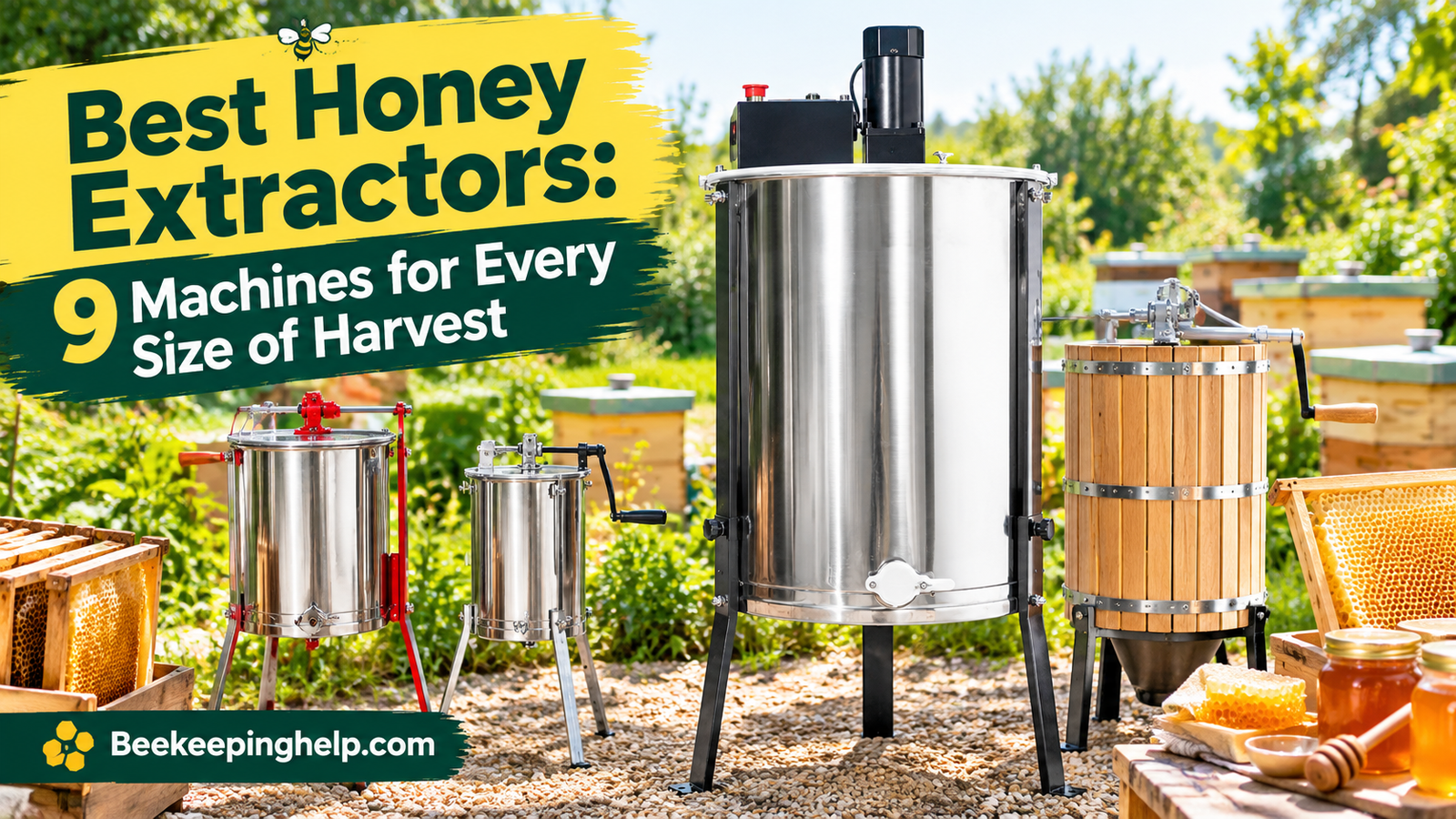
Best Honey Extractors: 9 Machines for Every Size of Harvest
Hand crank or motor, two frames or twelve, compact hobby drum or serious home setup — the right extractor turns harvest day from an ordeal into a satisfying afternoon.

Frames standing in the basket, ready to spin: the extractor does the work that once took a whole afternoon with a crush-and-strain bucket.
Why a Honey Extractor Changes Everything About Harvest Time
There is a moment in every beekeeper’s journey when the honey is capped, the supers are heavy, and the question arrives: how do I actually get the honey out of these frames? For a first harvest, many people crush and strain comb by hand — and quickly discover that it destroys comb the bees spent weeks building, makes a spectacular mess, and takes far longer than expected.
A honey extractor solves that problem elegantly. Instead of destroying the comb, it spins honey out of the cells by centrifugal force and hands the empty frames straight back to the colony. The bees reuse that comb rather than rebuilding it, which saves them enormous amounts of energy and nectar — and saves you from watching perfectly good wax go into the melting pot. It is one of those rare tools that benefits everyone in the arrangement.
But extractors are not all the same, and the differences matter more than the marketing suggests. Capacity is the obvious one: a two-frame machine and a machine that takes a dozen frames are built for completely different harvests. Then there is the drive — a hand crank you turn yourself versus a motor that spins while you attend to other tasks. There is the basket design that determines whether you must flip frames midway. And there is the small matter of how the machine assembles, cleans and stores, because an extractor that is a chore to live with ends up in the shed.
This guide covers nine of the most popular options across the whole range: the VEVOR 3 Frame Manual Honey Extractor, the VINGLI 2 Frame Manual Honey Extractor, the VIVO Electric Honey Extractor 8 Frame, the BeeTech 2/4 Frame Manual Honey Extractor Kit, the BeeCastle 4/12 Frame Electric Honey Extractor, the Honey Lake 3-Frame Electric Honey Extractor, the Goodland 3 Frame Manual Honey Extractor, the TRINFREE Electric PMSM Honey Extractor, and the Little Giant 2-Frame Honey Extractor. We will look at what each is genuinely good at, and where the trade-offs sit.
If you are still working toward your first harvest, it is worth stepping back to the bigger picture first. Our overview of beekeeping and the beginner’s roadmap in how to start beekeeping cover everything that has to happen before honey reaches the extractor, and our guide to the best beekeeping starter kits will help you get set up in the first place.
Shopping for an Extractor?
Compare manual and electric honey extractors side by side.
Check Price on AmazonQuick Comparison: Our Top Picks
All nine extractors in this guide appear in the table below so you can see the shape of the market before reading the full reviews. Descriptions reflect the general design and intended use of each machine; always confirm current specifications and included accessories on the product page before ordering.
| # | Image | Product | Key Specs | Verdict | Check Price |
|---|---|---|---|---|---|
| 1 |  |
Top PickVIVO Electric Honey Extractor 8 FrameBest Overall Electric |
|
The serious harvest workhorse that still fits home use. | Check Price on Amazon |
| 2 |  |
VEVOR 3 Frame Manual Honey ExtractorBest Manual Mid-Size |
|
A dependable hand-crank machine for steady home harvests. | Check Price on Amazon |
| 3 |  |
VINGLI 2 Frame Manual Honey ExtractorBest Compact Manual |
|
Small, simple, and perfect for a first harvest. | Check Price on Amazon |
| 4 |  |
BeeTech 2/4 Frame Manual Honey Extractor KitBest Convertible Manual |
|
Flexible frame loading that grows with your harvest. | Check Price on Amazon |
| 5 |  |
BeeCastle 4/12 Frame Electric Honey ExtractorBest for Big Harvests |
|
Serious capacity for beekeepers with real honey to move. | Check Price on Amazon |
| 6 |  |
Honey Lake 3-Frame Electric Honey ExtractorBest Compact Electric |
|
Motor power without the footprint of a big machine. | Check Price on Amazon |
| 7 | 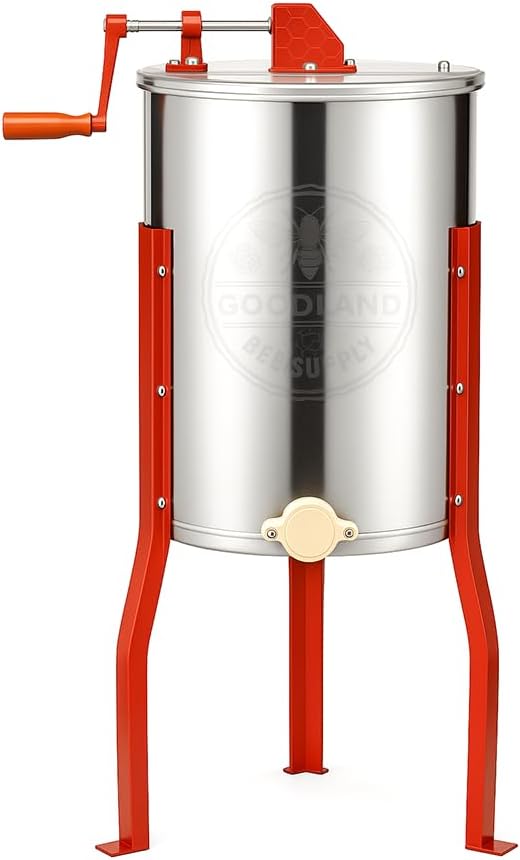 |
Goodland 3 Frame Manual Honey ExtractorBest Value Manual |
|
No-frills hand cranking that gets the job done. | Check Price on Amazon |
| 8 |  |
TRINFREE Electric PMSM Honey ExtractorBest Smooth Drive |
|
A refined motor for effortless, consistent extraction. | Check Price on Amazon |
| 9 |  |
Little Giant 2-Frame Honey ExtractorBest Trusted Compact |
|
A familiar name in a compact, straightforward machine. | Check Price on Amazon |
Compare the Full Range
Open listings to confirm current specs and what comes in the box.
Check Price on AmazonHow a Honey Extractor Actually Works
An extractor is a beautifully simple machine: a cylindrical drum, a central spindle, a frame basket inside, and something to turn it with. Spin the basket and centrifugal force pulls honey out of the open cells, where it runs down the drum wall and collects at the bottom. Open the honey gate at the base, and the honey flows out into your settling bucket. That is the whole idea, and everything else is refinement.
Tangential versus radial loading
The first big distinction is how frames sit in the basket. In a tangential arrangement, frames face the drum wall, so only one side empties at a time — you extract one side, then turn the frames around and spin again. In a radial arrangement, frames fan out like spokes, with both faces exposed to the outside; honey leaves both sides at once and you never have to flip anything. Radial machines are faster to operate, while tangential machines are simpler and gentler on older, softer comb.
Hand crank versus motor
A manual extractor is powered by your arm through a geared crank. That is honest work, but it is also completely controllable — you decide the speed, and you can ease into a full spin to protect wet comb. An electric extractor does the turning for you, which is a genuine relief during a large harvest and a pleasure if you are processing many supers in a day. Neither approach is universally better; it depends entirely on your volume.
Why speed control matters
Honey does not leave comb gracefully at full speed from a standing start. Freshly uncapped comb is soft, and forcing it to spin too fast too soon will blow out the cell walls and send wax into your honey. The correct approach is gradual: start slowly to clear the near side, build speed as the frame lightens, then reverse or flip if your machine requires it. This single technique accounts for most of the difference between clean, easy extraction and a drum full of wax fragments.
The parts worth noticing
Look for a stable base, a lid that keeps debris out, at least one honey gate with a decent opening, and legs or a stand that raise the drum so a bucket fits beneath the gate. Food-safe construction matters enormously since honey is going straight from these surfaces into jars. If you are curious about the wider hive system that produces these frames, our article on the parts of a beehive and the explainer on how a beehive works are excellent background reading.
Worth remembering: an extractor gives you liquid honey and intact comb, but the wax cappings still need handling. Most beekeepers collect and melt them into beeswax for candles and foundation — one of the quiet pleasures of harvest season.
See How Extractors Are Built
Compare drum designs and drive types across popular models.
Check Price on AmazonHow We Picked These Honey Extractors
Extractors sit in a category where the marketing numbers can mislead. Capacity claims, motor descriptions and bundle contents all vary, and a machine that sounds impressive on a listing may be frustrating in a garage on a warm evening. So rather than ranking by spec sheet, we evaluated these machines across the qualities that actually determine whether harvest day goes well.
Harvest volume compatibility
The first question is simply how much honey you are processing. A hobbyist with two hives and a hobbyist with twenty are shopping in different categories entirely, and a machine that is perfect for one will be miserable for the other. We judged each extractor against the kind of harvest it is clearly designed for, and we say so plainly in every review.
Handling and stability during operation
Extractors vibrate, especially as they come up to speed. The ones that feel solid on their stand, sit level on a real surface and do not wander across the floor make the entire process calmer. Stability also protects the comb inside — a wobbling machine is harder to speed up gently, and gentle speed is what keeps soft comb intact.
Drainage and workflow
Honey needs somewhere to go. The position, size and closure quality of the honey gate determine whether you are filling buckets neatly or mopping the floor. We also look at how easily the drum sits over a bucket or stand, how the lid works, and whether the basket can be removed for cleaning without a wrestling match.
Cleaning and storage practicality
An extractor is used for a few days a year and stored for the rest of it. Machines that come apart simply, wipe down quickly and pack away without fuss earn real credit here, because the cleanup is the part everyone underestimates. Sticky equipment that is hard to dry attracts moisture and bees, and that is reason enough to care.
Overall value across seasons
Value is not the cheapest purchase price. It is a machine that still works smoothly after many harvests, that you do not need to replace as your apiary grows, and that does not require constant tinkering. Robust construction and sensible design matter far more than a long accessory list.
How we describe products. Rather than quoting measurements or bundle counts that change without notice, we describe each extractor by its capacity, drive type and intended use. Always confirm current details on the product page. For the full picture of your first year of costs, see how much it costs to start beekeeping.
Ready to Compare Models?
Check current extractor options and see what each includes.
Check Price on AmazonManual vs Electric: Which Drive Suits the Way You Harvest
This is the decision that shapes everything else. Manual and electric extractors do exactly the same job — they spin honey out of comb — but they create completely different experiences, and matching the drive to your harvest size is the single most effective way to avoid buyer regret.
The case for a hand crank
Manual extractors are simple, dependable and free of electrical complications. There is nothing to plug in, nothing to fail at the worst possible moment, and no motor to worry about during cleanup. They are also wonderfully controllable: you feel the resistance of the comb through the crank, which makes it easy to ease into speed and protect delicate frames. For a handful of supers a season, turning a crank is satisfying rather than exhausting.
The case for a motor
Electric extractors earn their keep the moment your harvest grows. When you are processing multiple supers on a warm day, the difference between spinning with your arm and spinning with a switch is the difference between finishing comfortably and finishing exhausted. Motors also run at a steady speed, which suits consistent extraction once you have found the right setting for your comb.
Where each one struggles
Manual machines get tiring during big jobs, and that fatigue leads to shortcuts — too much speed, too little patience, comb blowouts. Electric machines add cost and complexity, and they need a sensible power setup in your processing area. Neither is a problem if you buy for your real harvest size rather than your imagined one.
A practical way to decide
Count the supers you realistically expect to process in a season and picture the afternoon. One or two supers, occasionally? Manual will suit you beautifully and cost less. Several supers, or regular harvests through the flow? Electric will feel like a gift to yourself. Many beekeepers also consider where their apiary is heading, since an extractor is a long-term purchase that outlasts several generations of hive equipment.
| Factor | Manual | Electric |
|---|---|---|
| Effort required |
|
|
| Speed control |
|
|
| Setup |
|
|
| Best harvest size |
|
|
| Best suited to |
|
|
Whichever drive you choose, the frames arriving at the extractor come from well-managed hives. Keeping colonies strong and productive is what fills supers in the first place — our guide to the best beekeeping hives is a good starting point, and if you are still building your setup, beehive types with pictures shows the systems that produce harvestable frames.
Choose Your Drive Type
Compare manual and electric extractors and find the right fit.
Check Price on AmazonBest Compact Manual Honey Extractors
For a first extractor, or for beekeepers running a couple of hives, compact manual machines hit a sweet spot. They are affordable to buy, easy to store, simple to clean and entirely within your control — and they handle the occasional harvest beautifully without demanding a permanent corner of the garage. These three cover the range from straightforward two-frame machines to a convertible kit.
| # | Image | Product | Key Specs | Check Price |
|---|---|---|---|---|
| 1 | |
VINGLI 2 Frame Manual Honey ExtractorBest for First Harvests |
|
Check Price on Amazon |
| 2 | |
Little Giant 2-Frame Honey ExtractorBest Trusted Name |
|
Check Price on Amazon |
| 3 | |
BeeTech 2/4 Frame Manual Honey Extractor KitBest Convertible Setup |
|
Check Price on Amazon |
Best for First Harvests
VINGLI 2 Frame Manual Honey Extractor
Your first harvest should feel exciting, not overwhelming — and a compact two-frame extractor is exactly the right companion for it. The VINGLI manual machine is built for the beekeeper with a couple of hives, a modest super or two, and a desire to understand extraction properly before scaling up. It is small enough to work in a domestic kitchen or garage, light enough to lift and store easily, and simple enough that there is genuinely nothing to figure out.
That simplicity is an underrated virtue. With only two frames in play, you can watch what happens inside the drum as you crank, learn how honey leaves the cells, and get a feel for the speed that suits your comb. Those lessons carry over directly to bigger machines later. Many experienced beekeepers still keep a small manual extractor around for the odd frame of wet comb, even after upgrading to a larger setup.
Key Features
- 2-frame capacity sized for small, occasional harvests
- Hand crank drive with direct control over spinning speed
- Compact body that stores easily between seasons
- Straightforward operation suited to a first-time harvester
- Drum and basket design that keeps comb accessible while you work
What We Like
- Ideal size for hobby apiaries and first harvests
- Easy to move, set up and put away
- Full control over spin speed protects comb
- Straightforward to clean after use
Keep in Mind
- Capacity suits occasional harvests rather than big ones
- Hand cranking takes time on large batches
- You may want a larger machine as your apiary grows
Who it’s best for: New beekeepers and small-apiary hobbyists who want a simple, space-friendly extractor for their first harvests.
Start Your First Harvest
See the VINGLI compact extractor and confirm the current details.
Check Price on Amazon
Best Trusted Name
Little Giant 2-Frame Honey Extractor
Some equipment brands have been part of farm and beekeeping life for long enough that their name alone carries reassurance, and Little Giant is one of them. Their 2-frame extractor is a compact, conventional machine of the kind generations of beekeepers learned on — a drum, a basket, a geared crank, and no surprises. For a beginner who wants equipment that behaves predictably, that familiarity is worth a lot.
Two-frame machines have a particular rhythm. You uncapping a pair of frames, lower them in, spin one side, flip, spin again, and repeat. It is unhurried work that suits a single hive or two, and it is genuinely pleasant when the weather is warm and the honey is flowing freely. Because the machine is compact, everything stays within arm’s reach, and the whole harvest fits comfortably on a kitchen table or a folding bench.
Key Features
- 2-frame capacity for small-scale, occasional harvesting
- Hand crank drive for straightforward, controlled spinning
- Conventional drum and basket layout that is easy to learn on
- Established brand with a long history in beekeeping equipment
- Compact proportions that suit limited storage space
What We Like
- Predictable, proven design
- Manageable size for home processing
- Good machine to learn extraction technique on
- Simple to keep clean and serviceable
Keep in Mind
- Limited to small harvests
- Manual turning adds time on busy days
- Bigger apiaries will outgrow it
Who it’s best for: Beekeepers who value a familiar, no-nonsense compact extractor from an established name.
Prefer a Proven Design?
Check the Little Giant 2-frame extractor and see current availability.
Check Price on Amazon
Best Convertible Setup
BeeTech 2/4 Frame Manual Honey Extractor Kit
The most common extractor regret is buying too small and replacing the machine a season later. The BeeTech 2/4 frame kit addresses that directly by offering a configurable arrangement — set up for a lighter load when the harvest is modest, or configured for a larger run when a strong flow fills several supers. That flexibility is worth more than it first appears.
As a kit, it also suits the beekeeper who wants their harvesting setup in one decision. Rather than buying an extractor and then discovering the missing accessories, a bundle approach gets you closer to a complete processing workflow immediately. For anyone still assembling the rest of their gear, our guide to the best beekeeping starter kits covers the equipment that comes before this stage.
Key Features
- Configurable 2/4 frame arrangement for flexible harvest sizes
- Hand crank drive with direct, gentle speed control
- Kit format covering more of the extraction workflow in one purchase
- Standard drum layout that suits common frame sizes
- A sensible middle ground between compact and full-size machines
What We Like
- Flexible capacity avoids buying twice
- Manual drive stays simple and dependable
- Bundle approach reduces follow-up shopping
- Good stepping stone as your apiary grows
Keep in Mind
- Larger batches still mean hand cranking
- Configuring takes a little attention on setup
- Storage space needed between harvests
Who it’s best for: Beekeepers who want a manual extractor that can flex between small and medium harvests without an early upgrade.
Want Flexible Capacity?
See the BeeTech 2/4 frame kit and check what is currently included.
Check Price on AmazonSmall manual extractors pair naturally with a well-organised processing space and a colony that keeps producing. If you are still placing your hives for a strong nectar flow, our guide to where to place a beehive covers the siting decisions that influence how much honey you actually have to extract.
Shopping Compact Extractors?
Compare 2-frame manual machines and kits in one search.
Check Price on AmazonBest 3-Frame Manual Honey Extractors
Move up one frame and the character of the machine changes. Three-frame extractors are the natural choice for the beekeeper who has moved past the experimental stage — a few hives, regular supers, and a harvest that is too big for a two-frame machine but not yet worth a motor. Both of these hand-crank machines offer that middle ground.
| # | Image | Product | Key Specs | Check Price |
|---|---|---|---|---|
| 1 | |
VEVOR 3 Frame Manual Honey ExtractorBest Manual Mid-Size |
|
Check Price on Amazon |
| 2 | |
Goodland 3 Frame Manual Honey ExtractorBest Value Manual |
|
Check Price on Amazon |
Best Manual Mid-Size
VEVOR 3 Frame Manual Honey Extractor
There is a comfortable middle ground in extraction equipment, and the VEVOR 3-frame manual machine sits squarely in it. Three frames is enough capacity to work through a decent super without constant reloading, yet the machine remains compact enough to operate in a home space and store without giving up half a shed. For a great many hobby beekeepers, this is the size that stays useful for years.
The hand crank keeps everything transparent. You feel the load through the gearing, you decide exactly how fast to build speed, and you can stop instantly if a frame sounds unhappy. That direct feedback is genuinely protective of comb, especially in a warm room where freshly uncapped wax is soft. It also makes the machine reliable — no power requirement, no electrical components near sticky surfaces, and no failure points on the one day of the year you really need the equipment to work.
Harvest day is easier when the rest of the season has gone well, and that starts with healthy, well-protected bees. Protective gear matters right through to the harvest, and our guide to the best beekeeping gloves and the bee suit review cover the working end of that.
Key Features
- 3-frame capacity that suits medium home harvests
- Hand crank drive with geared, controlled spinning
- Classic drum and basket arrangement for easy loading
- Honey gate at the base for clean draining into a bucket
- Manageable size for working in a domestic processing space
What We Like
- Practical capacity for regular hobby harvests
- Full control over speed protects delicate comb
- No power source required
- Comfortable to operate and store
Keep in Mind
- Hand cranking is tiring on very large harvests
- Big apiaries may want electric drive eventually
- Cleaning is a manual job after every session
Who it’s best for: Hobby beekeepers with a few hives who want a capable manual extractor without stepping up to a motor.
A Solid Mid-Size Choice
See the VEVOR 3-frame extractor and review the current listing.
Check Price on Amazon
Best Value Manual
Goodland 3 Frame Manual Honey Extractor
Not every piece of beekeeping equipment needs to be fancy — some just needs to do its job, season after season, without drama. The Goodland 3-frame manual extractor is exactly that kind of machine: a straightforward drum, a crank, and a basket designed to hold frames while honey spins out. For beekeepers who prize function over features, it is an appealing proposition.
What makes a simple extractor valuable is the attention it leaves you free to give the honey. With no settings to manage and no motor to monitor, you can focus on uncapping properly, loading frames carefully and keeping the process clean. Those are the habits that produce good honey, and they matter far more than any accessory list.
Key Features
- 3-frame capacity suited to home and small-apiary harvests
- Hand crank drive for simple, direct operation
- Uncomplicated construction that is easy to understand and maintain
- Drum layout that keeps frames accessible during processing
- Practical choice for beekeepers who want essential function only
What We Like
- Simple design with little to go wrong
- Good capacity for regular home harvesting
- Straightforward to set up and clean
- Focused on the job rather than extra features
Keep in Mind
- Manual effort adds up on large harvests
- Fewer conveniences than premium machines
- Check current bundle contents before ordering
Who it’s best for: Beekeepers who want a capable, no-frills manual extractor focused on straightforward harvesting.
Want Simple and Effective?
Check the Goodland 3-frame extractor and see current details.
Check Price on AmazonComparing 3-Frame Machines?
Compare manual extractors in the mid-size range side by side.
Check Price on AmazonBest Electric Honey Extractors
Once you are processing supers rather than frames, a motor stops being a luxury. Electric extractors hold a steady speed, let you step away to uncapping or bottling while the drum turns, and take the physical grind out of the biggest days of the beekeeping year. These four cover everything from compact home machines to serious high-capacity drums.
| # | Image | Product | Key Specs | Check Price |
|---|---|---|---|---|
| 1 | |
VIVO Electric Honey Extractor 8 FrameBest Overall Electric |
|
Check Price on Amazon |
| 2 | |
BeeCastle 4/12 Frame Electric Honey ExtractorBest High Capacity |
|
Check Price on Amazon |
| 3 | |
Honey Lake 3-Frame Electric Honey ExtractorBest Compact Electric |
|
Check Price on Amazon |
| 4 | |
TRINFREE Electric PMSM Honey ExtractorBest Smooth Drive |
|
Check Price on Amazon |
Best Overall Electric
VIVO Electric Honey Extractor 8 Frame
This is the machine that changes how a beekeeper thinks about harvest day. The VIVO 8-frame electric extractor takes a serious number of frames per load and turns them with a motor rather than your arm — and once you have experienced a harvest where the extractor works while you uncapping the next batch, going back to hand cranking feels unthinkable.
Eight frames per load is a meaningful step up in practical terms. It means the drum keeps working through a super without constant reloading, and the whole processing session moves at a pace that feels productive rather than endless. For beekeepers running several strong colonies — or anyone whose harvest has grown beyond the occasional bucket — this is the category where extraction becomes genuinely efficient.
There is also a workflow benefit worth naming. With the machine spinning on its own, you can keep uncapping, manage the honey gate, and filter as you go. A well-organised harvest is a clean harvest, and our guide to how to store honey covers what to do with the results once they start flowing.
Key Features
- 8-frame capacity for substantial home and semi-professional harvests
- Electric drive that keeps the drum spinning without manual effort
- Large drum volume that suits processing multiple supers per session
- Hands-free operation that lets you work on other parts of the process
- Standard layout suited to common hive frame formats
What We Like
- Motor drive makes big harvests comfortable
- Capacity that suits real honey production
- Lets you multitask while frames spin
- A long-term machine that grows with the apiary
Keep in Mind
- Needs space and a sensible power setup
- More to clean and store than a small manual machine
- Overkill for a single small hive
Who it’s best for: Beekeepers with several hives who want a capable electric extractor that makes serious harvests manageable.
Our Top Pick Overall
See the VIVO 8-frame electric extractor and confirm current details.
Check Price on Amazon
Best High Capacity
BeeCastle 4/12 Frame Electric Honey Extractor
Some beekeepers reach the point where harvest is no longer an afternoon — it is a production run. The BeeCastle 4/12 frame electric extractor is built for exactly that reality, with a configurable, high-capacity arrangement that lets you load a large number of frames per cycle. If you are running a good number of colonies or supplying honey beyond your own kitchen, capacity stops being a convenience and becomes a necessity.
Configurable capacity also means flexibility across the season. Early flows might not fill the drum, while a strong late-season super certainly will. Being able to load differently depending on the day keeps the machine useful through every stage of the harvest rather than only at peak.
Of course, high volume goes hand in hand with keeping colonies productive and well managed. Understanding what is happening inside the hive — including what drives bees to fill supers in the first place — makes you a better harvester. Our explainers on dearth and swarming cover the seasonal patterns that shape your honey crop.
Key Features
- Configurable 4/12 frame arrangement for high-volume processing
- Electric drive that keeps large loads spinning smoothly
- Generous drum capacity for processing supers in fewer cycles
- Suited to beekeepers with many colonies or regular harvests
- Standard frame compatibility for straightforward loading
What We Like
- Real capacity for serious honey production
- Configurable loading across different harvest sizes
- Motor drive that saves hours of cranking
- Room to grow without replacing the machine
Keep in Mind
- Bulky to store between seasons
- Requires a proper processing space
- More machine than a hobbyist with one hive needs
Who it’s best for: Established beekeepers who process large harvests and want capacity without compromise.
Need Serious Capacity?
Check the BeeCastle electric extractor and review the current configuration.
Check Price on Amazon
Best Compact Electric
Honey Lake 3-Frame Electric Honey Extractor
The gap in the market is obvious once you see it: beekeepers who want motor-driven convenience but have neither the harvest volume nor the floor space for a huge drum. The Honey Lake 3-frame electric extractor fills that gap neatly. It gives you the ease of powered spinning in a machine sized for a home apiary, which makes it one of the most approachable electric options available.
Motor drive at this scale is genuinely pleasant. You load a few frames, set the machine going, and the honey starts running while you attend to the next uncapping task. It removes the most tiring part of extraction — the repetitive cranking — while keeping the whole process compact and manageable in a normal domestic space.
Key Features
- 3-frame capacity sized for home apiary harvests
- Electric drive for effortless, consistent spinning
- Compact proportions that suit smaller processing spaces
- Straightforward loading and draining workflow
- A gentle introduction to powered extraction
What We Like
- Motor convenience in a manageable size
- Fits comfortably in a home workspace
- Takes the effort out of routine harvests
- Good stepping stone before a bigger machine
Keep in Mind
- Capacity suits small to medium harvests
- Still needs a power source nearby
- Large apiaries will want more frames per load
Who it’s best for: Hobby beekeepers who want the convenience of an electric extractor without a large, bulky machine.
Want Motor Power at Home?
See the Honey Lake 3-frame electric extractor and check details.
Check Price on Amazon
Best Smooth Drive
TRINFREE Electric PMSM Honey Extractor
Not all motors feel the same, and this is where the TRINFREE stands out. Built around a PMSM drive — the type named right in the product — it is designed for the kind of smooth, steady rotation that makes extraction feel effortless. Anyone who has used a machine that shudders or hunts for speed will appreciate the difference immediately.
Smooth rotation is not just about comfort; it is kinder to comb. A drum that builds speed evenly puts less sudden stress on soft, freshly uncapped frames, which means fewer blowouts and cleaner honey. It also makes the machine quieter and more pleasant to work alongside for the length of a processing session, which on a big harvest day is a longer stretch than most people expect.
Comfort during harvest is worth pursuing, but so is safety and ease during every other part of the season. Protective equipment that fits well keeps inspections calm and quick — see our bee suit review and the guide to washing a bee suit if yours is due a refresh.
Key Features
- Electric PMSM drive for smooth, consistent rotation
- Hands-free spinning suited to longer processing sessions
- Steady speed that treats delicate comb gently
- Quiet operation that makes harvest work more pleasant
- Design suited to beekeepers who value refinement in their tools
What We Like
- Smooth, steady drive that is gentle on comb
- Effortless operation through long harvest days
- Quieter, more controlled spinning
- A refined choice for serious hobbyists
Keep in Mind
- Electric machines need sensible power access
- Premium drive adds to the purchase decision
- Confirm current configuration on the listing
Who it’s best for: Beekeepers who want a refined, smooth-running electric extractor for effortless harvesting.
Prefer a Smooth-Running Motor?
Check the TRINFREE electric extractor and see the current listing.
Check Price on AmazonElectric extractors shine when you have a full day of processing ahead. Making that day comfortable also means good protective gear for the frames you pull from the hives beforehand — see our guide to the best beekeeping gloves and how to clean beekeeping gloves so your kit stays serviceable.
Shopping Electric Extractors?
Compare motor-driven machines across every capacity.
Check Price on AmazonFrame Count and Sizing: How Big an Extractor Do You Actually Need?
Capacity is the number on the listing that people argue about most, and it is also the one most often bought badly. The instinct is to buy the biggest machine you can afford, reasoning that you will grow into it. Sometimes that works. Often it leaves you with a drum that half-fills every harvest and takes up half the shed the rest of the year.
Match the machine to supers, not frames
The useful way to think about capacity is in supers. A super is the box you pull off the hive full of honey frames, and the number of supers you harvest in a session determines how much time you spend at the extractor. If a machine takes many frames per load, you can process a whole super in one or two cycles. If it takes only two, you will be loading and unloading repeatedly — which is fine occasionally and tedious annually.
The honest sizing guide
For one or two hives with an occasional super, a compact two-frame machine such as the VINGLI or Little Giant is genuinely adequate and pleasant to use. For a handful of hives producing several supers, a three-frame machine like the VEVOR or Goodland, or a convertible option like the BeeTech, keeps the workload sensible. For many colonies or regular large harvests, the electric machines — the Honey Lake for moderate volume, the VIVO 8-frame for substantial work, and the BeeCastle 4/12 for serious production — are where extraction becomes efficient.
Storage is part of the calculation
An extractor lives in storage for the vast majority of the year. Before buying a large drum, honestly assess where it will stand between harvests, how it will be cleaned and dried, and whether you can move it when full. Beekeepers who plan storage alongside purchase almost never regret the size they chose.
Think about where your apiary is heading
It is worth buying for where you will be in a few seasons rather than only where you are today — within reason. If you know you intend to expand from two hives to six, a mid-size machine makes sense. If you genuinely expect to stay small, a compact manual extractor will give you years of good service without the compromise of an oversized drum.
| Harvest Scale | Drive Type | Capacity to Look For |
|---|---|---|
| Occasional, one super at a time |
|
|
| Regular home harvests |
|
|
| Several supers per session |
|
|
| Large or semi-professional |
|
|
| Still growing your apiary |
|
|
Sizing also connects back to how many hives you realistically want to keep. Our guide to keeping bees in your backyard and the overview of the best beekeeping hives help you picture the apiary your extractor will serve.
Find Your Ideal Size
Compare extractor capacities and pick the machine that fits your harvest.
Check Price on AmazonMaterials, Hygiene and Food Safety in Honey Processing
Honey is food. It is one of the most forgiving foods in existence — its low moisture and natural acidity make it remarkably resistant to spoilage — but it still deserves to be handled with the same respect you would give anything heading for a jar on the breakfast table. That means paying attention to what your extractor is made of and how you keep it clean.
Food-safe surfaces matter
Every surface honey touches should be suitable for food contact. Metal drums and baskets are the norm in extraction equipment for exactly this reason: they are non-porous, easy to clean and do not hold odours or residues. When you are comparing machines, look for clear construction materials and think about how each surface will be washed and dried after use.
Clean equipment, clean honey
The enemy of good honey in the processing room is moisture and residue left behind between sessions. Equipment that has been washed but not thoroughly dried can introduce water into honey, which is the one thing genuinely capable of spoiling it. The routine is simple: clean promptly after use, rinse thoroughly, and dry completely before storing.
Keeping bees out of the processing area
Nothing attracts a colony’s attention like an open drum of honey. Process indoors or in an enclosed space where possible, cover containers between steps, and clean spills immediately. Robbing behaviour around an extraction site can be intense and stressful for your colonies — our explainer on robbing in beekeeping covers why it happens and how to prevent it.
Wax, filters and the finishing steps
Most of what separates honey from the jar is a few simple pieces of equipment: coarse filters for the big wax fragments, finer strainers for the small ones, and a settling container that lets air bubbles rise before bottling. These are inexpensive and make a dramatic difference to the clarity of your final product. We cover the full workflow in the filtering section below.
Good habit: treat your extractor like cookware. Wash it after every use, dry it thoroughly, and store it covered. Machines looked after this way last for many seasons and never contaminate a harvest.
Complete Your Processing Setup
Compare food-safe buckets, filters and bottling equipment.
Check Price on AmazonUncapping: The Step That Comes Before Spinning
Extractors only work on comb whose cells have been opened. Bees seal ripe honey under a thin layer of wax called a capping, and until that layer is removed, the honey stays exactly where the bees left it. Uncapping is therefore the gateway to the entire harvest — and the part of the process where technique pays the biggest dividend.
The tools of the trade
Uncapping is done with heated or cold knives, forks and scratchers, depending on who you ask and how deep the cappings sit. A long-bladed knife drawn across the face of the frame removes most of the wax in a single pass; an uncapping fork cleans up any cells left sealed. Warm tools glide more easily, which is why many beekeepers work with heated equipment or dip the blade in hot water between passes.
Working without damaging comb
The goal is to remove wax without gouging the comb beneath. Cut shallow, follow the plane of the frame face, and resist the urge to dig at stubborn patches. Comb that survives extraction intact is worth a great deal — it saves the colony weeks of work next season and gets them back to foraging sooner. That benefit is the entire reason extractors exist rather than crushing and straining.
Handling the cappings
Everything you shave off is beeswax loaded with honey. Let it drain in a warm room over a bucket, then press or melt it to recover both the honey and the wax. Nothing is wasted, and the wax itself is valuable for candles, cosmetics and foundation.
Staying comfortable while you work
Uncapping is sticky, repetitive work, and doing it comfortably makes the whole harvest better. Set up at a sensible height, keep tools and containers within reach, and wear something you do not mind washing. Beekeepers who plan the processing station before the first frame arrives have a much better day than those improvising at the last minute.
If you are still learning the equipment side of the hobby more broadly, our overview of how beehives are made gives useful context for how frames and comb come to exist in the first place.
Get the Right Uncapping Tools
Compare uncapping knives, forks and scratchers for smoother harvesting.
Check Price on AmazonFiltering, Settling and Bottling: From Drum to Jar
The extractor gets honey out of the comb, but it does not deliver it jar-ready. Straight from the drum, honey carries wax fragments, the odd bee part and a great many air bubbles whipped in during spinning. What happens next — filtering and settling — is what turns a messy harvest into the clear, beautiful jars that make beekeeping so rewarding.
Filtering in stages
Start coarse and finish fine. A first pass through a coarse strainer catches the big wax pieces; a second pass through a finer filter removes the smaller particles. Trying to do everything in one fine filter is a frustrating exercise in blocked mesh. Two stages is faster, cleaner and gives a noticeably better result.
Letting the honey settle
After filtering, honey needs time to rest. Air bubbles introduced during spinning rise to the surface over a day or two, and any remaining fine particles sink. A settling bucket with a honey gate at the base is the standard tool for this: let the honey stand, then draw it off into jars from the bottom, leaving the froth and sediment behind.
Bottling well
Fill jars cleanly, seal them promptly and label them while you remember what came from where. Honey bottled from a settled, well-filtered batch looks and pours beautifully, and the difference between a rushed job and a careful one is immediately obvious in the jar.
Storing your harvest
Honey stores for a very long time when kept sealed, dry and at a steady temperature. Crystallisation is natural and not a sign of anything wrong — gentle warmth returns it to liquid. Our full guide to how to store honey covers every detail, and if you find yourself reading about the craft side of beekeeping more deeply, our pick of the best beekeeping books is worth a look.
Filter and Bottle Like a Pro
Compare settling buckets, filters and honey jars for your harvest.
Check Price on AmazonCleaning, Storage and Long-Term Care of Your Extractor
The harvest lasts a day; the extractor lasts for years. How you treat it between those two points determines whether it remains a pleasure to use or becomes the machine everyone dreads dragging out. Fortunately, good extractor care is mostly common sense and a little discipline.
Clean immediately after use
Honey is far easier to remove while it is still warm and fluid. Rinse the drum, basket and gate as soon as you finish, using warm water and a soft cloth. Avoid harsh detergents that leave residues or odours, and take particular care around the honey gate, where sticky residue accumulates fastest.
Dry completely before storing
Water left inside a drum is an invitation to mildew and off flavours. Stand components to air dry fully in a warm, ventilated space, and only pack the machine away once everything is completely dry. This single step prevents most long-term problems.
Store covered and protected
Extractors prefer a clean, dry, dust-free environment. Keep the lid on, cover the drum if your storage area is exposed, and place it where it will not be knocked or bent. Protecting the honey gate from accidental knocks is worth a moment’s thought too, since it is the most exposed working part.
Check the moving parts
Before each harvest, give the machine a quick once-over. Spin the basket by hand, check that nothing is bent or rubbing, and confirm the gate closes cleanly. Machines that are inspected lightly each season rarely fail when you need them. This habit extends to all your beekeeping equipment — protective gear included, which is why guides like washing a bee suit matter as much as extractor care.
Equipment that is well cared for pays you back in reliability, and reliability pays you back in honey. If you are weighing whether the whole venture is worthwhile financially, our guide to whether beekeeping is profitable offers grounded thinking.
Keep Your Gear in Shape
Compare cleaning supplies and covers for off-season equipment care.
Check Price on AmazonCommon Mistakes When Buying a Honey Extractor
Nearly every extractor regret traces back to a handful of assumptions made at the moment of purchase. The good news is that each one is easy to avoid once you know to look for it.
Buying far too large
The big drum looks like better value until you are half-filling it every harvest and finding somewhere enormous to store it. Buy for your realistic harvest, with a modest allowance for growth.
Buying far too small
The opposite error is just as common. If you are processing several supers a session, a two-frame manual machine will turn a joyful day into a slog. Count the supers you expect to harvest and choose accordingly.
Choosing drive type by budget alone
A manual extractor that leaves you exhausted is not a bargain. If your harvests are substantial, the comfort of an electric drive is worth planning for — even if it means buying a little later.
Ignoring storage and cleaning practicality
A machine that is hard to clean or impossible to store becomes a machine you resent. Consider the reality of the other 360 days of the year before you buy.
Forgetting the rest of the workflow
An extractor is only one link in the chain. Uncapping tools, filters, settling buckets and jars all need to be in place before the first honey gate opens. Planning the whole workflow at once saves frantic last-minute shopping.
Spinning too fast, too soon
This is a use mistake rather than a buying one, but it ruins enough harvests to mention. Build speed gradually and let the honey leave the cells on its own schedule. Soft comb cannot withstand a sudden burst of centrifugal force.
Waiting too long to plan the harvest itself
Honey does not wait for your free weekend. When supers are capped and heavy, you need the equipment, the space and the time lined up. Beekeepers who plan the harvest before the flow arrives have a much better experience — and the same forward thinking applies to the hive side of the hobby, from buying bees to choosing a nuc for a strong start.
Buy the Right Extractor First Time
Compare machines across every capacity and drive type.
Check Price on AmazonFrequently Asked Questions About Honey Extractors
What is the best honey extractor for a beginner?
A compact manual machine is the friendliest place to start. Two-frame extractors like the VINGLI or Little Giant suit first harvests perfectly, while a three-frame manual such as the VEVOR gives you room to grow without moving to a motor straight away.
Manual or electric — which should I choose?
Match the drive to your harvest size. A few supers a season suit a hand crank beautifully; several supers per session are far more comfortable with a motor. Electric machines also let you multitask while frames spin.
How many frames should my extractor hold?
Think in supers rather than frames. If a machine can process most of a super in one or two loads, your harvest day stays manageable. Compact machines handle occasional supers; mid-size and electric machines handle regular, larger harvests.
Do I need to uncap frames before extracting?
Yes. Honey stays sealed under a wax capping until it is removed, and an extractor will only pull honey from opened cells. Uncapping knives, forks or scratchers are the standard tools for the job.
Can I damage comb by spinning too fast?
Absolutely — this is the most common extraction mistake. Soft, freshly uncapped comb can blow out under sudden centrifugal force. Build speed gradually and let the honey drain out gently before increasing.
What is the difference between radial and tangential extraction?
Radial baskets expose both faces of the frame at once, so honey leaves both sides in a single spin. Tangential baskets face one side outward at a time, requiring frames to be turned halfway through. Radial is faster; tangential is gentler on old comb.
How do I clean a honey extractor?
Wash it with warm water and a soft cloth straight after use, paying attention to the honey gate, then rinse and dry every part completely before storing. Avoid harsh detergents and never put the machine away damp.
Do I need filters and a settling bucket as well?
Yes, ideally. Filtering removes wax particles in stages, and a settling bucket lets air bubbles rise before bottling. Together they are what make honey clear and presentable in the jar.
How much honey can I expect from a hive?
It varies enormously with your region, the season, the strength of the colony and the local nectar flow. Rather than planning around a specific figure, size your equipment for the harvest you realistically handle and expand from there.
Can I use an extractor for any frame size?
Most extractors are built around the standard hive formats in common use. Check that your machine suits the frames you keep before buying, especially if you run a mix of box sizes in your apiary.
Is extracting honey a difficult job?
It is straightforward once you have seen it done, though it is sticky and takes longer than most people expect. Plan your workspace, keep tools within reach, and give yourself a full unhurried afternoon.
What else do I need for harvest day?
Uncapping tools, coarse and fine filters, a settling bucket with a gate, clean jars, and plenty of cloths. Protective gear is useful when you pull the supers in the first place — see our bee suit review for what to wear.
Still Weighing Your Options?
Revisit the comparison table or browse the full range of extractors.
Check Price on AmazonConclusion: Choose the Extractor That Matches Your Harvest
A honey extractor is one of the most satisfying purchases in beekeeping. It transforms a process that once meant destroying comb into one that protects it, speeds up harvest day dramatically, and produces jars of honey you can be genuinely proud of. The only real question is which machine fits the way you keep bees.
For most beekeepers with a serious home apiary, the VIVO Electric Honey Extractor 8 Frame is our overall pick — the capacity and motor drive make real harvests comfortable. If you want manual control at a practical size, the VEVOR 3 Frame Manual is a dependable workhorse, while the VINGLI 2 Frame and the Little Giant 2-Frame are excellent first machines for smaller harvests. The BeeTech 2/4 Frame Kit offers flexible capacity, the Goodland 3 Frame keeps things simple and focused, the Honey Lake 3-Frame Electric brings motor convenience to home scale, the TRINFREE PMSM offers beautifully smooth running, and the BeeCastle 4/12 Frame Electric handles harvests at genuine production scale.
Whichever you choose, buy for your real harvest, plan the whole processing workflow, and take care of the machine afterwards. Do those three things and harvest day becomes one of the best days of the beekeeping year.
Ready for Your Best Harvest Yet?
Compare the extractors in this guide and order yours today.
Check Price on AmazonBefore the honey ever reaches the extractor, there is a season of hive management behind it — and the regulations that come with keeping bees deserve attention too. Our guide to beekeeping laws by state covers the rules in your area, while beekeeping insurance is worth considering as your operation grows.