How to Buy Bees for Beekeeping: The Complete Buyer’s Guide
Everything you need to know before you spend a single dollar on your first colony — from choosing the right type of bee to picking a supplier you can actually trust.
1. What “Buying Bees” Really Means
If you’re wondering how to buy bees for beekeeping, the first thing to understand is that “buying bees” almost never means picking up a jar of insects off a shelf. It means choosing a starter colony format, working with a breeder or supplier months in advance, and coordinating a pickup or delivery window that lines up with your local climate. New beekeepers are often surprised that ordering bees looks more like reserving a seasonal produce box than shopping on a marketplace — you commit early, you wait, and then everything happens fast once your bees are ready.
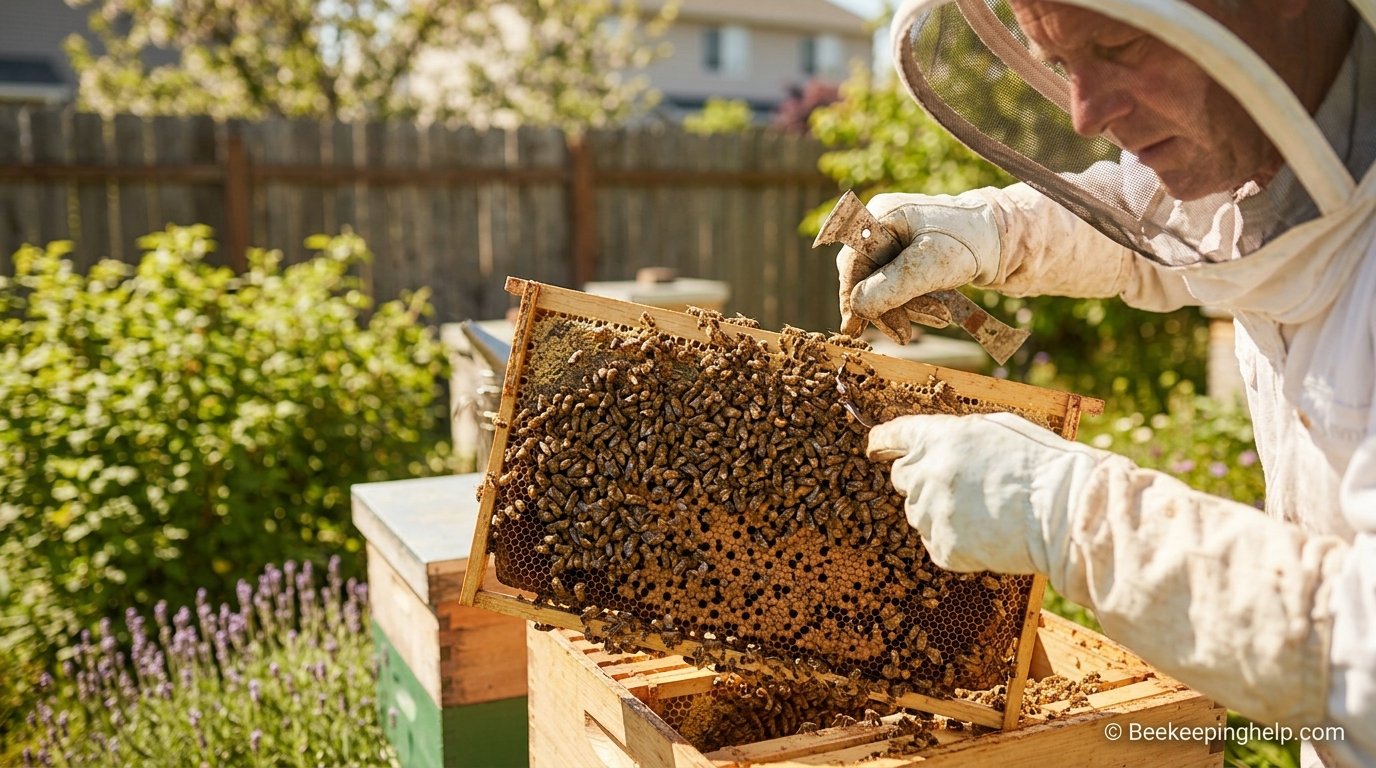
Before you get into the mechanics of ordering, it helps to understand how a hive actually functions and why the way it’s structured affects what you’re buying. If you haven’t already looked into how a beehive works, it’s worth a quick detour, because the queen, the workforce of worker bees, and the physical hive box all have to come together correctly for a purchased colony to thrive.
Buying bees is really a three-part decision: what type of starter colony to buy (package, nucleus, or full hive), which breed or strain of honey bee suits your climate and goals, and which supplier you trust enough to hand over your money to months before delivery. Get those three decisions right and the rest of the process — paperwork, transport, and hive prep — is mostly logistics. Get them wrong, and you can lose an entire season’s investment to a weak queen, a diseased colony, or a supplier who never ships at all.
This guide walks through the entire buying process in order, the same way an experienced mentor would walk a first-time buyer through it: understanding the options, working through eight concrete purchasing steps, avoiding the mistakes that trip up beginners, and comparing where you can actually buy from. If you’re completely new to the hobby, our guide to starting beekeeping is a good companion piece to read alongside this one.
It also helps to know what you’re actually purchasing on a biological level. A honey bee colony functions as a single organism made up of thousands of individuals: one queen laying eggs, a rotating workforce of female workers doing every job from nursing brood to foraging for nectar, and a seasonal population of male drones. When you buy a package or a nuc, you’re not just buying “bees” — you’re buying a functioning social structure that needs the right ratio of workers to brood, a mated queen the colony has accepted, and enough stored food or syrup support to get through the first few vulnerable weeks. Suppliers who understand this will talk about queen lineage and colony strength, not just bee count, and that’s usually a good sign you’re dealing with someone who takes the biology seriously rather than treating it as a simple retail transaction.
It’s also worth setting expectations early: buying bees is the beginning of a relationship with a living colony, not a one-time purchase you can set and forget. The choices you make at the buying stage — format, breed, supplier, and timing — ripple through the entire first season, affecting everything from how quickly the colony builds up to how well it survives its first winter. Treating this research phase with the same seriousness you’d give to buying a car or a major appliance will save you time, money, and frustration later.
2. Package Bees vs Nucs vs Full Hives
Every supplier will ask you the same first question: package, nuc, or full colony? Each option has a different price point, arrival timeline, and success rate, and picking the wrong one for your situation is one of the most common early mistakes.
A package is a screened box containing loose worker bees (usually two or three pounds, roughly 10,000–12,000 bees) and a separately caged queen, with no comb, no brood, and no stored food. A nucleus colony — almost always called a nuc — is a small, already-functioning colony on four or five frames, complete with drawn comb, brood at various stages, food stores, and a laying queen the bees have already accepted. If the term is new to you, our explainer on what a nuc is in beekeeping breaks down exactly what you’re getting for the price. A full hive or established colony is a mature, overwintered setup, usually sold by a beekeeper who is downsizing or retiring, complete with drawn comb across multiple boxes and an existing population.
| Format | What’s Included | Typical Price Range | Best For | Establishment Speed |
|---|---|---|---|---|
| Package Bees | Loose bees + caged queen, no comb | $$ (lowest) | Buyers on a budget, wide breed selection | Slowest — must draw comb from scratch |
| Nucleus Colony (Nuc) | 4–5 frames, brood, comb, laying queen | $$$ | Most first-time buyers | Fast — colony is already functioning |
| Full/Established Hive | Multiple boxes, mature population | $$$$ (highest) | Buyers wanting immediate honey production | Immediate, but higher disease-transfer risk |
Package Bees — Pros
- Lowest upfront cost
- Widest choice of bee breeds and queen lines
- Easier and cheaper to ship long distances
- No old comb, so no inherited pests or disease
Package Bees — Cons
- Slower to build up; may not produce surplus honey in year one
- Queen acceptance isn’t guaranteed
- Bees must draw all new comb before storing food
Nucs — Pros
- Already functioning as a colony
- Queen is proven and accepted
- Builds up and often produces honey the same season
Nucs — Cons
- More expensive than packages
- Harder to ship long distances (usually local pickup)
- Frames may need to match your hive’s frame size
If you’re still deciding what kind of hive box you’ll be installing any of these into, it’s worth reading up on Flow Hive vs Langstroth systems and browsing beehive types with pictures before you commit to a purchase, since nucs in particular are usually sold on frames sized for one specific hive system.
Price alone shouldn’t decide which format you buy. A cheap package from a supplier who can’t answer questions about queen genetics is a worse deal than a slightly pricier nuc from a breeder who tracks mite resistance and overwintering survival across their stock. Ask any supplier, regardless of format, where their queens originate — whether they raise their own breeder queens or purchase them from a larger queen producer — and how they select for traits like gentleness, honey production, and disease resistance. A supplier who can answer in specifics rather than generalities is almost always the better buy, even at a higher price point.
1Assess Your Goals, Space, and Local Regulations
Before you contact a single supplier, work out three things: why you want bees (pollination, honey, hobby, or a mix), how many colonies your space can realistically support, and whether your city, county, or homeowners’ association actually allows beekeeping. Many buyers skip this step and only discover a zoning restriction or a hive-count limit after they’ve already paid a deposit — at which point refunds are rare.
A good rule of thumb for a backyard beginner is to start with two colonies rather than one. Two hives let you compare behavior side by side and, if one colony loses its queen, you have a frame of eggs from the other to save it. Larger lots can support more, but urban and suburban keepers should check local ordinances first — some municipalities cap the number of hives per lot or require a minimum setback from property lines.
Talk to your immediate neighbors before your bees arrive, even if you’re not legally required to. A quick conversation about hive placement and flight paths prevents most of the neighbor complaints that eventually escalate into code-enforcement calls. Position the hive entrance to face away from walkways, patios, and neighboring yards where possible, and consider a low hedge or fence panel a few feet in front of the entrance — it forces bees to fly up and over foot-traffic height almost immediately, which meaningfully reduces the odds of anyone walking through the flight path.
Also plan your water source and flight-path direction now — bees need a nearby water supply and generally do best facing a hive entrance away from foot traffic. For more on how the internal box design supports this planning, see the parts of a beehive and their functions.
2Choose the Right Bee Breed for Your Climate
Not all honey bees behave the same way, and the breed you buy should match your climate and temperament preferences, not just whatever a supplier has in stock. Italian bees are prolific, gentle, and popular with beginners but can be prone to robbing in a dearth. Carniolans build up quickly in spring and are known for calm temperament and strong winter clustering, making them a favorite in colder regions. Russian bees show strong resistance to varroa mites and manage brood rearing conservatively during nectar shortages, which matters if you live somewhere with an unpredictable nectar dearth season.
Ask your supplier which breed they raise and why they recommend it for your region — a good breeder will ask about your winters before recommending a strain, not just sell you whatever queens they happen to have that week.
Beyond the three breeds above, you’ll also encounter hybrid stock and locally adapted “mutt” bees that breeders sell simply because they’ve performed well in that specific area over multiple generations. These local crosses aren’t a registered breed at all, but they’re often an excellent choice precisely because they’ve already been naturally selected for your climate’s winters, dearth periods, and local forage. Don’t dismiss a supplier just because they can’t give you a purebred name — ask instead how the stock has performed locally over the past few winters, which is a far more useful data point than a breed label alone.
3Find and Vet a Reputable Supplier
This is the step most likely to make or break your first season. Reputable bee suppliers fall into three broad categories: certified queen and package breeders who ship regionally or nationally, local nuc producers who sell face-to-face, and beekeeping associations or clubs that broker sales between members. Whichever route you choose, vet the supplier the same way you’d vet any high-value purchase from a stranger.
Look for suppliers who are registered with their state apiary inspection program, who can clearly explain where their queens come from, and who publish a real replacement or guarantee policy rather than a vague promise. Ask fellow keepers in local Facebook groups or club meetings which suppliers they’ve used more than once — repeat customers are the strongest signal of reliability. Avoid any seller who can’t answer basic questions about mite treatment history or who pressures you to pay the full balance immediately with no receipt or written order confirmation.
It’s also reasonable to ask for a small deposit structure rather than full payment upfront, and to get delivery windows, replacement policy, and price all confirmed in writing — even a simple email exchange counts. Suppliers who sell out every year and have a multi-year track record are generally worth the wait if their current list is full; it’s usually better to reserve a spot on next year’s list with a proven breeder than to settle for an unknown seller just to get bees this season.
4Check Health Certifications and Inspection Records
Every reputable bee sale should come with, or at minimum reference, a state apiary inspection certificate confirming the colony was checked for American foulbrood, small hive beetle infestation levels, and other reportable pests and diseases before sale. Interstate shipments in particular usually require this documentation to cross state lines legally.
Don’t be shy about asking a supplier directly: “Can you send me a copy of your most recent inspection certificate?” A trustworthy breeder will have this ready. If they hesitate, treat it as a warning sign rather than an inconvenience — importing a hidden case of foulbrood or a mite bomb into your apiary can wipe out every colony you own, not just the new one.
Beyond the certificate itself, ask when the last mite count was taken and what treatment, if any, was used. Varroa mite loads that look manageable at the point of sale can spike within weeks under stress, so knowing the recent treatment history helps you plan your own first mite check after installation rather than guessing at a random interval. If a supplier can’t tell you their most recent mite count at all, budget for testing the colony yourself within the first two weeks of ownership.
5Time Your Order With the Beekeeping Season
Bee suppliers sell out of spring packages and nucs months in advance — often by late winter for delivery in April or May, depending on your region’s nectar flow. Ordering late usually means settling for whatever breed is left, or waiting until next year. As a rule, place your order as soon as a supplier opens their list for the season, even if delivery is still months away.
Timing also matters for colony behavior after arrival. Installing bees too early into a cold snap, or too late into a nectar dearth, both stress a young colony. It’s worth reading about swarming and robbing behavior so you understand the seasonal risks that follow installation, especially if you’re buying a package rather than an established nuc.
Regional nectar flow calendars vary widely, so the “right” window in one state can be weeks off from another. Rather than relying on a generic calendar date, ask your supplier or local bee club when packages and nucs typically go out in your specific area, and cross-reference that against your last expected frost date. Installing too far ahead of the first real nectar flow forces you into heavier syrup feeding for longer, while installing after the flow has already started means the colony misses its best early build-up window entirely.
6Budget for Bees and Hidden Startup Costs
The bees themselves are often the smallest line item in a first-year budget. Hive boxes, frames, foundation, a smoker, a suit, a hive tool, and a feeder typically cost more combined than the colony you’re putting inside them. Buyers who budget only for the bees are frequently caught off guard when the full setup bill arrives.
For a realistic full breakdown, see our guide on how much it costs to start beekeeping, and if you’re weighing whether the hobby is worth the investment at all, our piece on how hard it is to start beekeeping covers the time commitment alongside the cost.
Beyond the one-time equipment purchase, build in a small recurring budget for consumables: sugar for syrup, smoker fuel, mite treatments, and eventually replacement frames or foundation as old comb gets rotated out. None of these individually cost much, but skipping them in your first-year budget is a common reason new keepers feel blindsided by ongoing costs after the initial setup is already paid for.
7Arrange Safe Pickup or Shipping
Packages are commonly shipped through the mail or a dedicated bee-freight network and arrive in ventilated screened boxes; nucs are almost always picked up locally because the frames and live brood don’t travel well over long distances or multiple days in transit. Either way, plan the logistics before order day, not after.
If you’re driving bees home yourself, keep the vehicle’s interior temperature moderate, never leave a package in direct sun or a hot trunk, and mist packages lightly with sugar water if the trip runs long. On arrival, install the colony into a hive body that’s already partially set up — this is also the point where reviewing how to make a beehive or how beehives are made pays off, since you’ll want frames and foundation ready before the bees are in hand.
If you’re picking up a nuc, ask the supplier in advance whether they want their nuc box returned — many local breeders lend out the wooden nuc box itself and expect it back once you’ve transferred the frames into your own hive, sometimes with a small deposit attached. Confirming this ahead of pickup day avoids an awkward conversation in the parking lot with a car full of bees.
8Prepare Your Hive Before the Bees Arrive
The single biggest predictor of a smooth installation is having everything ready before the bees show up, not scrambling once they’re in the driveway. That means an assembled hive body, a smoker loaded with fuel, a properly fitted suit, and a feeder ready to go.
Paint or seal exterior hive boxes ahead of time if needed — see how to paint a beehive for guidance on colors and finishes that won’t harm the bees. Make sure your smoker fuel is sorted out in advance by reading what to use in a bee smoker and understand how a bee smoker works so you’re not fumbling with it on installation day; our best bee smoker roundup can help if you don’t own one yet.
Protective gear matters just as much. If you’re buying your first suit, our bee suit review compares fit and ventilation across popular models, and it’s worth knowing whether bee suits protect against wasps if you deal with both insects in your yard. Once your suit sees regular use, how to wash a bee suit will keep it from breaking down prematurely.
Finally, plan your feeding strategy for the first few weeks. A new package especially needs sugar syrup support while it draws comb. Read up on what to feed a bee, compare options in our best bee feeder guide, or build your own using our tutorial on how to make a bee feeder.
Walk through the entire installation in your head — or better, out loud with a mentor — before the day arrives. Know exactly where each frame goes, how you’ll transfer the queen cage, and what you’ll do if the colony seems unusually defensive on arrival. Rehearsing the sequence removes hesitation on installation day, and hesitation around an open hive is when most beginner stings actually happen.
11. Common Mistakes First-Time Buyers Make
- Ordering too late in the season and settling for whatever breed or format is left over.
- Buying based on price alone without checking a supplier’s health certification or reputation.
- Underestimating total startup cost by budgeting only for the bees and not the equipment around them.
- Skipping the vetting process for local classified-ad sellers who can’t produce inspection paperwork.
- Buying a nuc built on the wrong frame size for the hive system they already own.
- Installing bees into an unfinished hive setup, forcing a stressful mid-installation scramble.
- Ignoring local regulations and later being forced to relocate or remove hives.
- Choosing a breed poorly suited to the local climate, leading to weak overwintering survival.
Most of these mistakes trace back to rushing the decision. Slowing down through steps 1–8 above — even if it means waiting an extra season — dramatically improves your odds of a colony that survives its first winter.
One more mistake worth calling out on its own: buying bees in isolation, without connecting to any local beekeeping community first. New keepers who join a club or find a mentor before their bees even arrive tend to catch small problems early — a failing queen, an early mite spike, an odd brood pattern — because they have someone experienced to send a photo to. Keepers who go it entirely alone often don’t realize something’s wrong until the colony has already collapsed. If a local club exists near you, join it before your bees do, not after something goes wrong.
12. Where to Buy Bees: Online vs Local Breeders vs Bee Clubs
There are three realistic channels for buying bees, and each suits a different type of buyer.
| Channel | Typical Format | Pros | Cons |
|---|---|---|---|
| Online/Regional Suppliers | Packages, shipped queens | Wide breed selection, established shipping process | Higher shipping stress on bees, less personal vetting |
| Local Breeders | Nucs, sometimes packages | Locally adapted genetics, easy to inspect before buying | Limited availability, sells out fast |
| Bee Clubs / Associations | Member-to-member nucs and splits | Vetted through community reputation, mentorship included | Membership required, smaller supply |
For most first-time buyers, a local breeder or a bee club connection offers the best balance of trust and convenience — you can often see the colony before paying in full, and you gain access to a mentor network in the same climate you’re keeping bees in. If you haven’t yet explored the broader hobby beyond this one purchase, our overview of beekeeping as a hobby is a useful next read.
Frequently Asked Questions
How much does it cost to buy bees?
A package typically costs less than a nuc, and a nuc costs less than a full established hive, but bees are usually the smallest part of a first-year budget once boxes, frames, and protective gear are included.
What’s the difference between a package and a nuc?
A package is loose bees and a caged queen with no comb, while a nuc is a small already-functioning colony on drawn comb with brood and a laying queen already accepted.
When is the best time of year to buy bees?
Order in late winter for spring delivery, since most suppliers sell out of packages and nucs months before the actual delivery window opens.
Can I buy bees online and have them shipped?
Yes, packages are commonly shipped through the mail or bee-specific freight networks, though nucs are usually sold for local pickup only due to the fragility of drawn comb in transit.
Do I need a permit to buy and keep bees?
Many cities, counties, and homeowners’ associations regulate or restrict beekeeping, so check local ordinances before ordering rather than after your bees arrive.
How do I know if a bee supplier is reputable?
Look for state apiary registration, a documented health inspection certificate, transparent queen sourcing, and reviews or references from repeat customers.
Should a beginner start with one hive or two?
Most experienced keepers recommend starting with two colonies so you have a comparison point and a resource hive if one loses its queen.
What breed of bee is best for beginners?
Italian bees are popular with beginners for their gentle temperament, though Carniolans and Russians may suit colder climates or mite-prone regions better.
Do I need equipment before the bees arrive?
Yes — a fully assembled hive, a working smoker, a properly fitted suit, and a feeder should all be ready before your delivery or pickup date.
What health documentation should come with a bee purchase?
A recent state apiary inspection certificate covering pests like American foulbrood and small hive beetle is the standard documentation reputable sellers provide.
Is it cheaper to buy a nuc or build up from a package?
Packages cost less upfront, but nucs establish faster and often produce surplus honey the same season, which can offset the higher initial price.
What happens if my queen isn’t accepted after installation?
Reputable suppliers typically offer a replacement or guarantee policy for queen failure within a set window, which is another reason to buy from a seller with a clear written policy.
Ready to Buy Your First Bees?
Buying bees is less about the transaction itself and more about the groundwork you do beforehand — choosing the right format, breed, and supplier, then having your hive genuinely ready before the bees arrive. Work through the eight steps above in order, and you’ll walk into your first season with far better odds than most beginners.
Shop Beekeeping Starter Kits