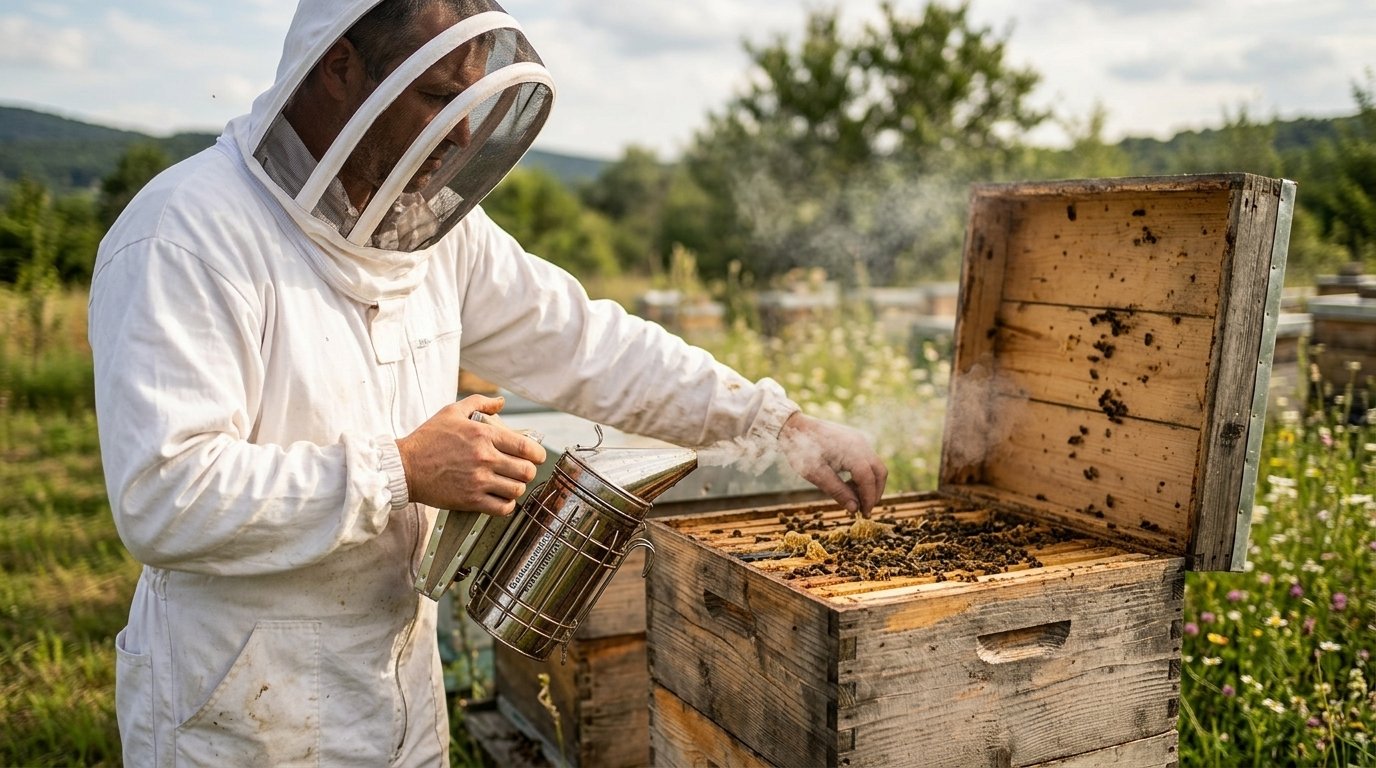
How Does a Bee Smoker Work? The Complete Guide to Calming Bees With Smoke
A deep, practical look at the tool every beekeeper reaches for before opening a hive — how it works, why it works, and how to use one properly.
Anyone who has stood beside an open hive on a warm afternoon has probably noticed the same ritual: before a beekeeper lifts a single frame, they reach for a small metal canister with a bellows attached, pump it a few times, and send a slow curl of smoke drifting over the top bars. It looks almost ceremonial, but it is one of the most functional habits in all of beekeeping. Understanding how does a bee smoker work is really understanding how bees think, how they communicate danger to each other, and how a few puffs of cool smoke can turn a defensive colony into a calm one for just long enough to get the job done.
This guide breaks the entire process down — the biology behind it, the mechanics of the tool itself, and the practical technique that separates a smooth, sting-free inspection from a chaotic one. Whether this is your first season with bees or you’re troubleshooting why your smoker keeps going out mid-inspection, everything you need is below.
1. What Is a Bee Smoker?
A bee smoker is a hand-held device that burns slow-smoldering fuel and pumps the resulting cool smoke out through a spout, using a small bellows attached to the side of the canister. It has been part of standard beekeeping equipment for well over a century, and the basic design has barely changed because it simply works. Squeeze the bellows, and air is forced through the fire chamber, pushing smoke out the nozzle in a controlled stream that the beekeeper can direct exactly where it’s needed — across the hive entrance, over the top bars, or gently into the space between frames.
The purpose isn’t to harm or choke the bees. A properly used smoker produces cool, thin smoke that drifts rather than billows, and it’s applied in short bursts rather than a constant stream. The goal is behavioral, not physical: to change how the colony responds to the disturbance of being opened up.
It’s easy to underestimate just how central this small tool is to the entire practice of beekeeping. Nearly every routine task — checking for a healthy laying pattern from the queen, spotting early signs of pests or disease, adding or removing supers, or simply confirming a colony is thriving — requires opening the hive and exposing the bees to light, air, and a human presence they instinctively treat as an intrusion. Without some reliable way to manage that defensive response, every single one of those routine checks would be slower, riskier, and far more stressful for both the bees and the beekeeper. The smoker is what makes regular, hands-on hive management practical rather than an occasional, high-stakes ordeal.
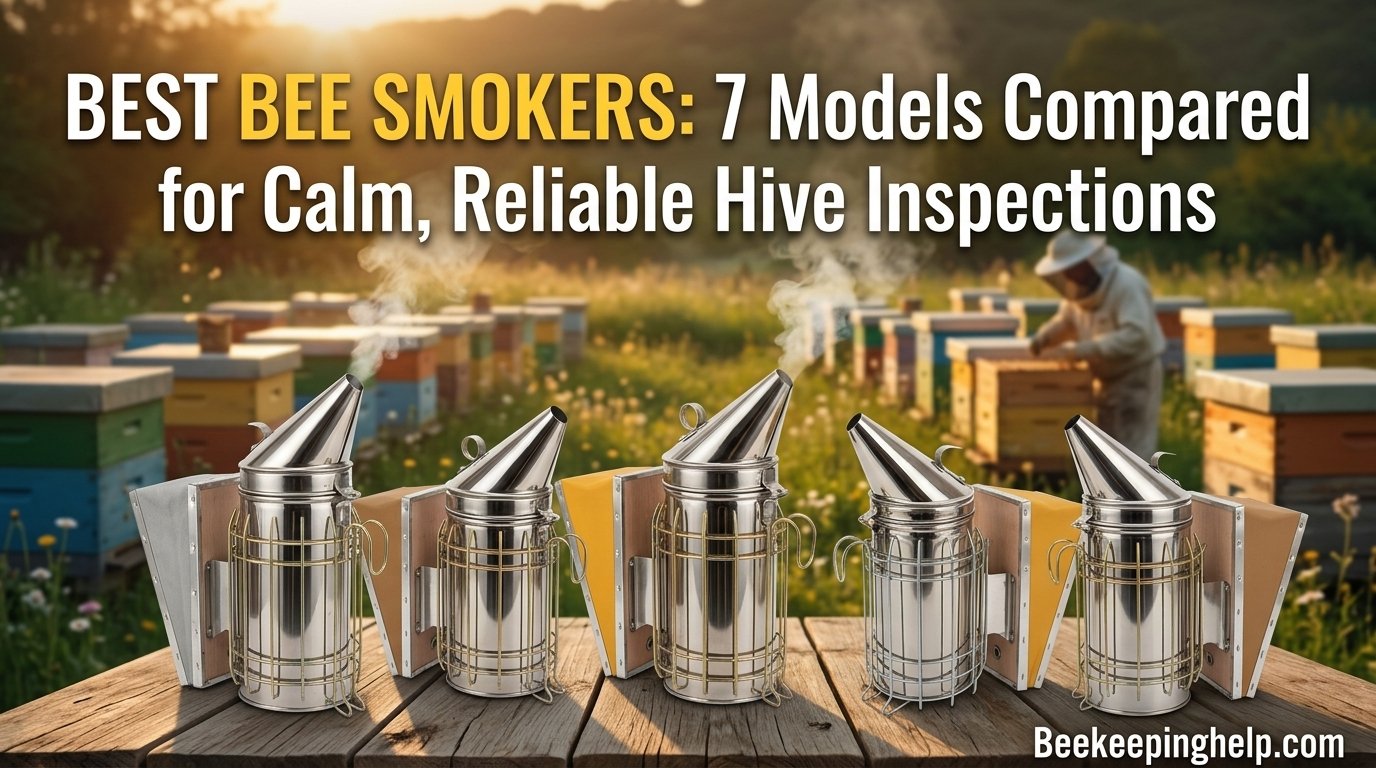
Looking for a reliable smoker? Our team tested several models side by side — see which one held a steady burn the longest.
See the Best Bee Smokers →It’s worth pointing out that the smoker isn’t a modern invention dressed up to look traditional — it’s one of the oldest continuously used pieces of beekeeping technology in existence, and the reason it hasn’t changed much is simply that the underlying problem it solves hasn’t changed either. Bees still communicate the same way they did thousands of years ago, and cool, drifting smoke still interrupts that communication just as effectively now as it did for ancient beekeepers working with clay pots and smoldering embers. Understanding that continuity helps explain why so much beekeeping wisdom around smokers is passed down almost unchanged from one generation of beekeepers to the next: the physics and biology involved haven’t given anyone a reason to reinvent it.
It’s also worth being clear about what a smoker is not. It is not a repellent, it does not “gas” the bees into unconsciousness, and it does not clear a hive the way some newcomers assume. Bees exposed to smoke are still fully awake, mobile, and capable of stinging — they are simply less inclined to do so for a short window. That distinction matters because it shapes how a smoker should be used: as a tool for buying calm minutes, not a substitute for careful, deliberate hive handling.
2. Anatomy of a Bee Smoker
Every bee smoker, regardless of brand or size, is built around the same core components. Understanding each part makes it much easier to diagnose problems later — a smoker that keeps dying out is almost always a fuel, airflow, or moisture problem tied to one of these pieces.
Fire Chamber
The metal canister (usually stainless steel) where fuel burns slowly. A grate at the bottom lets air from the bellows pass up through the burning material.
Bellows
The accordion-style pump attached to the side. Each squeeze forces a burst of air into the base of the fire chamber, feeding the fire and pushing smoke out the spout.
Nozzle / Spout
The narrow opening at the top that directs and concentrates the smoke stream so it can be aimed precisely.
Grate
A perforated metal plate near the bottom of the chamber that holds fuel above the air intake, allowing consistent airflow from below.
Heat Shield / Cage
An outer wire cage on many models that keeps the hot canister from directly touching a beekeeper’s hand, glove, or clothing.
Hinged Lid
Allows fuel to be added or rearranged mid-use, and helps regulate airflow when partially closed to slow a fire that’s burning too hot.
Some premium models add a heat-resistant base plate to protect surfaces when the smoker is set down, and a few include an adjustable air intake at the bottom for finer control over burn rate.
Material choice affects long-term performance more than most beginners expect. A smoker’s fire chamber goes through repeated heating and cooling cycles every time it’s used, and cheaper metals fatigue faster under that kind of stress. Stainless steel handles this cycling gracefully, resisting both rust and warping over years of seasonal use, which is why it dominates the mid-to-premium end of the market. Galvanized steel is lighter on the wallet but the zinc coating can begin to flake or discolor with heavy use, and painted finishes are the least durable of all, since the paint itself can scorch, bubble, or burn off entirely after enough heating cycles.
| Component | Common Failure Point | How to Spot It |
|---|---|---|
| Fire chamber | Rust perforation at the base | Small holes or flaking near the grate after a few seasons |
| Bellows | Cracked leather or split seams | Weak, hissing airflow when squeezed |
| Grate | Warping from repeated heat cycles | Fuel sitting unevenly, poor draft |
| Hinge | Stiffness or rust seizing | Lid becomes hard to open/close smoothly |
| Nozzle | Creosote clogging | Weak, thin smoke stream despite a strong fire |
Bellows design also varies more than most buyers realize. Larger bellows move more air per squeeze, which is useful for quickly reviving a dying fire but can also make it easier to accidentally over-smoke a hive if a beekeeper isn’t paying attention to how hard they’re pumping. Smaller bellows demand more frequent squeezing but tend to give finer control over smoke volume, which some experienced beekeepers actually prefer once they’ve built up the hand strength for it.
3. The Science: Why Smoke Calms Bees
This is the part most people are actually curious about — not what a smoker is, but why on earth smoke would make a colony of stinging insects calmer instead of angrier. Researchers and experienced beekeepers generally point to two overlapping explanations, and the truth is likely a combination of both.
It masks the colony’s alarm signal
Bees communicate primarily through pheromones — chemical signals detected by receptors on their antennae. When a guard bee perceives a threat, it releases an alarm pheromone (largely isopentyl acetate) that spreads rapidly and recruits nearby bees to respond defensively. Smoke interferes with the colony’s ability to detect and spread this signal, effectively disrupting their defensive communication network right when the beekeeper needs it disrupted most.
It triggers a feeding instinct
Smoke is also strongly associated, in a bee’s evolutionary memory, with wildfire. When bees detect smoke, many begin gorging on stored honey — an instinctive response tied to the possibility that they may need to abandon the hive and start over elsewhere, in which case they’d want a full stomach for the trip. A bee with a full abdomen is measurably less agile and less inclined to curl and sting, which further calms the colony’s overall demeanor.
| Mechanism | What Happens | Result for the Beekeeper |
|---|---|---|
| Pheromone masking | Smoke particles interfere with alarm pheromone detection between bees | Guard bees can’t effectively signal “intruder” to the rest of the colony |
| Feeding response | Bees instinctively gorge on honey, preparing to evacuate | Bees become physically less agile and defensive |
| Disorientation | Sudden change in hive “scent environment” | Guard bees briefly lose track of what’s happening at the entrance |
It’s worth noting that this isn’t a single, universally agreed-upon mechanism — entomologists have studied bee response to smoke for decades, and the honest answer is that the pheromone-masking and feeding-response theories are complementary rather than competing. Both are almost certainly happening simultaneously any time smoke drifts across a hive. The guard bees near the entrance are dealing with a disrupted communication channel at the same moment that house bees deeper in the hive are shifting into a feeding response, and the combined effect is a colony that is, for a few minutes, meaningfully less coordinated in its defense.
There’s also a temperature and humidity dimension worth understanding. Bees regulate the internal climate of their hive with remarkable precision, fanning their wings to move air and evaporate moisture when needed. A sudden waft of warm smoke changes the immediate microclimate around the entrance and top bars, and some researchers believe this contributes an additional layer of distraction — bees momentarily redirect attention toward assessing and adjusting to the changed conditions rather than toward the beekeeper reaching into the hive. This is a smaller effect than the pheromone and feeding responses, but it likely adds to the overall calming picture.
One detail that surprises a lot of new beekeepers: not every bee in the colony responds to smoke identically. Younger house bees, which spend most of their time inside the hive on brood care and food processing duties, tend to show the feeding response most readily. Older forager bees and guard bees, which are more specialized toward external threats, are the ones most affected by the pheromone-masking mechanism. Because a healthy hive is a mix of bees at every stage of this developmental progression, a well-timed puff of smoke is really influencing several different bee “job categories” simultaneously, each through a slightly different behavioral pathway.
4. Alarm Pheromones Explained
To really appreciate how does a bee smoker work, it helps to understand the alarm pheromone system in more detail. When a bee stings, or even when a guard bee simply feels threatened, it releases isopentyl acetate along with a handful of other volatile compounds from a gland near the base of the stinger. This scent smells faintly sweet and banana-like to humans, but to nearby bees it’s an unmistakable call to arms.
Within seconds, bees throughout the affected area of the hive shift into a heightened defensive posture — more bees fly toward the disturbance, more stingers are readied, and the colony’s overall threshold for tolerating further disruption drops sharply. This is exactly the cascading response a beekeeper wants to avoid, and it’s exactly what smoke interrupts. By introducing a strong, unfamiliar scent across the hive before pheromones can spread and recruit, the smoker effectively buys a window of calm.
This is also why timing matters so much. A puff of smoke applied before opening the hive is far more effective than the same puff applied after bees are already agitated and pheromone has already spread — prevention works better than damage control.
5. The Feeding-Response Theory
The gorging behavior triggered by smoke is worth examining a little further, because it explains a lot about why smoked bees seem almost sluggish for the first few minutes after exposure. Beekeepers can often see it directly: lift a frame shortly after smoking and it’s common to see bees with visibly distended abdomens, having just filled up on nearby honey stores.
This theory ties back to how honey bee colonies historically responded to actual wildfire, a real and recurring threat in the wild nesting sites bees have occupied for millions of years. A colony that smells smoke and immediately begins stockpiling food internally is a colony hedging its bets against having to abscond on short notice. That evolutionary wiring hasn’t gone anywhere, even though today’s smoke usually comes from a beekeeper’s smoker rather than an actual fire, and it works in the beekeeper’s favor every time.
There’s a practical, observable side to this worth mentioning for anyone still skeptical of the theory: beekeepers who’ve kept detailed notes across many seasons often describe a fairly predictable arc after smoking. In the first ten to twenty seconds, there’s usually a brief spike in activity — a soft roar or buzz as bees near the entrance and top bars react to the new stimulus. That’s followed by a noticeable settling period, often lasting several minutes, during which bees move more slowly, cluster more loosely on the comb, and are markedly less likely to fly up defensively when a frame is lifted. This settling window is precisely what a beekeeper is trying to create and extend through careful, repeated light puffs rather than one heavy dose up front.
It’s also worth understanding what happens metabolically once bees gorge on honey. A bee’s flight muscles need immediate, accessible energy, and a stomach full of honey doesn’t just weigh a bee down mechanically — it also shifts some of the bee’s attention and physiological resources toward digestion and energy storage rather than toward coordinated defensive flight. Multiply that across thousands of individual bees simultaneously gorging, and the colony’s overall defensive readiness drops measurably, even though no single bee has been harmed or incapacitated in any lasting way.
What Smoke Does Well
- Reduces defensive stinging behavior
- Buys several minutes of calm per application
- Works quickly — often within 10–20 seconds
- Safe for the colony when used correctly
Limitations to Keep in Mind
- Effect wears off — repeat applications are often needed
- Overuse can stress the colony or taint honey
- Doesn’t eliminate stinging risk entirely
- Some colonies respond less predictably than others
6. How to Light and Keep a Smoker Lit
Getting a smoker lit — and keeping it lit through a 20-minute inspection — is genuinely the most common frustration new beekeepers run into. The trick is building the fire in layers and giving it enough airflow before adding denser fuel on top.
| Step | What to Do |
|---|---|
| 1 | Start with a small handful of highly flammable tinder (dry leaves, pine needles, or crumpled paper) in the bottom of the fire chamber. |
| 2 | Light the tinder and immediately begin gentle, steady puffs on the bellows to establish a flame. |
| 3 | Once flames are active, add a loose layer of a slower-burning fuel (wood shavings, burlap, or pine straw). |
| 4 | Keep puffing until you see thick smoke, then pack the chamber a bit more densely with fuel — this slows combustion and produces cooler, longer-lasting smoke. |
| 5 | Close the lid most of the way, leaving airflow, and give a few test puffs. Steady white-gray smoke means it’s ready to use. |
If the smoker keeps going out, the fuel is almost always packed too loosely (letting it burn out fast) or too tightly (choking off airflow before combustion is established). A few slow puffs every couple of minutes during an inspection is usually enough to keep it smoldering without needing to relight.
Weather plays a bigger role in lighting success than most beginners expect. On damp mornings, or right after rain, ambient humidity can seep into stored fuel and make it noticeably harder to catch and sustain a flame. Keeping fuel in a sealed, dry container between uses — rather than loose in a bag or bucket exposed to the elements — solves most of this problem before it starts. Many beekeepers keep a dedicated fuel tin or dry bag as part of their apiary kit for exactly this reason, refilling it from a larger dry storage supply at home rather than leaving raw material exposed to weather between visits. Wind is the other major variable: a light breeze can actually help draw a young flame upward and establish combustion faster, but a strong, gusty wind can blow out a newly lit flame before it has a chance to establish itself in denser fuel. Cupping a hand around the top of the chamber during the first minute of lighting, or turning to shield the opening from the wind direction, usually solves this.
Altitude and ambient temperature have smaller but real effects too. In cooler conditions, it can take slightly longer for a smoker to reach a steady, self-sustaining smolder, simply because more of the fire’s early energy goes toward warming the metal chamber itself before combustion stabilizes. Beekeepers working in colder climates often report that lighting a smoker a few minutes before actually needing it — rather than trying to light it and go straight to the hive — produces a steadier, more reliable smoke output right from the first puffs at the hive entrance.
| Problem | Likely Cause | Fix |
|---|---|---|
| Smoker won’t catch at all | Fuel too damp or tinder layer too thin | Use dry tinder, add more of it, and puff more vigorously at the start |
| Flames but no smoke | Fuel too loose / burning too hot and fast | Add denser fuel and partially close the lid to slow combustion |
| Smoke is thin and wispy | Chamber not packed densely enough | Add more fuel and pack it down gently |
| Goes out within a few minutes | Insufficient fuel volume or too little airflow | Fill the chamber more fully and give periodic maintenance puffs |
| Smoke smells acrid or harsh | Wrong fuel type (treated wood, glossy paper, plastic residue) | Switch to a clean, natural fuel source |

Struggling to keep your smoker lit? The right fuel makes a bigger difference than most beekeepers expect.
What to Use in a Bee Smoker →7. Best Fuels for a Bee Smoker
Not all fuel is created equal. The best smoker fuel burns slowly, produces cool rather than hot smoke, and doesn’t introduce anything toxic or irritating into the hive. Some materials that seem convenient — like treated wood or glossy paper — should be avoided entirely.
Pine Needles
Widely available, burns slowly, produces thick cool smoke. A favorite among experienced beekeepers.
Untreated Burlap
Smolders well and is easy to pack tightly for long, low burns.
Wood Shavings/Pellets
Consistent and long-burning, especially compressed cotton or wood pellets made specifically for smokers.
Dried Grass or Leaves
Good as a tinder layer but burns quickly on its own, so best combined with a denser fuel.
Cotton Rags (Untreated)
Some beekeepers use plain cotton fabric scraps, which smolder steadily.
Materials to avoid: anything treated with chemicals, painted or stained wood, glossy/colored paper, plastic of any kind, and materials that produce hot flame rather than slow smolder. Anything toxic or acrid can stress the colony rather than calm it.
Beyond the common options above, a number of regional and traditional fuels have been used by beekeeping communities around the world for generations, and many are still favored today for specific qualities. Dried sumac bobs, for example, are prized in some regions for producing a particularly cool, mellow smoke. Baled straw, when packed tightly, gives a long, steady burn that many commercial beekeepers appreciate during long days moving between many hives. Dried corn cobs, cut or broken into chunks, smolder for a surprisingly long time once established and are a byproduct many rural beekeepers already have on hand.
Compressed fuel products designed specifically for bee smokers have also become popular in recent years — typically made from natural fibers like cotton or wood pulp pressed into pellets or cartridges. These are convenient because they’re consistent from use to use, lightweight to carry, and eliminate the guesswork of sourcing and drying natural materials seasonally. The tradeoff is cost: pre-made fuel generally runs more expensive per session than gathering pine needles or burlap scraps, which remain essentially free for most beekeepers with access to a yard or nearby tree line.
Dried Sumac Bobs
Traditional favorite in many regions, known for a cool, gentle smoke profile that’s easy on both bees and beekeepers.
Baled Straw
Packs densely for a long, steady smolder — a common choice for commercial operations covering many hives per day.
Dried Corn Cobs
Long-burning once lit, and often a free, readily available byproduct for beekeepers in agricultural areas.
Compressed Cotton Pellets
Purpose-made, consistent burn characteristics, and easy to store — convenient at a slightly higher cost.
A final consideration many new beekeepers overlook: whatever fuel is chosen, it’s worth sourcing it from an area free of pesticide or herbicide residue, particularly if gathering dried grass, leaves, or straw from field edges. Chemical residues on plant material can vaporize into the smoke stream just as easily as they would in an open fire, introducing exactly the kind of unwanted substance into the hive that beekeepers are otherwise careful to keep out.
8. How to Use a Smoker During an Inspection
Technique matters as much as the tool itself. A smoker used correctly gives a beekeeper a calm, cooperative colony to work with; used carelessly, it can actually agitate bees or barely have any effect at all.
| When | Where to Smoke | Why |
|---|---|---|
| Before opening the hive | 2–3 gentle puffs at the entrance | Calms guard bees before disturbance begins |
| After removing the outer cover | A light puff across the top bars | Settles bees near the surface before frames are lifted |
| Mid-inspection | A small puff if bees become more active or noise increases | Reinforces the calming effect as it wears off |
| Before closing up | A gentle puff to clear bees from the rim | Prevents bees from being crushed when replacing the cover |
The most common technique mistake is over-smoking — treating the smoker like it needs to blanket every frame in thick smoke. In reality, a little goes a long way. Short, gentle puffs spaced out over the course of an inspection are far more effective (and far less stressful for the colony) than one heavy, continuous stream.
Positioning and angle matter more than most beginners realize. Rather than aiming the nozzle directly down into the seams between frames — which can blast concentrated smoke straight onto clustered bees — most experienced beekeepers direct smoke in a low, sweeping arc just above the top bars, letting it settle and drift naturally across the surface. This produces a more even, gentler exposure across the whole top of the hive rather than a concentrated hot spot of smoke in one small area.
Distance also plays a role. Holding the nozzle too close to the hive risks pushing hot smoke directly onto bees, which can singe or seriously irritate them rather than calmly disperse. Most experienced beekeepers keep the nozzle at least six to twelve inches from the surface being smoked, letting the smoke cool slightly as it travels before it reaches the bees.
Body positioning matters too, though it’s rarely discussed in beginner guides. Standing slightly to the side of the hive entrance rather than directly in front of it keeps a beekeeper out of the main flight path bees use to leave and return, reducing collisions and incidental defensive encounters that have nothing to do with the inspection itself. Working from the back or side of the hive when possible, rather than looming directly over the top bars, also tends to feel less threatening to the colony, since it more closely resembles how a natural obstruction, like an overhanging branch, would present itself rather than a direct overhead intrusion.
Timing between puffs deserves its own mention. New beekeepers often either forget to reapply smoke at all, letting the calming effect fully wear off mid-inspection, or swing the other way and puff far too frequently out of nervousness. A useful mental rule of thumb: reapply a light puff roughly every three to five minutes during a longer inspection, or immediately if bee activity and noise noticeably increase, rather than on a fixed schedule regardless of what the colony is actually doing.
Seasonal conditions change how much smoke a colony needs. In early spring, when colonies are smaller and less defensive, very light smoking is often sufficient. By mid-summer, when colonies reach peak population and foraging activity is at its highest, bees tend to be noticeably more reactive, and inspections often call for slightly more frequent — though still gentle — smoke applications. In late fall, as colonies begin conserving resources and defending stores more aggressively against robbing, smoke use often needs to increase again, particularly around the entrance, to discourage opportunistic bees from nearby hives.
| Season | Typical Colony Temperament | Smoking Approach |
|---|---|---|
| Early Spring | Smaller population, generally calmer | Light, minimal smoke — often just at the entrance |
| Late Spring / Early Summer | Rapid growth, more defensive as population builds | Standard technique — puffs at entrance and top bars |
| Mid-to-Late Summer | Peak population, highest activity and reactivity | Slightly more frequent light puffs throughout inspection |
| Fall | Resource-defensive, watch for robbing behavior | Extra attention to entrance smoking to deter robbers |
| Winter | Minimal activity, inspections rare | Very brief, gentle smoke if any inspection occurs at all |
Weather on the day of inspection matters just as much as the calendar season. Bees tend to be calmer and easier to work on warm, sunny, low-wind days when foragers are actively out collecting and the hive population inside is lower. Cloudy, cool, or stormy conditions — especially a drop in barometric pressure ahead of rain — often correlate with noticeably more defensive behavior, since more bees are home and colonies seem to sense the change in conditions. Scheduling inspections for mid-morning to early afternoon on a calm, clear day, and using slightly more smoke on marginal-weather days, is a simple habit that measurably reduces stings.
9. How Much Smoke Is Too Much?
There’s a real cost to over-smoking a colony, and it’s worth understanding before assuming “more smoke = calmer bees.” Excessive smoke exposure can stress a colony, disrupt its internal temperature and humidity regulation if bees fan more heavily in response, and in extreme cases has been associated with bees absconding a hive altogether if they interpret it as a persistent fire threat.
A good rule of thumb: if bees are boiling out of the hive, roaring loudly, or moving frantically after smoke is applied, that’s a sign of too much — not too little. Back off, give the colony a minute, and use smaller, more measured puffs going forward.
Over-smoking can also leave a lingering effect that isn’t immediately obvious during the inspection itself. Honey and wax are naturally absorbent to airborne compounds, and heavy, repeated smoke exposure over many inspections has been anecdotally linked by some beekeepers to a faint smoky note in honey harvested soon afterward — though this is far more likely with excessive, careless smoking than with the occasional light puff most inspections call for. Beekeepers selling honey commercially, in particular, tend to be especially disciplined about using the minimum smoke necessary, both for the bees’ sake and to protect the honey’s flavor profile.
There’s also a longer-term behavioral consideration. Colonies subjected to frequent, heavy smoking over many inspections across a season sometimes show a gradual increase in baseline defensiveness, as if the repeated stress response shifts the colony’s overall temperament. This is one more reason experienced beekeepers treat the smoker as a precision tool rather than a blunt instrument — using just enough to accomplish the goal, and no more, tends to keep both the immediate inspection and the colony’s long-term disposition in better shape.

New to inspections? Pairing correct smoker technique with the right protective gear makes early inspections far less stressful.
Beginner’s Guide to Starting Beekeeping →10. Types of Bee Smokers Compared
Smokers come in a handful of standard sizes and a few material variations. Choosing the right one usually comes down to how many hives are being managed and how long inspections typically run.
| Type | Chamber Size | Best For | Notes |
|---|---|---|---|
| Mini/Small Smoker | ~3.5″ tall | Hobbyists with 1–2 hives | Lightweight but needs more frequent refueling |
| Standard Smoker | ~7″ tall | Most backyard beekeepers (2–10 hives) | Best balance of burn time and portability |
| Large/Commercial Smoker | ~10″ tall | Beekeepers managing many hives or long apiary rounds | Holds fuel for extended sessions, heavier to carry |
| Stainless Steel | Varies | Long-term durability | Resists rust, holds up to heat cycling well |
| Galvanized/Painted | Varies | Budget setups | Cheaper but more prone to rust and paint burn-off over time |
Beyond size and material, a handful of design features are worth paying attention to when comparing models. A wire heat cage around the chamber isn’t just a nice-to-have — it makes a meaningful difference in comfort and safety, especially for beekeepers working solo who need to set the smoker down and pick it back up repeatedly during a single inspection. A hook or hanger built into the cage is similarly useful, letting the smoker be hung from a hive box or a nearby branch rather than balanced precariously on the ground.
Bellows quality is another differentiator that’s easy to overlook when comparing smokers online, since it’s hard to judge from photos alone. Leather bellows tend to feel more durable over years of use but require occasional conditioning to stay supple, especially if stored in a dry shed or garage. Synthetic bellows are typically lower-maintenance and often less expensive, though some cheaper synthetic options can crack in cold weather faster than a well-made leather equivalent.
Small Smokers — Advantages
- Lightweight and easy to carry on longer walks between hives
- Lower cost, good for testing the hobby in year one
- Easier to store in a small equipment kit
Small Smokers — Drawbacks
- Shorter burn time, more frequent refueling
- Less fuel capacity for longer inspections
- Can run out of smoke mid-inspection if not monitored
For beekeepers just starting out with one or two hives, a standard-sized stainless steel smoker with a wire heat cage strikes the best balance of price, durability, and burn time, and it’s the configuration most experienced mentors recommend to newcomers rather than either extreme of the size range.
11. Cleaning and Maintenance
A smoker that’s neglected will eventually become harder to light and less efficient — creosote and ash buildup restrict airflow, and a clogged nozzle weakens the smoke stream exactly when it’s needed most.
- Empty ash regularly. Let the smoker cool completely, then tap out loose ash after every few uses.
- Scrape creosote buildup. A build-up of tar-like residue inside the chamber and nozzle should be scraped out periodically with a wire brush.
- Check the bellows. Leather or synthetic bellows can crack over time — inspect for tears that would reduce airflow efficiency.
- Store it dry. Moisture is one of the fastest ways to ruin the bellows and promote rust inside the chamber.
- Lubricate hinges. A drop of oil on the lid hinge keeps it functioning smoothly season after season.
- Inspect the grate. A warped or heavily corroded grate restricts airflow from below and is one of the most common reasons a well-maintained smoker still struggles to stay lit — replace it if it’s visibly bent or rusted through.
- Deep clean seasonally. At least once per season, a more thorough cleaning — removing all ash and residue and wiping down the interior — helps catch small issues like hairline cracks before they become bigger problems.
A well-cared-for smoker can easily last a decade or more, and many beekeepers end up passing down a favorite, well-seasoned smoker to newer beekeepers in their local club or family. Paradoxically, a smoker that’s been used consistently over many seasons — provided it’s been cleaned regularly — often lights more easily than a brand-new one, since a mild coating of residue inside the chamber can actually help retain heat during the initial lighting phase.
12. Safety Considerations
A lit smoker is, at its core, a small contained fire, and it deserves the same respect any open flame would. A few practical safety habits go a long way:
- Never leave a lit smoker unattended, even briefly, especially near dry grass or wood chips.
- Use the wire heat cage (if included) or a heat-resistant glove when handling — the outer canister gets hot enough to burn skin quickly.
- Set a lit smoker down on bare dirt, stone, or a dedicated metal stand — never directly on grass, mulch, or a wooden surface.
- Fully extinguish the smoker after use by plugging the nozzle and closing the lid to cut off oxygen, or submerging the fuel in water if it needs to cool quickly.
- Keep a small fire extinguisher or bucket of water nearby during dry, high-fire-risk conditions.
- Avoid using a smoker indoors or in an enclosed space such as a shed or garage — always operate it outdoors with good ventilation.
- Be mindful of local fire restrictions or burn bans during dry seasons, which in some regions can apply even to small contained devices like a bee smoker.
- Keep long hair tied back and avoid loose, flowing clothing near the nozzle and chamber while lighting or refueling.
It’s also worth thinking through what happens if a smoker is accidentally knocked over while lit. A stable, flat surface to work from — and keeping the smoker away from the edges of a hive stand or equipment table — reduces this risk considerably. Some beekeepers keep a small metal tray or paver stone at each apiary location specifically as a safe, non-flammable spot to rest a lit smoker between uses.
15. Troubleshooting Common Smoker Problems
Even experienced beekeepers run into an uncooperative smoker occasionally. Most issues trace back to one of a handful of root causes, and knowing what to check first can save a lot of frustration mid-inspection.
| Symptom | Most Likely Cause | What to Try |
|---|---|---|
| Bees seem unusually agitated even after smoking | Smoke too hot, too concentrated, or applied too close | Increase distance, use gentler puffs, check fuel isn’t flaming |
| Smoker dies between every frame check | Insufficient fuel volume in chamber | Pack more fuel in before starting, refuel proactively rather than reactively |
| Thin, weak smoke stream despite visible fire | Clogged or partially blocked nozzle | Clear creosote buildup from the nozzle opening |
| Smoker relights easily but dies within seconds | Grate or airflow path blocked by ash | Empty ash fully and check the grate is seated correctly |
| Fuel smolders but produces almost no visible smoke | Fuel too dry or too thin (e.g., pure paper) | Mix in a denser, slower-burning fuel layer |
When troubleshooting mid-inspection, it’s almost always faster to add fresh fuel and give several firm bellows squeezes than to fully empty and relight from scratch — a smoker with even a few active embers remaining can usually be revived within thirty seconds to a minute with the right technique. Keeping a small bag of dry backup tinder in a hive tool kit specifically for this situation is a habit many experienced beekeepers adopt after their first frustrating mid-inspection relight.
Final Thoughts on How a Bee Smoker Works
At its core, a bee smoker is a simple mechanical device solving a surprisingly nuanced biological problem: how to safely work inside a colony of tens of thousands of insects that are hard-wired to defend their home. By masking alarm pheromones and triggering an instinctive feeding response, a few careful puffs of cool smoke buy a beekeeper exactly the window of calm needed to inspect frames, check for pests, and keep a colony healthy — without unnecessary stress to the bees or stings to the beekeeper.
Like most beekeeping skills, smoker technique improves with practice. Pay attention to how the colony responds, adjust the amount and timing, and it quickly becomes second nature. Every colony has its own personality, and the amount of smoke that works perfectly for one hive may be slightly too much or too little for the one right next to it — the beekeepers who get the most consistent, calm results tend to be the ones who treat each inspection as an opportunity to read their bees rather than following a fixed routine on autopilot.
Over a season or two, most beekeepers develop an almost intuitive feel for their smoker — how many puffs a given colony typically needs, how long a chamber of a favorite fuel will last, and how to read the first few seconds of bee behavior to know whether more smoke is needed or whether it’s time to simply get on with the inspection. That intuition, built puff by puff and hive visit by hive visit, is really the heart of good beekeeping practice, and the smoker is the tool that makes developing it possible in the first place.
Compare the Best Bee Smokers →Frequently Asked Questions
Does smoke actually hurt the bees?
No — when used correctly, cool smoke in small, controlled puffs is not harmful to bees. It’s the same reason beekeepers are told to avoid thick, hot smoke: proper technique keeps the experience calming rather than distressing for the colony.
Why do bees eat honey when they smell smoke?
It’s believed to be an instinctive survival response tied to wildfire. Bees that sense smoke may be preparing to abandon the hive, so they gorge on stored honey to have energy reserves available if they need to relocate.
How long does the calming effect of smoke last?
Typically several minutes per application, though it varies by colony and conditions. Most beekeepers reapply a light puff every few minutes during a longer inspection to maintain the effect.
Can you use a bee smoker without fuel that produces flame?
Yes — the goal is smoldering, not active flame. Once the fuel catches, packing it more densely and partially closing the lid encourages slow smoldering combustion rather than open burning, which produces the cooler, thicker smoke that works best.
What’s the best beginner-friendly fuel?
Pine needles are a popular starting point — widely available, easy to light, and known for producing thick, cool smoke without much fuss.
Is it safe to use newspaper as smoker fuel?
Plain, untreated newspaper can work as a tinder layer to start a fire, but it burns quickly and isn’t ideal as a primary fuel source. Glossy or colored paper should be avoided, as inks and coatings can release unwanted chemicals.
Why does my smoker keep going out?
Usually a fuel-packing issue — either too loose (burns out too fast) or too tight (chokes off airflow before it catches). Building the fire in layers, starting with light tinder and adding denser fuel gradually, usually solves it.
Do I need to smoke the hive every single time I open it?
Most experienced beekeepers use at least a small amount of smoke on most inspections, though some very calm colonies may need very little. It’s generally better to have the smoker lit and ready than to need it and not have it.
Can too much smoke cause bees to leave the hive permanently?
In extreme, repeated cases of heavy smoke exposure, yes — some beekeepers have reported colonies becoming more likely to abscond. This is uncommon with normal, moderate smoker use but is a good reason to avoid over-smoking.
What’s the difference between a small and large smoker?
Mainly burn time and fuel capacity. Smaller smokers are lighter and easier to carry but need refueling more often, while larger smokers hold enough fuel for extended apiary visits without needing to relight.
Should the smoke be white or gray?
A steady white-gray, relatively cool smoke is the goal. Thick black smoke or visible flame usually means the fire is burning too hot or the fuel is inappropriate, and should be adjusted.
Are there alternatives to using a smoker at all?
Yes, some beekeepers use sugar-water sprays or other calming techniques on very docile colonies, though a smoker remains the most reliable and widely used tool for most situations.
Can I use a smoker on a package or nucleus colony?
Yes, though very light, minimal smoke is usually recommended for small or newly established colonies, since they’re often calmer to begin with and heavy smoke isn’t necessary for a small, low-population setup.
Does the color of smoke matter?
Generally, thin white-to-gray smoke indicates a cooler, well-regulated burn, while thick black smoke or visible orange flame usually signals the fire is burning too hot or the fuel is unsuitable, and adjustments should be made.
How far should I stand from the hive when smoking it?
Most beekeepers hold the nozzle roughly six to twelve inches from the entrance or top bars, close enough for the smoke to reach effectively but far enough that bees aren’t exposed to concentrated heat.
13. A Note on Alternatives to Smoke
While a smoker remains the standard tool, some beekeepers occasionally use a light mist of sugar water as a supplementary calming technique, particularly on already docile colonies. The sugar water encourages grooming behavior that keeps bees occupied and less focused on the disturbance overhead. That said, it doesn’t interrupt alarm pheromone communication the way smoke does, so most experienced beekeepers treat it as a supplement rather than a replacement.
A few other approaches occasionally come up in beekeeping circles, each with real limitations worth understanding before relying on them. Some beekeepers experiment with commercial “liquid smoke” sprays, which attempt to mimic the calming chemical profile of real smoke without an open flame; results are mixed, and most experienced keepers still consider a proper smoker more reliable. Others lean heavily on working only with especially gentle bee genetics, selectively requeening from calmer stock over time to reduce how much smoke is needed in the first place — a longer-term strategy rather than an inspection-day technique. And some beekeepers simply work faster and more efficiently, minimizing the total disturbance time and therefore the total defensive response, which reduces reliance on smoke without eliminating the need for it entirely.
None of these fully replace a smoker for most beekeepers, most of the time. The combination of low cost, reliability, and a track record spanning centuries of practical use is hard to match, and it’s part of why the humble bee smoker remains standard equipment in beekeeping courses, supply catalogs, and apiaries worldwide.
16. A Short History of the Bee Smoker
Humans have been using smoke to manage bees for far longer than the modern metal-and-bellows design has existed. Ancient depictions from Egypt show beekeepers using smoking pots to subdue bees while harvesting honey from clay hive vessels, and similar practices show up independently across cultures in Africa, Asia, and the Mediterranean — a sign of just how universally effective the technique is once discovered, regardless of the specific tools available at the time.
The bellows-equipped smoker recognizable today is generally credited to Moses Quinby, an American beekeeper who patented a practical bellows smoker design in the 1870s. Before that point, many beekeepers relied on simpler smoldering torches, smoking pots, or even just a handful of burning material held near the hive — effective, but far less controllable than a directed nozzle and bellows. Quinby’s design, and the refinements that followed from other beekeeping innovators in the following decades, introduced the precision and portability that turned smoke from a blunt, improvised tool into a purpose-built piece of standard equipment.
Interestingly, very little about the core mechanism has changed since. Modern smokers are more likely to be made of stainless steel rather than tin, and some now include ergonomic grips or heat shields that Quinby’s original design lacked, but the fundamental fire-chamber-plus-bellows concept remains essentially untouched. That’s a strong testament to how well the original solution matched the problem — bee behavior hasn’t changed, and neither has the tool built to work with it.
17. Where the Smoker Fits Into the Bigger Picture
Understanding your smoker is only one piece of a much larger beekeeping toolkit. The hive itself — its design, materials, and how it’s set up — plays just as large a role in how manageable inspections are overall. Beekeepers researching their first setup often start by comparing the best beekeeping hives before deciding which style suits their goals, whether that’s a traditional Langstroth setup or something more specialized like a Flow Hive compared to a Langstroth hive.
It’s also worth understanding how a beehive works as a whole system, and even the different beehive types available today, since hive design directly affects how often and how intensely a smoker gets used during a typical season.